International · Medium
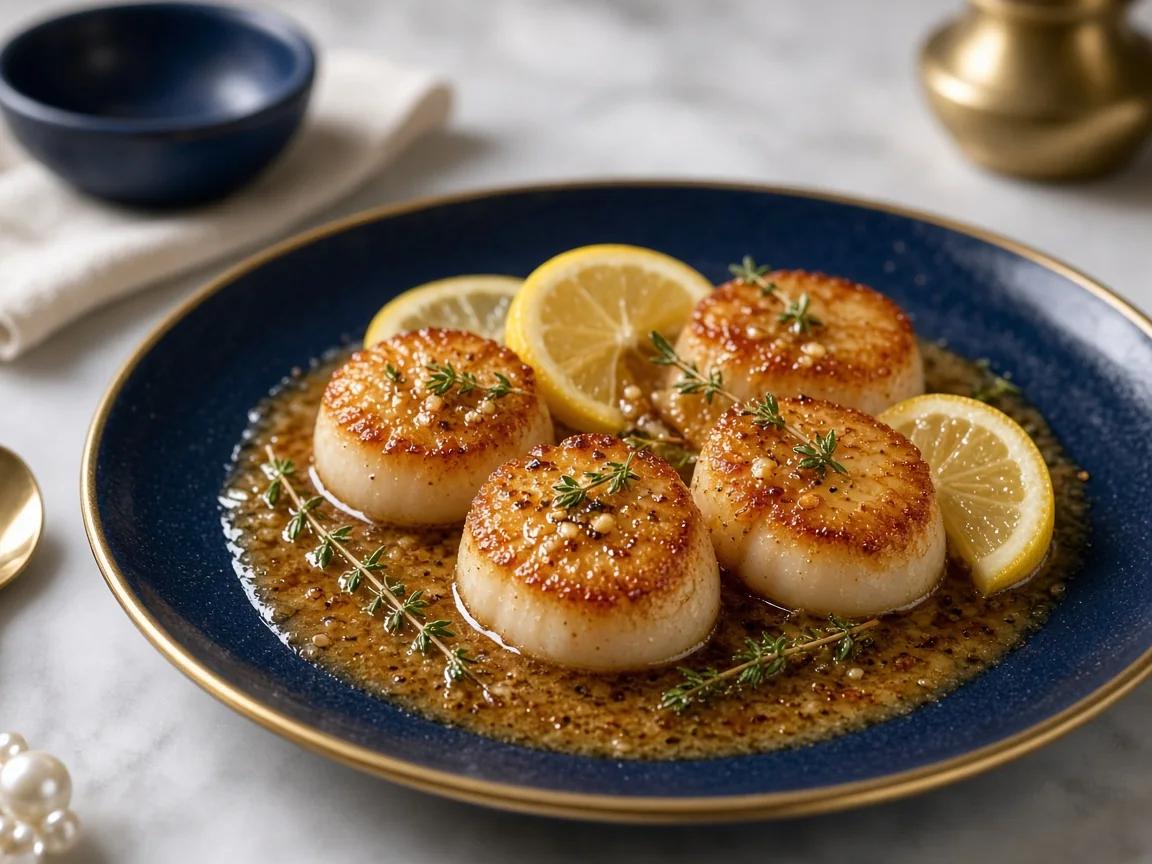
Seared Scallops with Brown Butter and Lemon
Dry sea scallops seared to a deep golden crust, then basted in brown butter with garlic, thyme and lemon. Restaurant-style in under 10 minutes.
scallops guide
Atlantic sea scallop (*Placopecten magellanicus*) (NOAA Fisheries)
Scallops are bivalve shellfish prized for their sweet, rich, tender white adductor muscle, and a perfectly seared scallop with a golden crust is one of the great restaurant dishes you can make at home in 3 minutes.
sweet and rich; can be mild or briny (NOAA) · Peak windows vary by fishery; quality dry-packed product is year-round in good markets. · Atlantic sea scallop (*Placopecten magellanicus*) (NOAA Fisheries)
We earn commissions when you shop through the links below.
InfoSea, bay, king, queen; taste.
Open →CookSeared scallops and sides.
Open →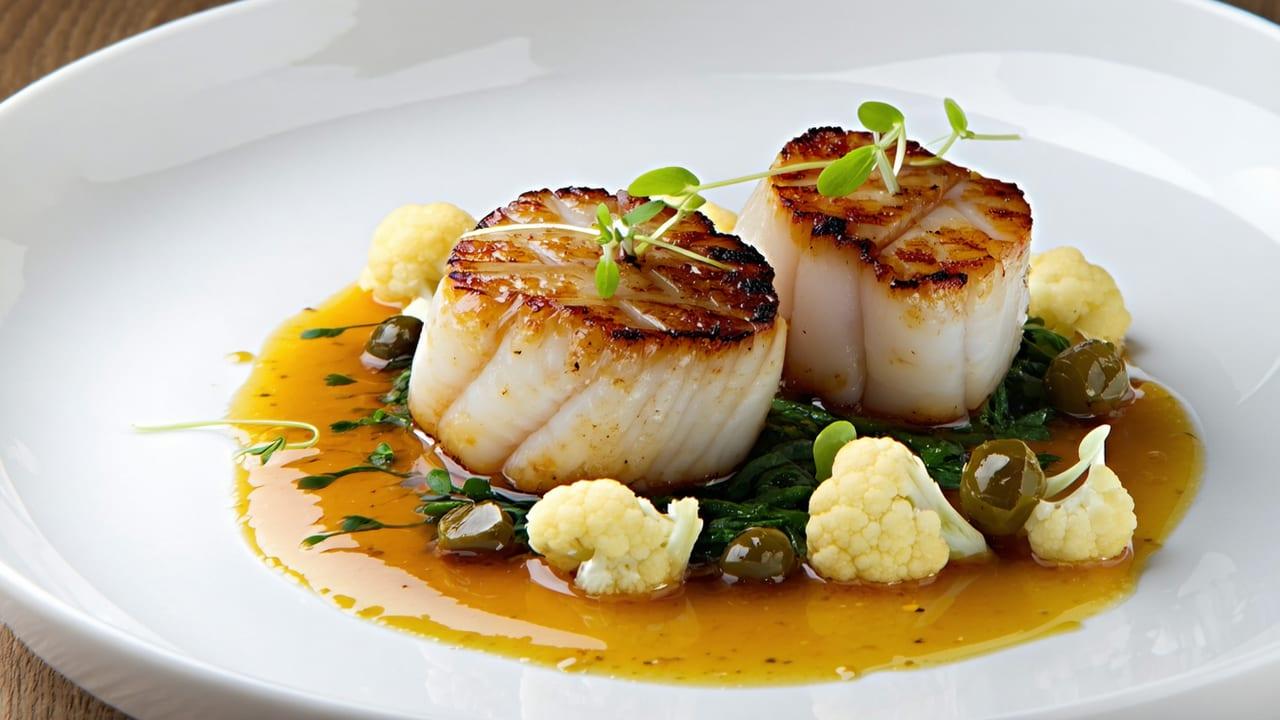 Eat
Scallops on real menus in 27 of our cities.
Open →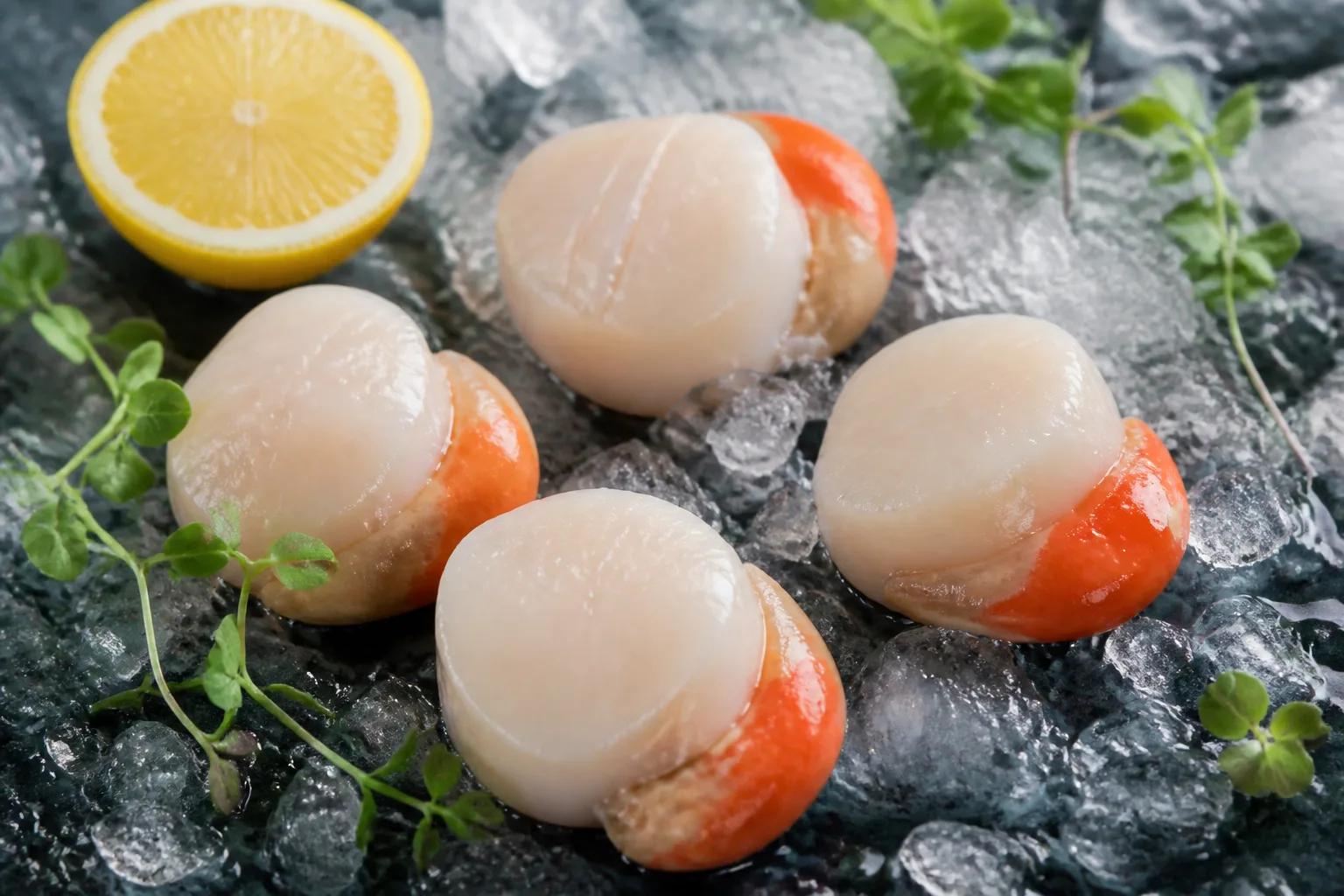 Buy
Dry vs wet, sizes, markets near you.
Open →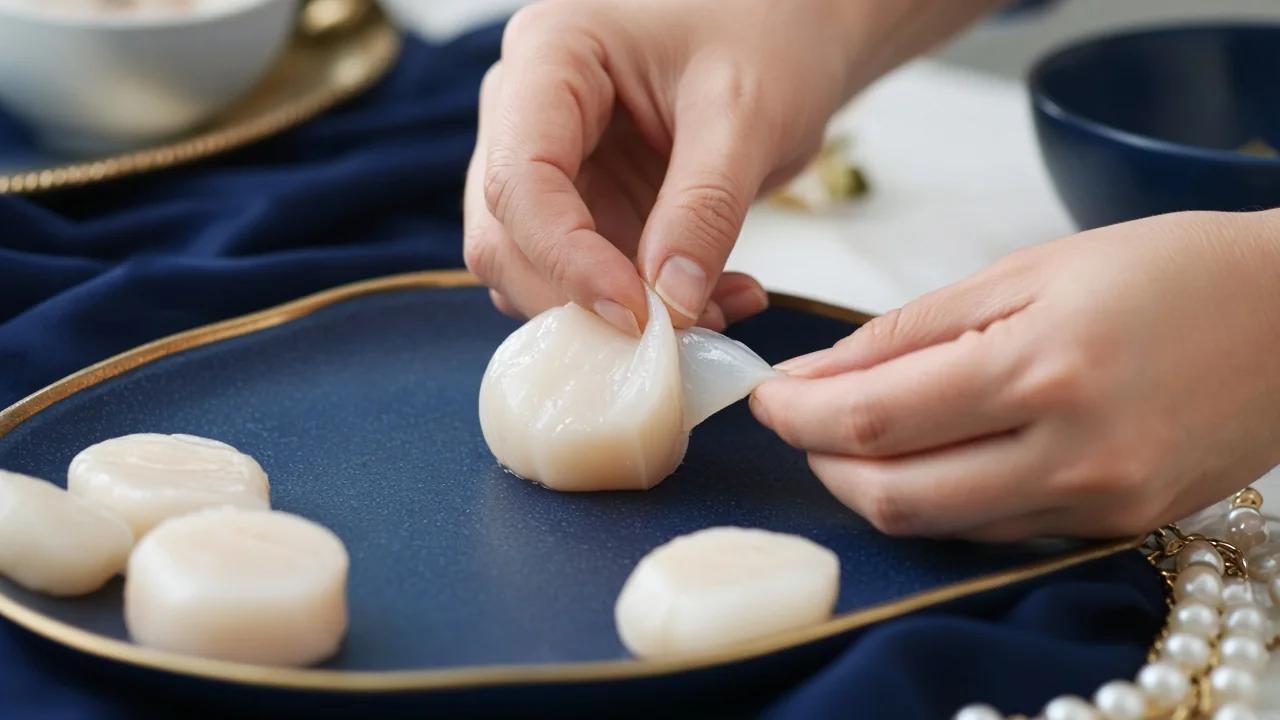 Tips
Side muscle, drying, raw, mistakes.
Open →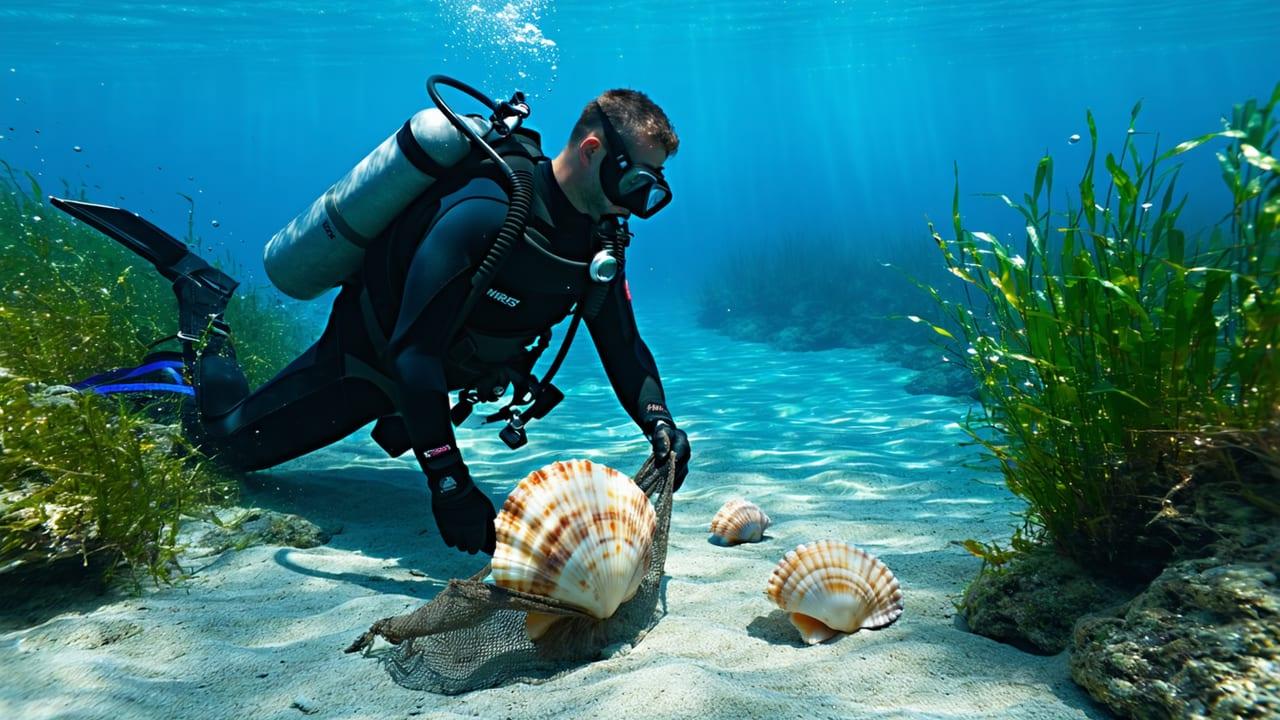 Catch
Dredged, hand-dived, farmed.
Open →Ask the Fish Guide about scallops — grounded in this species hub.
US species
Atlantic sea scallop (*Placopecten magellanicus*) (NOAA Fisheries)
UK species
king scallop and queen scallop (MCS)
Taste
sweet and rich; can be mild or briny (NOAA)
Texture
firm and lean (NOAA)
Taste
sweet and rich; can be mild or briny (NOAA)
Season
Peak windows vary by fishery; quality dry-packed product is year-round in good markets.
Habitat
Atlantic sea scallop (*Placopecten magellanicus*) (NOAA Fisheries)
Recipes
Step-by-step methods from our recipe pages — same hero photos you will see on each dish.
International · Medium
Dry sea scallops seared to a deep golden crust, then basted in brown butter with garlic, thyme and lemon. Restaurant-style in under 10 minutes.
For cooking at home, see our homemade seafood seasonings.
For cooking at home, see our garlic butter seafood seasoning.
Scallops are bivalve shellfish prized for their sweet, rich, tender white adductor muscle, and a perfectly seared scallop with a golden crust is one of the great restaurant dishes you can make at home in 3 minutes.
Buying links may earn a commission. Restaurant listings are editorial — not paid placements in this block.
Tips
Best methods: Hard sear in butter, Ceviche / crudo, Grill skewers, Risotto finish.
Catch & season
Species guide
Scallops are bivalve shellfish prized for their sweet, rich, tender white adductor muscle, and a perfectly seared scallop with a golden crust is one of the great restaurant dishes you can make at home in 3 minutes. This guide covers the types of scallops, how to buy "dry" scallops, how to sear them and how to choose sustainable ones. It's part of our Fish & Seafood Guide.
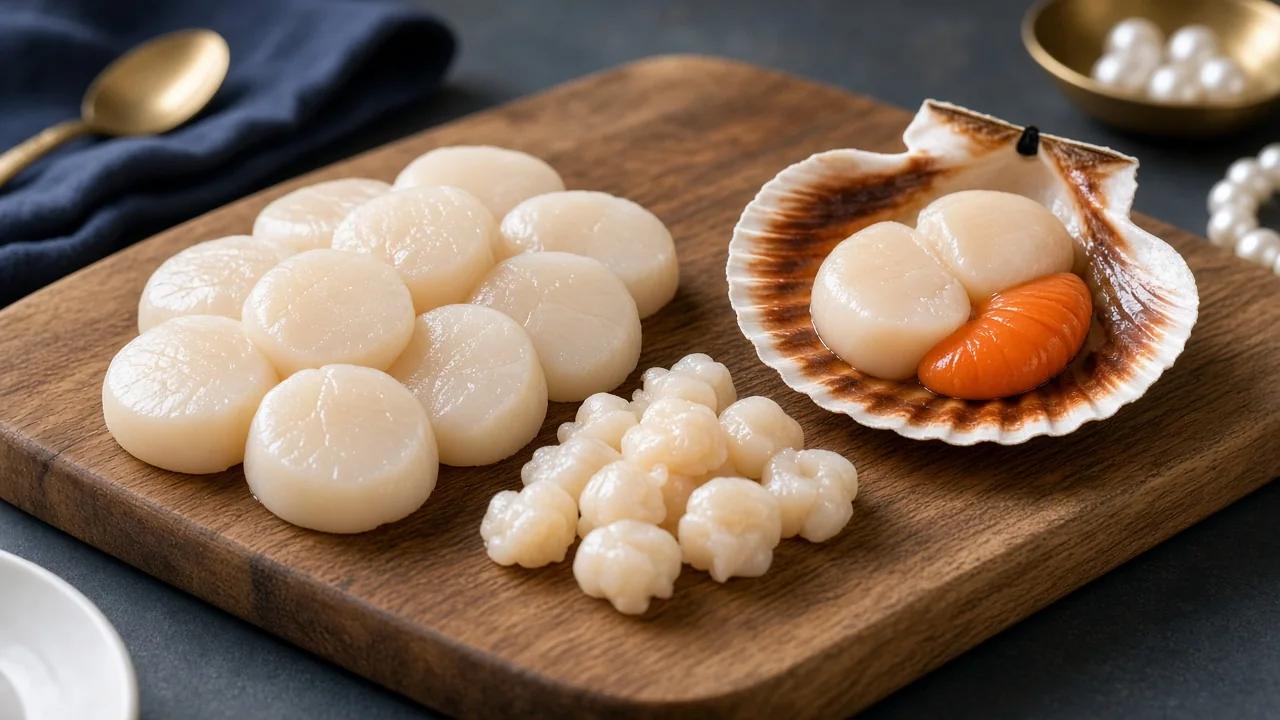
What are scallops? Scallops are bivalve mollusks with fan-shaped shells. The part we usually eat is the round white adductor muscle that opens and closes the shell. In Europe the orange roe (coral) is often served too.
NOAA says Atlantic sea scallops can live up to 20 years and grow quickly in their first few years. They typically reach no more than 6 inches in shell height; the largest on record was about 9 inches. They can reproduce by age 2 but produce few eggs until about age 4, after which a female can produce hundreds of millions of eggs a year, which helps the population respond quickly to management. They usually spawn in late summer or early autumn.
Dry scallops are untreated. Wet scallops have been soaked in a solution of sodium tripolyphosphate (STPP), which helps them hold extra water (America's Test Kitchen). They release liquid in the pan and won't brown well. Check the label: dry scallops list only "scallops". NOAA says high-quality raw scallops are shiny and creamy white, sometimes with a natural orange or pinkish tint, have an ivory translucence and keep their shape.
NOAA describes sea scallops as sweet and rich, mild or briny, with a firm, lean texture. Seared, they develop a caramelised, nutty crust and a soft, almost buttery centre.
NOAA says Atlantic sea scallops are wild-caught from Maine to North Carolina, and that vessels from Massachusetts, Virginia and New Jersey land most of the US catch. They're available year-round. A small share of sea scallops (5 to 10%) have a darker, reddish-brown upper shell.
The FDA says scallops are cooked when they turn milky white or opaque and firm.
| Type | Method | Approximate time |
|---|---|---|
| Sea or king scallops | Sear in a very hot pan | 1½–2 min + 30–60 sec |
| Bay or queen scallops | Sauté | 1–2 min total |
| Scallops in the shell | Grill or broil with garlic butter | 3–5 min |
| Frozen scallops | Thaw overnight in the fridge first (FDA) | Then sear as above |
FoodSafety.gov says scallops are cooked when the flesh is pearly or white and opaque.
Woods Hole Sea Grant suggests using fresh scallop meats within 2 to 3 days, and Clemson Extension gives 2 to 3 days in the fridge and about 3 months in the freezer. Keep them in a sealed container on ice in the coldest part of the fridge (NOAA).
Raw scallop crudo is popular, but raw seafood carries a risk of foodborne illness. The FDA says cooking is safest, and that pregnant people, young children, older adults and people with weakened immunity should avoid raw shellfish.
Our featured recipe is Seared Scallops with Brown Butter and Lemon: Dry sea scallops seared to a deep golden crust, then basted in brown butter with garlic, thyme and lemon. It takes 15 minutes and serves 2, with a photo for every step.
Try scallops at fine dining seafood and shrimp & shellfish restaurants, in Boston, Portland, Maine and Edinburgh.
According to NOAA Fisheries (Atlantic sea scallop; values per 100 g):
| Nutrient | Amount |
|---|---|
| Calories | 88 kcal |
| Protein | 16.7 g |
| Fat | 0.76 g |
| Carbohydrate | 2.36 g |
| Cholesterol | 33 mg |
| Selenium | 22.2 µg |
| Sodium | 161 mg |
NOAA says scallops are a good low-fat source of protein and are high in selenium and B vitamins. The FDA lists scallops as a "Best Choice".
What are scallops? Bivalve shellfish. The part usually eaten is the round white adductor muscle that opens and closes the shell (NOAA).
How do you cook scallops? Pat them dry and sear in a very hot pan for 1½ to 2 minutes without moving them, then flip and baste with butter for 30 to 60 seconds.
What's the difference between sea and bay scallops? Sea scallops are large and best seared; bay scallops are small and sweet.
What are dry scallops? Untreated scallops. Wet scallops are soaked in phosphate (STPP) and don't sear well.
Are scallops good for you? Yes. They're a good low-fat source of protein and are high in selenium and B vitamins (NOAA).
How do you know when scallops are cooked? They turn pearly or white and opaque (FoodSafety.gov).
Can you eat scallop roe? Yes. The orange coral is eaten widely in Europe.
Are scallops high in mercury? No. The FDA lists scallops as a Best Choice.
For a boil-night pot, see the seafood boil guide. For a skillet cousin, see shrimp scampi.
Bivalve shellfish. The part usually eaten is the round white adductor muscle that opens and closes the shell (NOAA).
Pat them dry and sear in a very hot pan for 1½ to 2 minutes without moving them, then flip and baste with butter for 30 to 60 seconds.
Sea scallops are large and best seared; bay scallops are small and sweet.
Untreated scallops. Wet scallops are soaked in phosphate (STPP) and don't sear well.
Yes. They're a good low-fat source of protein and are high in selenium and B vitamins (NOAA).
They turn pearly or white and opaque (FoodSafety.gov).
Yes. The orange coral is eaten widely in Europe.
No. The FDA lists scallops as a Best Choice.
Cookies. Essential cookies always run. Analytics and ads need your choice — manage or accept below. Essential cookies run the site. Google Analytics runs by default outside the UK, EEA and Switzerland, and only after you accept it there. Opt out any time in Cookie settings. Ads (Meta, Pinterest) load only with your permission. · Privacy