
Portuguese · Medium
Portuguese Seafood Cataplana (Cataplana de Marisco)
A sealed copper pot of clams, prawns, and fish — Portugal’s sociable shellfish classic.
mussels guide
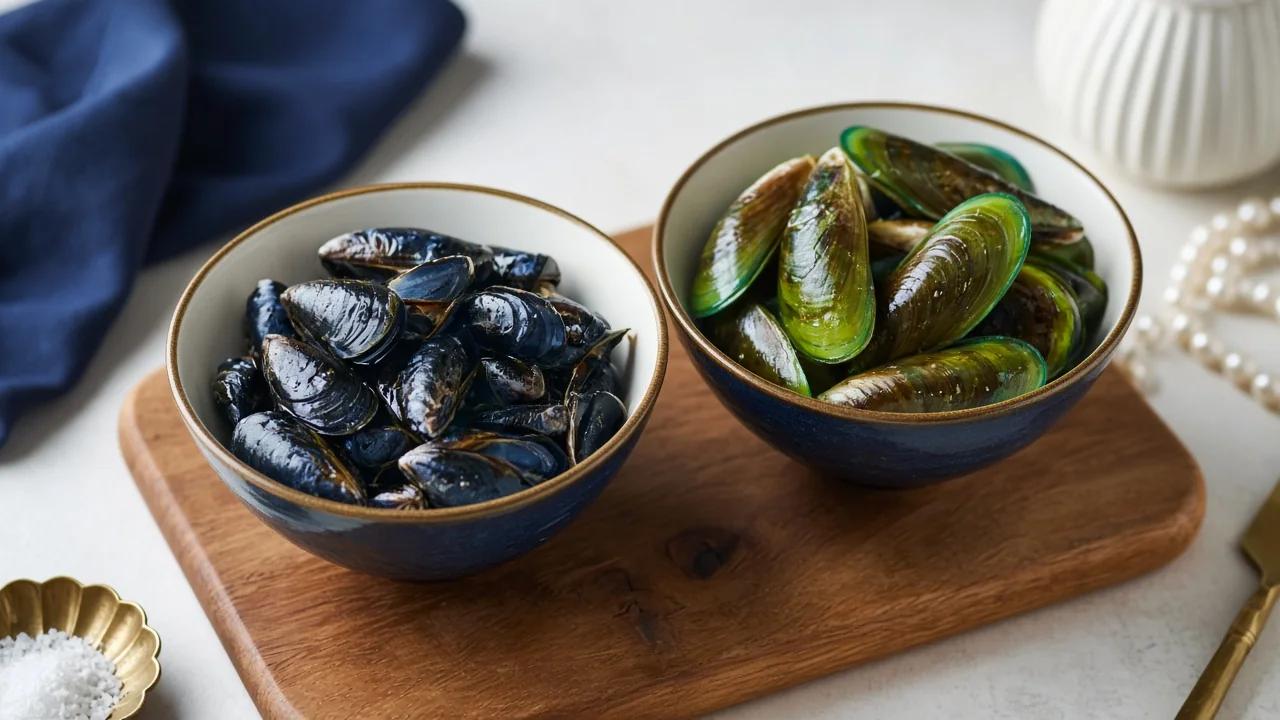
blue mussel (*Mytilus edulis*); New Zealand green-lipped mussel is another popular type
Mussels are bivalve shellfish with blue-black shells and tender, sweet, orange-to-cream meat, and they are one of the quickest, most affordable seafood dishes you can cook at home.
sweet, with tender meat (NOAA Fisheries) · Excellent year-round from quality farms; cold-water months often taste especially sweet. · blue mussel (*Mytilus edulis*); New Zealand green-lipped mussel is another popular type
 Info
Types, taste, nutrition.
Open →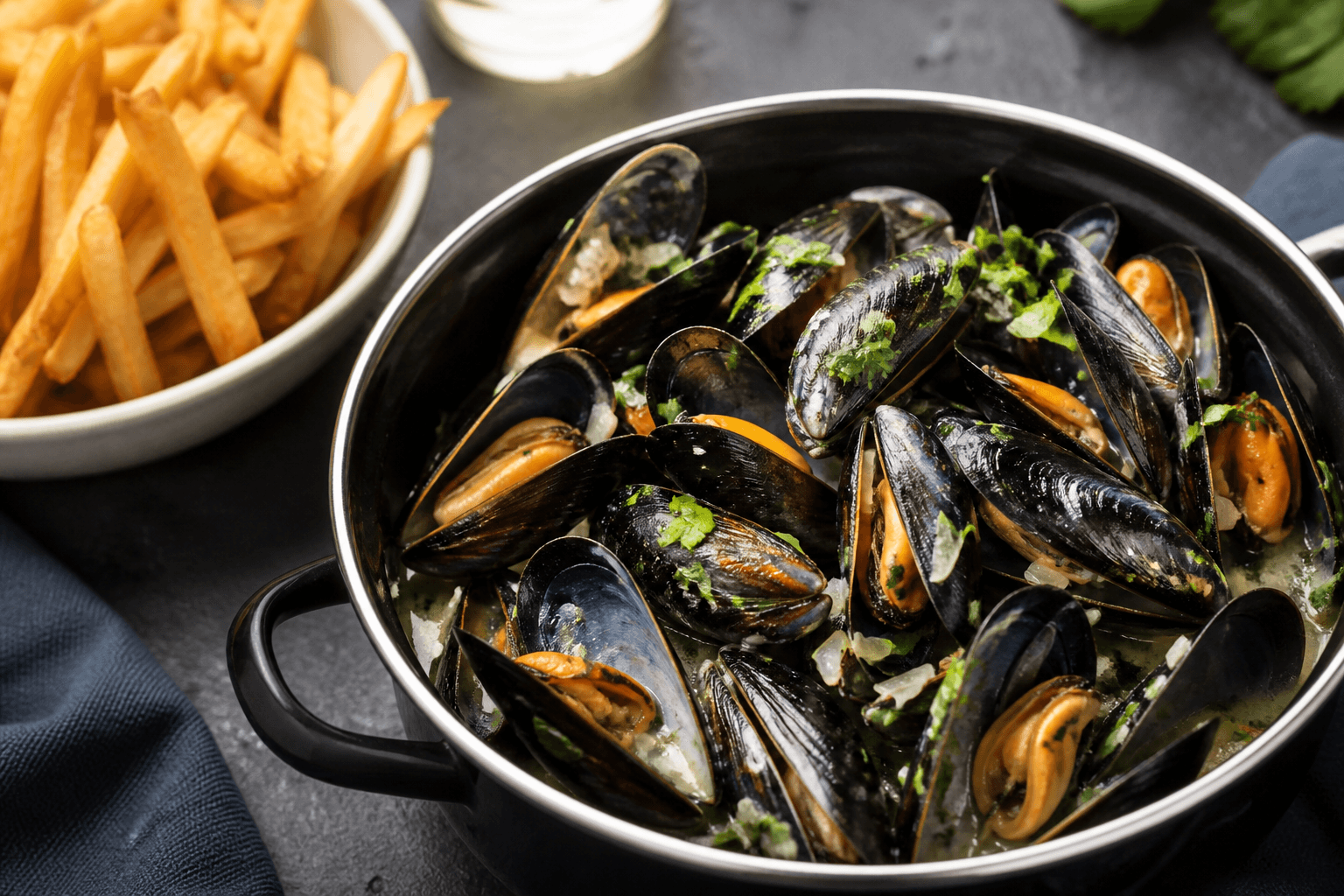 Cook
Moules marinière and more.
Open →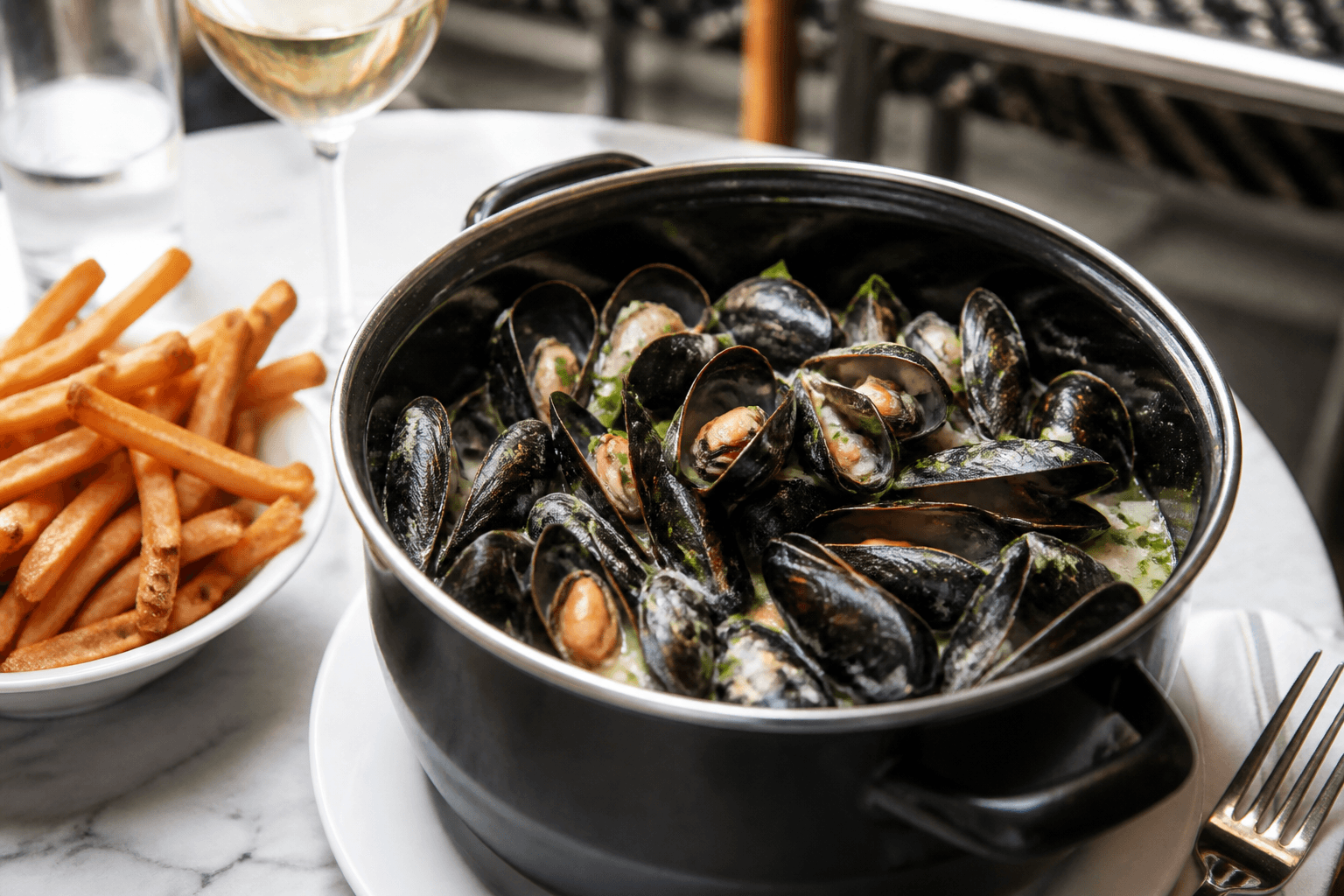 Eat
Mussels on real menus in 26 of our cities.
Open →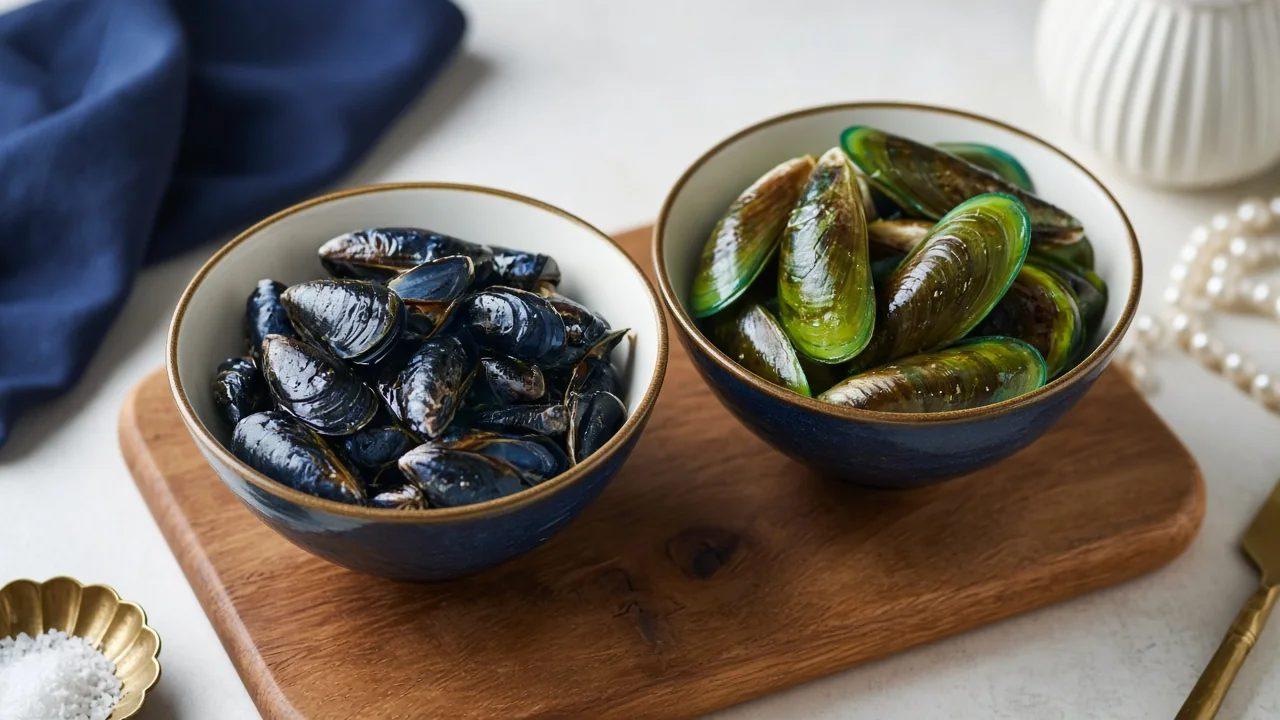 Buy
Live checks, tags, storage, markets.
Open →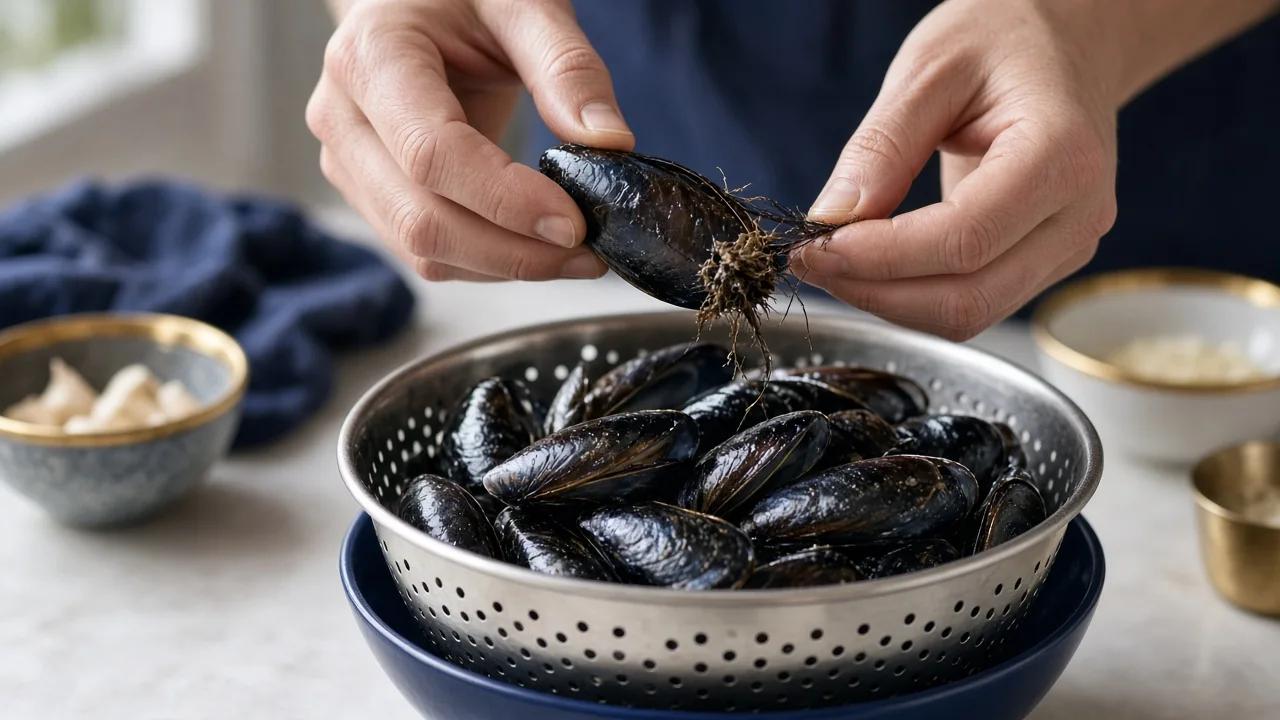 Tips
Clean, debeard, cook safely.
Open →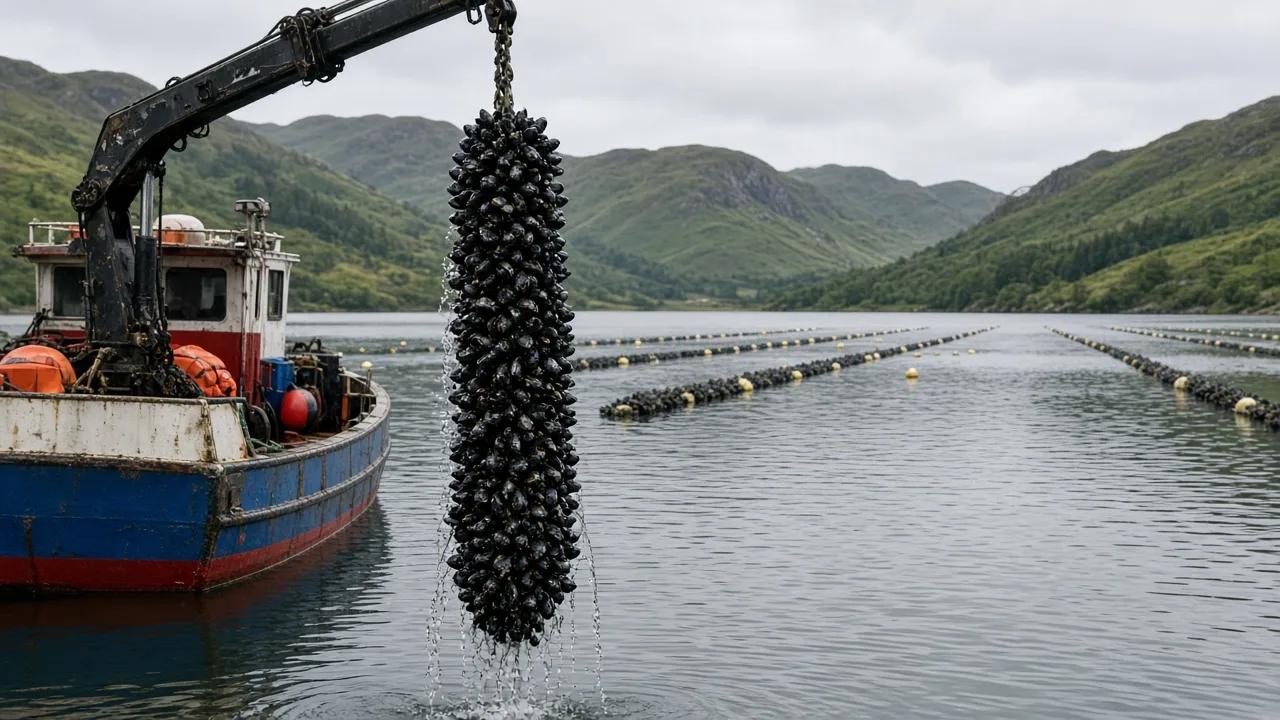 Catch
Rope, bouchot, wild; water testing.
Open →Ask the Fish Guide about mussels — grounded in this species hub.
Main species
blue mussel (*Mytilus edulis*); New Zealand green-lipped mussel is another popular type
Taste
sweet, with tender meat (NOAA Fisheries)
Family
bivalve mollusks, like oysters, clams and scallops (NOAA Fisheries)
Cooking signal
shells open; discard any that don't (FDA)
Taste
sweet, with tender meat (NOAA Fisheries)
Season
Excellent year-round from quality farms; cold-water months often taste especially sweet.
Habitat
blue mussel (*Mytilus edulis*); New Zealand green-lipped mussel is another popular type
Recipes
Step-by-step methods from our recipe pages — same hero photos you will see on each dish.
Portuguese · Medium
A sealed copper pot of clams, prawns, and fish — Portugal’s sociable shellfish classic.

Italian · Medium
Coastal Italy in a bowl — briny clams, white wine, garlic, and al dente spaghetti.

Portuguese · Medium
Soupy tomato seafood rice — Portugal’s shareable answer to a fisherman’s stew on rice.

New Zealand · Easy
Big green shells, garlicky wine broth, crusty bread — NZ’s most shareable shellfish bowl.
Mussels are bivalve shellfish with blue-black shells and tender, sweet, orange-to-cream meat, and they are one of the quickest, most affordable seafood dishes you can cook at home.
Buying links may earn a commission. Restaurant listings are editorial — not paid placements in this block.
Tips
Best methods: Steam / marinière, Thai coconut curry, Grill on the half shell, Pasta.
Catch & season
Species guide
Mussels are bivalve shellfish with blue-black shells and tender, sweet, orange-to-cream meat, and they are one of the quickest, most affordable seafood dishes you can cook at home. A pot of mussels steamed in wine, garlic and herbs is ready in under 10 minutes. This guide covers how to buy, clean, cook and eat mussels safely. It is part of our Fish & Seafood Guide.
What are mussels? Mussels are shellfish. NOAA explains that, like oysters, clams and scallops, blue mussels are bivalve mollusks with a hinged shell. Adults are sessile: they attach to one spot, in both intertidal and subtidal areas, using tough threads called the byssus, or "beard".
Blue mussels grow fast and reproduce prolifically. They first mature as males and later develop female reproductive capability, and one female can release between 50 and 200 million eggs in a single spawning event (NOAA Fisheries).
Mussels have tender meat and a sweet flavour (NOAA Fisheries), with a gentle taste of the sea. They're milder than oysters and softer than clams. Their real magic is the briny juices they release when they cook, which become the sauce.
Most mussels you buy are farmed. NOAA Fisheries says US farmed blue mussels are a smart seafood choice because they're grown and harvested under state and federal rules. Farms use two main methods: - On-bottom: young mussels (seed) are spread on the seabed to form beds. - Off-bottom: mussels grow in the water column on longlines (ropes), rafts, or the French bouchot method, on ropes wrapped around poles.
Because shellfish toxins and bacteria occur naturally, regulators monitor farmed mussels to make sure they're safe to eat (NOAA).
Seafood Watch rates certified farmed blue mussels (ASC, BAP, Naturland and others) as eco-certified, and US wild-harvested blue mussels from Maine to Rhode Island as a Good Alternative (February 2024 list). Farmed mussels are filter feeders and need no added feed.
Yes. Mussels are sold canned or jarred, often in olive oil, brine or escabeche (a vinegar and paprika marinade), and also as frozen cooked mussels, either half-shell or in a sauce. Canned mussels are already cooked and ready to eat; once opened, keep them refrigerated.
Keep live mussels in the fridge in a shallow, open container covered with a damp cloth or paper towel so they can breathe. Never store them in an airtight bag or container, or in fresh water, which kills them (Clemson HGIC; NOAA). Woods Hole Sea Grant advises using live mussels within 2 to 3 days.
Clean mussels just before cooking.
The FDA says clams, mussels and oysters are cooked when the shells open; throw away any that don't open.
| Method | Approximate time | Done when |
|---|---|---|
| Steamed in wine (1 kg / 2 lb) | 4–6 min, covered | Shells open |
| In a creamy or tomato sauce | 5–7 min | Shells open |
| Grilled or baked half-shell (precooked) | 3–5 min | Topping golden |
| Frozen cooked mussels | Reheat until steaming | Hot throughout |
FoodSafety.gov says clams, oysters and mussels are cooked when the shells open. Discard any that stay closed (FDA).
Try mussels at shrimp & shellfish restaurants, or read about a specialist in Meet Midye Kapanı, Çanakkale's mussel house. For classic moules, see the London seafood guide.
USDA FoodData Central (blue mussel, raw; values per 100 g; sodium from NOAA Fisheries):
| Nutrient | Amount |
|---|---|
| Calories | 86 kcal |
| Protein | 11.9 g |
| Fat | 2.24 g |
| Vitamin B12 | 12 µg |
| Selenium | 44.8 µg |
| Sodium | 286 mg |
NOAA says mussels are low in saturated fat and an excellent source of omega-3 fatty acids.
How do you cook mussels? Steam them, covered, in a splash of wine with shallots and garlic for 4 to 6 minutes, until the shells open.
How do you clean mussels? Rinse, pull off the beard toward the hinge, scrub off barnacles, and discard any open mussel that won't close when tapped (FDA).
How do you prepare mussels for cooking? Clean and debeard them just before cooking, and keep them cold until then.
Are mussels good for you? Yes. They're low in saturated fat and rich in omega-3s (NOAA), and they're high in vitamin B12 and selenium (USDA).
What do mussels taste like? Sweet and tender, with a mild sea flavour (NOAA).
Is there such a thing as canned mussels? Yes. Mussels are sold canned in oil, brine or escabeche, and they're ready to eat.
How long do mussels last in the fridge? Woods Hole Sea Grant advises using live mussels within 2 to 3 days. Store them in an open container under a damp cloth.
How do you know if mussels are bad? Discard any that stay open when tapped before cooking, or stay closed after cooking (FDA).
Steam them, covered, in a splash of wine with shallots and garlic for 4 to 6 minutes, until the shells open.
Rinse, pull off the beard toward the hinge, scrub off barnacles, and discard any open mussel that won't close when tapped (FDA).
Clean and debeard them just before cooking, and keep them cold until then.
Yes. They're low in saturated fat and rich in omega-3s (NOAA), and they're high in vitamin B12 and selenium (USDA).
Sweet and tender, with a mild sea flavour (NOAA).
Yes. Mussels are sold canned in oil, brine or escabeche, and they're ready to eat.
Woods Hole Sea Grant advises using live mussels within 2 to 3 days. Store them in an open container under a damp cloth.
Discard any that stay open when tapped before cooking, or stay closed after cooking (FDA).
Cookies. Essential cookies always run. Analytics and ads need your choice — manage or accept below. Essential cookies run the site. Google Analytics runs by default outside the UK, EEA and Switzerland, and only after you accept it there. Opt out any time in Cookie settings. Ads (Meta, Pinterest) load only with your permission. · Privacy