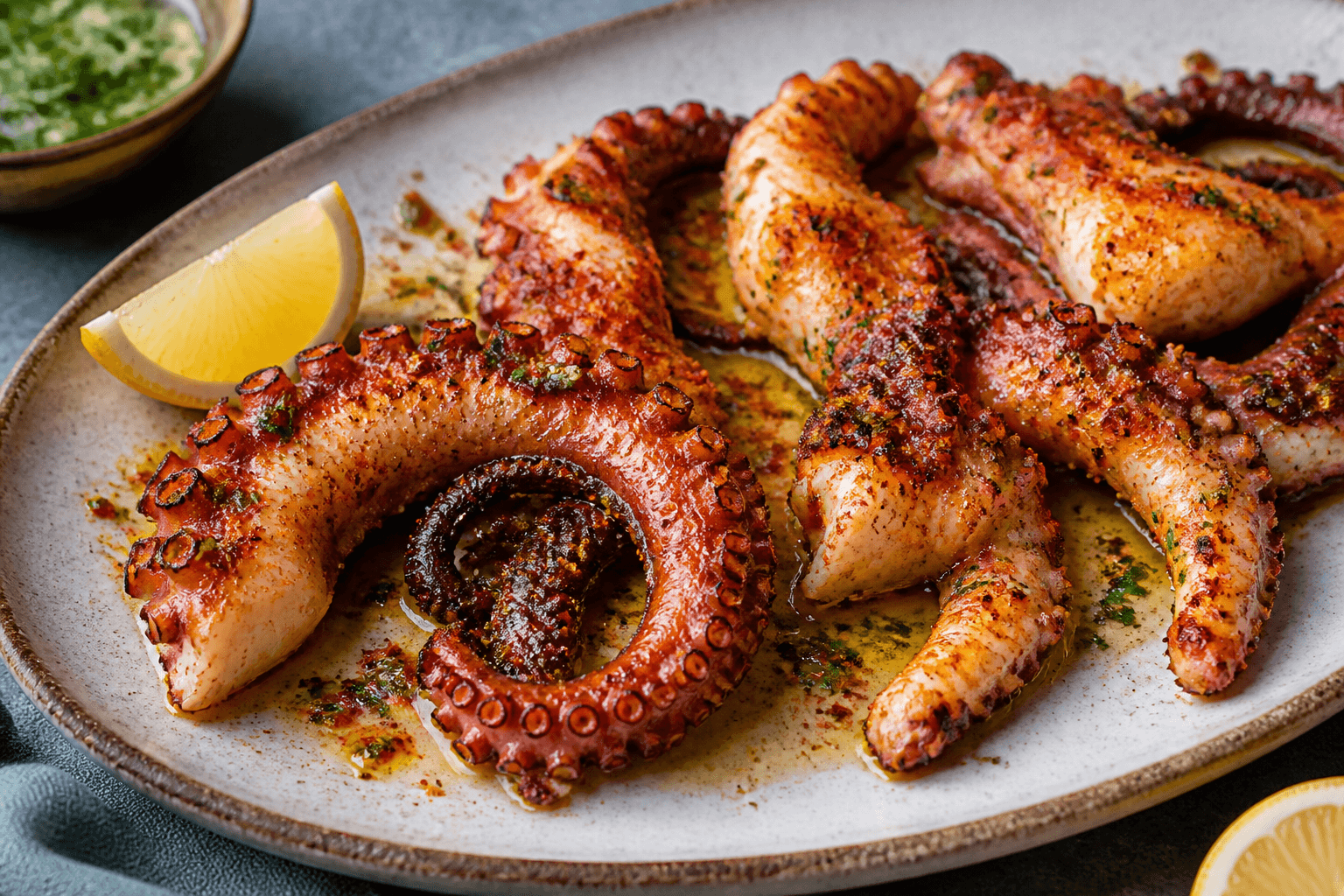
Octopus rewards patience. Chefs usually simmer it gently until tender, then finish on a screaming grill for smoke and char. Done well, it is one of the great Mediterranean seafood dishes.
You will meet it as Greek grilled octopus, Spanish pulpo with paprika, or modern charred tentacle plates in coastal cities worldwide.
Also called
Octopus · Pulpo · Poulpe · Octopodi
Best cooking methods
Simmer then grill · Pulpo a la gallega · Charcoal skewer · Stew
Why octopus can be tough
Undercooked or rushed octopus stays rubbery. The classic fix is a long gentle simmer (sometimes with a cork in folk tradition) until a knife slides in easily, then high-heat finishing.
Frozen octopus can actually help tenderise some batches. Good restaurants will still finish with real grill flavour, not just boiled softness.
How to order it
Look for char, olive oil, lemon, and restrained seasoning. Heavy breading often hides average product. Pair with a crisp white or light red depending on the preparation.
Explore Greek, Spanish, and Portuguese fish restaurants for the most confident traditional versions.