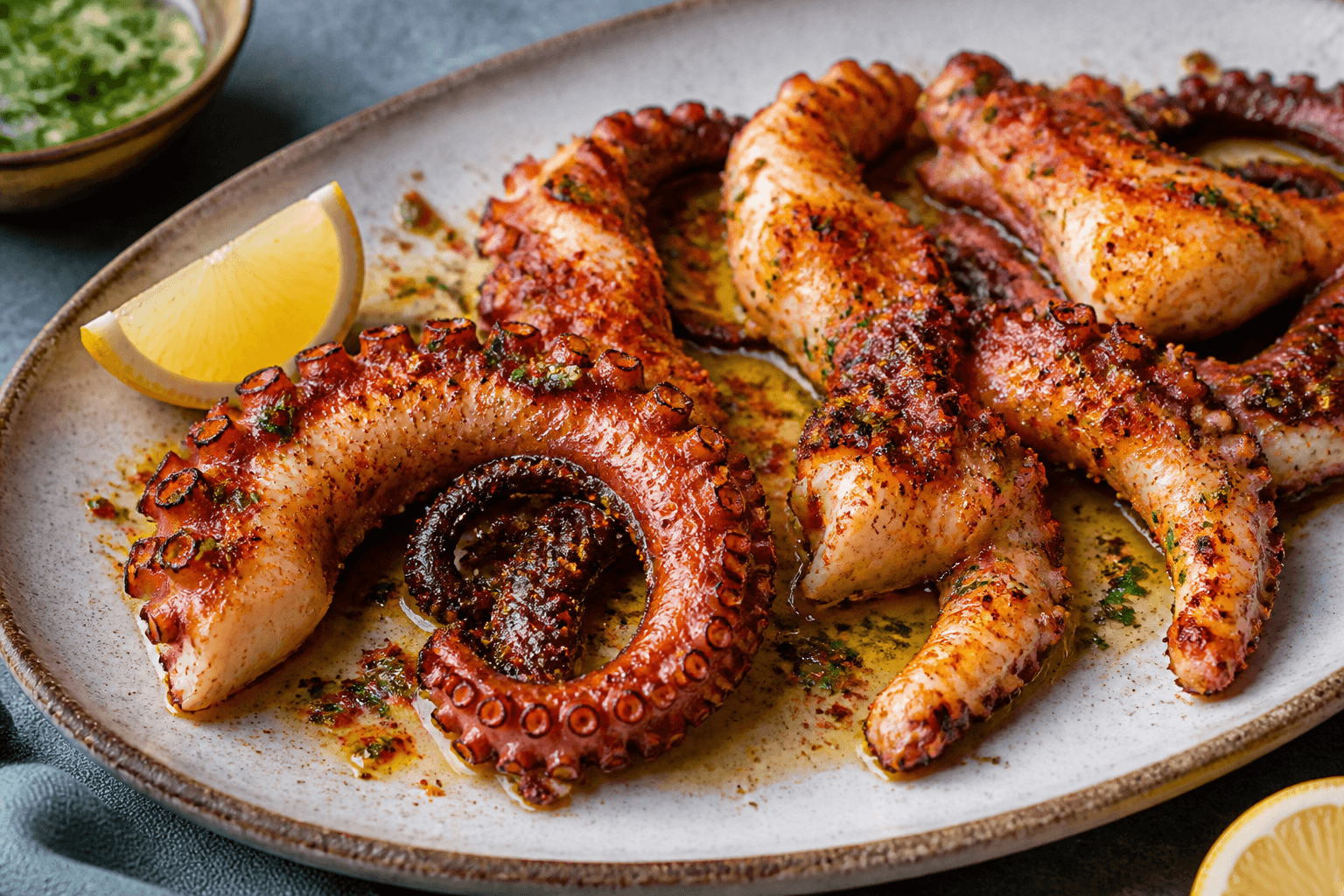
Charcoal-grilled Greek octopus with olive oil, oregano, and lemon

Greek · Greece

Greek Grilled Octopus (Octopodi sta Karvouna)

Mediterranean classic — octopus simmered until tender, then blistered over charcoal with lemon and oregano.

Prep

20 min

Cook

75 min

Servings

4 as a meze / 2 as a main

Difficulty

Medium

Greek grilled octopus rewards patience: a gentle simmer tenderises the meat, then high heat builds the char you want on a seaside taverna plate. The seasoning is intentionally simple — olive oil, oregano, lemon, salt.

Serve as a meze with bread and salad, or as a shared main. Then compare restaurant versions across Mediterranean city guides on FishRestaurants.com.

Method

  1. 1

    Simmer until tender

    Place the octopus in a pot with bay leaves, peppercorns, and just enough water to not quite cover (many cooks start with little water — octopus releases liquid). Simmer gently 45–70 minutes until a knife slides in easily. Cool slightly and cut into tentacles.

  2. 2

    Season for the grill

    Pat dry. Toss with olive oil, oregano, salt, and a squeeze of lemon (and optional vinegar).

  3. 3

    Char over high heat

    Grill over medium-hot coals or a hard plancha 2–4 minutes per side until edges blister and char in spots. Do not cook so long that it re-toughens.

  4. 4

    Finish and serve

    Plate, dress with more olive oil, oregano, and lemon wedges. Serve warm with bread and a sharp salad.

Chef tips

  • Frozen octopus is often more tender after thawing — a gift for home cooks.
  • Dry well before the grill so you get char, not steam.
  • If outdoor grilling is impossible, finish under a very hot broiler.

Octopus species guide

FAQ — Greek Grilled Octopus (Octopodi sta Karvouna)

Why simmer before grilling?
Raw grilled octopus is usually rubbery. The simmer tenderises; the grill only finishes flavour and colour.
Can I use pre-cooked octopus?
Yes. Dry thoroughly, season, and focus on a hard sear. Skip the long simmer.