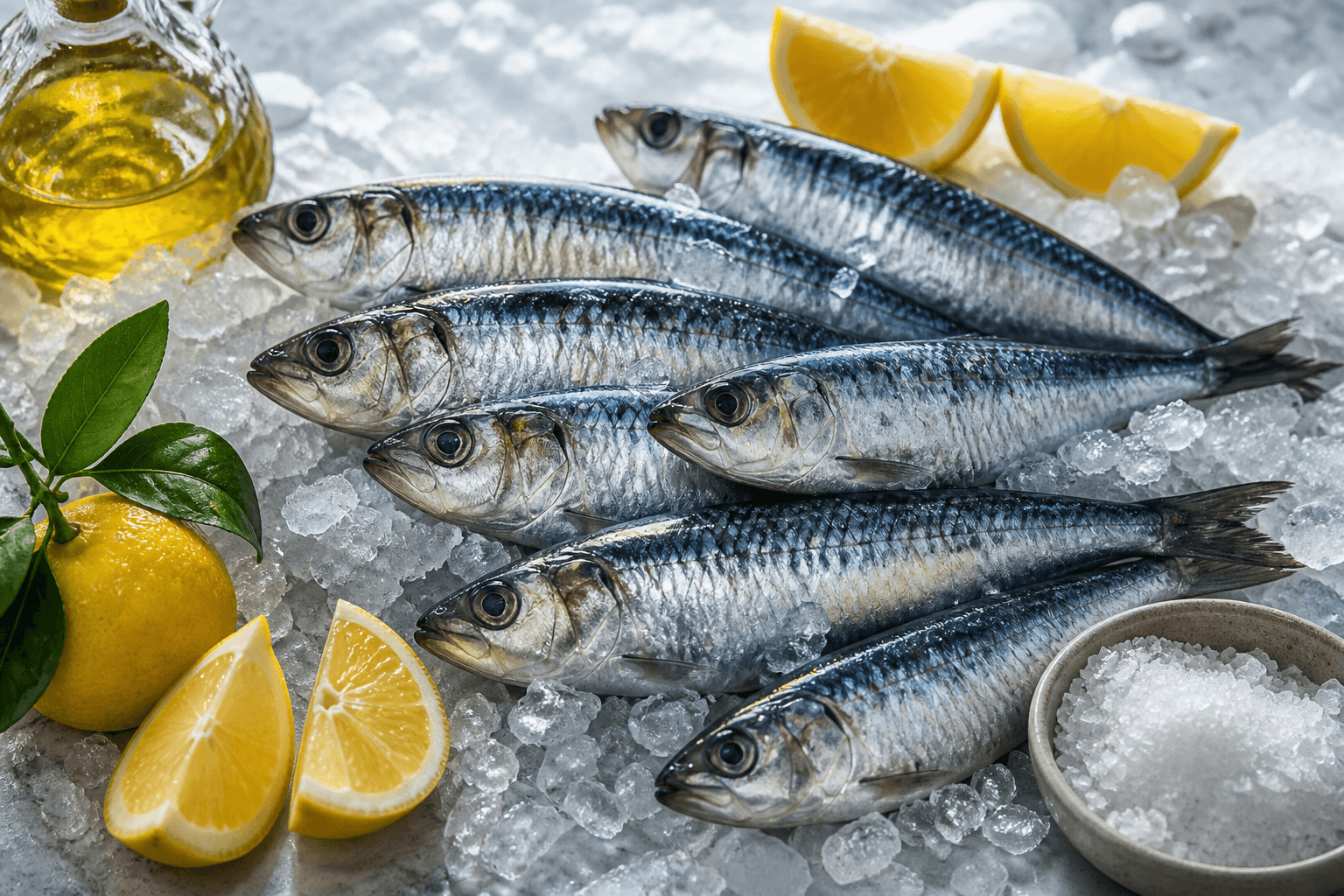
Sardines are one of the world’s most important food fish: affordable, nutritious, and extraordinary when cooked simply over high heat. In Portugal they are a cultural season as much as a dish — sardinhas assadas define summer festivals and beach dinners.
This guide covers taste, seasonality, cooking methods, and how to connect sardines to restaurants and recipes on FishRestaurants.com.
Also called
Sardine · European pilchard · Sardinhas
Best cooking methods
Charcoal grill · Pan sear · Escabeche · Tin/preserve
What do sardines taste like?
Fresh sardines taste rich and oceanic without being muddy. The fat carries flavour, so peak-season fish taste sweeter and less “fishy” than out-of-season catch. If they smell sharply ammoniac, skip them.
Compared with mackerel, sardines are usually milder and more delicate. Compared with white fish like sea bass, they are far oilier and better with acid (lemon, vinegar) and smoke.
How to cook sardines
The classic method is whole fish over charcoal with coarse salt — blister the skin, flip once, finish with olive oil and lemon. A screaming-hot pan works at home when you cannot grill.
Sardines also shine in escabeche, on toast, or from quality tins as a pantry seafood staple. For a full method, use our Portuguese grilled sardines recipe.
Buying and freshness tips
Look for bright eyes, firm bodies, shiny skin, and a clean sea smell. Ask for fish cleaned the same day. For grilling, slightly larger sardines are easier to handle on the grate.