French · Easy
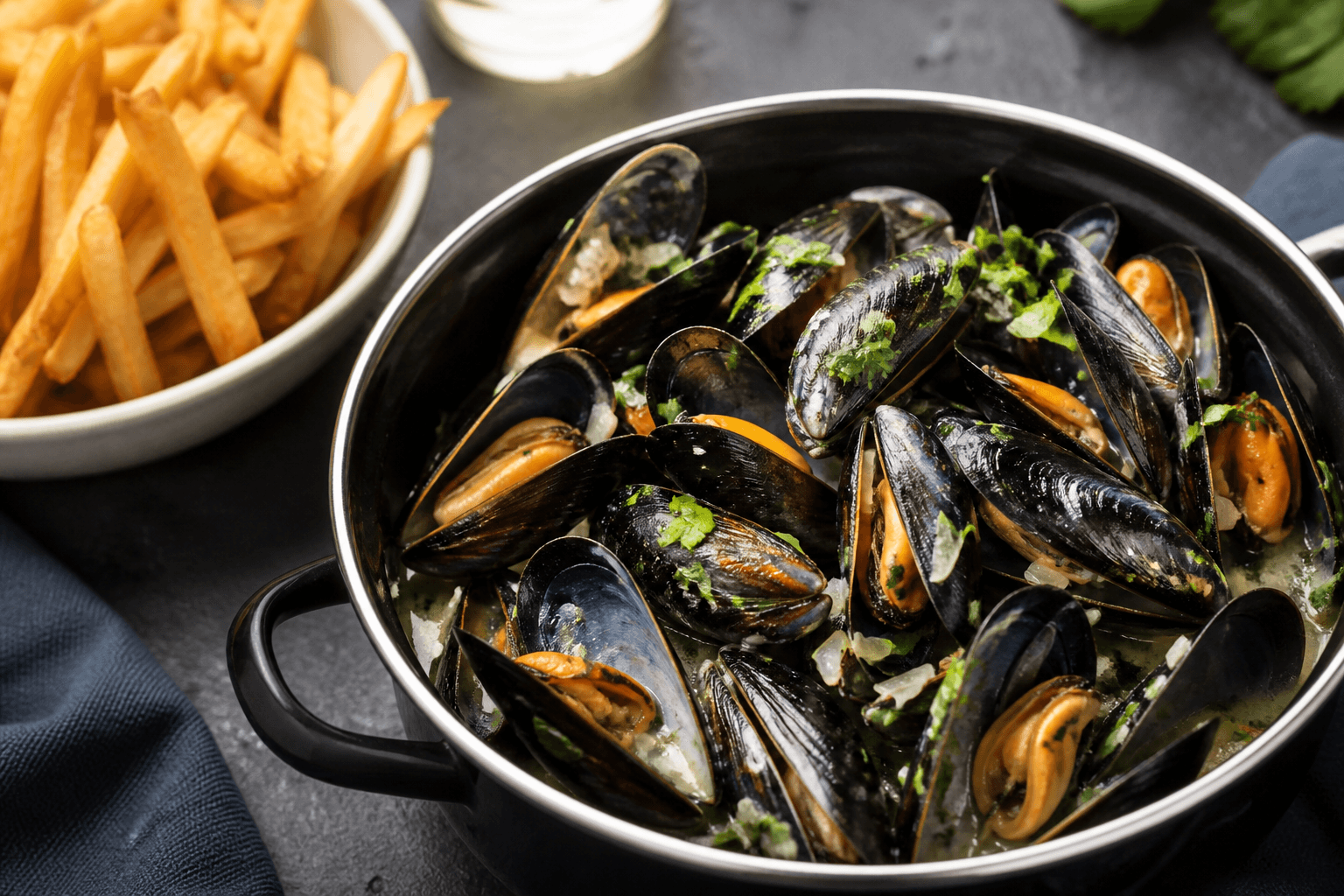
French Moules Marinière (White Wine Mussels)
A French coastal classic — mussels opened in white wine, shallot, and parsley, served with fries or bread.
oysters guide
Eastern oyster (*Crassostrea virginica*), Pacific oyster (*Magallana gigas*), Kumamoto (*Crassostrea sikamea*), European flat oyster (*Ostrea edulis*), Sydney rock oyster (*Saccostrea glomerata*)
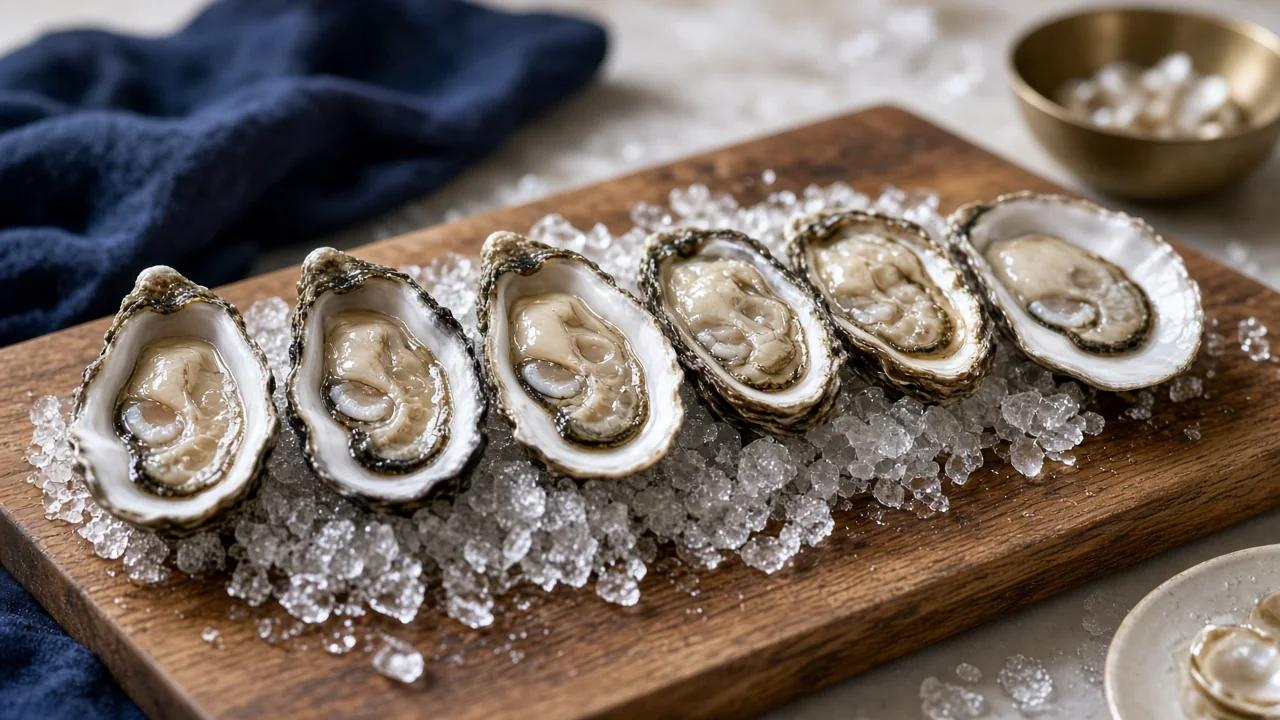
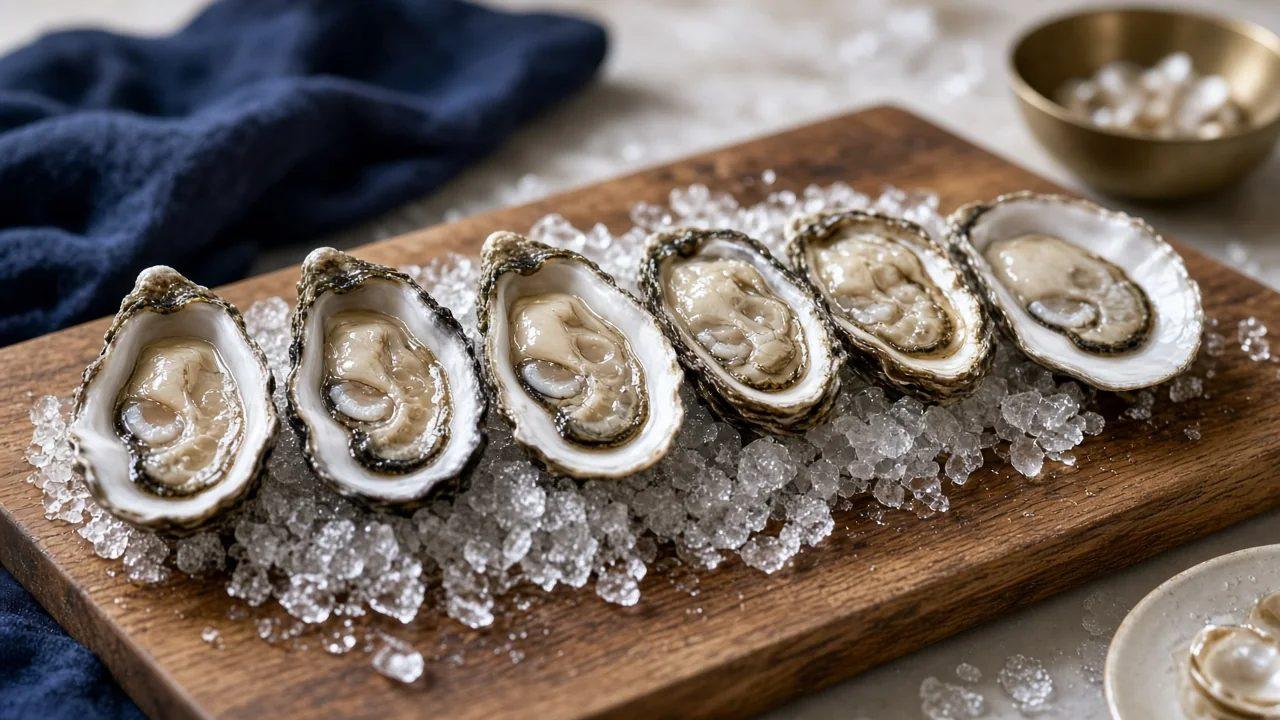
Oysters are bivalve shellfish, related to clams, mussels and scallops, and they are eaten raw on the half shell or cooked: grilled, fried or baked.
ranges from sweet to briny (NOAA Fisheries) · Excellent year-round from good farms; peak “cold water” character is often strongest in cooler months. · Eastern oyster (*Crassostrea virginica*), Pacific oyster (*Magallana gigas*), Kumamoto (*Crassostrea sikamea*), European flat oyster (*Ostrea edulis*), Sydney rock oyster (*Saccostrea glomerata*)
 Info
Types, taste, merroir, nutrition.
Open →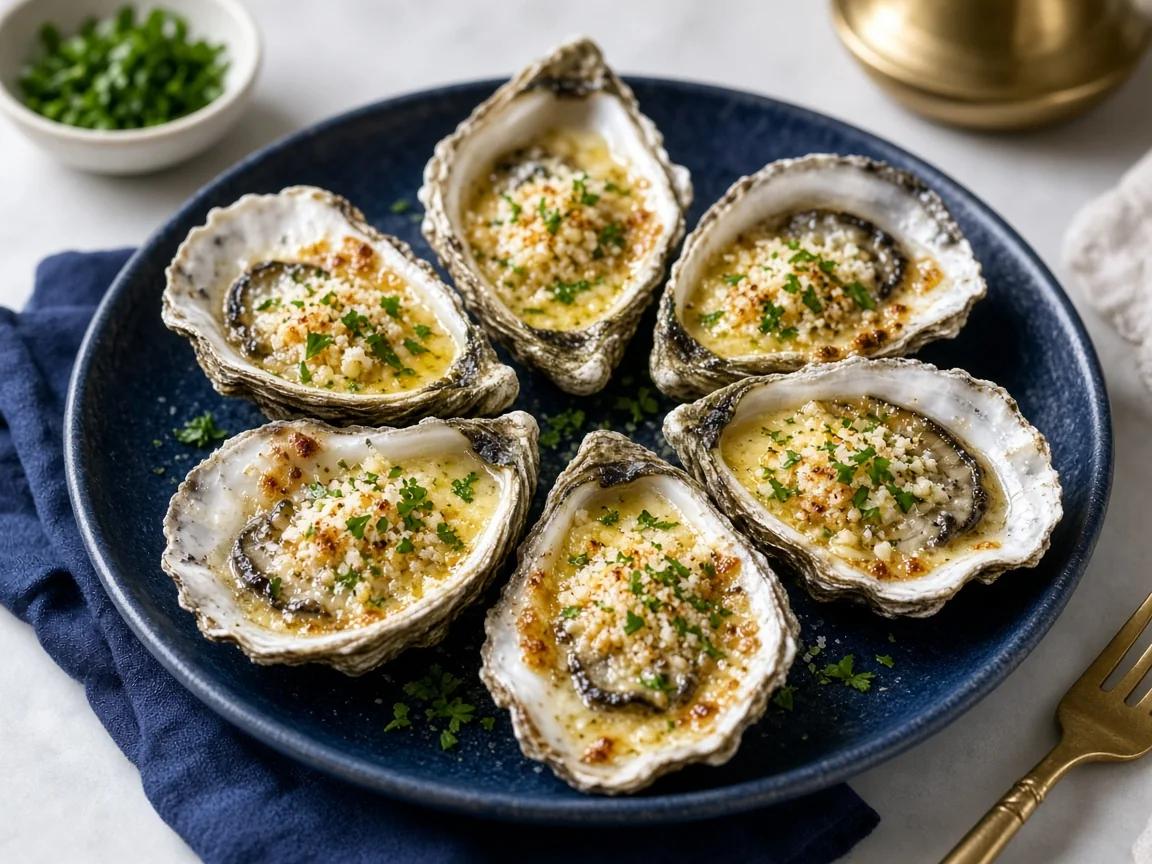 Cook
Grilled, baked, fried oysters.
Open →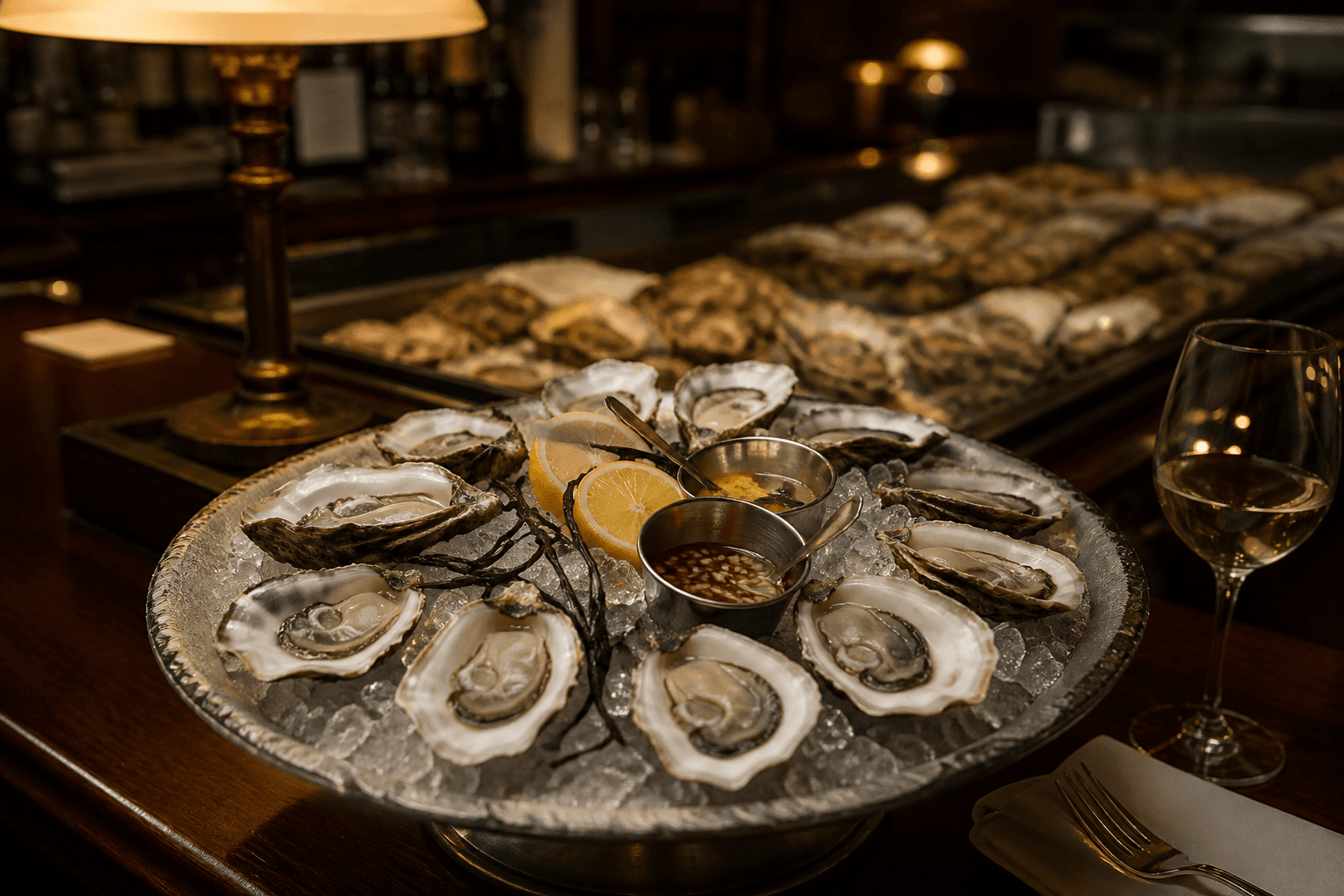 Eat
Oysters on real menus in 28 of our cities.
Open → Buy
Tags, tap test, storage, markets.
Open →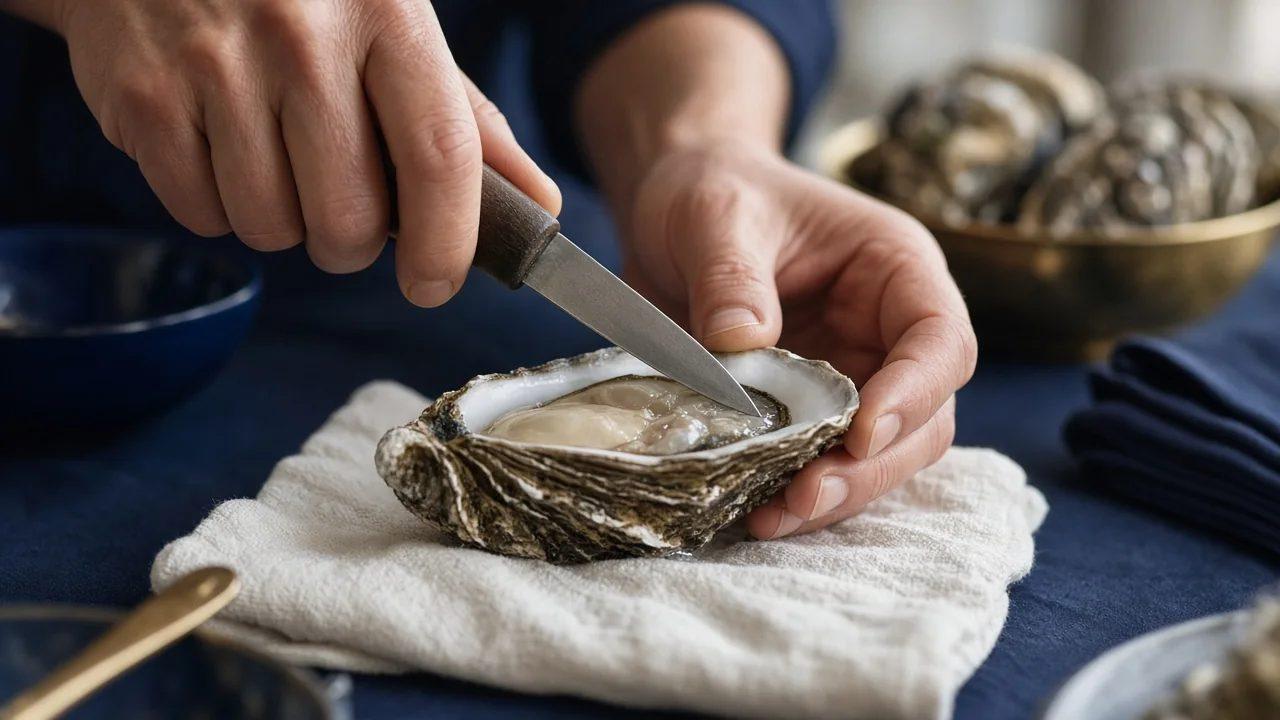 Tips
Shuck, serve, eat safely.
Open →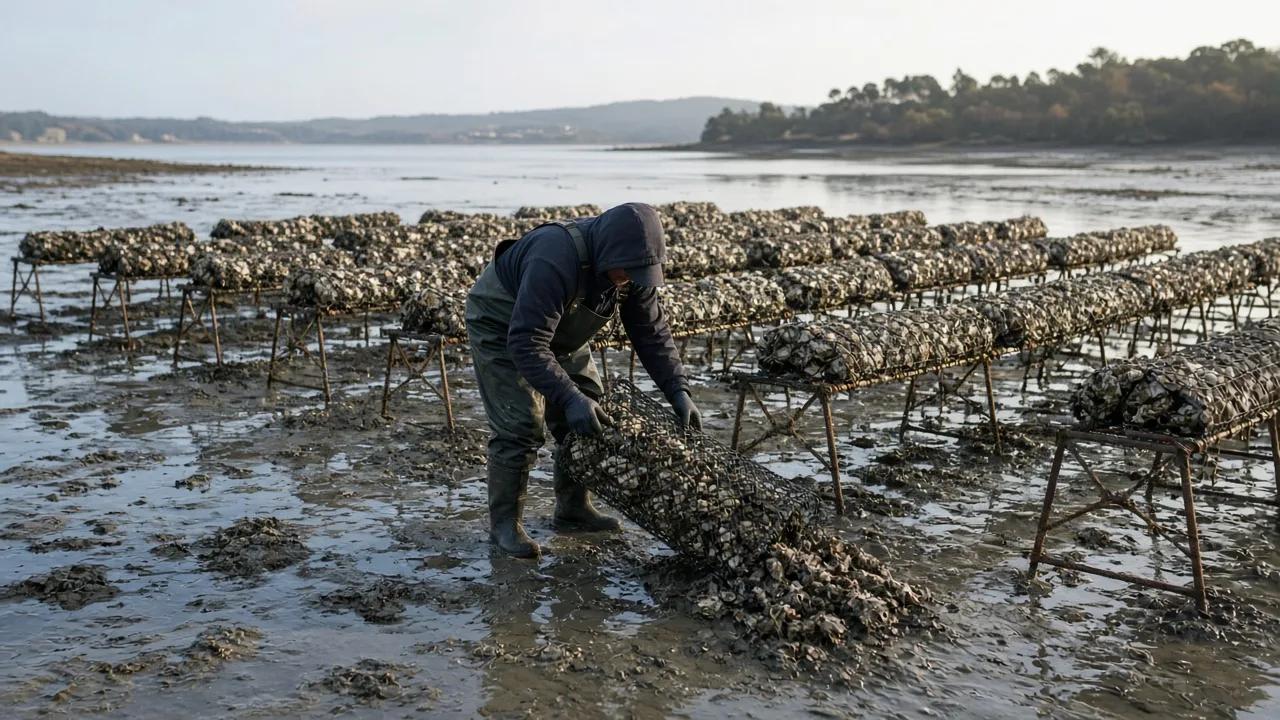 Catch
Farms, wild reefs, water testing.
Open →Ask the Fish Guide about oysters — grounded in this species hub.
Main species
Eastern oyster (*Crassostrea virginica*), Pacific oyster (*Magallana gigas*), Kumamoto (*Crassostrea sikamea*), European flat oyster (*Ostrea edulis*), Sydney rock oyster (*Saccostrea glomerata*)
Taste
ranges from sweet to briny (NOAA Fisheries)
Availability
farmed oysters are available year-round (NOAA Fisheries)
Sustainability
US farmed Eastern and Pacific oysters are a smart seafood choice (NOAA); farmed Pacific (rock) oysters and farmed native oysters are a Best Choice in the UK (Marine Conservation Society)
Goût
ranges from sweet to briny (NOAA Fisheries)
Saison
Excellent year-round from good farms; peak “cold water” character is often strongest in cooler months.
Habitat
Eastern oyster (*Crassostrea virginica*), Pacific oyster (*Magallana gigas*), Kumamoto (*Crassostrea sikamea*), European flat oyster (*Ostrea edulis*), Sydney rock oyster (*Saccostrea glomerata*)
Recipes
Step-by-step methods from our recipe pages — same hero photos you will see on each dish.
French · Easy
A French coastal classic — mussels opened in white wine, shallot, and parsley, served with fries or bread.
International · Medium
Freshly shucked oysters topped with garlic, parsley and Parmesan butter and grilled until bubbling. A cooked oyster recipe for the barbecue or oven grill.
For cooking at home, see our creole seasoning recipe.
On the half shell, oysters should taste of clean brine — ask about merroir and try a simple mignonette before you mask the cup.
Oysters are bivalve shellfish, related to clams, mussels and scallops, and they are eaten raw on the half shell or cooked: grilled, fried or baked.
Buying links may earn a commission. Restaurant listings are editorial — not paid placements in this block.
Tips
Best methods: Raw on the half shell, Grilled with butter, Fried, Kilpatrick / Rockefeller.
Catch & season
Species & morphology
Malpeque, Kumamoto, and Belon are places and farms on top of these five bodies. Once you know the species, the menu stops feeling like random branding.
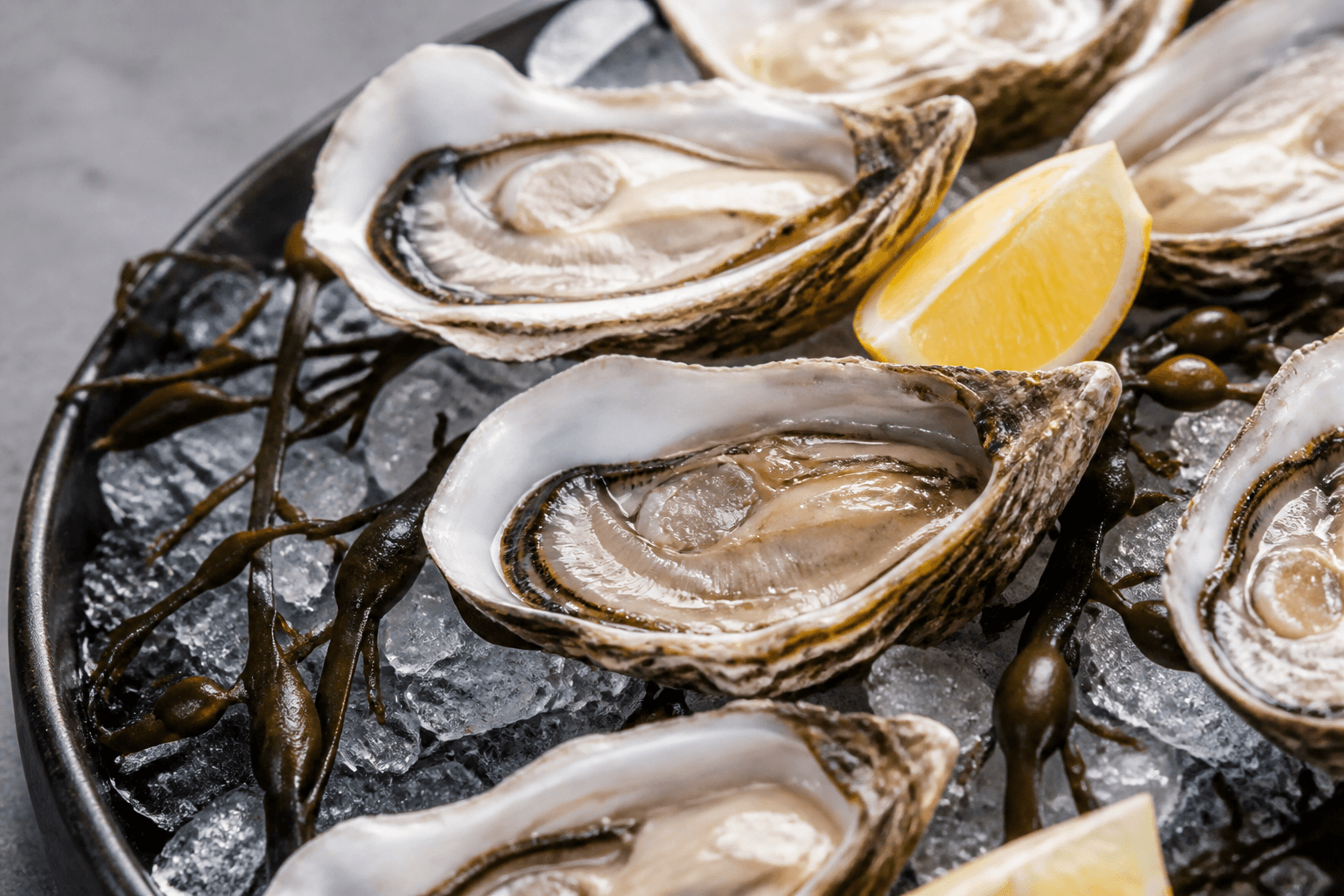 Global cup
Magallana gigas
The workhorse of West Coast raw bars. Names on the card (Kusshi, Miyagi) are farms, not separate species.
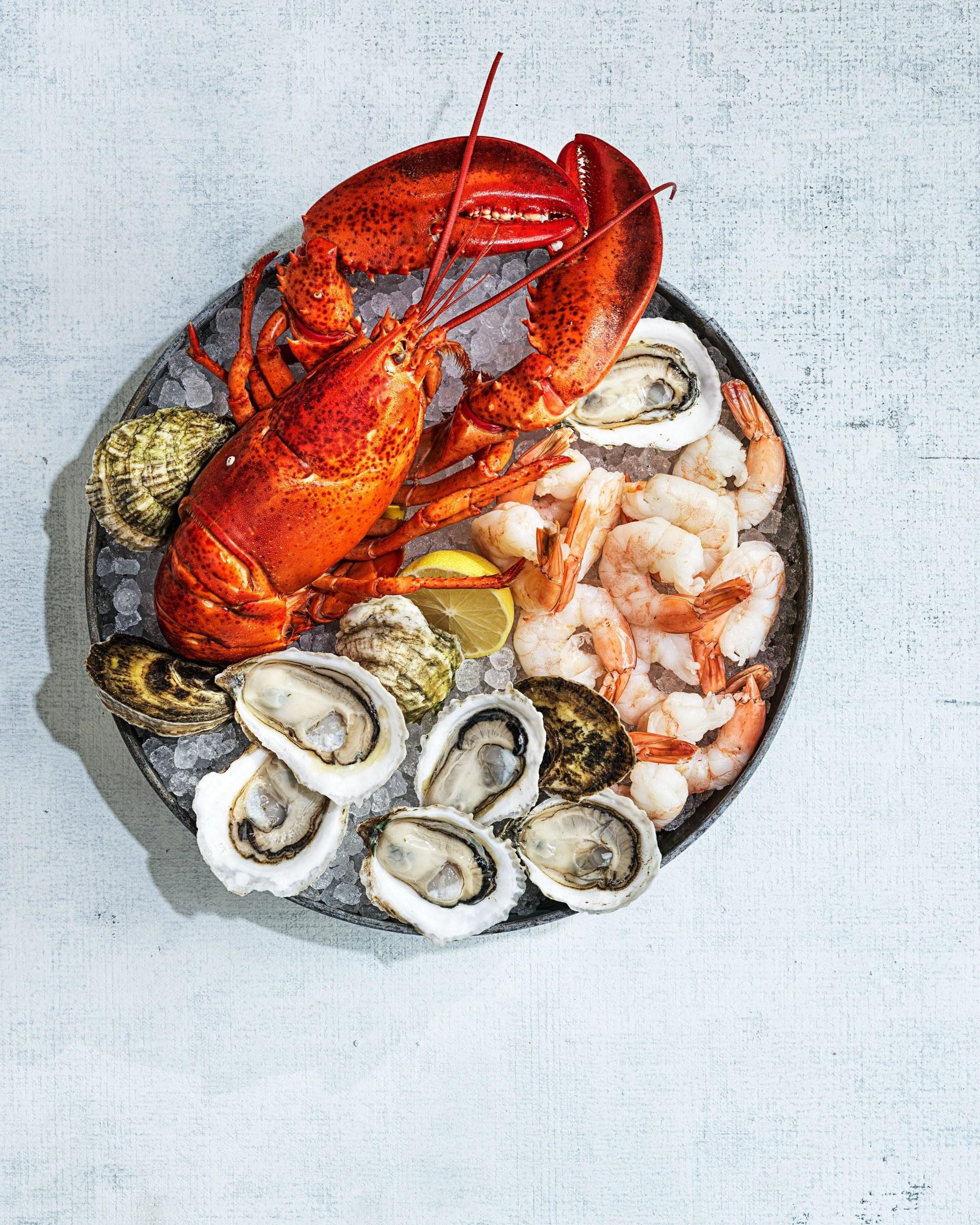 Atlantic benchmark
Crassostrea virginica
Wellfleet, Island Creek, and Apalachicola are appellations of this one species — salinity changes the bite.
Small & sweetCrassostrea sikamea
Beginner-friendly. If a list says “Kumamoto,” expect a small cup — not a jumbo East Coast select.
 Belon style
Ostrea edulis
Not shy. Belon and Gillardeau marketing sits on this species — order one before a dozen sweet cups.
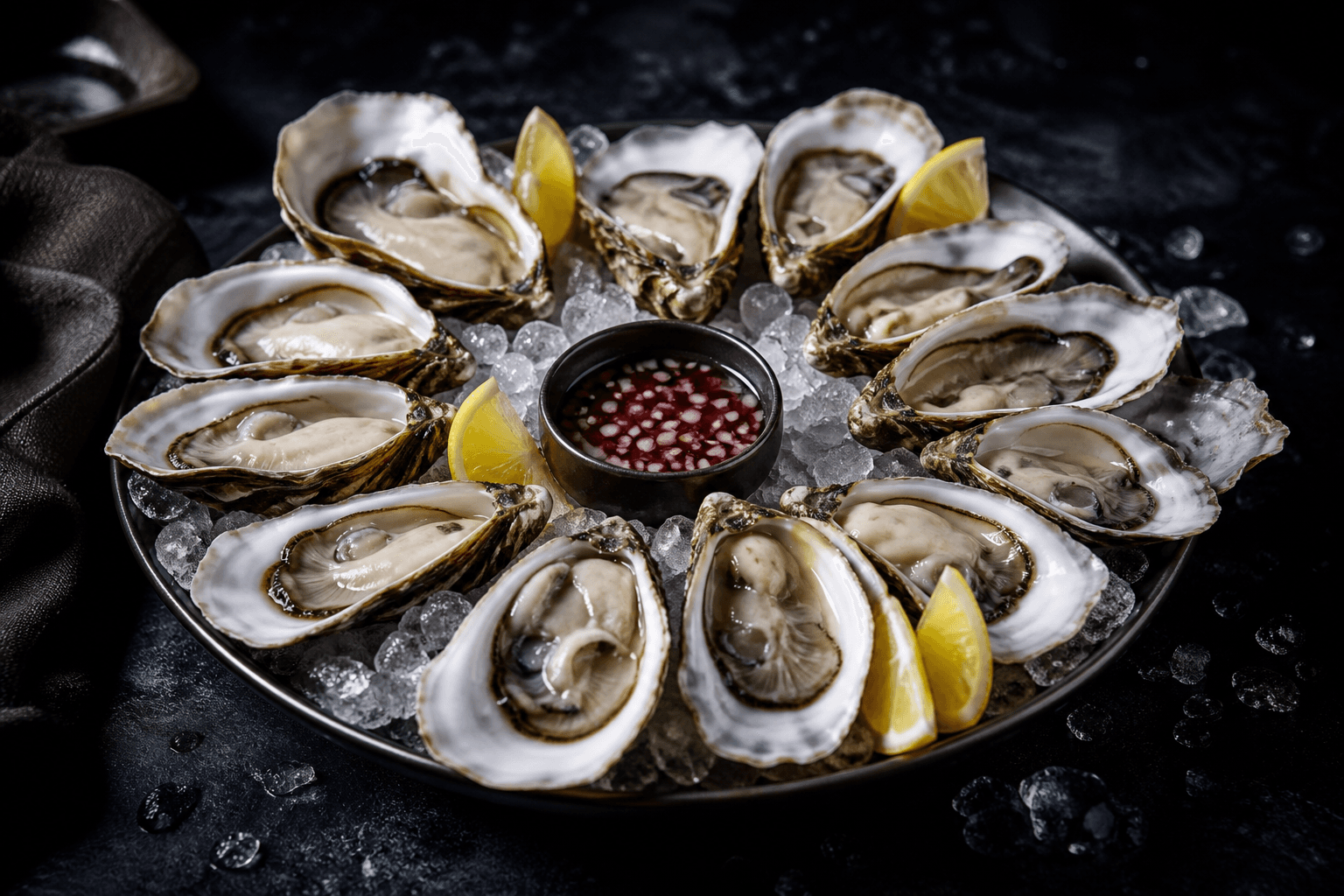 Southern hemisphere
Saccostrea glomerata
Harbour city raw bars lead with this native cup alongside Pacific imports — ask which is local today.
Half shell
Leverage at the hinge, not force through the belly. Cold oysters shuck cleaner.
Step 1Fold a thick kitchen towel. Set the oyster cup-down on a board with the hinge pointing toward your knife hand. Press the towel flat — never shuck toward your palm in the air.
Cup-down keeps liquor in the shell if the seal breaks early.
Raw bars near you
We match the oyster-bar category, then boost rooms that actually name oysters or a raw bar on the listing.
Or start from a focus city:
Species guide
Oysters are bivalve shellfish, related to clams, mussels and scallops, and they are eaten raw on the half shell or cooked: grilled, fried or baked. Their flavour ranges from sweet to briny depending on the species and the water they grow in (NOAA Fisheries), which is why a raw-bar menu can read like a wine list. This guide is part of our Fish & Seafood Guide.
What are oysters? They are bivalve molluscs: shellfish with a hinged, two-part shell, like mussels, clams, cockles and scallops. Adult oysters are sessile, meaning they stay in one place, and they live in both intertidal and subtidal areas (NOAA Fisheries).
Oysters grow fast and reproduce in huge numbers. A single female Eastern oyster can release more than 100 million eggs in one spawning event, and a Pacific oyster 50 to 200 million (NOAA Fisheries). Pacific oysters start life as males, and some later develop female reproductive organs.
Most oysters sold today are farmed. US Eastern oysters come mainly from estuaries on the East Coast and the Gulf, and Pacific oysters mostly from the Pacific Northwest (NOAA Fisheries). In the UK, the Marine Conservation Society notes that farmed Pacific (rock) oysters are usually grown in mesh sacks in tidal waters, which has a low environmental impact.
Farmed oysters are one of the most sustainable seafoods you can eat:
The FDA's shellfish advice:
Storing: keep live oysters in the fridge in a shallow, open container covered with a damp cloth or paper towel so they can breathe. Never store them in an airtight bag or container, and never in fresh water, which kills them (Clemson HGIC; NOAA Fisheries). Many shuckers store them cup side down to hold in the liquor. Woods Hole Sea Grant advises using live oysters within about a week, but they taste best eaten soon after you buy them.
Raw oysters are a delicacy, but they do carry a risk. *Vibrio* bacteria live naturally in coastal waters and are found in higher numbers from May to October, when the water is warmer. The CDC says most people get vibriosis by eating raw or undercooked shellfish, particularly oysters, and it estimates 80,000 cases of vibriosis in the US each year.
Some people are at higher risk of serious illness, including people with liver disease, cancer, diabetes, HIV or thalassemia, people on immune-suppressing treatment or taking medicine that lowers stomach acid, and people who have had recent stomach surgery (CDC). If that's you, eat your oysters cooked.
How to tell cooked oysters are done: the shells open during cooking. Throw out any that don't open (FDA).
If you prefer them cooked, oysters are excellent:
For a starter, allow 6 oysters per person. For an oyster party where oysters are the main event, plan on 12 or more per person. Have a little extra ice and a few spares in case some don't pass the tap test.
We don't have an oyster recipe yet; mignonette, Rockefeller and grilled oysters are planned. Meanwhile:
Our featured recipe is Grilled Oysters with Garlic Parmesan Butter: Freshly shucked oysters topped with garlic, parsley and Parmesan butter and grilled until bubbling. It takes 26 minutes and serves 4, with a photo for every step.
Read our London seafood guide, Boston seafood guide and San Francisco seafood guide, the best oysters in New York, Sydney rock oysters, and our story on Bentley's Oyster Bar in London. Or browse every oyster bar.
Are oysters healthy? Yes. They are low in calories and one of the richest food sources of zinc. According to USDA FoodData Central (oyster, eastern, wild, raw; values per 100 g):
| Nutrient | Amount |
|---|---|
| Calories | 51 kcal |
| Protein | 5.71 g |
| Fat | 1.71 g |
| Cholesterol | 40 mg |
| Zinc | 39.3 mg |
| Vitamin B12 | 8.75 µg |
| Iron | 4.61 mg |
| Selenium | 19.7 µg |
| Omega-3 (EPA + DHA) | 0.31 g |
NOAA Fisheries describes oysters as low in saturated fat and excellent sources of omega-3 fatty acids, iron and zinc. The FDA lists oysters as a "Best Choice" for low mercury.
What is merroir, and why do oysters taste so different? Merroir is the oyster version of terroir: salinity, tidal flow, algae and river runoff change the liquor in the cup. A 32 ppt Atlantic bar tastes nothing like an 18 ppt Pacific cove.
Is the R-month rule still valid? For farmed oysters on ice, mostly no. The rule dates from warm-month spawning and no refrigeration. Busy raw bars and triploid farm strains keep quality steady in summer.
Should you drink the oyster liquor? Yes. It is not plain water; it carries the salinity and minerals from the lease. Rinsing washes away half the flavour.
Cup or flat oysters? Cups (Crassostrea / Magallana) are deep and common on US and Pacific lists. Flats (Ostrea edulis) are shallower, firmer and more metallic. Order one before a dozen sweet cups.
Are oysters healthy? Yes. They are low in calories and very high in zinc and vitamin B12, with iron, selenium and omega-3s (USDA FoodData Central).
Is it safe to eat raw oysters? Raw oysters can carry Vibrio bacteria, especially from May to October. People with liver disease, diabetes, cancer or weakened immunity should eat oysters cooked (CDC).
How long do oysters last in the fridge? Store them in the fridge in an open container under a damp cloth, never in water or a sealed bag (Clemson HGIC). Woods Hole Sea Grant suggests using them within about a week; they taste best sooner.
How many oysters per person? About 6 per person as a starter, and 12 or more for an oyster party.
Merroir is the oyster version of terroir: salinity, tidal flow, algae and river runoff change the liquor in the cup. A 32 ppt Atlantic bar tastes nothing like an 18 ppt Pacific cove.
For farmed oysters on ice, mostly no. The rule dates from warm-month spawning and no refrigeration. Busy raw bars and triploid farm strains keep quality steady in summer.
Yes. It is not plain water; it carries the salinity and minerals from the lease. Rinsing washes away half the flavour.
Cups (Crassostrea / Magallana) are deep and common on US and Pacific lists. Flats (Ostrea edulis) are shallower, firmer and more metallic. Order one before a dozen sweet cups.
Yes. They are low in calories and very high in zinc and vitamin B12, with iron, selenium and omega-3s (USDA FoodData Central).
Raw oysters can carry Vibrio bacteria, especially from May to October. People with liver disease, diabetes, cancer or weakened immunity should eat oysters cooked (CDC).
Store them in the fridge in an open container under a damp cloth, never in water or a sealed bag (Clemson HGIC). Woods Hole Sea Grant suggests using them within about a week; they taste best sooner.
About 6 per person as a starter, and 12 or more for an oyster party.
Cookies. Essential cookies always run. Analytics and ads need your choice — manage or accept below. Essential cookies run the site. Google Analytics runs by default outside the UK, EEA and Switzerland, and only after you accept it there. Opt out any time in Cookie settings. Ads (Meta, Pinterest) load only with your permission. · Privacy