Crab guide
Crab tips: prep and cracking
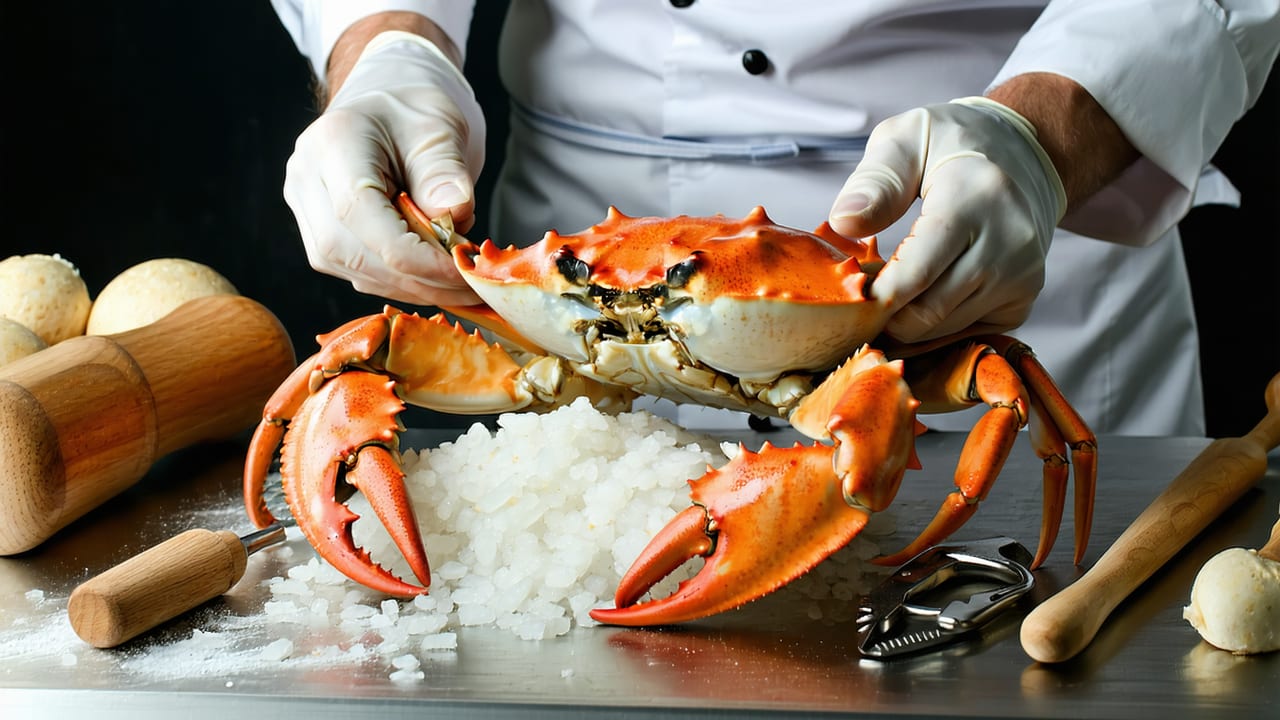
Getting the meat out is half the job. These tips cover cleaning, cracking and cooking crab properly.
Cook Times and Temperatures by Method
Times vary with the size and number of crabs. Always check doneness by color and texture as well as time.
- FoodSafety.gov: cook crab until the flesh is pearly and opaque.
- Reheat leftovers to 165°F (74°C).
| Crab and method | How | Done when |
|---|---|---|
| Live blue crab, steamed | Over boiling water with seasoning, lid on | Shells bright red-orange all over |
| Live Dungeness, boiled | Into heavily salted boiling water | Shell bright orange; leg meat opaque |
| Frozen snow or king crab legs | Steam to reheat; they are already cooked | Hot all the way through |
| Crab cakes | Broil, bake or pan-fry | Golden outside and hot in the middle: 165°F (74°C) for reheated leftovers |
| Soft-shell crab | Pan-fry or deep-fry | Crisp outside, opaque inside |
How to Tell Crab Is Done
Raw crab shells are dull blue, green or brown. Cooked shells turn bright red-orange. Crack a leg: the meat should be white and opaque, not glassy, and it should pull away from the shell easily. For pre-cooked frozen legs you are only reheating, so stop as soon as they are hot; more time only dries the meat.
Common Crab Mistakes
- Cooking crabs that died before cooking. Cook live crab alive, or keep it cold and cook it the same day.
- Boiling pre-cooked king or snow crab legs for too long, which makes them watery and stringy.
- Thawing frozen crab at room temperature. Thaw it in the fridge overnight.
- Drowning sweet crab meat in sauce. Use butter, lemon and seasoning sparingly.
- Throwing away the brown meat, which many cooks prize for sauces and toast.
Cleaning a whole crab
- Pull off the top shell (carapace) from the back.
- Remove the feathery gills ("dead man's fingers") and the mouth parts; they are not eaten.
- Rinse out the guts, then break the body in half to reach the meat.
Cracking and picking
- Crack claws with the back of a heavy knife, a mallet or crackers; tap rather than smash so you do not get shell in the meat.
- Cut snow and king crab legs open along the side with kitchen scissors.
- For blue crab, pick the body chambers with a small fork or the tip of a claw.
When it is cooked
Cook crab until the shell turns red-orange and the meat is opaque and pearly (FoodSafety.gov). Pre-cooked frozen legs only need heating through — 5 to 7 minutes of steaming is usually enough; longer dries them out.
Seasonings that work
Old Bay-style seafood seasoning, Cajun blends, garlic butter and chilli all suit crab.
Prep: Cleaning and Cracking a Whole Crab
- Cook first, then clean: once a cooked crab is cool enough to handle, turn it over and lift off the triangular flap (the apron).
- Pull off the top shell from the back.
- Remove the feathery grey gills (often called "dead man's fingers") and the soft innards; keep the brown meat if you like it.
- Break the body in half and pick the white meat from the chambers with a pick or the tip of a leg.
- Crack claws and legs with a cracker or the back of a heavy knife, then pull the meat out in one piece where you can.
- For frozen clusters and king crab, use kitchen shears to cut along the shell, then lift the meat out.
Flavor Pairings and Seasonings
Sweet crab needs little help. Melted butter and lemon are classic; Old Bay-style seasoning is the Chesapeake way; Cajun seasoning suits boils; and garlic, ginger, chilli and spring onion suit Asian stir-fries and chilli crab. For crab cakes, a little mustard, mayonnaise and seafood seasoning lets the crab taste of itself.
Reheating and Leftovers
Cooked crab legs and clusters reheat best by steaming: set them in a steamer basket over boiling water, cover, and heat just until hot all the way through. You can also bake them wrapped in foil with a splash of water, or grill them briefly for a little char. Microwaving tends to make the meat rubbery in spots.
Leftover cooked crab keeps 3 to 4 days in the fridge. Pick the meat out of the shells before storing it, and use it cold in salads and dips or warm in pasta, fried rice or omelettes. Add it at the end so it only warms through. Reheat dishes made with leftover crab to 165°F (74°C).
To freeze cooked crab, keep it in the shell or pack the picked meat tightly in a freezer bag with the air pressed out. Thaw it in the fridge and use it in cooked dishes, because frozen and thawed crab meat loses some texture.
Sources: FoodSafety.gov – Cold Food Storage Chart · FoodSafety.gov – Safe Minimum Internal Temperatures
Cooking Soft-Shell Crab
Soft-shell crabs are blue crabs caught just after molting, so the whole crab is eaten. To clean one, snip off the face just behind the eyes, lift each side of the top shell to pull out the gills, and remove the apron underneath. Pat it dry, dust it lightly in seasoned flour and pan-fry it in hot oil or butter until crisp, turning once. It is done when the shell is crisp and the inside is opaque and hot.
FAQs
What temperature should crab be cooked to?
FoodSafety.gov says to cook crab until the flesh is pearly and opaque. Reheat leftovers to 165°F (74°C).
Should you rinse crab before cooking?
Rinse live crabs briefly in cold water to remove grit; you do not need to rinse cooked frozen legs.
Why is my crab meat mushy?
It was usually overcooked, held too long after death before cooking, or thawed badly.
Do you need to clean a crab before cooking?
For steaming whole, no. Many cooks clean Dungeness after cooking by removing the back shell and gills.