Crab guide
Where crab comes from
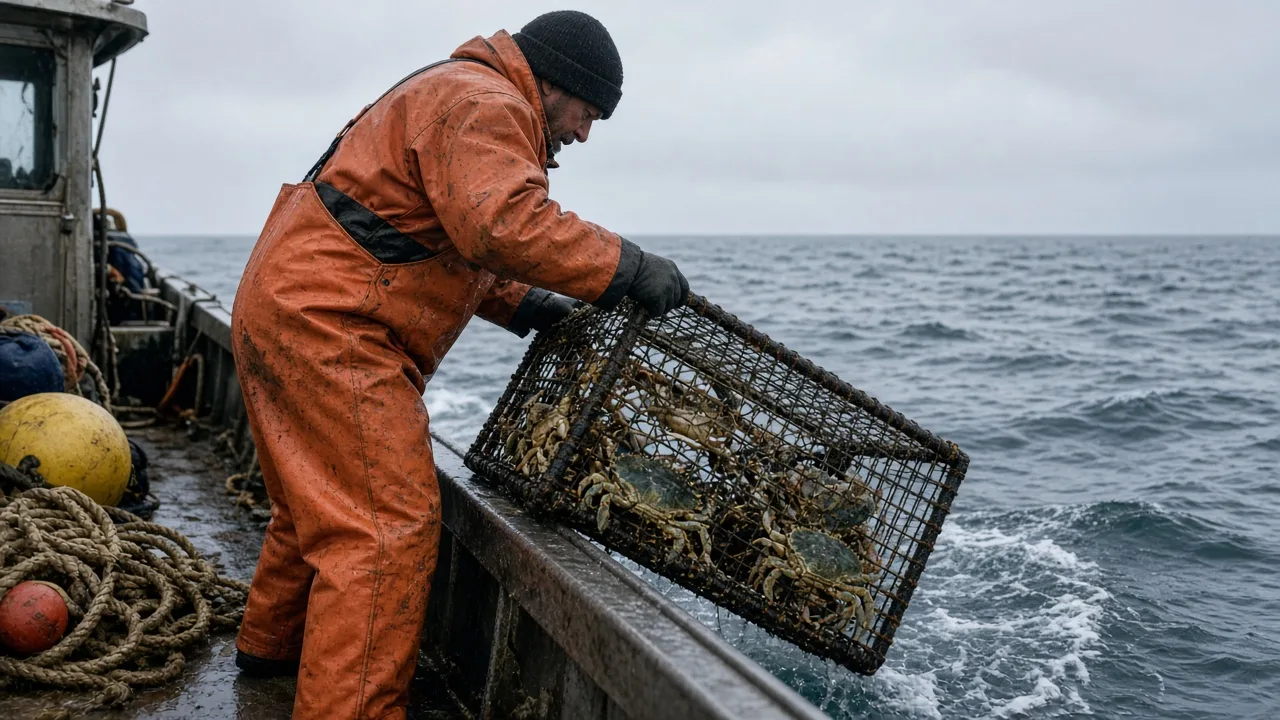
Most crab is caught in baited pots (traps). Seasons and size rules protect the breeding stock.
Alaska snow and king crab
Snow and king crab are caught with large pots in the Bering Sea and Gulf of Alaska. Only males above a minimum size can be kept, and seasons and quotas are set each year; some seasons have been closed when stocks fell (NOAA).
Sources: NOAA Fisheries – Alaska Snow Crab · NOAA Fisheries – Red King Crab
Blue crab
Blue crab is caught with pots and trotlines along the US Atlantic and Gulf coasts, especially Chesapeake Bay and Louisiana; it is managed mainly by the states (NOAA).
Source: NOAA Fisheries – Blue Crab
Dungeness and stone crab
Dungeness crab is caught with pots from California to Alaska, males only, with winter the main season in California. Florida stone crab is trapped from mid-October to May; fishermen take one or both claws and return the crab to the water, where claws can regrow.
Choosing responsibly
Pot-caught crab from managed US, Canadian and UK fisheries is generally a good choice. Check Seafood Watch or the MCS Good Fish Guide for imported crab meat.
Sources: Monterey Bay Aquarium Seafood Watch · Marine Conservation Society – Good Fish Guide
Where Crabs Live
Blue crabs live in bays, estuaries and tidal creeks from the Atlantic coast to the Gulf, with the Chesapeake Bay the best-known crabbing ground. Dungeness crabs live on sandy bottoms along the Pacific coast from Alaska to California, including inside bays such as Puget Sound. Stone crabs are taken around Florida.
Sources: NOAA Fisheries – Blue Crab · California Department of Fish and Wildlife – Dungeness Crab · Florida Fish and Wildlife Conservation Commission – Stone Crab (recreational rules)
Best Season and Time of Day
Blue crabbing is best in the warm months, when crabs are active in shallow water; in Maryland the recreational season runs from spring into autumn. Dungeness seasons are set by each state and often open in late autumn or winter on the open coast, with separate rules for bays. Many crabbers find an incoming or high tide and early morning productive. Check the current season dates for your state before you go.
Sources: Maryland DNR – Recreational crabbing · Washington Department of Fish and Wildlife – Crab regulations · California Department of Fish and Wildlife – Dungeness Crab
Bait, Traps and Lines
- Hand lines: a weighted line with bait tied on, pulled in slowly and netted. Simple and good for children on piers.
- Collapsible traps and ring nets: dropped to the bottom and lifted every few minutes.
- Crab pots: left to soak longer; many states limit how many you can use and require marked buoys.
- Baits commonly used: chicken necks or backs and oily fish heads or frames.
Techniques
Fish where crabs feed: drop-offs, pilings, grass beds and channel edges. With a hand line, pull slowly when you feel the crab tugging and slip a dip net under it before it lets go. Measure every crab on the spot and return any that are too small, egg-bearing females, or of a sex you are not allowed to keep. Keep legal crabs alive, cool and shaded in a basket or cooler, not sealed in water.
Be patient and quiet on the line: crabs often nibble for a while before they settle on the bait. Rebait often, because crabs strip soft bait quickly, and move to a new spot if nothing comes after a while. Slack tide can be slow, so plan around the tide table.
Regulations, Limits and Licenses
Crabbing rules differ by state and change year to year. They cover licenses, seasons, minimum sizes, daily limits, gear and which crabs you may keep. For example, Washington and California recreational Dungeness rules allow keeping only male crabs. Always read the current rules from your state wildlife agency before you go; we do not list specific limits here because they change.
Sources: Maryland DNR – Recreational crabbing · Washington Department of Fish and Wildlife – Crab regulations · California Department of Fish and Wildlife – Dungeness Crab · Florida Fish and Wildlife Conservation Commission – Stone Crab (recreational rules)
From Catch to Kitchen
Cook your crabs alive and the same day. Steam blue crabs with seasoning, boil Dungeness in salted water, and pick the meat for crab cakes if you have plenty. Our tips tab covers timings and cleaning, and the recipes tab has ideas for the meat.
Crabbing Safety
Check local shellfish and fish advisories before eating crab you catch, especially from industrial harbors or after heavy rain; state health departments post them. Handle blue crabs from behind, where the claws cannot reach, and keep children away from open traps and pots on docks.
Source: US EPA – Choose Fish and Shellfish Wisely (fish advisories)
Which Crabs You Can Catch
Most recreational crabbers in the US catch one of three crabs. Blue crabs are the target from the Mid-Atlantic to the Gulf, in shallow, brackish water, often from docks and piers. Dungeness crabs are caught from the Pacific Northwest to California, from piers, boats and jetties, with ring nets and pots. In Florida, recreational stone crabbing allows taking claws of legal size while returning the crab to the water, under specific state rules.
Snow and king crab are not recreational crabs for most people. They live in cold, deep water and are caught commercially in Alaska with large pots set from fishing vessels.
Sources: NOAA Fisheries – Blue Crab · NOAA Fisheries – Dungeness Crab · Florida Fish and Wildlife Conservation Commission – Stone Crab (recreational rules) · NOAA Fisheries – Alaska Snow Crab
Handling and Keeping Your Catch
Keep legal crabs alive until you cook them. Store them in a basket or cooler with a damp cloth or seaweed on top and ice packs underneath, out of the sun, and never in standing fresh water, which kills them. Pick blue crabs up from behind, holding the back legs or the rear of the shell, away from the claws. Throw out any crab that dies before cooking, and cook the rest the same day.
Source: US FDA – Selecting and Serving Fresh and Frozen Seafood Safely
FAQs
When is crab season?
It depends on the species and state. Blue crabbing is best in the warm months; Dungeness seasons are set by each Pacific state. Check your state wildlife agency for current dates.
What is the best bait for crabs?
Chicken necks or backs and oily fish heads or frames are the baits most crabbers use.
Do you need a license to go crabbing?
Often, yes, depending on the state, gear and where you crab. Check your state wildlife agency.
How do you clean a crab after catching it?
Keep it alive until cooking. After cooking, remove the back shell, gills and guts, then crack out the meat.