
American / New England · Medium
New England Clam Chowder (Creamy Classic)
Boston comfort classic — tender clams, soft potato, smoky bacon, and a creamy white broth.
clams guide
northern quahog (*Mercenaria mercenaria*) and Atlantic surfclam (*Spisula solidissima*)
Clams are burrowing bivalve shellfish with mild, sweet and briny meat, and they're behind some of the world's best-loved dishes, from spaghetti alle vongole to New England clam chowder.
mild, sweet and briny (NOAA Fisheries) · Excellent year-round from good farms; cold-water seasons often taste especially sweet. · northern quahog (*Mercenaria mercenaria*) and Atlantic surfclam (*Spisula solidissima*)
We earn commissions when you shop through the links below.
InfoTypes, taste, names, nutrition.
Open →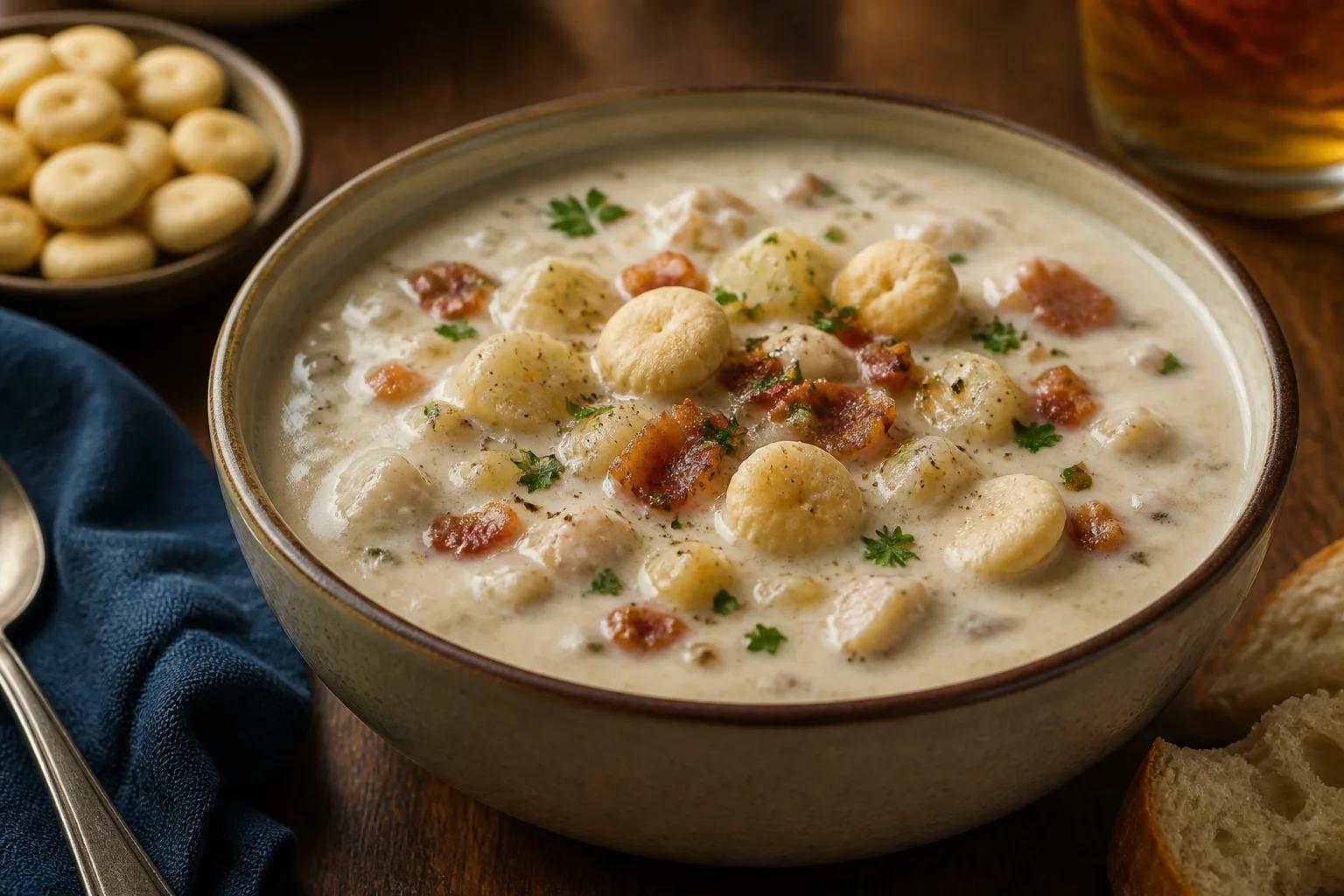 Cook
Chowder, vongole, cioppino.
Open → Eat
Clams on real menus in 25 of our cities.
Open → Buy
Live checks, tags, storage, markets.
Open →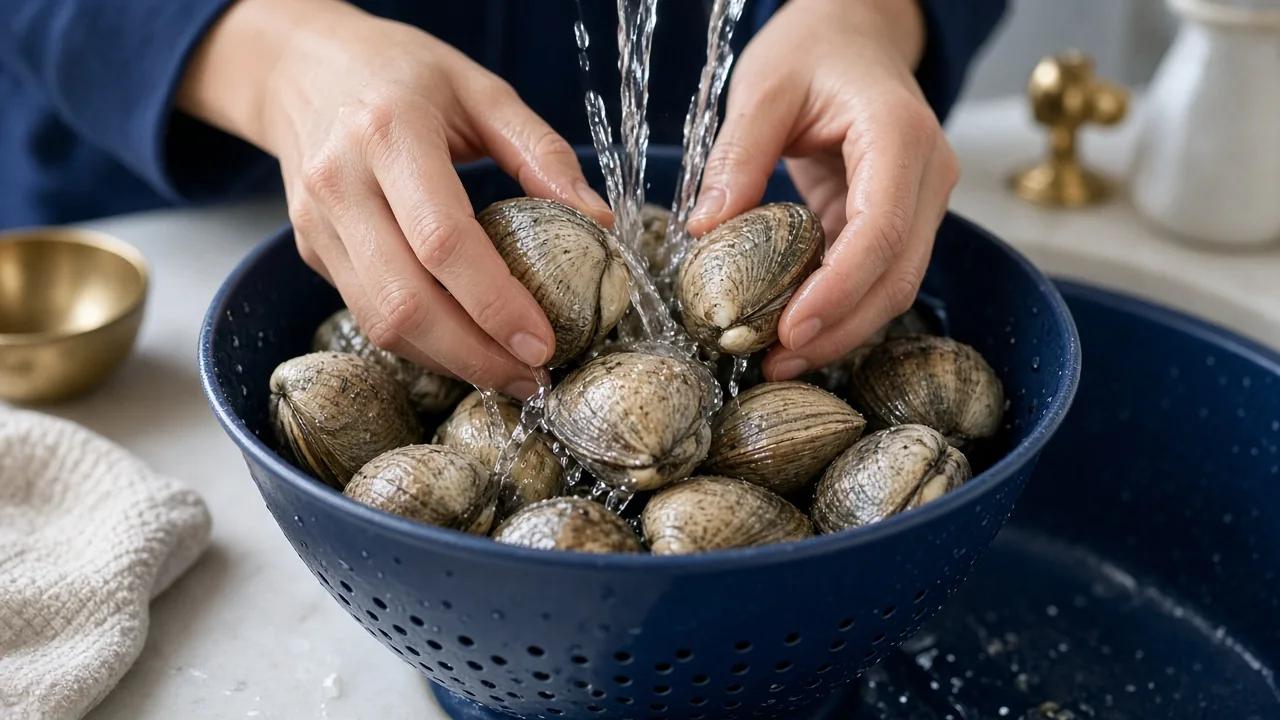 Tips
Purge, clean, cook safely.
Open →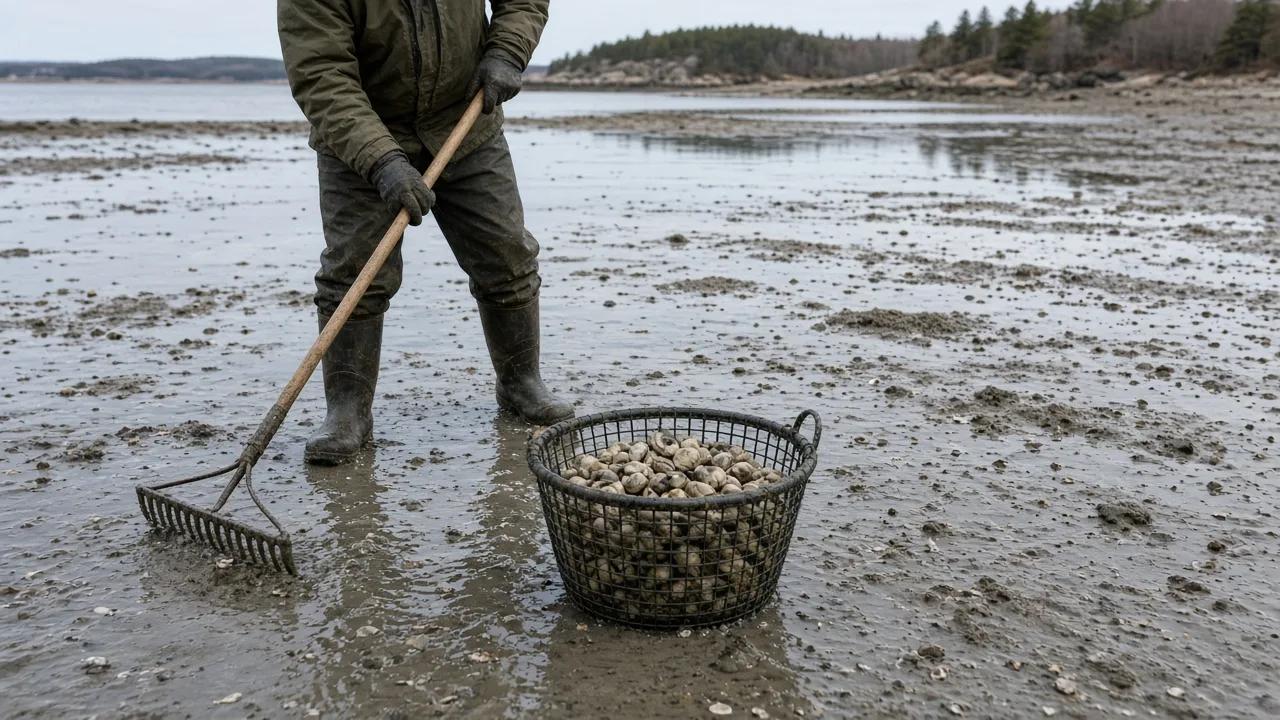 Catch
Digging, dredging, farming.
Open →Ask the Fish Guide about clams — grounded in this species hub.
Main US species
northern quahog (*Mercenaria mercenaria*) and Atlantic surfclam (*Spisula solidissima*)
Taste
mild, sweet and briny (NOAA Fisheries)
Texture
surfclams are chewy (NOAA Fisheries)
Mercury
clams are an FDA "Best Choice"
Taste
mild, sweet and briny (NOAA Fisheries)
Season
Excellent year-round from good farms; cold-water seasons often taste especially sweet.
Habitat
northern quahog (*Mercenaria mercenaria*) and Atlantic surfclam (*Spisula solidissima*)
Recipes
Step-by-step methods from our recipe pages — same hero photos you will see on each dish.
American / New England · Medium
Boston comfort classic — tender clams, soft potato, smoky bacon, and a creamy white broth.

Californian / Italian-American · Medium
Bay legacy stew — tomato, garlic, fennel, and a mixed seafood haul mopped with sourdough.
For cooking at home, see our homemade seafood seasonings.
Clams are burrowing bivalve shellfish with mild, sweet and briny meat, and they're behind some of the world's best-loved dishes, from spaghetti alle vongole to New England clam chowder.
Buying links may earn a commission. Restaurant listings are editorial — not paid placements in this block.
Tips
Best methods: Steam, Pasta (vongole), Chowder, Grill, Clam bake.
Catch & season
Species guide
Clams are burrowing bivalve shellfish with mild, sweet and briny meat, and they're behind some of the world's best-loved dishes, from spaghetti alle vongole to New England clam chowder. This guide explains the main types of clams, how to buy, purge, clean and cook them, and what makes them so nutritious. It is part of our Fish & Seafood Guide.
What are clams? NOAA explains that clams, like oysters, mussels and scallops, are bivalve mollusks with a hinged shell. Adults stay in one place and burrow into the sediment, leaving only their siphons exposed to feed.
Northern quahogs grow slowly and live 12 to 20 years on average, and up to 40. They need salty water and can't survive if the salt content is too low (NOAA Fisheries). Atlantic surfclams can live up to 35 years and reach a harvestable size of about 5 inches in 5 to 7 years (NOAA Fisheries).
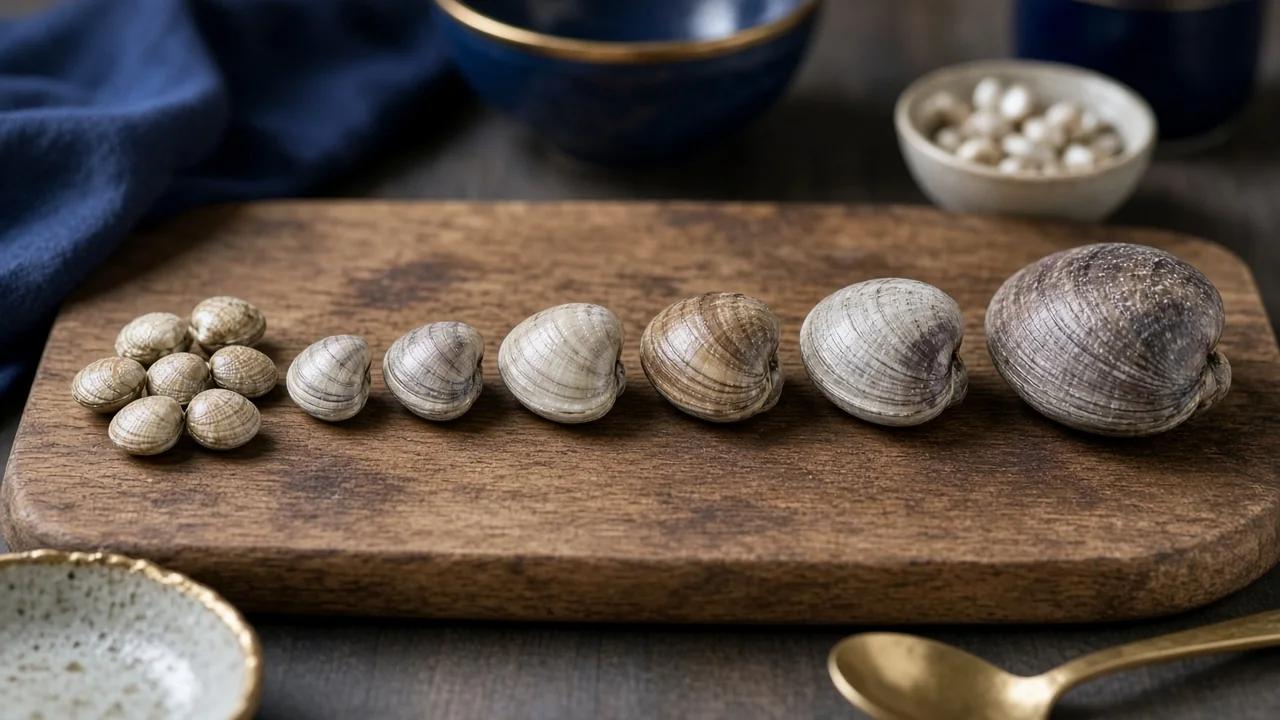
The northern quahog is sold under different names by size:
| Market name | Hinge width | Clams per pound | Best for |
|---|---|---|---|
| Pasta | under 0.75 in | 18–25 | Pasta, quick sautés |
| Button | 0.75–0.9 in | 14–18 | Pasta, steaming |
| Littleneck | 0.9–1.05 in | 10–13 | Raw bar, steaming, vongole |
| Middleneck | 1.05–1.25 in | 7–9 | Steaming, grilling |
| Topneck | 1.25–1.5 in | 5–7 | Grilling, stuffing |
| Cherrystone and chowder | larger | — | Stuffed clams, chopped for chowder |
*Sizes from the Southern Regional Aquaculture Center (SRAC 7306, UF/IFAS). The grades aren't standardised. Larger quahogs have tougher meat and are usually chopped or stripped.*
Other clams include:
Clams are mild, sweet and briny (NOAA Fisheries). When cooked, surfclam meat is white, mild and sweet with a chewy texture. Smaller clams are more tender; large ones are best chopped.
Keep live clams in the fridge in an open container covered with a damp cloth. Don't seal them in plastic or soak them in fresh water. Cook within 1 to 2 days.
The Southern Regional Aquaculture Center's simple method: 1. Simmer half a cup of white wine (or water) with butter or olive oil, lemon juice and minced garlic in a deep, lidded pan for 3 minutes. 2. Add about 2 dozen rinsed hard clams, cover, and cook on medium-high for 5 to 8 minutes, depending on size, until the shells open. 3. Lift out the clams, boil the broth for a few minutes to reduce it, and pour it over the clams. Serve with pasta or crusty bread.
Discard any clams that stay closed (FDA).
The FDA says clams, mussels and oysters are done when the shells open. Discard any that stay closed.
Clams filter tiny plants (algae) and nutrients from the water (SRAC). Quahogs are found in intertidal and subtidal areas from Nova Scotia to Florida, and hard clams support large aquaculture farms as well as wild harvests (NOAA Fisheries). Surfclams are the largest bivalves in the western North Atlantic. Their shells don't close fully, and they're sold processed rather than live: breaded clam strips, minced and stuffed clams, chowders and broth (NOAA Fisheries).
New England is clam country. See the Boston seafood guide, Boston restaurants and Portland, Maine restaurants. Also explore fish soup & stew and seafood boil restaurants. More places to try: San Francisco seafood guide, shrimp and shellfish restaurants.
According to NOAA Fisheries (northern quahog, raw; values per 100 g):
| Nutrient | Amount |
|---|---|
| Calories | 74 kcal |
| Protein | 12.77 g |
| Fat | 1 g |
| Saturated fat | 0.1 g |
| Cholesterol | 34 mg |
| Sodium | 56 mg |
NOAA says clams are an excellent source of omega-3 fatty acids, and surfclams are an excellent source of selenium and niacin. The FDA lists clams as a "Best Choice".
How do you cook clams? Steam them covered in a little wine, garlic and butter for 5 to 8 minutes, until the shells open (SRAC). You can also grill, roast or add them to pasta.
How do you clean clams? Scrub them under cold running water. Purge only soft-shell steamers or Manilas in cold seawater for 4 hours or more (WDFW).
How long do you steam clams? About 5 to 8 minutes, depending on size, until the shells open (SRAC).
Are clams good for you? Yes. They're low in fat and high in protein, selenium and omega-3s (NOAA Fisheries).
What do clams eat? They filter microscopic algae and nutrients from the water (SRAC).
How long do live clams last in the fridge? Woods Hole Sea Grant suggests using quahogs within about a week, and soft-shell clams within 1 to 2 days. Keep them in a ventilated container under a damp cloth.
What are littleneck clams? A small market size of hard clam (quahog), about 0.9 to 1.05 inches across the hinge and 10 to 13 per pound (SRAC). They're often served raw on the half shell.
Are clams high in mercury? No. The FDA lists clams as a Best Choice.
Steam them covered in a little wine, garlic and butter for 5 to 8 minutes, until the shells open (SRAC). You can also grill, roast or add them to pasta.
Scrub them under cold running water. Purge only soft-shell steamers or Manilas in cold seawater for 4 hours or more (WDFW).
About 5 to 8 minutes, depending on size, until the shells open (SRAC).
Yes. They're low in fat and high in protein, selenium and omega-3s (NOAA Fisheries).
They filter microscopic algae and nutrients from the water (SRAC).
Woods Hole Sea Grant suggests using quahogs within about a week, and soft-shell clams within 1 to 2 days. Keep them in a ventilated container under a damp cloth.
A small market size of hard clam (quahog), about 0.9 to 1.05 inches across the hinge and 10 to 13 per pound (SRAC). They're often served raw on the half shell.
No. The FDA lists clams as a Best Choice.
Cookies. Essential cookies always run. Analytics and ads need your choice — manage or accept below. Essential cookies run the site. Google Analytics runs by default outside the UK, EEA and Switzerland, and only after you accept it there. Opt out any time in Cookie settings. Ads (Meta, Pinterest) load only with your permission. · Privacy