Portuguese · Easy
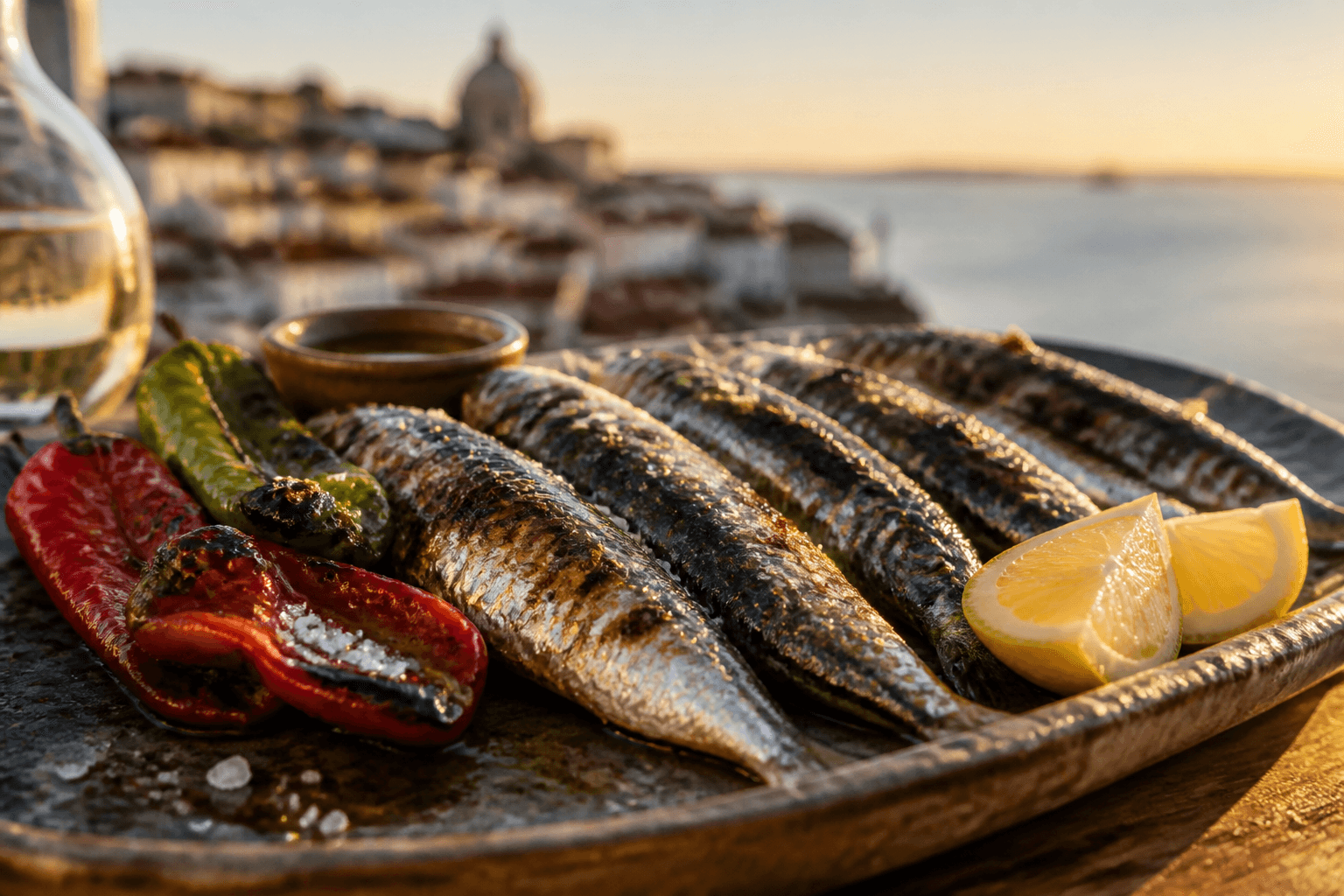
Portuguese Grilled Sardines (Sardinhas Assadas)
Summer on a plate — fatty Atlantic sardines grilled over charcoal, finished with lemon, salt, and good olive oil.
sardines guide
European sardine (*Sardina pilchardus*); Pacific sardine (*Sardinops sagax*) in the US
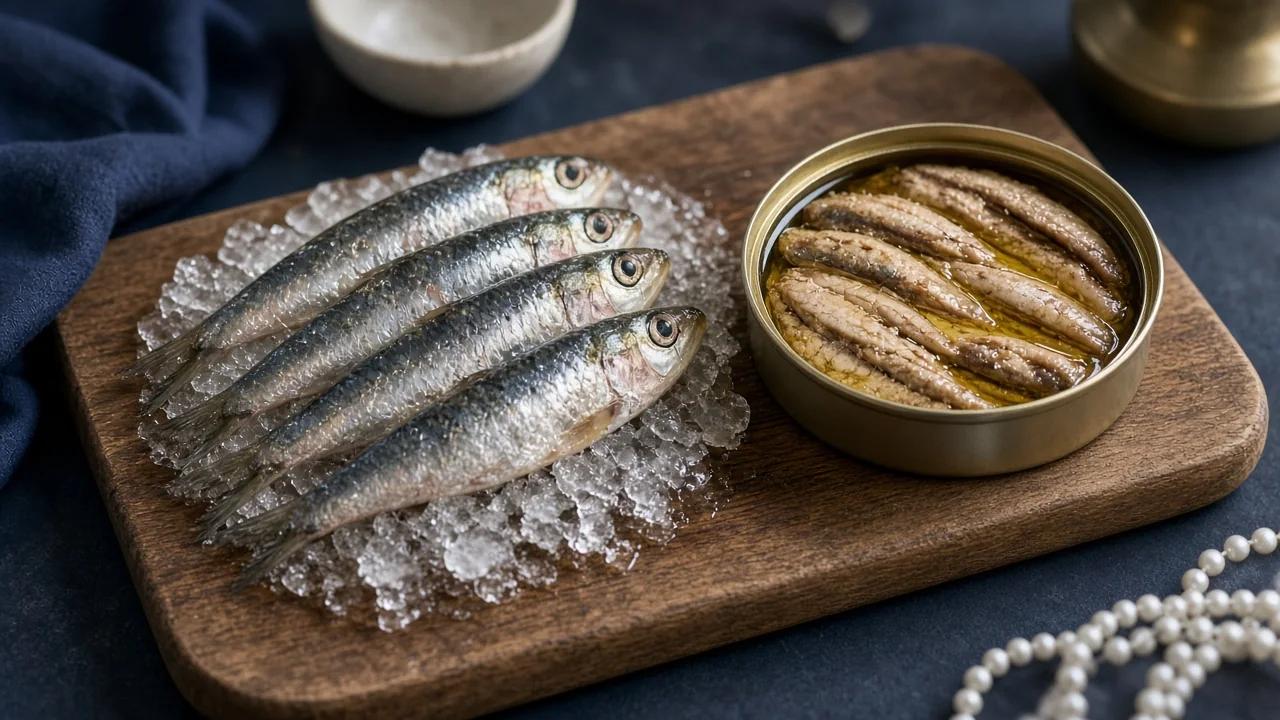
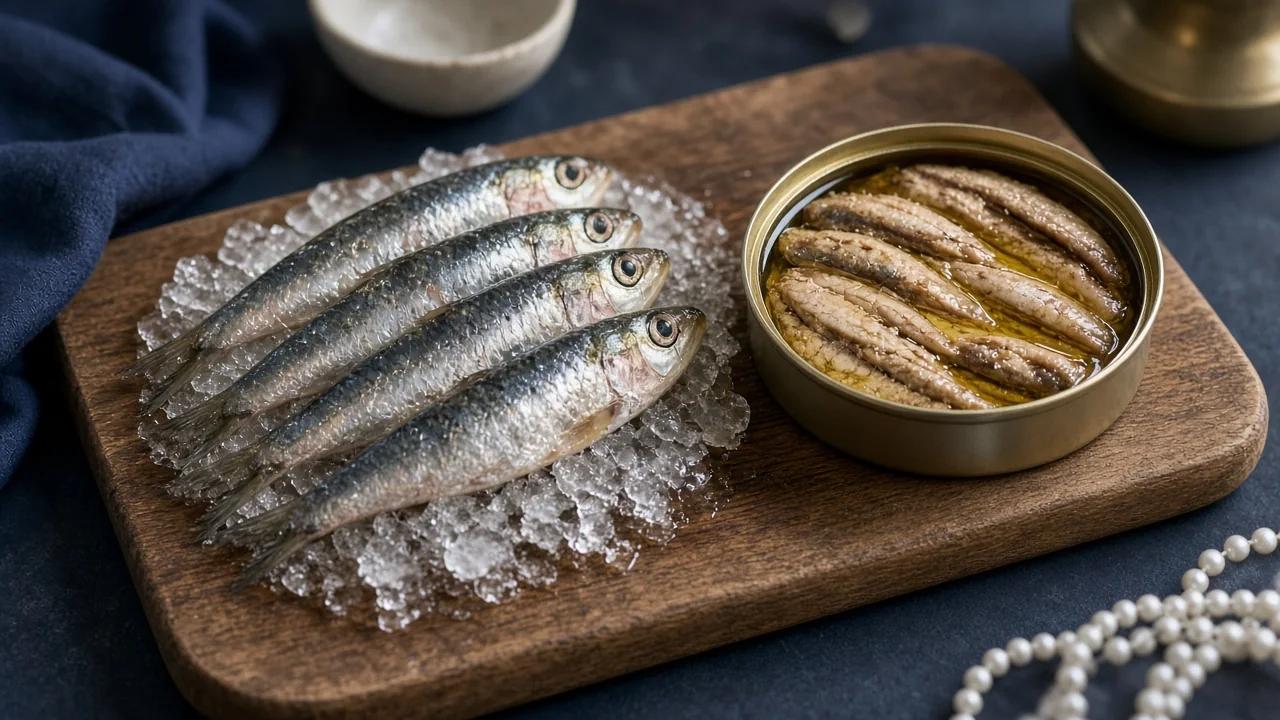
Sardines are small, silvery, oily fish that are packed with flavour, omega-3 fats and calcium, and they taste completely different fresh off a grill than from a tin.
delicate when small and fresh; fuller and oilier when larger (NOAA Fisheries) · Peak summer (especially June–September in Portugal and Spain). · pilchard (Marine Conservation Society); sardinhas (Portugal), sardinas (Spain)
Ask the Fish Guide about sardines — grounded in this species hub.
Also called
pilchard (Marine Conservation Society); sardinhas (Portugal), sardinas (Spain)
Main species
European sardine (*Sardina pilchardus*); Pacific sardine (*Sardinops sagax*) in the US
Taste
delicate when small and fresh; fuller and oilier when larger (NOAA Fisheries)
Texture
soft when fresh, firm when canned (NOAA Fisheries)
Sabor
delicate when small and fresh; fuller and oilier when larger (NOAA Fisheries)
Temporada
Peak summer (especially June–September in Portugal and Spain).
Hábitat
pilchard (Marine Conservation Society); sardinhas (Portugal), sardinas (Spain)
Recipes
Step-by-step methods from our recipe pages — same hero photos you will see on each dish.
Portuguese · Easy
Summer on a plate — fatty Atlantic sardines grilled over charcoal, finished with lemon, salt, and good olive oil.
For cooking at home, see our chermoula.
For cooking at home, see our piri piri seasoning.
Whole grilled fish with skin-on blister and a citrus finish is the fastest quality check — the flesh should flake at the bone, not mush under heavy sauce.
Sardines are small, silvery, oily fish that are packed with flavour, omega-3 fats and calcium, and they taste completely different fresh off a grill than from a tin.
Buying links may earn a commission. Restaurant listings are editorial — not paid placements in this block.
Tips
Best methods: Charcoal grill, Pan sear, Escabeche, Tin/preserve.
Catch & season
Species guide
Sardines are small, silvery, oily fish that are packed with flavour, omega-3 fats and calcium, and they taste completely different fresh off a grill than from a tin. In Portugal and Spain, grilled sardines are a summer festival food, while tinned sardines are a cheap, healthy store-cupboard staple everywhere. This guide is part of our Fish & Seafood Guide.
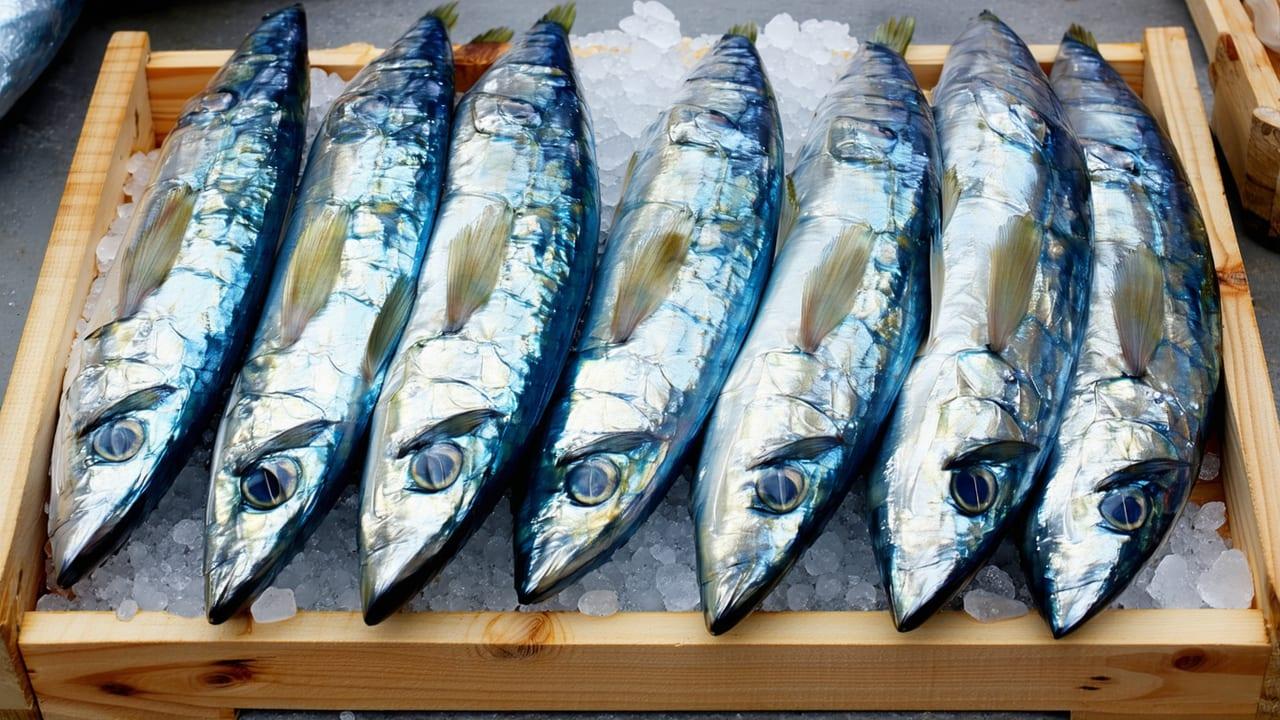
What are sardines? They are small, oily fish in the herring family that swim in large schools and feed on plankton. The name covers several species. In Europe the main one is the European sardine, also called the pilchard. In the US, it's the Pacific sardine.
NOAA says Pacific sardines grow fast, to more than 12 inches, can live up to 13 years (but usually not past 5), and reproduce at age 1 or 2. They spawn several times a season, and their eggs hatch in about 3 days. They are a vital food for many fish, marine mammals and seabirds.
Sardine populations naturally swing through boom-and-bust cycles, which makes careful management important (NOAA Fisheries).
Small, fresh sardines have a delicate flavour, while larger sardines are fuller and oilier (NOAA Fisheries). Grilled fresh sardines are smoky, rich and savoury, with soft, moist flesh. Tinned sardines are firmer and saltier and taste more intense.
Choose sardines in olive oil or water rather than heavily salted sauces if you're watching sodium. The NHS notes that tinned fish can be high in salt, so check the label.
Look for the blue MSC label on tins and fresh fish.
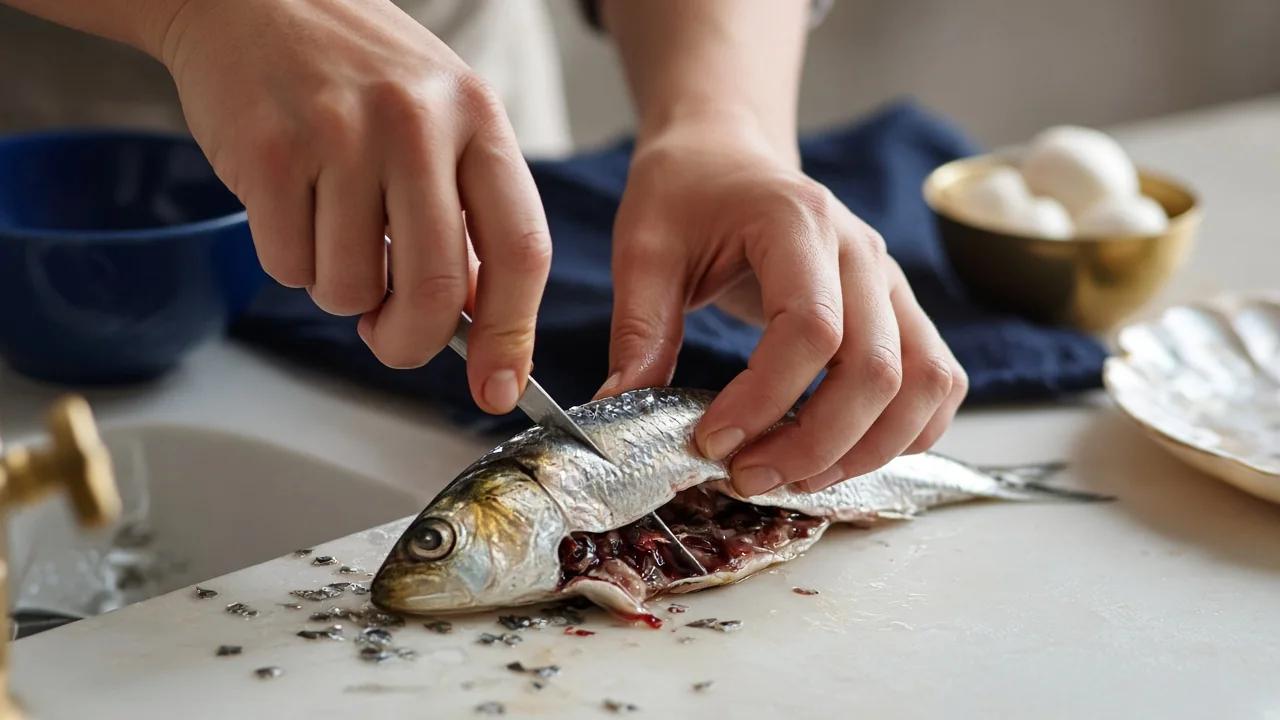
Sardines spoil quickly. Cook them on the day you buy them. Keep tins in a cool cupboard; once opened, refrigerate and eat within a couple of days.
Fish is cooked when the flesh is opaque and flakes easily, at 145°F (63°C) (FDA).
| Method | Approximate time |
|---|---|
| Charcoal grill, whole | 2–3 min per side |
| Pan-fried butterflied fillets | 1–2 min per side |
| Baked stuffed at 400°F (200°C) | 12–15 min |
| Broiled whole | 3–4 min per side |
Sardines are done at 145°F (63°C), when the flesh is opaque and flakes from the bone (FoodSafety.gov).
Lisbon is the sardine capital, especially in June. Read the Lisbon seafood guide and our Lisbon sardines guide, or explore the Barcelona seafood guide and grilled fish restaurants. More places to try: Athens seafood guide, Mediterranean seafood restaurants.
According to NOAA Fisheries (Pacific sardine; values per 100 g):
| Nutrient | Amount |
|---|---|
| Calories | 217 kcal |
| Protein | 24.58 g |
| Fat | 12.37 g |
| Saturated fat | 2.79 g |
| Cholesterol | 82 mg |
| Selenium | 52.6 µg |
| Sodium | 918 mg |
These NOAA figures match canned sardines, which explains the high sodium. NOAA says sardines are a very good source of selenium and vitamin B12, and a good source of calcium, niacin and phosphorus. The FDA lists sardines as a "Best Choice" for low mercury.
Are sardines good for you? Yes. They're rich in protein and omega-3s, very high in selenium and vitamin B12, and a good source of calcium, niacin and phosphorus (NOAA Fisheries).
Are sardines healthy? Yes, and they're an FDA Best Choice for low mercury. Tinned sardines can be salty, so check the label (NHS).
How do you eat sardines? On toast with lemon and chilli, straight from the tin with crackers, in pasta or salads, or grilled fresh.
What do sardines taste like? Rich and savoury. Small fresh sardines are delicate, larger ones are oilier (NOAA).
Can you eat sardine bones? Yes. In tinned sardines they're soft, edible and full of calcium.
How do you grill sardines? Salt them, then grill over hot charcoal for 2 to 3 minutes per side until the skin blisters.
Are sardines and pilchards the same? Yes. MCS lists the sardine as "also known as pilchard".
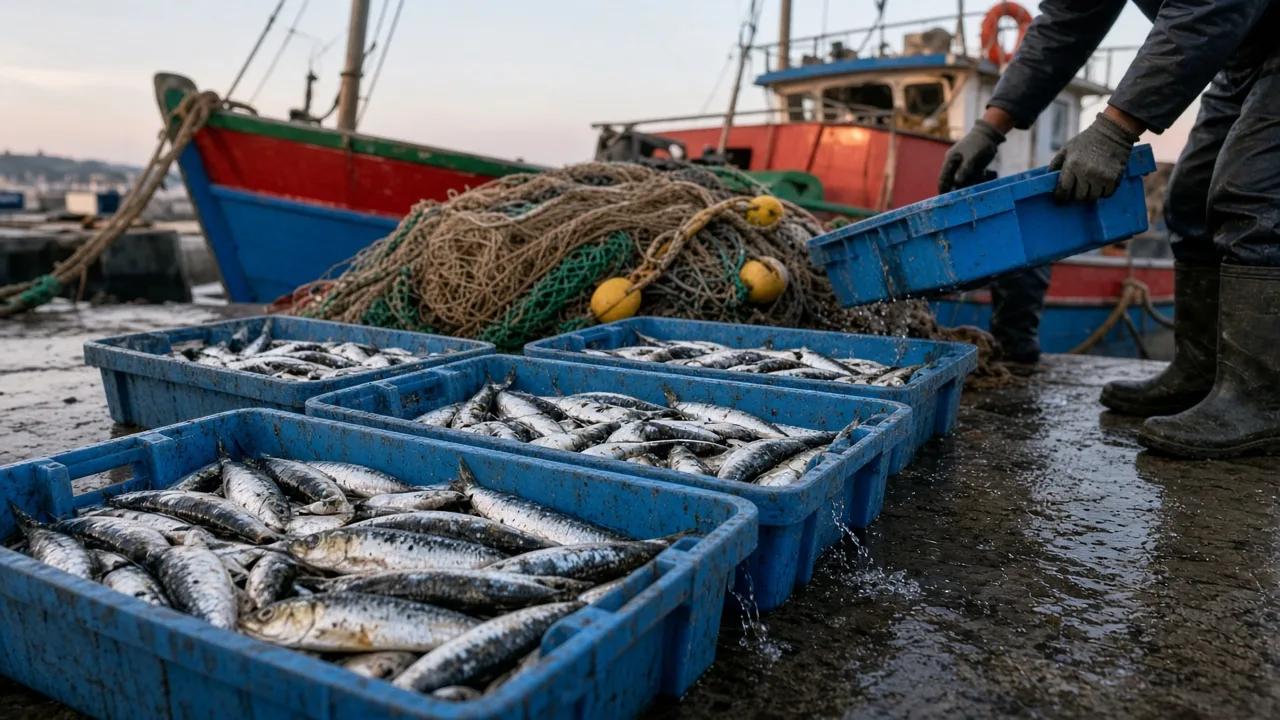
Are sardines sustainable? Choose MSC-certified sardines from south-west England, and avoid North-west African sardines (MCS).
For another rich, smoky fish flavour on this site, see smoked salmon.
Yes. They're rich in protein and omega-3s, very high in selenium and vitamin B12, and a good source of calcium, niacin and phosphorus (NOAA Fisheries).
Yes, and they're an FDA Best Choice for low mercury. Tinned sardines can be salty, so check the label (NHS).
On toast with lemon and chilli, straight from the tin with crackers, in pasta or salads, or grilled fresh.
Rich and savoury. Small fresh sardines are delicate, larger ones are oilier (NOAA).
Yes. In tinned sardines they're soft, edible and full of calcium.
Salt them, then grill over hot charcoal for 2 to 3 minutes per side until the skin blisters.
Yes. MCS lists the sardine as "also known as pilchard".
Choose MSC-certified sardines from south-west England, and avoid North-west African sardines (MCS).
Cookies. Essential cookies always run. Analytics and ads need your choice — manage or accept below. Essential cookies run the site. Google Analytics runs by default outside the UK, EEA and Switzerland, and only after you accept it there. Opt out any time in Cookie settings. Ads (Meta, Pinterest) load only with your permission. · Privacy