International · Medium
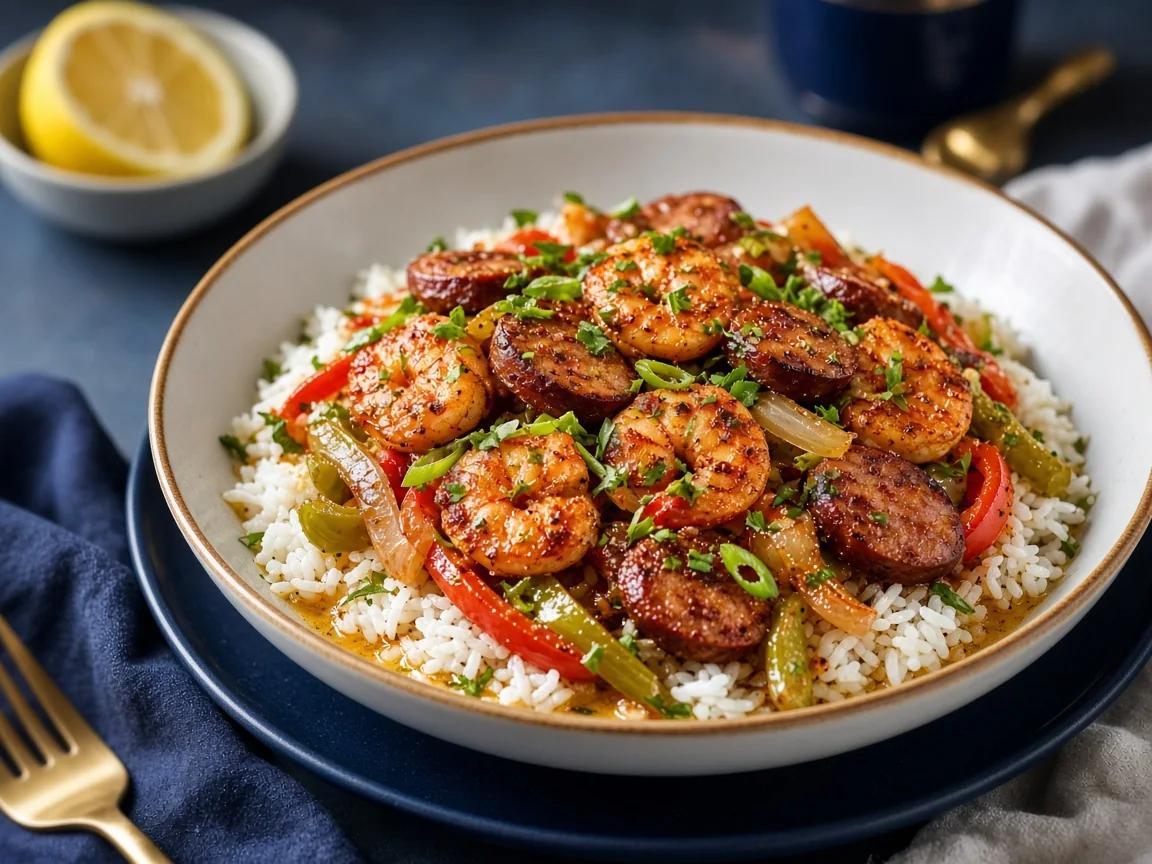
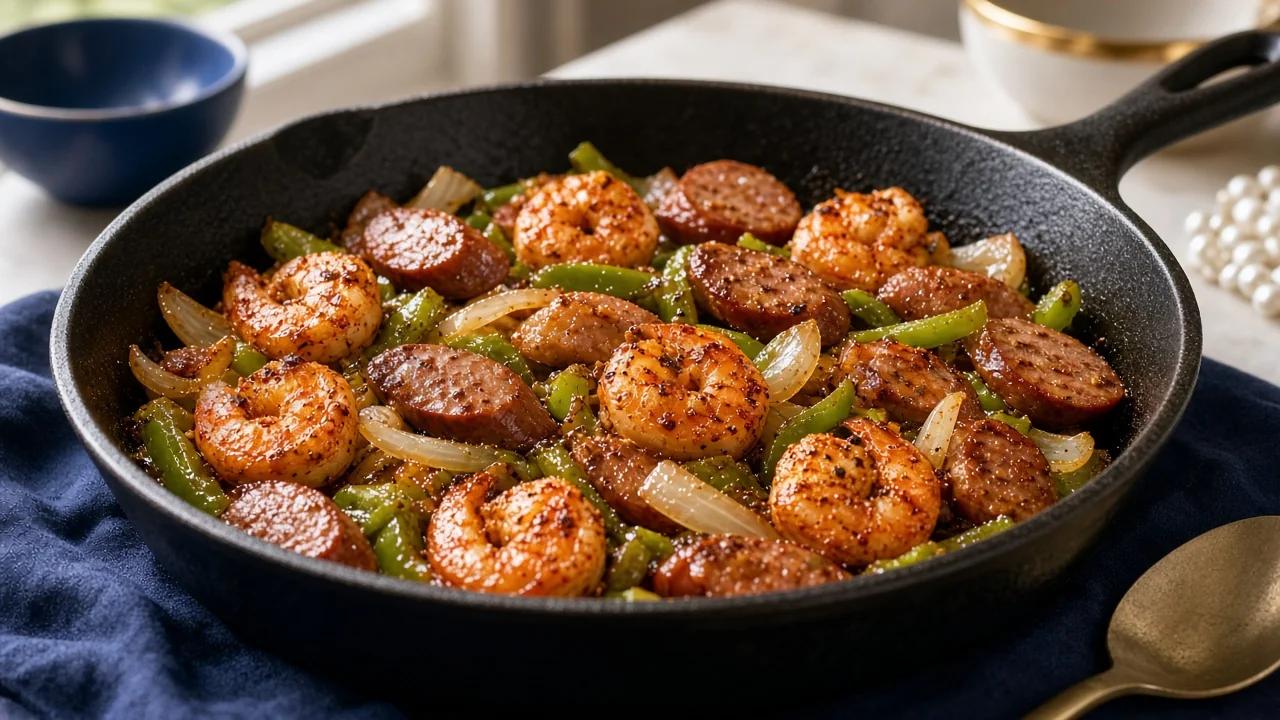
Cajun Shrimp and Andouille Skillet
Juicy shrimp and smoky andouille sausage with the Cajun "holy trinity" of onion, celery and pepper, finished with garlic butter. One pan, 25 minutes.
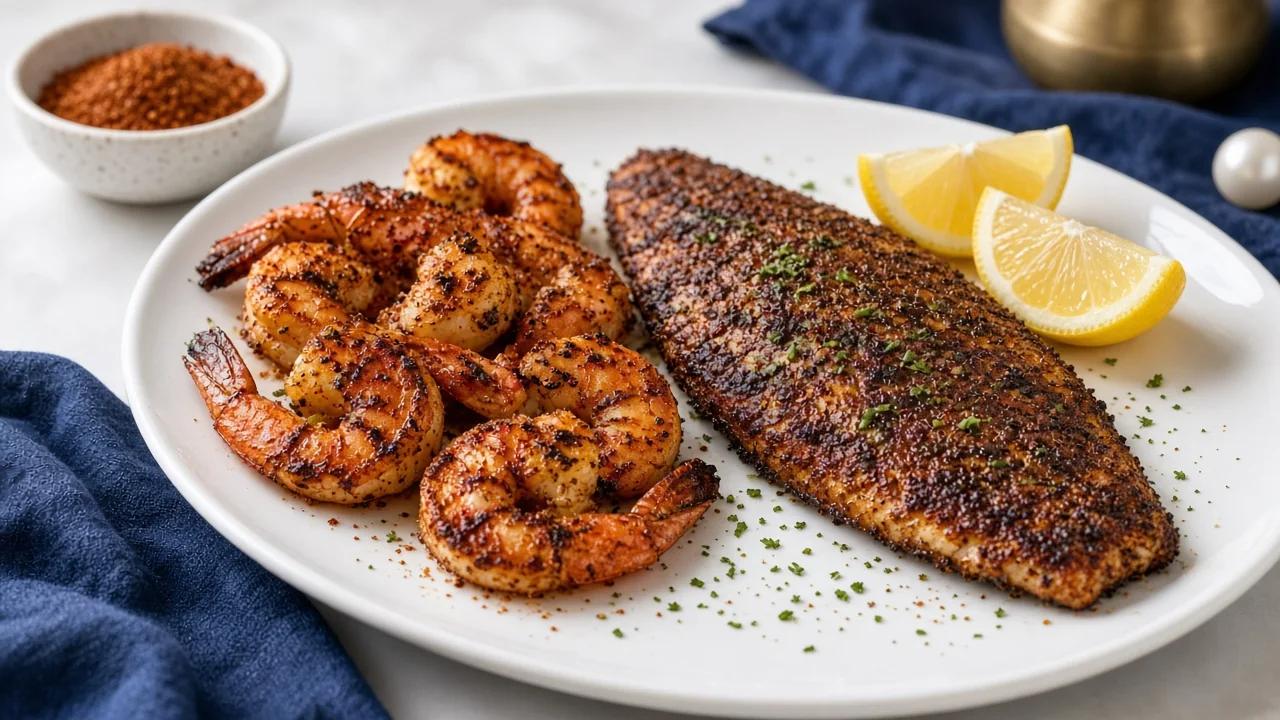
Seasoning blend
Cajun seasoning is a bold Louisiana blend of paprika, cayenne, garlic, onion, black pepper, thyme and oregano. To make it at home, mix the spices below in a jar: it takes 5 minutes and gives you about ½ cup, enough for 8–10 seafood dinners.
Quick facts
about 8 tbsp (about ½ cup, ~61 g) · **Prep:** 5 min · **Shelf life:** 6 months airtight, cool and dark
| Ingredient | Amount | Grams |
|---|---|---|
| Paprika | 2 tbsp | 13.8 g |
| Garlic powder | 1 tbsp | 9.3 g |
| Onion powder | 1 tbsp | 7.2 g |
| Cayenne | 1½ tsp | 2.7 g |
| Black pepper | 2 tsp | 4.6 g |
| White pepper | 1 tsp | 2.4 g |
| Dried thyme | 1½ tsp | 1.5 g |
| Dried oregano | 1½ tsp | 1.5 g |
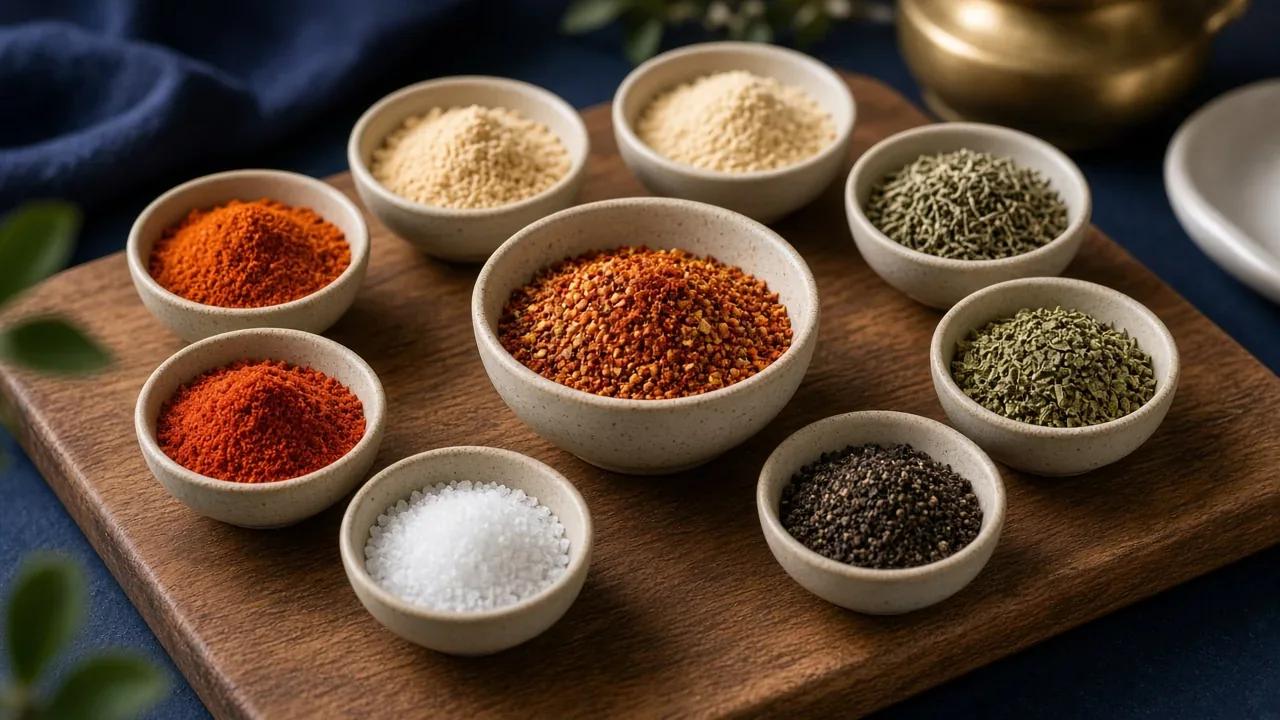
| Fine salt | 1 tbsp | 18.0 g |
Measure all 9 ingredients into a small bowl; crumble dried herbs between your fingers.
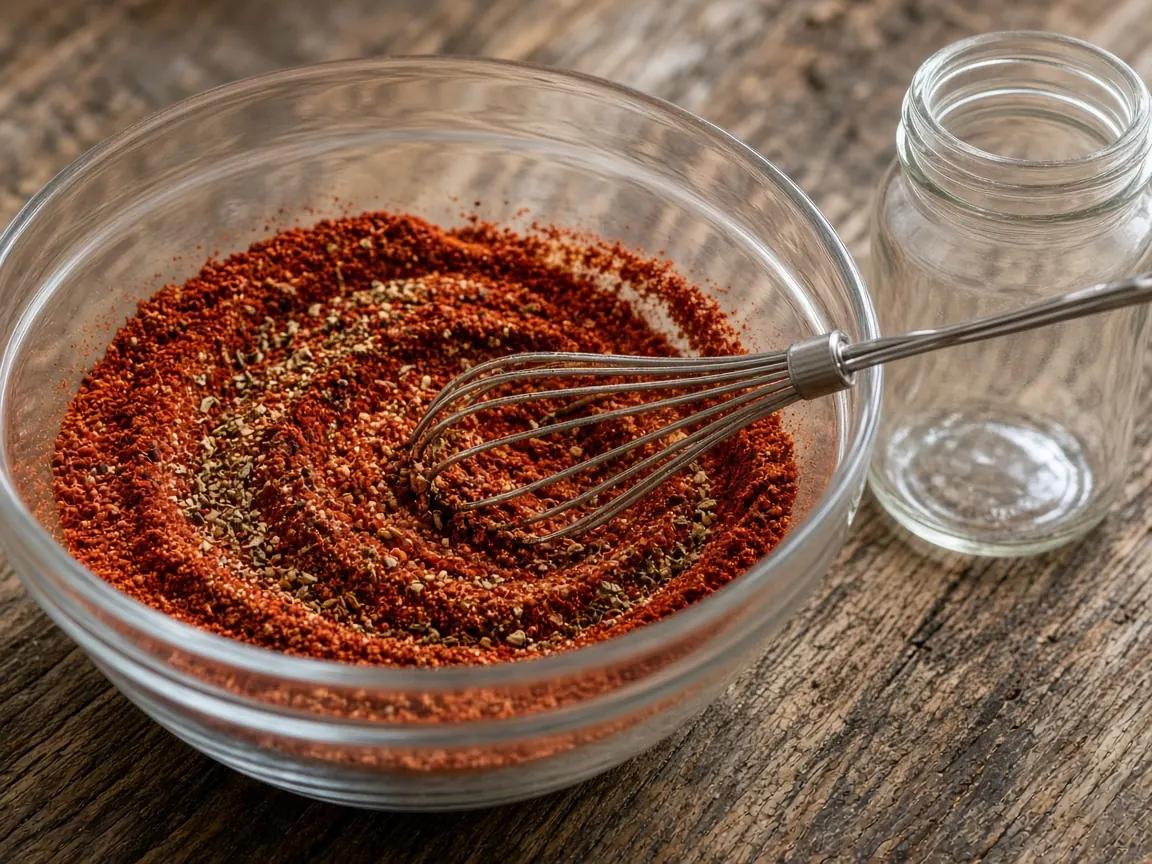
Whisk for 30 seconds until the colour is even with no streaks.
Funnel into a clean, dry glass jar, seal and label with the date.
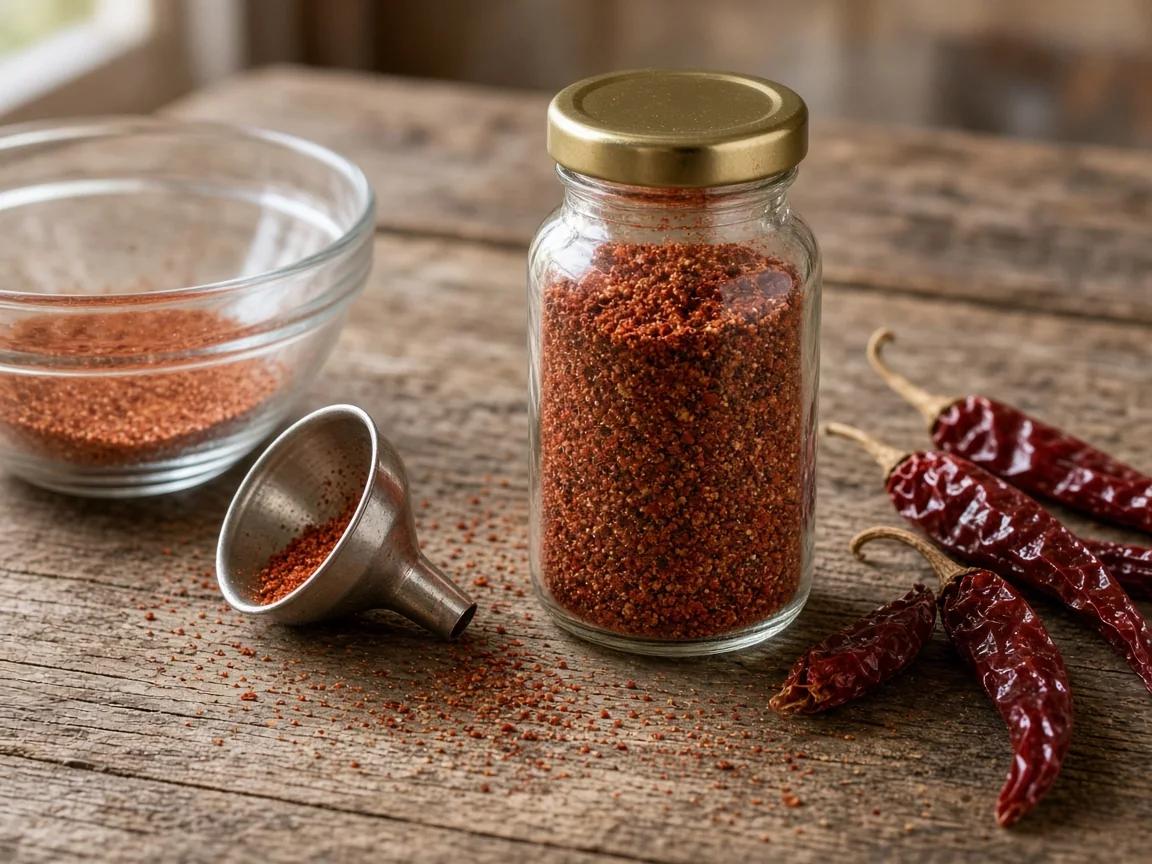
Keep in an airtight glass jar away from the stove, light and moisture. Ground spices lose aroma after about 6 months; if it no longer smells strongly when rubbed between your fingers, make a fresh batch. Do not shake the jar over a steaming pan; moisture causes clumping.
Heat 3/5. Smoky-sweet paprika up front, sharp cayenne heat, earthy thyme and oregano finish.
It is medium-hot. Cayenne sets the heat; at 1½ tsp per batch our blend sits around 3/5. For a Cajun seasoning that is not spicy, drop the cayenne to ¼ tsp and add 1 tsp extra sweet paprika so the colour stays deep red.
Leave out the salt entirely and add 1 tsp dried lemon zest and ½ tsp celery seed for savouriness. Salt your seafood separately to taste; this is the version to use for low-sodium diets.
Shrimp: 2 tsp per 450 g (1 lb). Fish fillets and salmon: 1–1½ tsp per fillet. Chicken breast or wings: about 1 tbsp per 450 g, as poultry takes more seasoning than seafood. For fries, toss hot chips with ½ tsp per portion.
For a boil use 3–4 tbsp per gallon (4 L) of water plus extra salt, or switch to our saltier seafood boil seasoning. In gumbo or jambalaya, 1–2 tbsp per pot is plenty; add it with the "holy trinity" of onion, celery and pepper.
Old Bay-style blends are celery-salt based and milder; Cajun is paprika and cayenne based. Paprika alone is just one ingredient of Cajun seasoning — it gives colour but none of the heat or herbs.
Recipes
Step-by-step methods from our recipe pages — same hero photos you will see on each dish.
International · Medium
Juicy shrimp and smoky andouille sausage with the Cajun "holy trinity" of onion, celery and pepper, finished with garlic butter. One pan, 25 minutes.
Species guide
Cajun seasoning is a bold, peppery spice blend from the cooking of south Louisiana, built on paprika, cayenne, garlic, onion, black pepper, thyme and oregano. It is the flavour behind blackened fish, crawfish and shrimp boils, jambalaya and spicy fried catfish, and it is one of the fastest ways to make plain seafood taste exciting.
What is Cajun seasoning? It is the spice mix that captures the flavour of Cajun home cooking in a jar. "Cajun" comes from "Acadian": the Cajuns are descendants of French-speaking settlers who were expelled from Acadia (today's Nova Scotia and nearby Canadian provinces) by the British from 1755 onward. Many resettled in the bayous and prairies of south Louisiana, where their country cooking blended French techniques with local ingredients and Spanish, African, Native American and German influences (64 Parishes, the Encyclopedia of Louisiana).
Traditional Cajun cooks rarely used a pre-mixed blend. They seasoned each pot with salt, black pepper, cayenne, garlic and the "holy trinity" of onion, celery and green bell pepper. Commercial Cajun blends appeared later to bottle that taste, and they became famous across the US in the 1980s, when New Orleans chef Paul Prudhomme's blackened redfish set off a national craze for Louisiana spice.
Today "Cajun seasoning" on a label simply means a hot, savoury, paprika-red blend. Recipes vary from brand to brand and kitchen to kitchen, but the core is always the same: pepper heat, garlic and onion, and dried herbs.
What's in Cajun seasoning? Almost every blend uses some or all of these ingredients:
| Ingredient | What it does |
|---|---|
| Paprika (sweet or smoked) | Colour, body and a mild sweet-smoky base |
| Cayenne pepper | The heat |
| Garlic powder | Savoury depth |
| Onion powder | Sweetness and savoury depth |
| Black pepper | A sharp, woody bite |
| White pepper | A hotter, more floral bite that hits at the back of the throat |
| Dried thyme | Earthy, herbal notes |
| Dried oregano | A slightly bitter, herby edge |
| Salt | Seasons the food (many blends are mostly salt) |
| Optional: celery seed, red pepper flakes, mustard powder, a little sugar | Extra complexity |
Watch the salt. In many shop-bought blends salt is the first ingredient, which means it is the biggest one by weight. Read the label. If you use a salty blend, cut back on any other salt in the recipe, especially in boils where the water is already salted. A salt-free blend lets you control seasoning yourself.
How to make Cajun seasoning: mix the dried spices in a bowl and store them in an airtight jar away from heat and light. A good all-purpose ratio, by volume:
Crush the dried herbs between your fingers as you add them to release their oils. For a finer texture, which coats seafood more evenly, give the mix a few pulses in a spice grinder. Ground spices lose aroma over time, so make small batches and use them within a few months.
If you'd rather not measure out a pantry of jars, our Louisiana Cajun Blackening blend is ready to use and comes in the World Seafood Spice Pack.
Is Cajun seasoning spicy? Usually yes, but it should be warm rather than painful. Cayenne gives the heat, and black and white pepper add bite. Paprika, garlic and onion soften it. If you're cooking for children or heat-shy guests:
To make it hotter, add more cayenne, a pinch of chipotle powder or red pepper flakes, or finish the dish with Louisiana-style hot sauce.
Is Creole seasoning the same as Cajun seasoning? They overlap a lot, and many brands use the names loosely, but they come from two different cooking traditions.
In practice you can swap one for the other in most seafood recipes. Use Creole when you want a more herby flavour and Cajun when you want more kick.
Is Old Bay Cajun seasoning? No. Old Bay comes from Baltimore, Maryland, not Louisiana, and it tastes quite different. It is built on celery salt with paprika and warm spices, and it is the classic seasoning for Chesapeake Bay blue crabs and steamed shrimp. Cajun seasoning is hotter, more garlicky and more herby, without the strong celery note. Both work in a seafood boil. Many cooks even use both: Old Bay in the pot and a Cajun butter to finish. Read more in our seafood seasoning guide.
Cajun seasoning shines with seafood because it adds colour, salt and heat in one step. These are the methods that work best:
Use the right amount. As a starting point, use about 1 teaspoon of blend for every two fish fillets, or 1 to 2 tablespoons for each pound (450 g) of shrimp. Taste a cooked piece and adjust next time, since blends vary so much in salt and heat.
| Blend | Origin | Tastes like | Swap for Cajun? |
|---|---|---|---|
| Creole seasoning | New Orleans | Herby, milder | Yes, almost 1:1 |
| Blackening seasoning | Louisiana | Paprika-heavy, herby | Yes, for rubs and searing |
| Old Bay / seafood seasoning | Maryland | Celery salt, warm spice | Partly; less heat, more celery |
| Jerk seasoning | Jamaica | Allspice, Scotch bonnet, thyme | Different but great on fish |
| Chilli powder (US) | Southwest US | Chilli, cumin, oregano | In a pinch, add garlic and thyme |
| Piri-piri | Portugal and Mozambique | Hot chilli, garlic, lemon | For grilled shrimp and chicken |
If you love Cajun food, the Jamaican Jerk and Portuguese Piri-Piri blends in our spice pack are the natural next step, as both bring heat and big flavour to seafood.
Although it's best known with seafood, Cajun seasoning is an everyday blend in Louisiana kitchens:
Spice crusts can make fish look done before it is. Cook fish to an internal temperature of 145°F (63°C), or until the flesh is opaque and separates easily with a fork (FoodSafety.gov). Shrimp, crab and crawfish are done when the shells turn red and the flesh is pearly and opaque. Keep raw seafood and the spoon you use for your seasoning jar apart: tip the amount you need into a small bowl first so you don't contaminate the whole jar.
Store the blend in a sealed glass jar in a cool, dark cupboard, away from the stove. Ground spices don't spoil in a food-safety sense, but they lose flavour and colour over time. If the blend smells faint and the paprika has faded from bright red to brick brown, it's time for a fresh batch. Never shake the jar over a steaming pot, because moisture gets in and makes the blend clump.
Our step-by-step recipe, with a photo for every step:
More seafood recipes on our site that use the same techniques:
Every recipe on this page works with our ready-made regional spice blends. For cajun seasoning, try Louisiana Cajun Blackening, part of our 10-blend World Seafood Spice Pack. Each blend is a complete seasoning: warm a spoonful in oil or butter, add your seafood, and cook.
Prefer someone else to cook? Browse our seafood boil restaurants or find the best fish restaurants in New Orleans, Houston, Miami.
Part of our Boils & seasonings guides in the fish and seafood guide hub.
What is Cajun seasoning made of? Mainly paprika, cayenne, garlic powder, onion powder, black and white pepper, dried thyme and dried oregano, usually with salt.
What is Cajun seasoning used for? Seasoning seafood, chicken, sausages, potatoes and rice dishes. It's the classic flavour for blackened fish, shrimp and crawfish boils, jambalaya and fried catfish.
Is Cajun seasoning spicy? It is medium-hot. Cayenne gives the heat. Use sweet paprika and less cayenne for a milder blend.
Is Creole seasoning the same as Cajun seasoning? Not quite. Creole blends lean on herbs, while Cajun blends lean on pepper. They can be swapped in most recipes.
Is Old Bay a Cajun seasoning? No. Old Bay is a Maryland seasoning based on celery salt. Cajun seasoning is hotter and has no strong celery flavour.
How do I make Cajun seasoning? Mix paprika, garlic powder, onion powder, thyme, oregano, black pepper, cayenne, white pepper and optional salt. Store it in an airtight jar.
How much Cajun seasoning do I use on shrimp? Start with 1 to 2 tablespoons for each pound (450 g) of shrimp, then adjust to taste.
Does Cajun seasoning go bad? It doesn't spoil if kept dry, but it loses aroma over a few months. Replace it when the smell and colour fade.
Mainly paprika, cayenne, garlic powder, onion powder, black and white pepper, dried thyme and dried oregano, usually with salt.
Seasoning seafood, chicken, sausages, potatoes and rice dishes. It's the classic flavour for blackened fish, shrimp and crawfish boils, jambalaya and fried catfish.
It is medium-hot. Cayenne gives the heat. Use sweet paprika and less cayenne for a milder blend.
Not quite. Creole blends lean on herbs, while Cajun blends lean on pepper. They can be swapped in most recipes.
No. Old Bay is a Maryland seasoning based on celery salt. Cajun seasoning is hotter and has no strong celery flavour.
Mix paprika, garlic powder, onion powder, thyme, oregano, black pepper, cayenne, white pepper and optional salt. Store it in an airtight jar.
Start with 1 to 2 tablespoons for each pound (450 g) of shrimp, then adjust to taste.
It doesn't spoil if kept dry, but it loses aroma over a few months. Replace it when the smell and colour fade.
Creole uses more herbs (basil, oregano, thyme) and less heat; Cajun leans on pepper and cayenne. See our Cajun vs Creole guide.
Yes, but it is hotter and has no celery salt. Add ½ tsp celery salt per tbsp for a closer match.
6 months in an airtight jar away from light and heat; paprika fades first.
About 2 tsp (6 g) per 450 g/1 lb shrimp.
South Louisiana in the United States, from the cooking of the Acadian (Cajun) communities.
Yes. Our homemade blend is just spices, herbs and salt, so it is vegetarian and vegan.
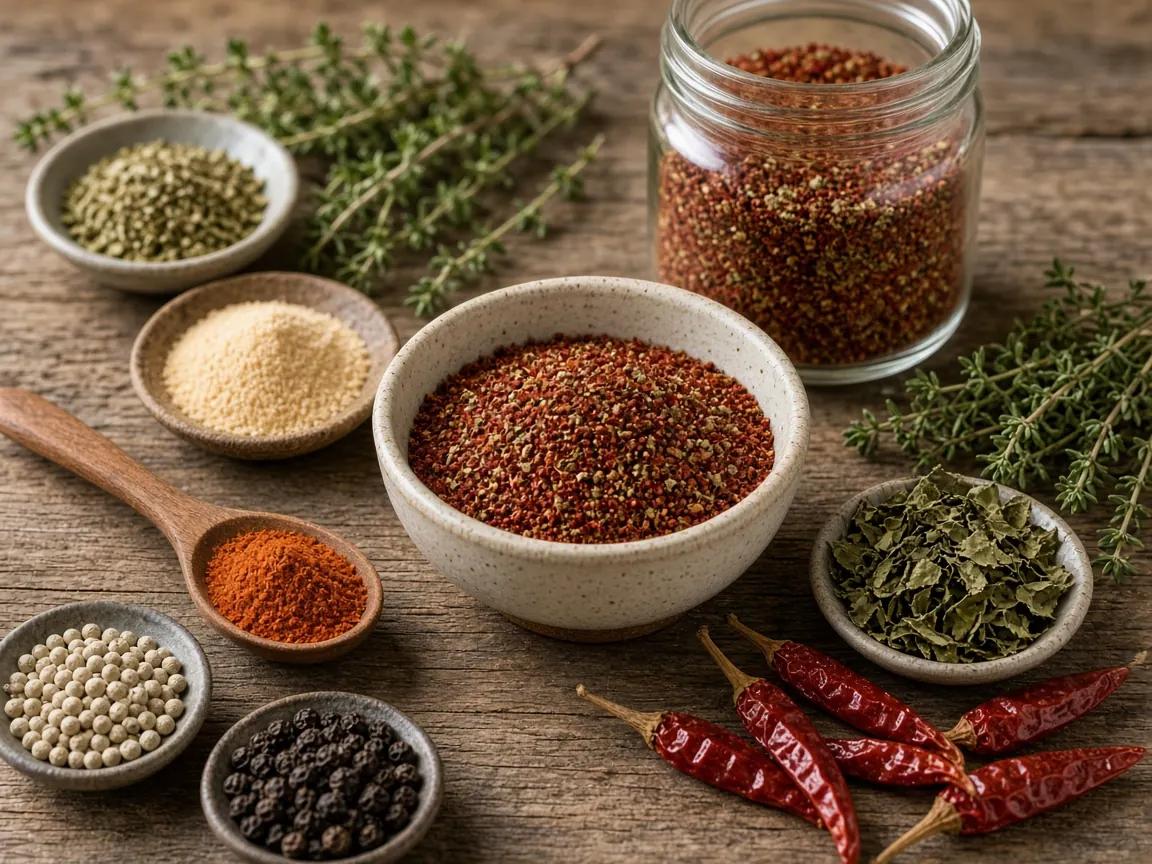
Creole Seasoning
Homemade Creole seasoning recipe with exact measurements. How it differs from Cajun, and how to use it in shrimp creole, gumbo and on fish.
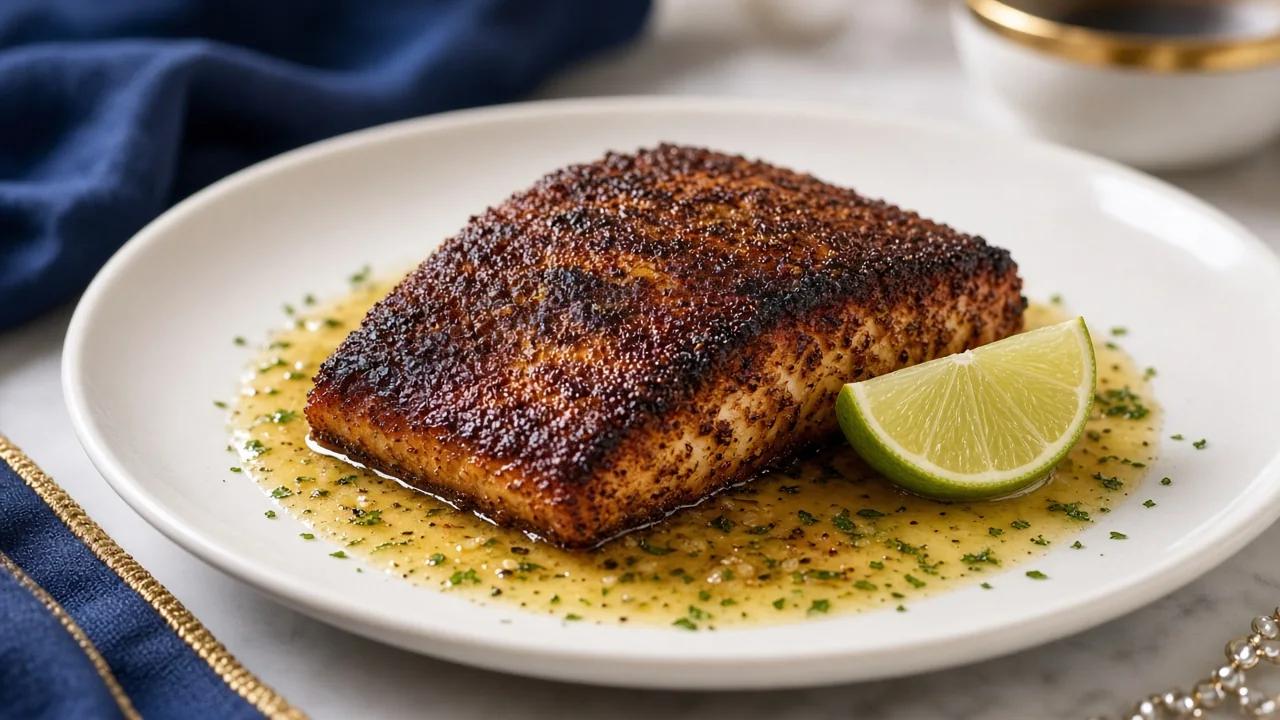
Blackened Seasoning
Make blackened seasoning at home: exact tsp and gram measurements, how to blacken fish in a cast-iron pan, heat level, swaps and FAQs.
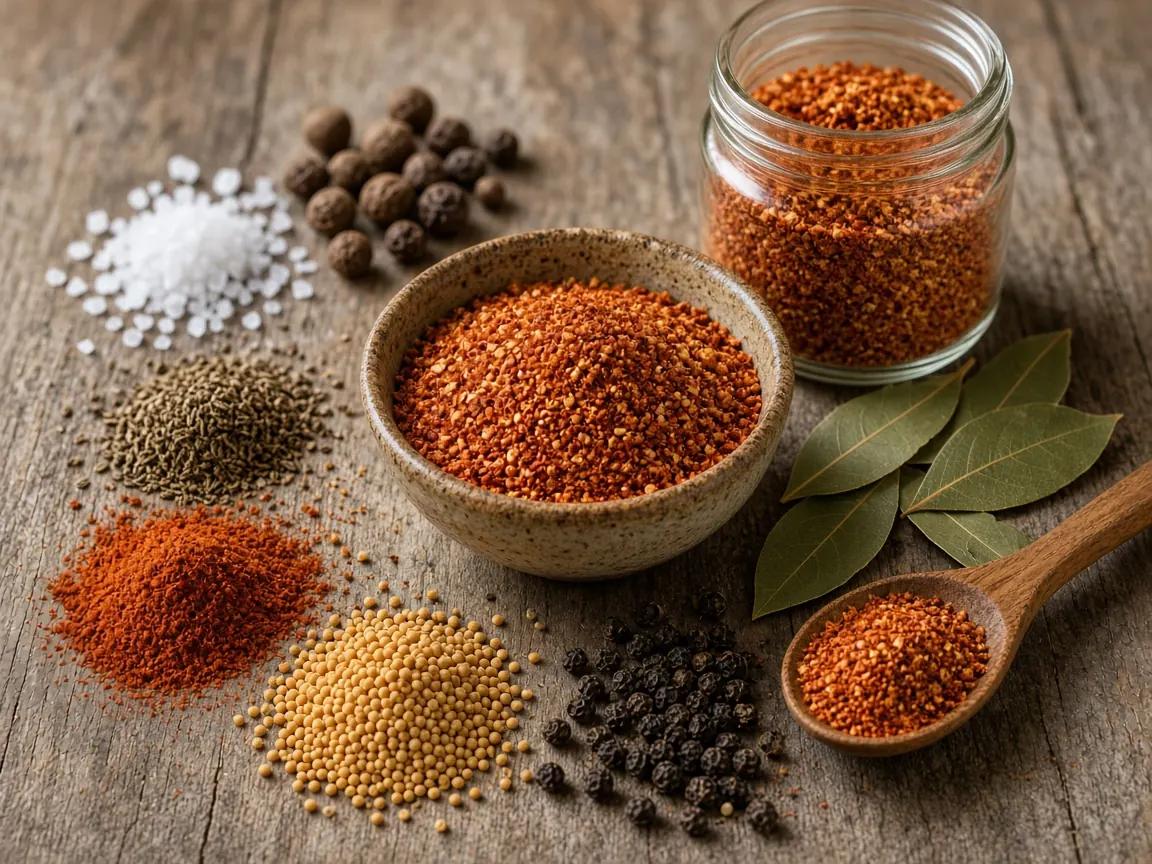
Seafood Boil Seasoning
Make seafood boil seasoning at home with exact measurements. How much per gallon, plus the butter sauce trick for crab, shrimp and crawfish boils.
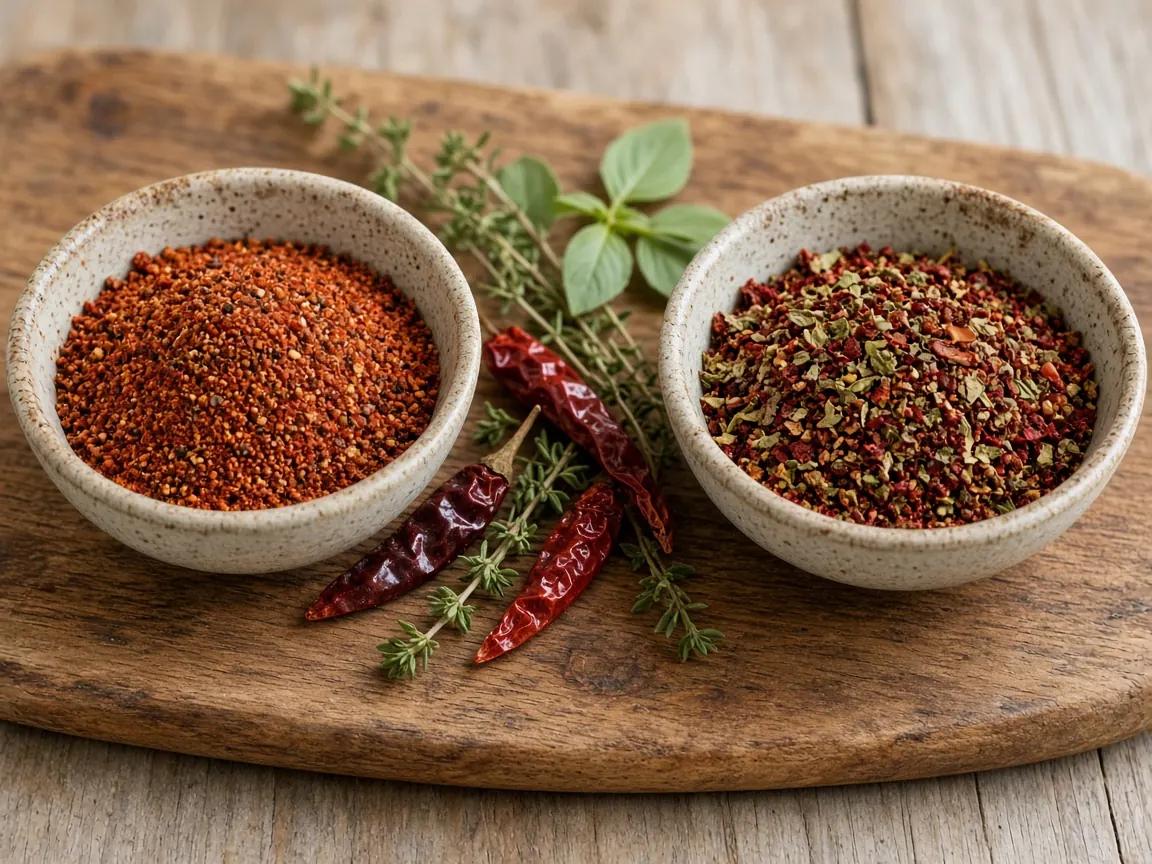
Cajun vs Creole Seasoning: What's the Difference?
Cajun vs Creole seasoning: what is the difference, which is spicier, and can you swap them? Side-by-side table, recipes and FAQs.
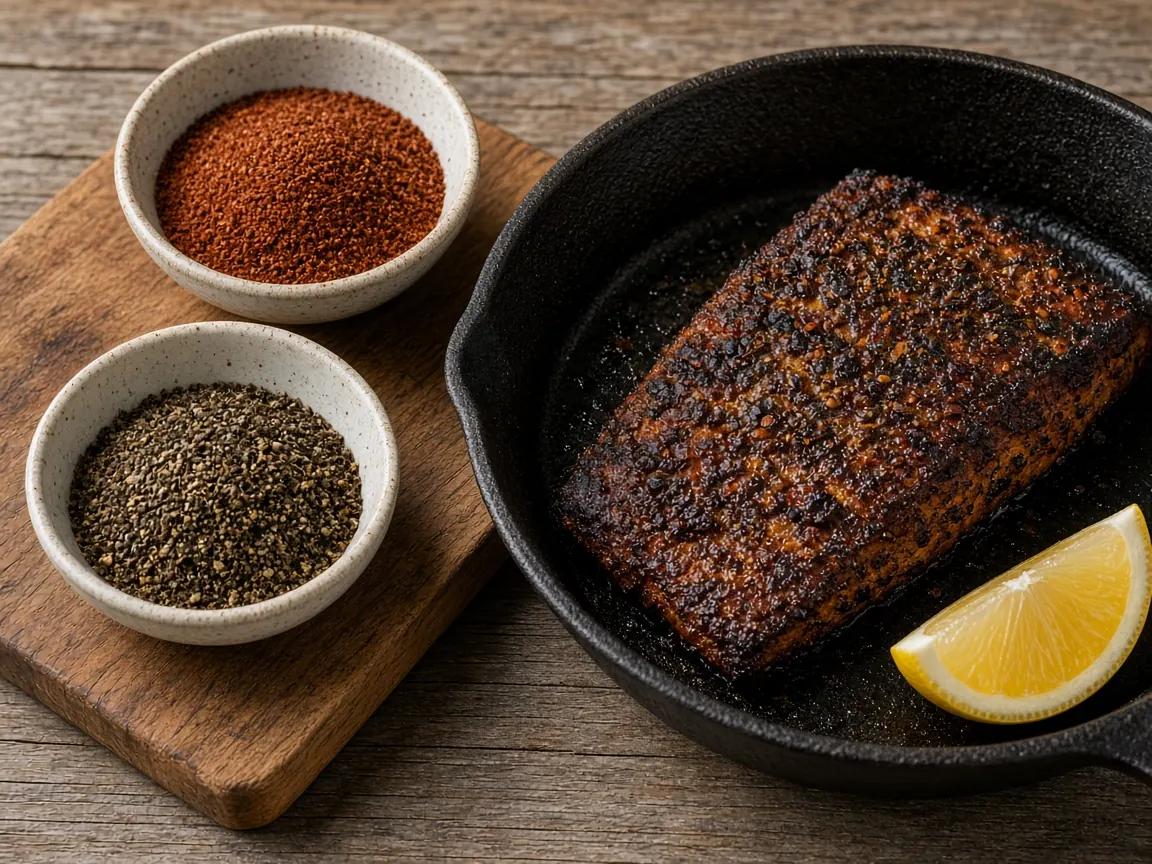
Cajun vs Blackened Seasoning: What's the Difference?
Cajun vs blackened seasoning explained: ingredients, heat, how blackening works, and when to use each on fish and shrimp. Table and FAQs.
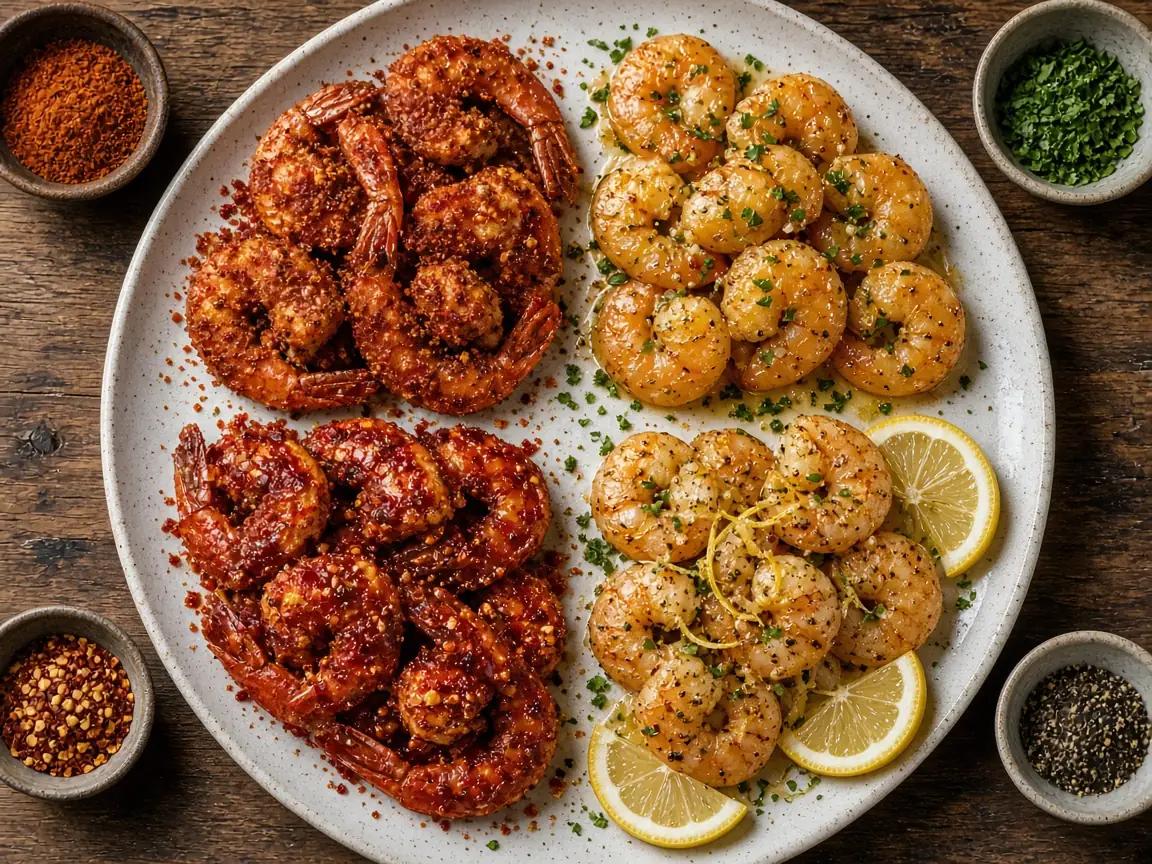
Best Seasoning for Shrimp (6 Blends That Work)
The best seasoning for shrimp: Cajun, garlic butter, piri-piri, lemon pepper and more, with amounts per pound and the best cooking method for each.
All seafood seasonings
Cookies. Essential cookies always run. Analytics and ads need your choice — manage or accept below. Essential cookies run the site. Google Analytics runs by default outside the UK, EEA and Switzerland, and only after you accept it there. Opt out any time in Cookie settings. Ads (Meta, Pinterest) load only with your permission. · Privacy