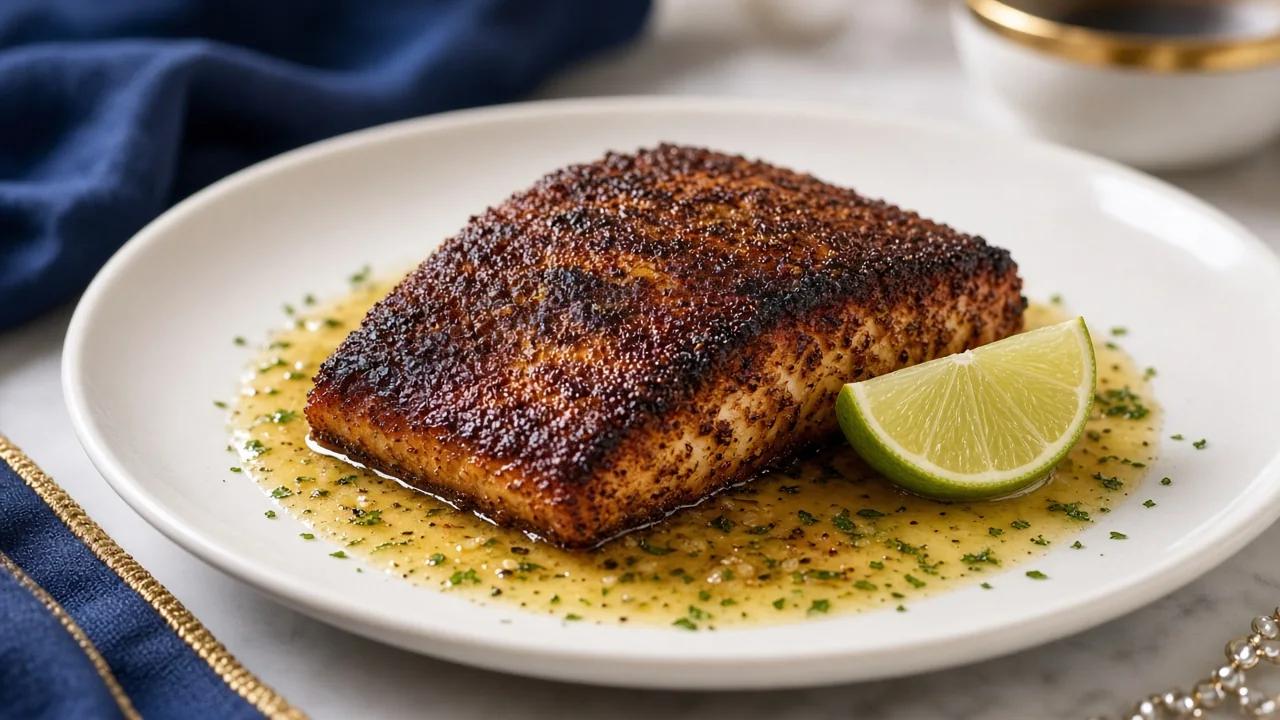
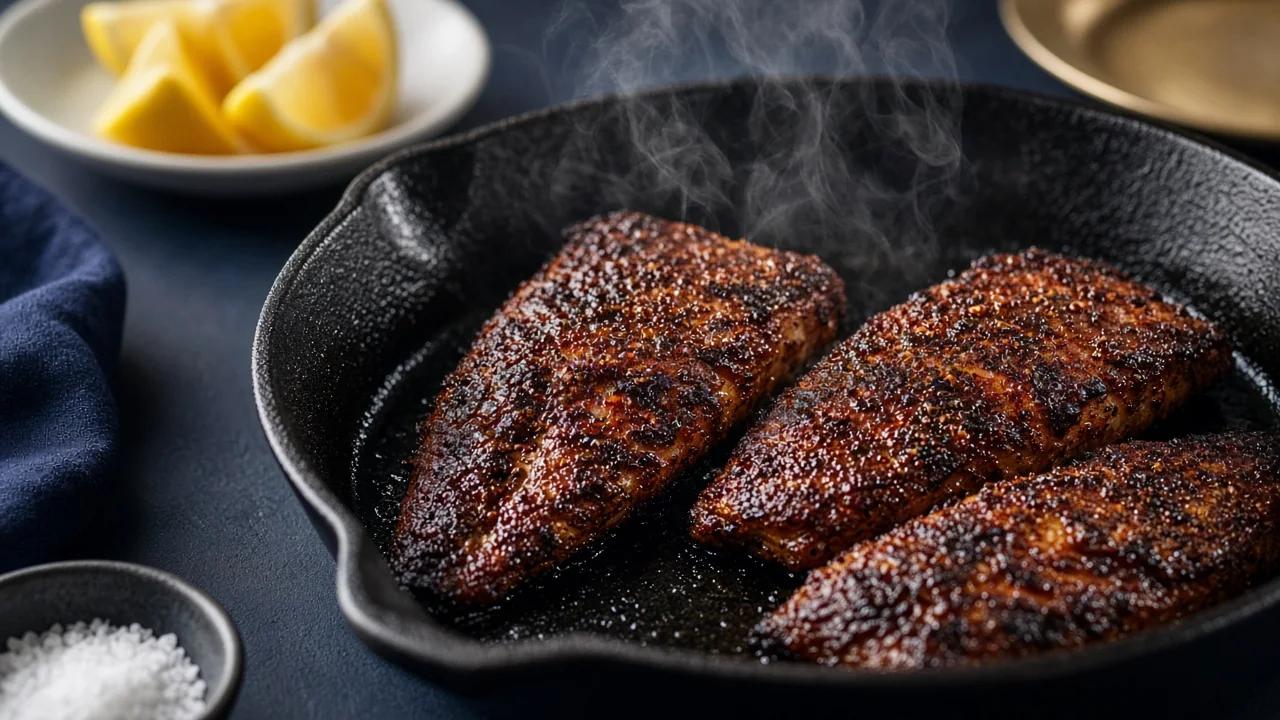
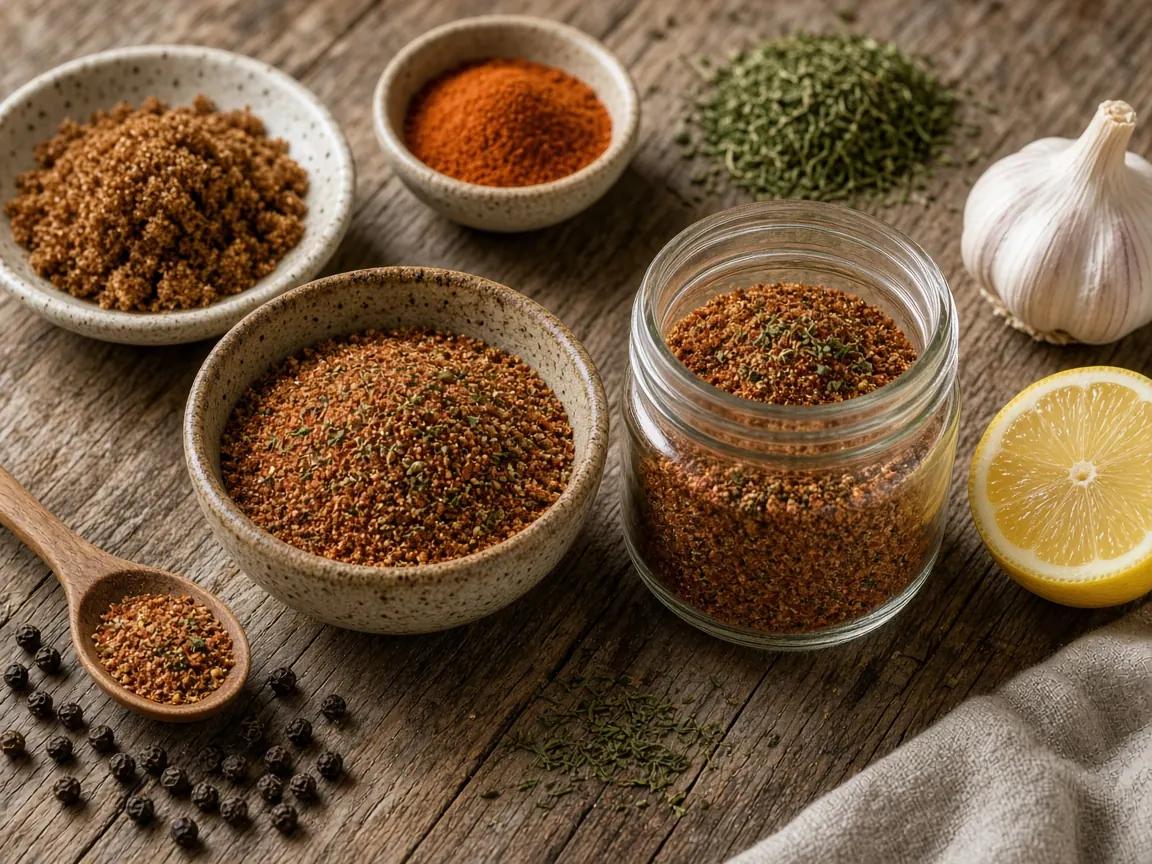
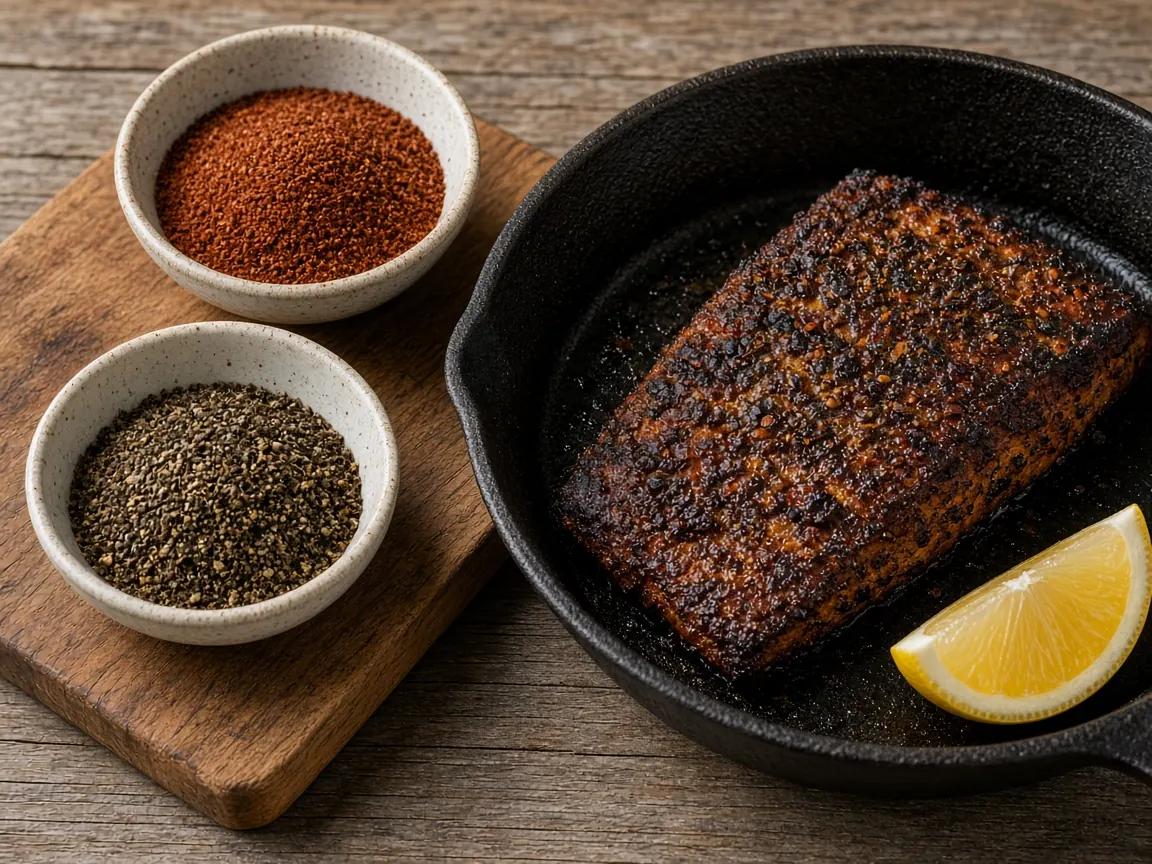
Blackened seasoning is a paprika-rich Louisiana spice blend made for "blackening": coating fish or meat in butter and spices and searing it in a very hot cast-iron pan until a dark, crisp crust forms. Done right, the crust is deeply savoury and smoky, not burnt, and the fish inside stays moist and flaky.
What is blackened seasoning?
What is blackened seasoning? It is a spice blend designed for one job: building a dark, flavourful crust in seconds on very high heat. The colour comes from the spices toasting in butter, not from charring the fish itself.
The technique was popularised by Chef Paul Prudhomme at K-Paul's Louisiana Kitchen in New Orleans. His blackened redfish became so popular across the US in the 1980s that demand helped push Gulf of Mexico red drum (redfish) stocks into trouble. Commercial harvest of red drum in US federal Gulf waters has been closed since the late 1980s, and today the fish is managed mainly as a recreational species (NOAA Fisheries). That's why most blackened "redfish" on menus now is farmed or state-caught, and why catfish, snapper and mahi mahi are such common substitutes.
What is in blackened fish seasoning?
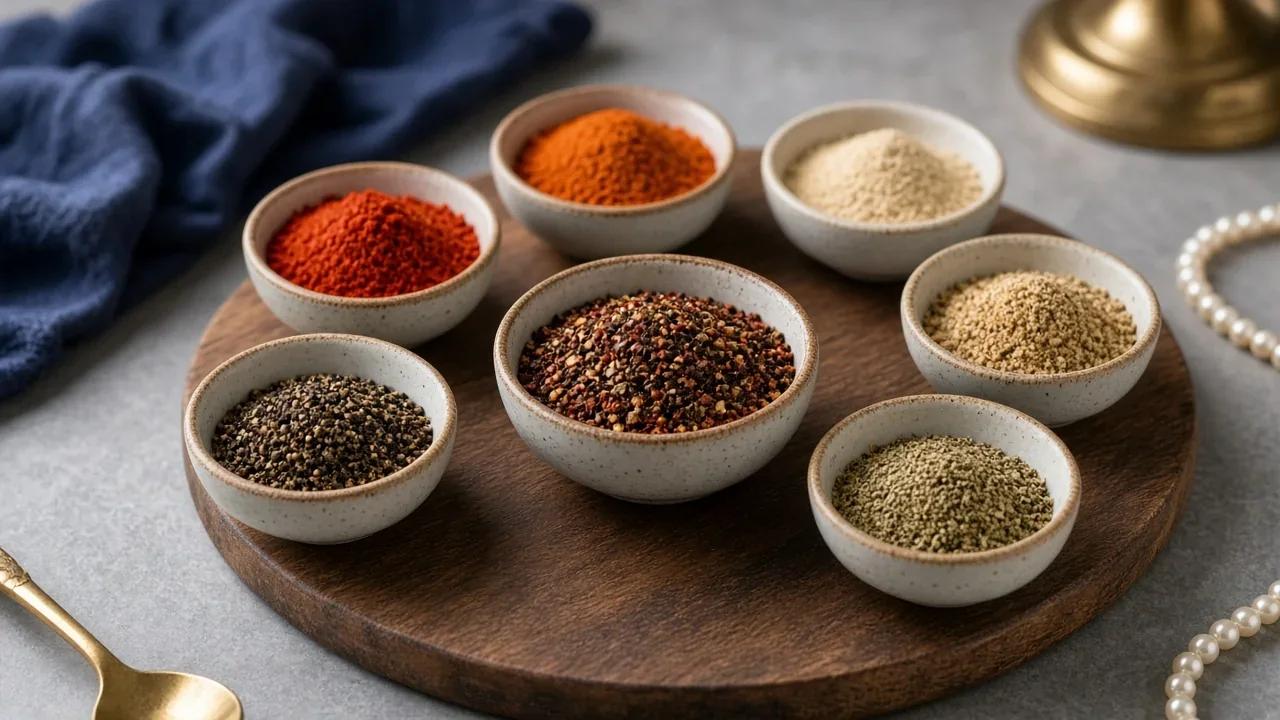
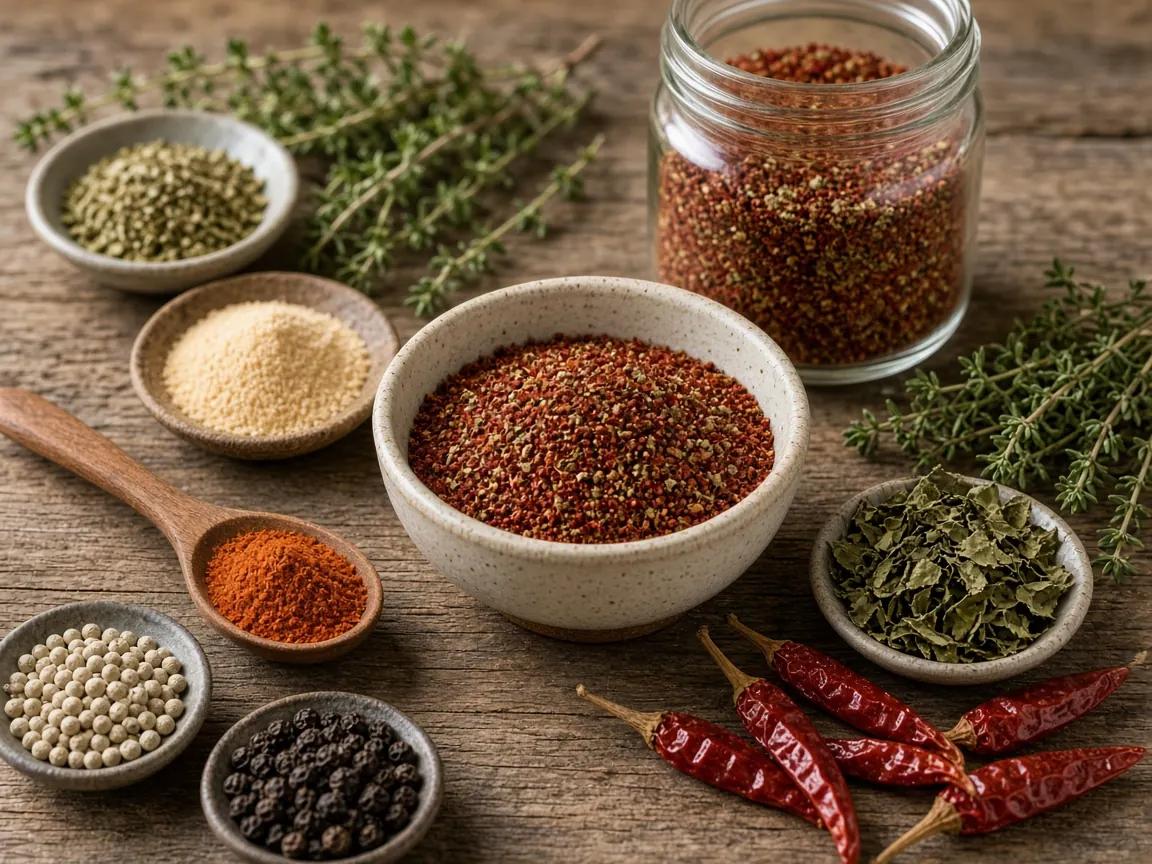
What is in blackened fish seasoning? Most blends use the same core as Cajun seasoning, but with more paprika for colour and more herbs for aroma:
| Ingredient | Role in blackening |
|---|
| Sweet paprika | The main colour and crust; toasts to a deep mahogany |
| Smoked paprika (optional) | Extra smokiness without a grill |
| Cayenne pepper | Heat |
| Garlic powder and onion powder | Savoury depth |
| Black and white pepper | Bite |
| Dried thyme and oregano | Herbal aroma that stands up to high heat |
| Salt | Seasoning; many cooks add it separately |
| A little brown sugar (optional) | Faster caramelisation (watch it, as sugar burns quickly) |
Blackened seasoning vs Cajun seasoning
The two are close cousins, and you can use either one to blacken. The difference is focus:
- Blackened seasoning is built for crust: it's heavy on paprika and herbs, and many recipes leave out salt so you can coat the fish thickly.
- Cajun seasoning is an all-purpose blend for boils, stews, sautés and rubs, and is often saltier and hotter.
Our Louisiana Cajun Blackening blend is made to do both. It comes in the World Seafood Spice Pack. For more on the wider family, read our Cajun seasoning guide.
How to make blackened seasoning
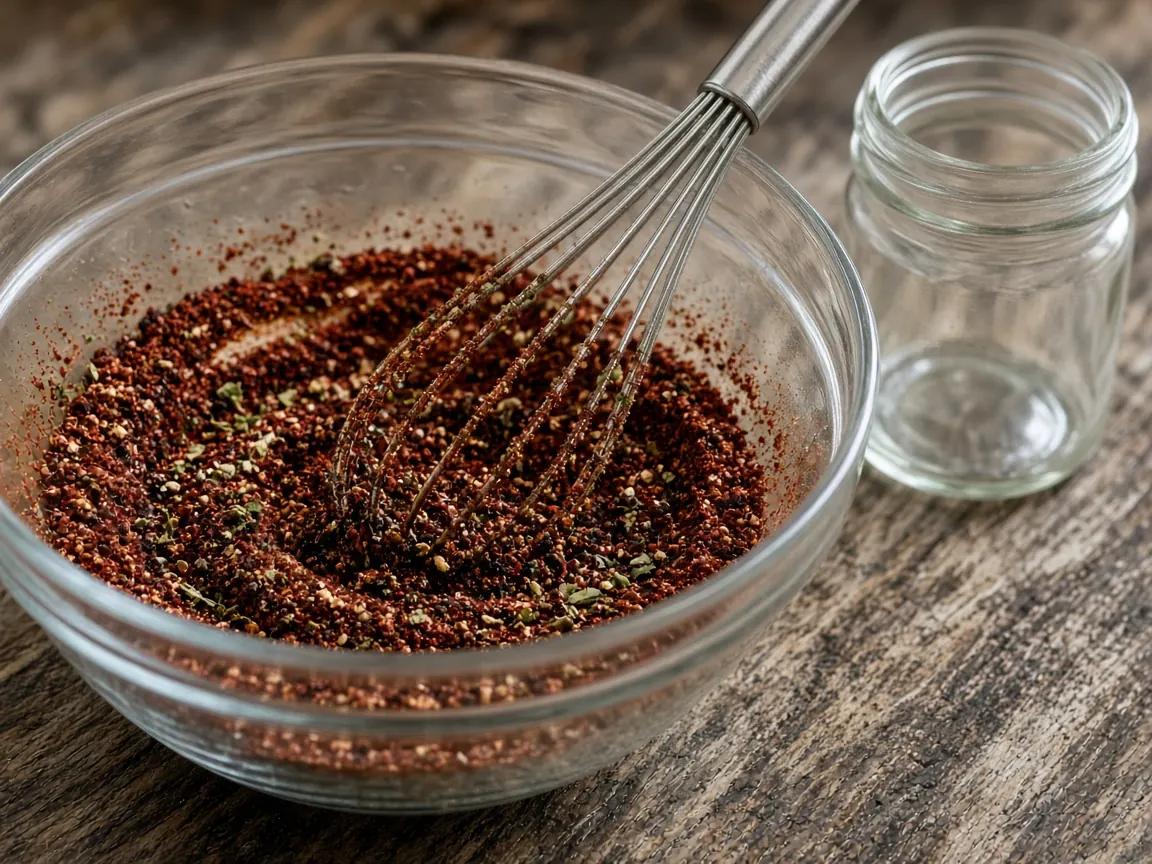
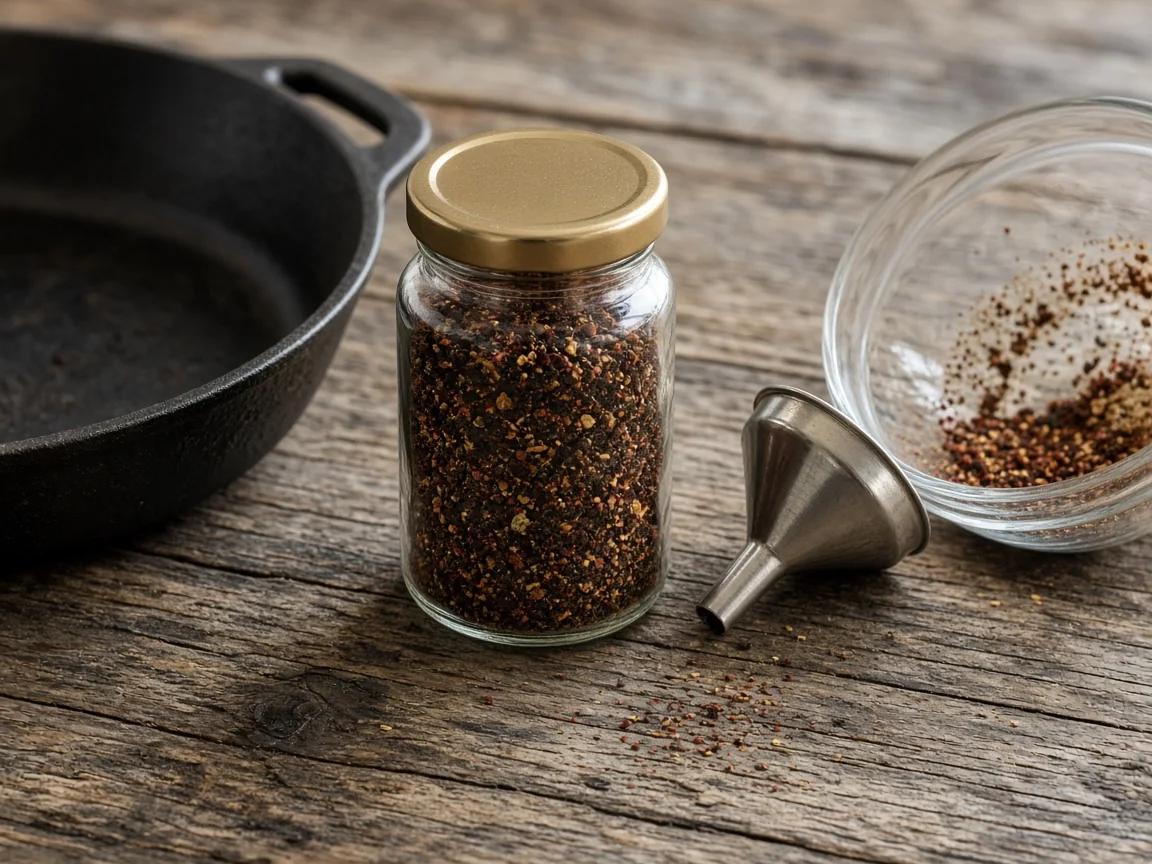
How to make blackened seasoning: stir these together and keep them in an airtight jar.
- 2 tablespoons sweet paprika
- 1 teaspoon smoked paprika
- 2 teaspoons garlic powder
- 2 teaspoons onion powder
- 1 1/2 teaspoons dried thyme
- 1 1/2 teaspoons dried oregano
- 1 teaspoon black pepper
- 1 teaspoon white pepper
- 1/2 to 1 teaspoon cayenne pepper
- 1 to 2 teaspoons fine salt (optional)
This makes enough for about 8 fish fillets. Rub the dried herbs between your palms before adding them, and grind the finished blend briefly so it coats the fish in an even layer.
How to blacken fish (without burning it)
Blackening is fast and smoky. Get everything ready before you heat the pan.
- Choose the right fish. Use fillets of even thickness, about 3/4 to 1 inch (2 to 2.5 cm) thick. Thin fillets overcook before the crust forms, and very thick ones burn outside before the centre cooks.
- Dry the fish. Pat the fillets completely dry. Water stops the crust from forming and makes the butter spit.
- Butter, then spice. Dip each fillet in melted butter, then press a generous, even layer of seasoning onto both sides.
- Heat a cast-iron skillet. Heat it over high heat for 5 to 10 minutes until very hot. A thin, non-stick pan isn't safe for this level of heat.
- Ventilate. Turn the extractor fan on full, open a window, or cook outdoors on a grill side burner. Blackening makes a lot of smoke.
- Sear. Lay the fillets in the dry pan, presentation side down. Cook for about 2 minutes until a dark crust forms, then flip and cook for 1 to 2 minutes more.
- Check doneness. Fish is safe at 145°F (63°C) in the thickest part, or when the flesh is opaque and flakes easily (FoodSafety.gov).
Dark brown, not black-black. The crust should look like dark mahogany and smell toasty. If it smells acrid or the spices turn grey-black, the pan is too hot or the fish has been in too long.
How to make blackened salmon
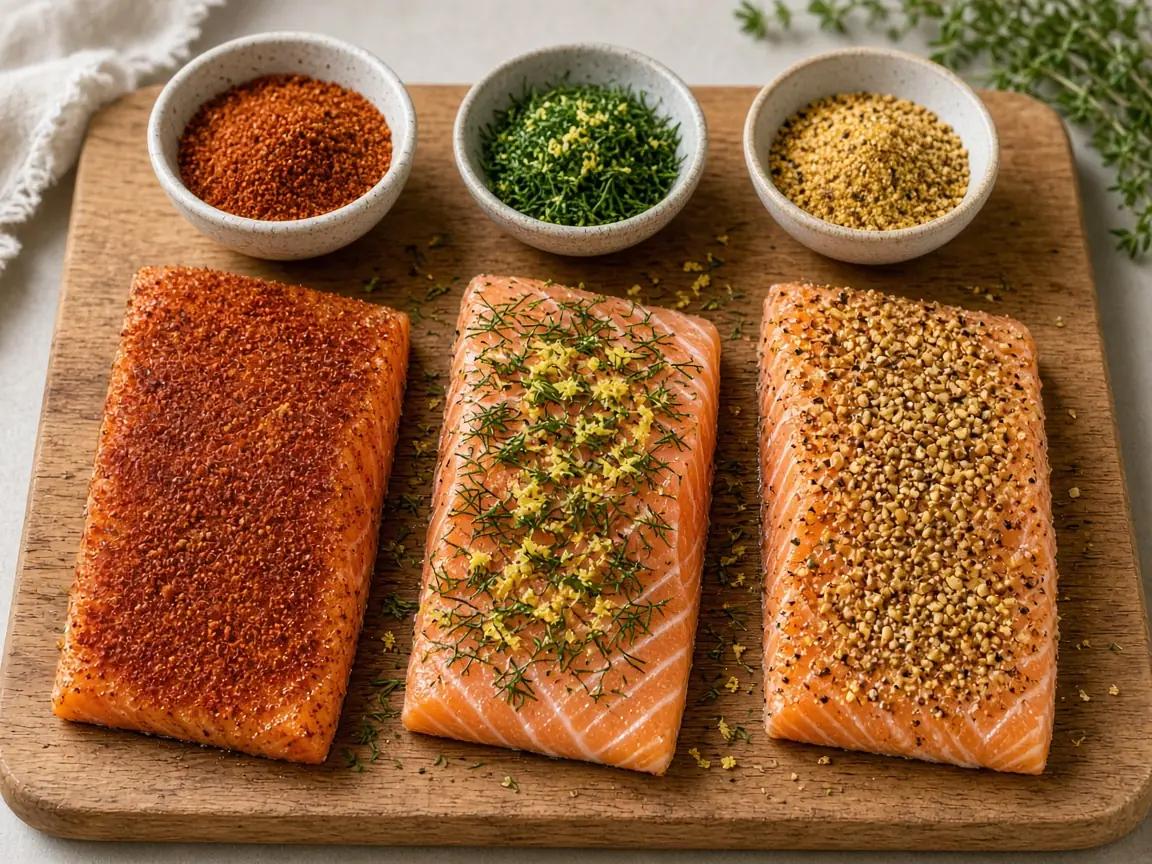
How to make blackened salmon: salmon is one of the most-searched blackened dishes because its rich flesh balances the spice. Use skin-on fillets of even thickness. Brush the flesh side with oil or melted butter and coat it with seasoning, leaving the skin unseasoned. Sear flesh side down in a very hot cast-iron pan for about 2 minutes, then turn it onto the skin and cook for 3 to 5 minutes more, or finish in a 400°F (200°C) oven until done to your liking. Our salmon guide explains the different types of salmon and how fatty each one is.
How to make blackened shrimp
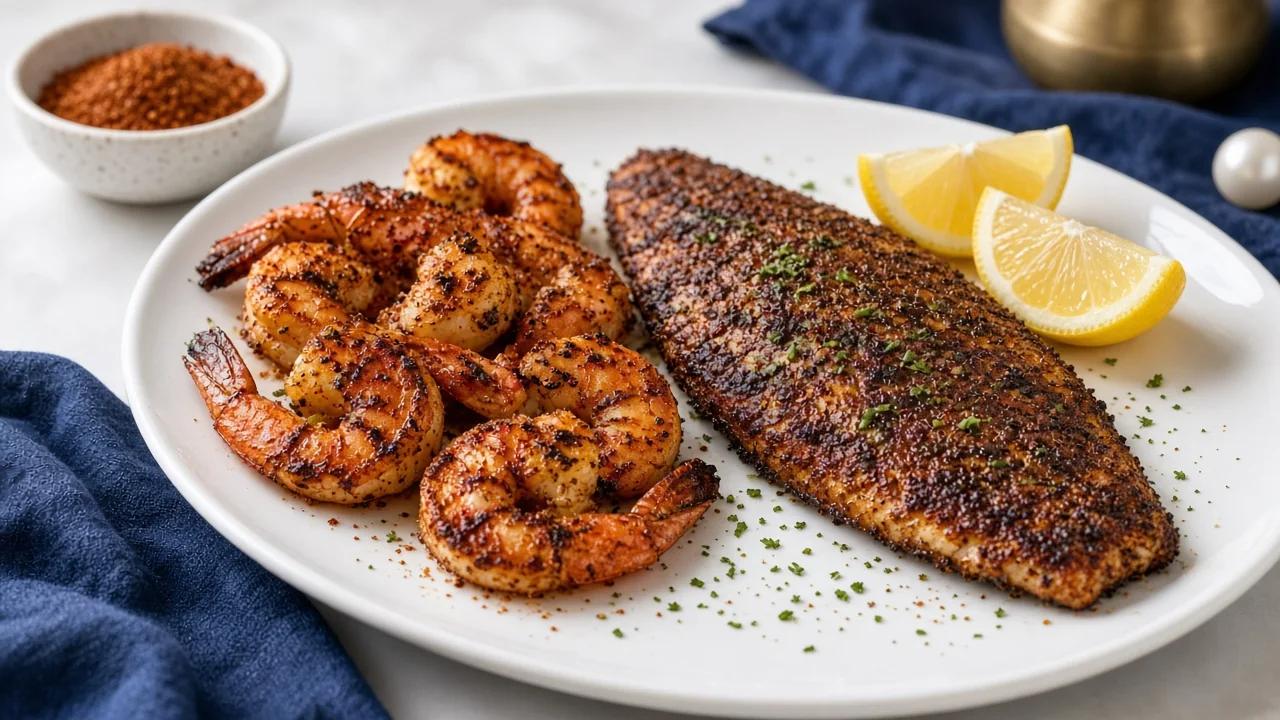
Toss peeled shrimp in a little oil and seasoning. Sear them in a hot cast-iron pan in one layer for about 1 minute per side until the outside is dark red-brown and the inside is opaque. Serve them in tacos, over grits, or on a Caesar salad. For shrimp sizes and buying tips, see our shrimp and prawn guide.
The best fish for blackening
| Fish | Why it works |
|---|
| Redfish (red drum) | The original; firm, mild and sweet |
| Catfish | Affordable, firm and very forgiving |
| Red snapper | Sweet, firm flakes hold their shape |
| Mahi mahi | Lean and meaty; perfect for blackened fish tacos |
| Grouper | Thick, firm, Gulf Coast favourite |
| Swordfish | Steak-like; stands up to strong spice |
| Salmon | Rich, so the spice is balanced |
Avoid very delicate fish such as sole or plaice, which fall apart in the pan.
Blackening on the grill or in an air fryer
Not everyone wants a kitchen full of smoke. You can get a very similar crust outdoors:
- On a gas or charcoal grill: put a cast-iron skillet or griddle directly on the grates and heat it with the lid closed for 10 minutes. Cook exactly as you would indoors. The smoke stays outside.
- Directly on the grates: this works for firm fish such as swordfish, mahi mahi and salmon. Oil the grates well, brush the fish with oil instead of butter (butter flares up), and grill over high heat. The crust will be lighter than in cast iron.
- In an air fryer: brush the fillets with oil, coat with seasoning, and air-fry at 400°F (200°C) for 7 to 10 minutes depending on thickness. You get "blackened-style" fish with a well-toasted crust, but not the deep, buttery crust of the pan method.
- In the oven: sear one side in a hot skillet for 1 to 2 minutes, then flip and move the pan to a 425°F (220°C) oven to finish. This is the safest method for thick fillets.
Common blackening mistakes
| Mistake | What happens | Fix |
|---|
| Wet fish | Steams instead of searing; spices slide off | Pat completely dry |
| Pan not hot enough | Pale, pasty crust | Preheat cast iron for 5 to 10 minutes |
| Too much sugar in the rub | Burns and tastes bitter | Leave sugar out, or use a pinch |
| Crowding the pan | Pan cools, fish steams | Cook two fillets at a time |
| Moving the fish too soon | Crust tears | Leave it alone for the first 2 minutes |
| Very thin fillets | Dry before the crust forms | Use fillets at least 3/4 inch (2 cm) thick |
| Wrong pan | Damaged non-stick coating | Use cast iron or carbon steel |
Sauces to serve with blackened fish
Because blackened fish is spicy and smoky, a cool or tangy sauce balances it:
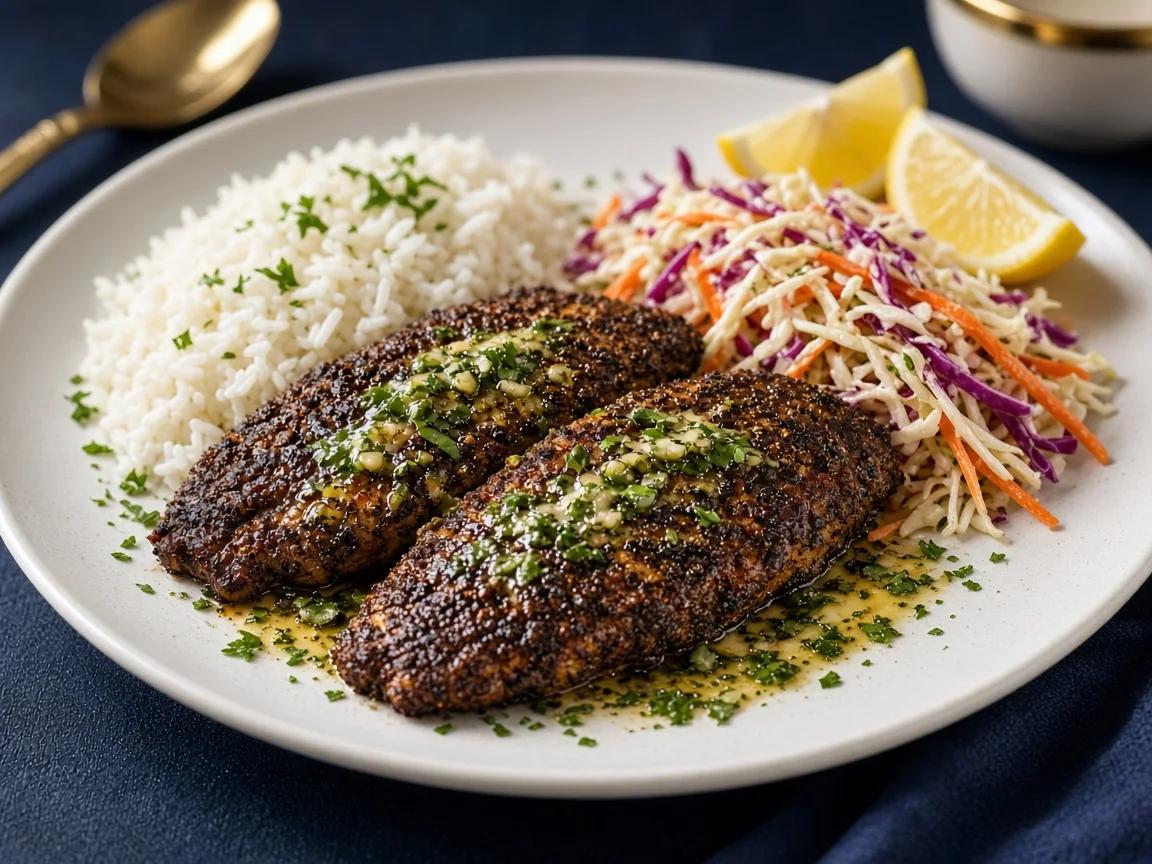
- Lemon butter: melted butter, lemon juice and parsley, spooned over at the end.
- Remoulade: mayonnaise with Creole mustard, capers, pickles, paprika and hot sauce, the Louisiana classic.
- Lime crema: sour cream or Greek yogurt with lime juice and zest, perfect for fish tacos.
- Mango or pineapple salsa: sweet fruit cuts the heat, especially with mahi mahi.
- Garlic aioli: simple and rich, great in a blackened fish sandwich.
Serving ideas
- Blackened fish tacos with cabbage slaw, lime and avocado crema.
- Blackened fish over rice with a spoon of the pan butter.
- Blackened shrimp and grits, a Southern brunch classic.
- Blackened fish sandwich on a toasted bun with remoulade and lettuce.
- Blackened salmon Caesar salad with crisp romaine and lemon.
Blackened Seasoning recipe
Our step-by-step recipe, with a photo for every step:
More seafood recipes on our site that use the same techniques:
Season it like a pro
Every recipe on this page works with our ready-made regional spice blends. For blackened seasoning, try Louisiana Cajun Blackening, part of our 10-blend World Seafood Spice Pack. Each blend is a complete seasoning: warm a spoonful in oil or butter, add your seafood, and cook.
Where to eat blackened seasoning
Prefer someone else to cook? Browse our grilled fish restaurants or find the best fish restaurants in New Orleans, Miami, Houston.
Part of our Boils & seasonings guides in the fish and seafood guide hub.
Blackened Seasoning FAQs
What is blackened seasoning? A Louisiana spice rub based on paprika, cayenne, garlic, onion, pepper, thyme and oregano, used to form a dark, crisp crust on fish and meat seared in a very hot pan.
What is in blackened fish seasoning? Usually sweet paprika, smoked paprika, garlic powder, onion powder, black and white pepper, cayenne, dried thyme and dried oregano, with optional salt.
Is blackened fish burnt? No. The dark colour comes from spices toasting in butter. The crust should be dark brown and taste smoky, not bitter.
Is blackened seasoning the same as Cajun seasoning? They're very similar. Blackened seasoning usually has more paprika and herbs and less salt, so you can use more of it for the crust.
How do you make blackened salmon? Coat the flesh side of oiled fillets with seasoning and sear it in a very hot cast-iron pan for about 2 minutes, then flip it and cook it skin-side down until done.
What fish is best for blackening? Firm fillets of even thickness, such as redfish, catfish, snapper, mahi mahi, grouper, swordfish and salmon.
Can you blacken fish in a non-stick pan? It isn't recommended. Blackening needs very high heat, which can damage non-stick coatings. Use cast iron or carbon steel.
Is blackened seasoning spicy? It's medium-hot. Reduce the cayenne for a milder version, or serve it with a cooling sauce.