American · Easy
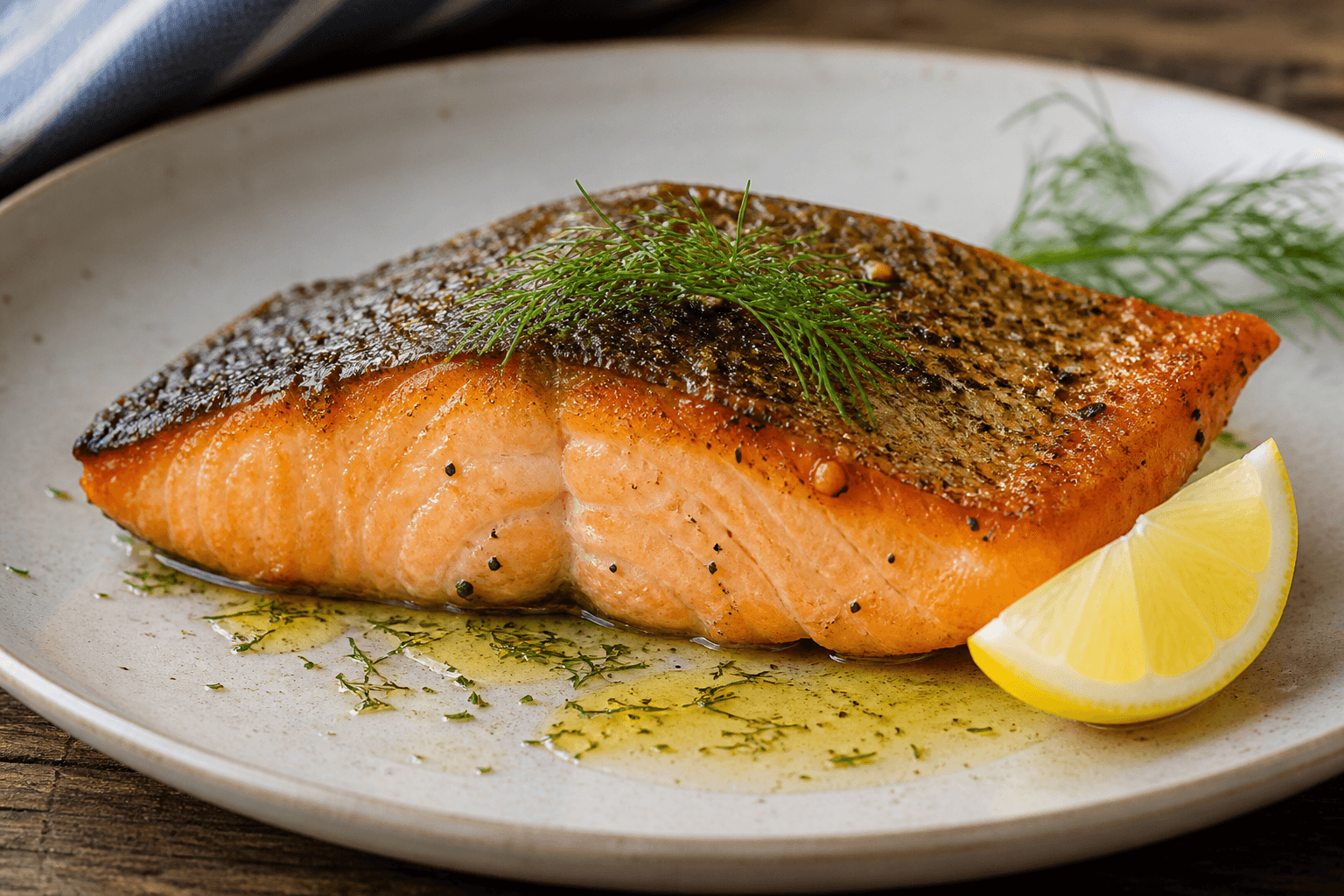
New England Pan-Seared Salmon with Lemon & Dill
Crispy skin, medium centre, lemon and dill — a clean New England weeknight salmon plate.
salmon guide
Salmo salar (Atlantic); Oncorhynchus spp. (Pacific)
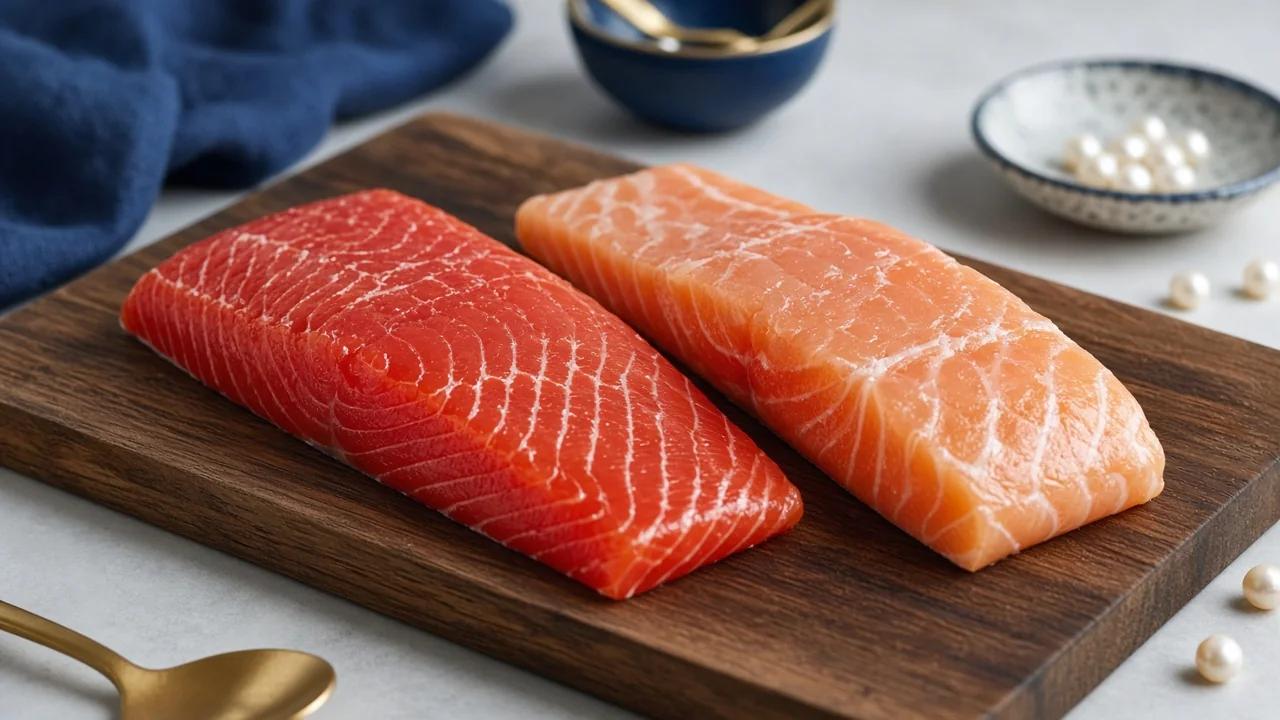
Salmon is a rich, oily fish with pink-orange flesh, and it is one of the most popular fish in the world because it is easy to cook, full of omega-3 fats and available all year.
rich; sockeye's flavour rivals Chinook (NOAA Fisheries) · fresh in summer and early autumn; frozen, canned and smoked all year (NOAA Fisheries) · North Atlantic and North Pacific; major farming in Norway, Scotland, Chile, and Canada.
 Info
Atlantic vs Pacific types, taste and nutrition.
Open →Cook7 recipes: pan-seared, baked, grilled, teriyaki.
Open →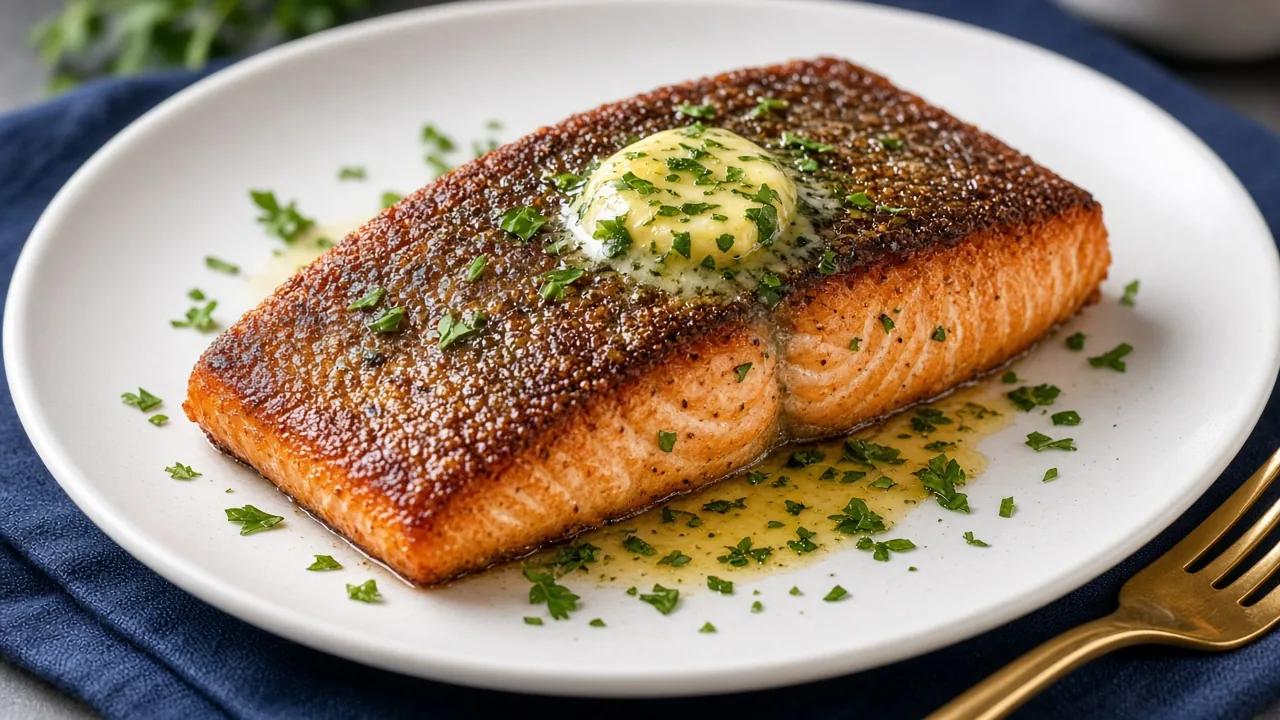 Eat
Salmon on real menus in all 30 of our cities.
Open →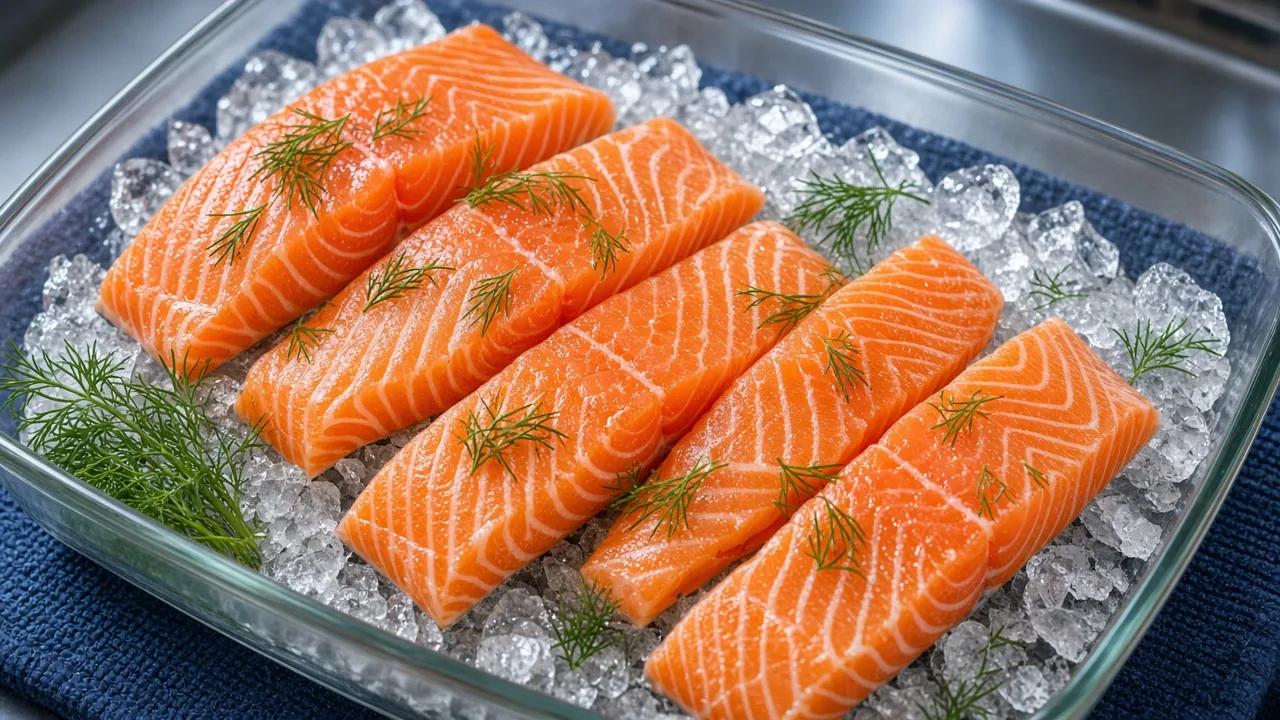 Buy
Farmed vs wild labels, cuts, freshness, markets near you.
Open →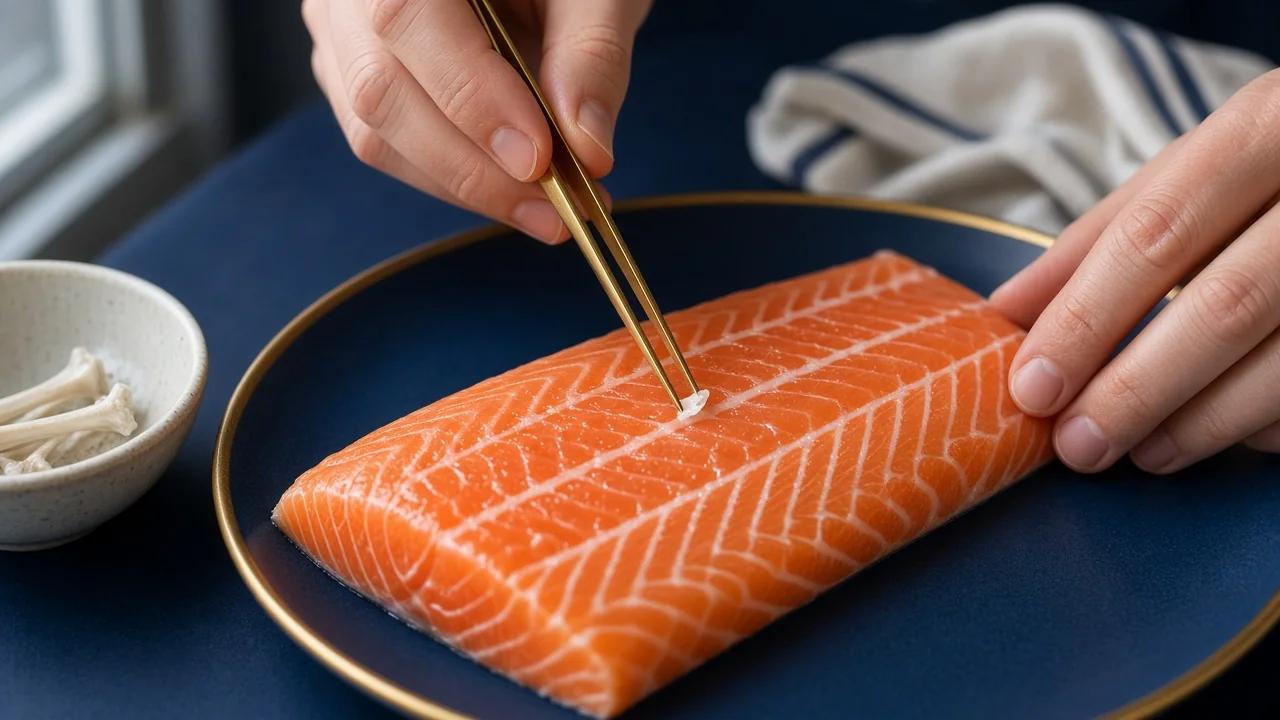 Tips
Crisp skin, no white albumin, safe for sushi.
Open →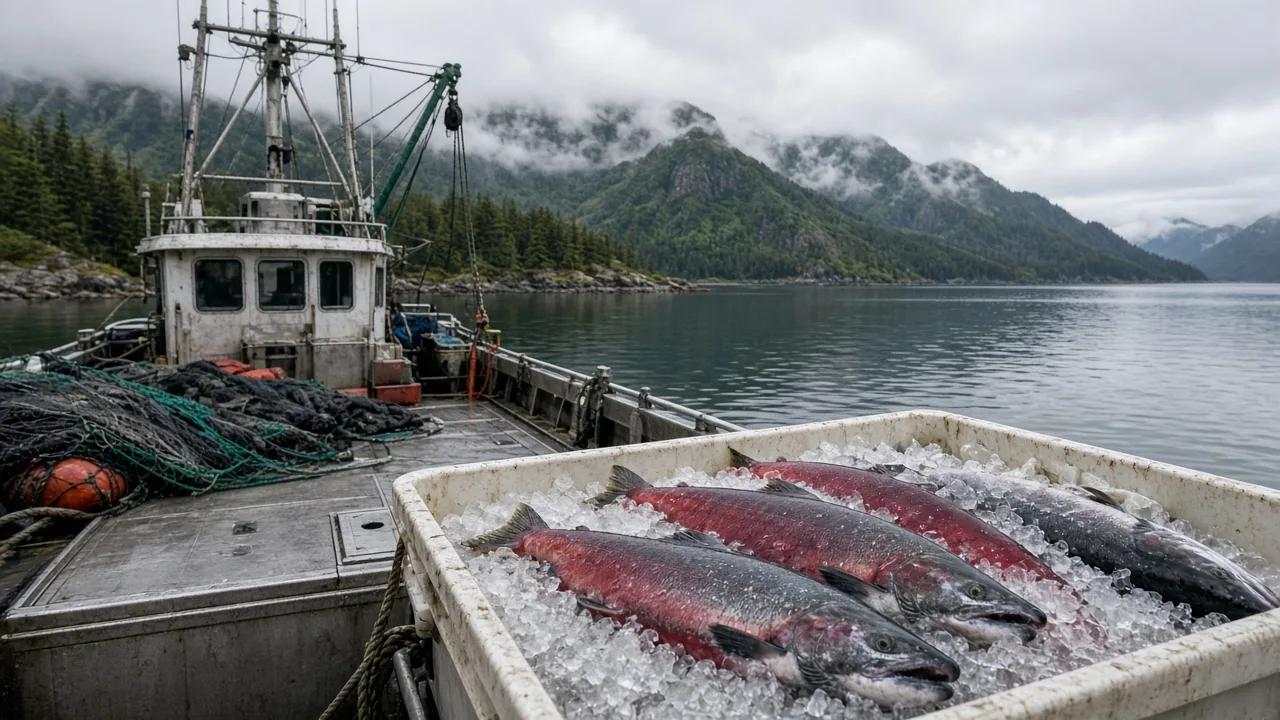 Catch
Alaska seasons, Norway & Scotland farms, rules.
Open →Ask the Fish Guide about salmon — grounded in this species hub.
Main types
Atlantic salmon (*Salmo salar*), mostly farmed; Pacific salmon including sockeye, coho, Chinook (king), pink and chum, mostly wild
Taste
rich; sockeye's flavour rivals Chinook (NOAA Fisheries)
Texture
firm and fatty (sockeye, NOAA Fisheries)
Wild sockeye season
fresh in summer and early autumn; frozen, canned and smoked all year (NOAA Fisheries)
الطعم
rich; sockeye's flavour rivals Chinook (NOAA Fisheries)
الموسم
fresh in summer and early autumn; frozen, canned and smoked all year (NOAA Fisheries)
الموطن
North Atlantic and North Pacific; major farming in Norway, Scotland, Chile, and Canada.
Recipes
Step-by-step methods from our recipe pages — same hero photos you will see on each dish.
American · Easy
Crispy skin, medium centre, lemon and dill — a clean New England weeknight salmon plate.
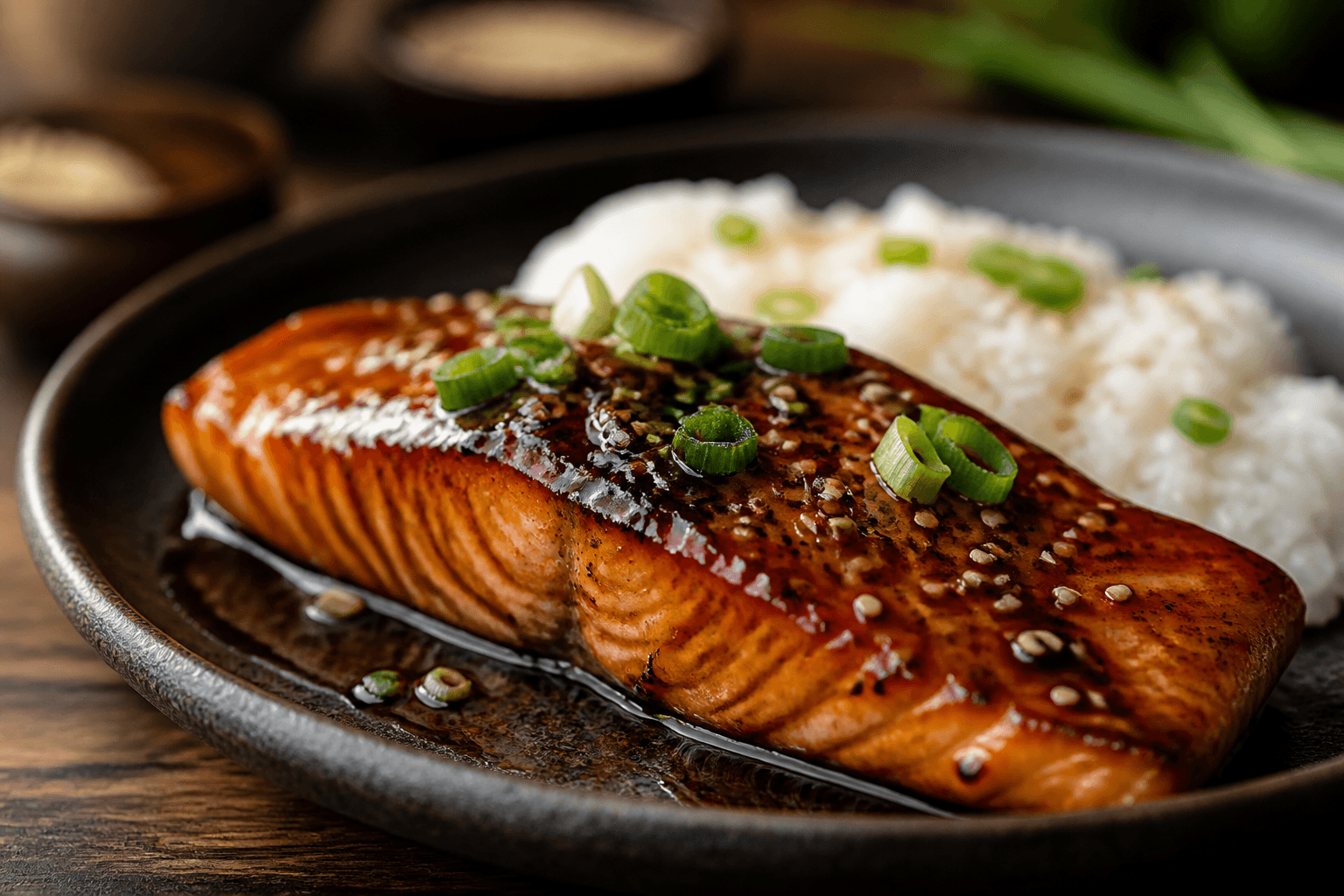
Japanese · Easy
Weeknight Japanese classic — crisp-edged salmon under a sweet-savoury glaze in under 20 minutes.
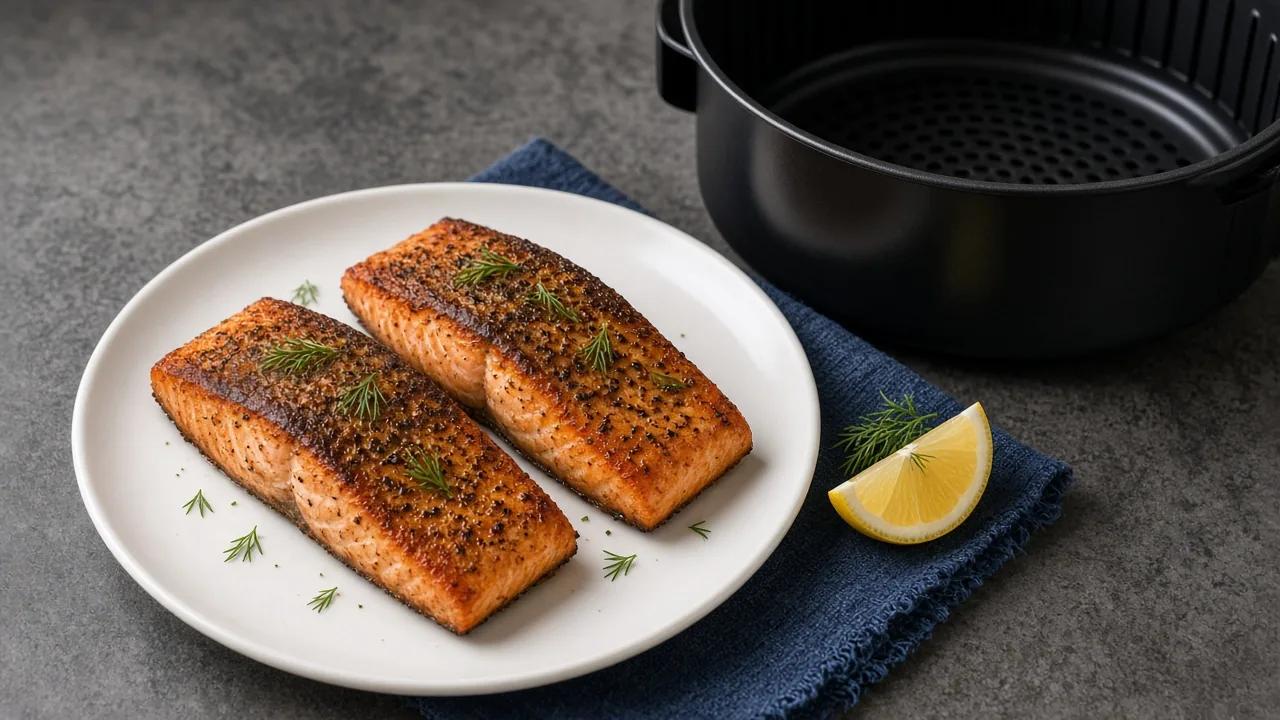
American · Easy
Air fryer salmon is one of the fastest ways to get crisp edges and a moist centre without heating the oven. A hot basket, dry fillets and a short cook time do most of the work.
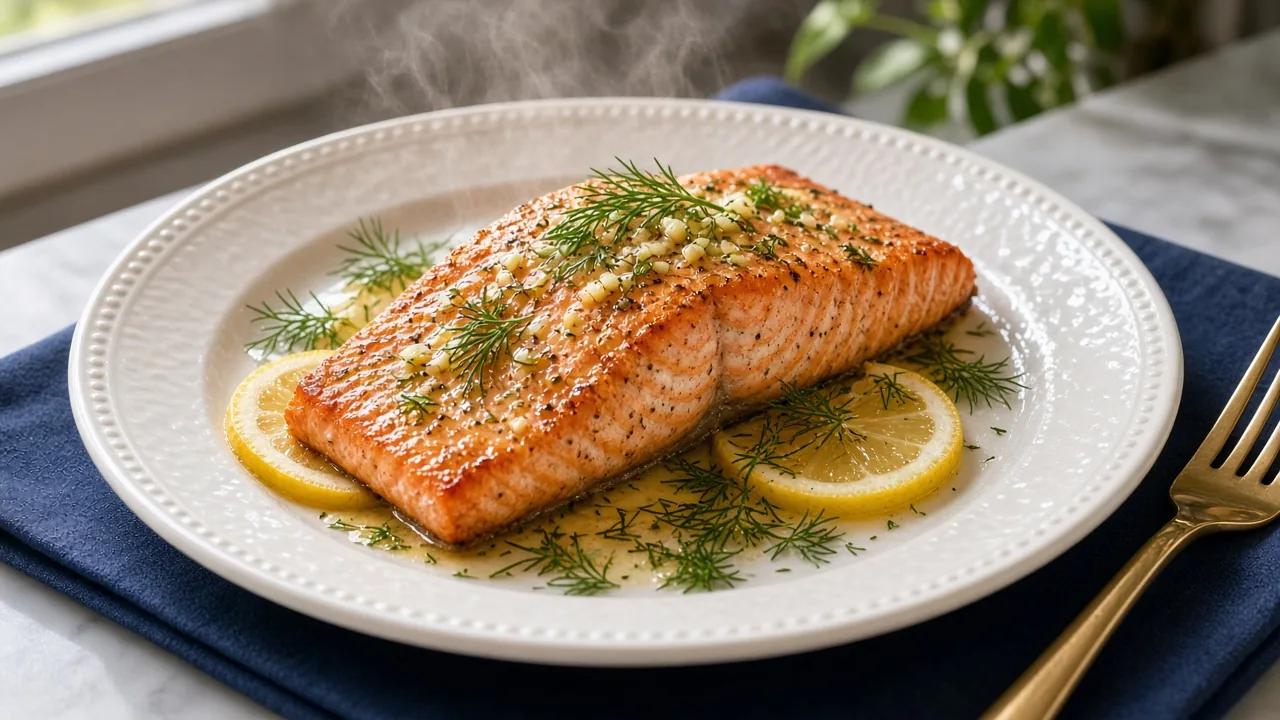
Mediterranean · Easy
Baking salmon at 400°F / 200°C with lemon, garlic and olive oil is a reliable way to feed four people with almost no tending. The oven heat is even, and the lemon keeps the flavour bright.
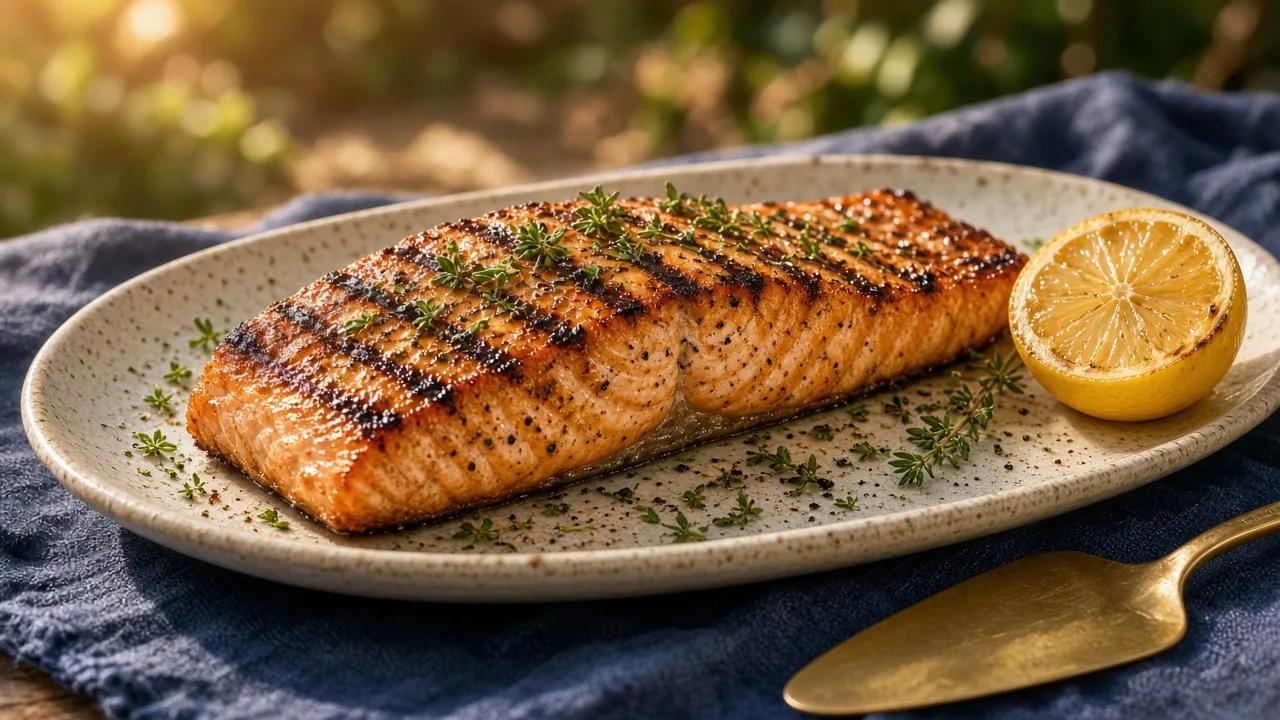
American · Medium
Grilled salmon should have crisp skin, moist flakes and a little smoke, not a stuck fillet and a dry centre. Oil the fish and the grates, start skin-side down, and keep the lid closed.
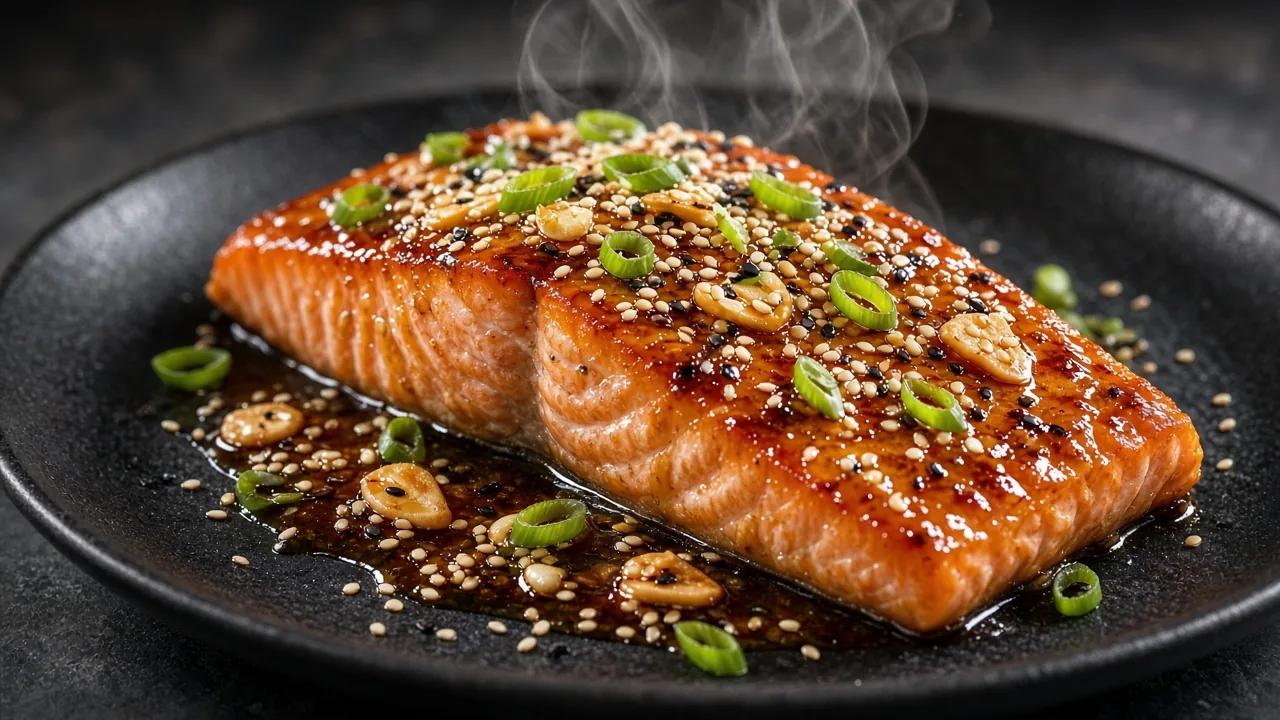
Asian-inspired · Easy
Honey garlic salmon tastes like a restaurant glaze only if you add the honey late. Sugar burns in a hot pan, so the salmon cooks first and the glaze goes on in the last few minutes.
French-inspired · Medium
Crispy-skin salmon is a pan job, not an oven job. Dry skin, a hot pan, and the patience not to move the fillet are what make the crackle.
For cooking at home, see our best seasoning for salmon.
For cooking at home, see our lemon pepper seasoning.
For cooking at home, see our salmon seasoning.
Salmon is a rich, oily fish with pink-orange flesh, and it is one of the most popular fish in the world because it is easy to cook, full of omega-3 fats and available all year.
Buying links may earn a commission. Restaurant listings are editorial — not paid placements in this block.
Tips
Best methods: Pan sear, Oven roast, Grill, Cure / gravlax, Smoke.
Catch & season
Species guide
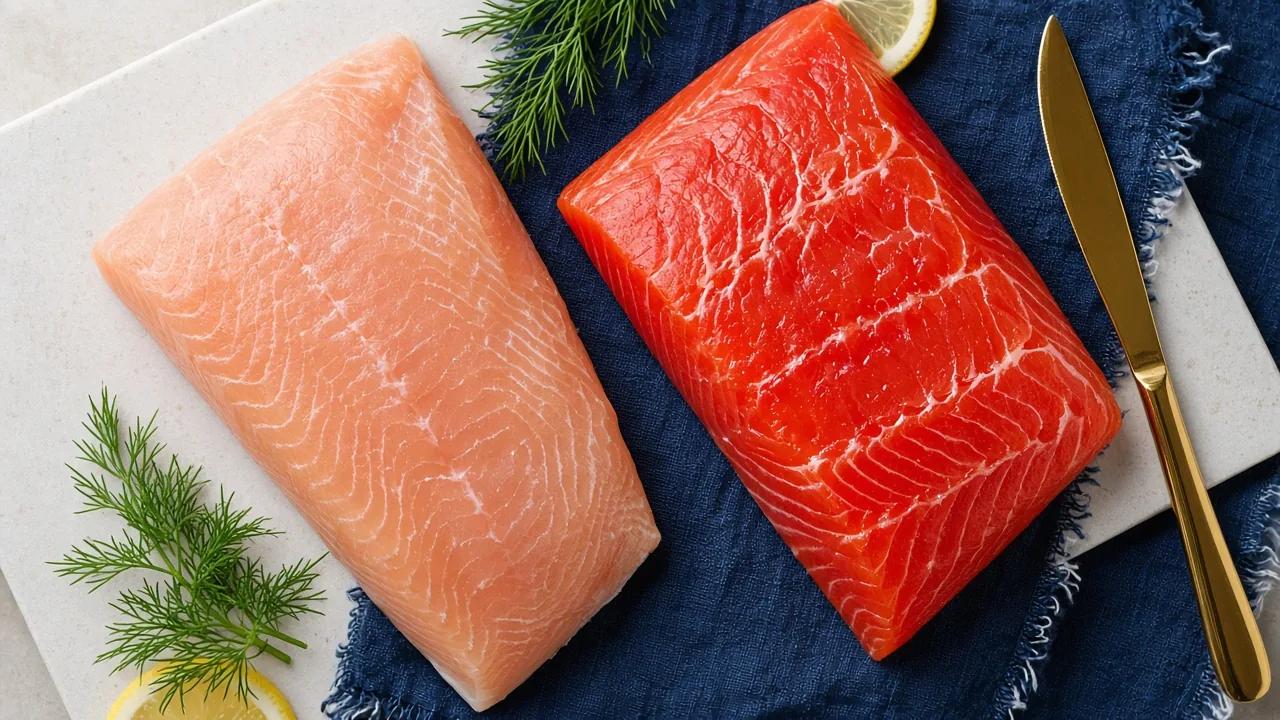
Salmon is a rich, oily fish with pink-orange flesh, and it is one of the most popular fish in the world because it is easy to cook, full of omega-3 fats and available all year. The salmon you buy is either farmed Atlantic salmon or one of several wild Pacific salmon such as sockeye, coho and king, and they taste noticeably different. This guide is part of our Fish & Seafood Guide.
What is salmon? Salmon are fish that hatch in fresh water, move to the sea to grow, and usually return to fresh water to spawn. NOAA Fisheries explains that most sockeye salmon, for example, hatch in streams, rivers or lakes, spend 1 to 3 years in fresh water, then migrate to the ocean and return to spawn after 2 to 3 years at sea. Females dig nests in gravel with their tails and lay 2,000 to 4,500 eggs.
There are two main groups:
| Type | Wild or farmed | Flavour and texture | Good for |
|---|---|---|---|
| Atlantic salmon | Mostly farmed | Mild, buttery, high fat | Roasting, sushi, smoking |
| Sockeye | Wild | Rich, deep red, firm | Grilling, pan-searing |
| Coho | Wild | Milder, medium fat | Baking, grilling |
| Chinook (king) | Wild | Richest, very buttery | Special occasions |
| Pink and chum | Wild | Lean, mild | Canned, smoked |
Farmed Atlantic salmon is available all year, fairly consistent in size and fat, and mild-tasting. The Marine Conservation Society notes environmental concerns linked to salmon farming and says the Best Choices are organic or ASC-certified farmed salmon.
Wild Pacific salmon such as sockeye is leaner, firmer and more strongly flavoured. NOAA says there are hundreds of sockeye stocks in Alaska; some are in decline while others are steady or increasing, and none is listed under the Endangered Species Act. If organic or ASC farmed salmon isn't available, MCS points to wild-caught Pacific salmon as an option.
Avoid wild Atlantic salmon, because the wild populations are struggling (MCS).
Salmon tastes rich and savoury, with a gentle sweetness. Farmed Atlantic salmon is mild and buttery. Wild sockeye has a rich flavour that NOAA says rivals Chinook, with firm, fatty flesh. Because it's oily, salmon stays moist and is quite forgiving to cook.
Store fresh salmon in the coldest part of the fridge and cook within a day or two. Thaw frozen salmon overnight in the fridge.
The FDA says fish is cooked at 145°F (63°C), when the flesh is opaque and separates easily. Many people like wild salmon slightly less done; cook to your own preference and the FDA guidance.
How long to bake salmon at 400°F? Roughly 4 to 6 minutes per half inch of thickness. Start checking early, because thin fillets overcook fast.
| Method | Approximate time (1-inch fillet) |
|---|---|
| Broil, 4 inches from the heat | 10–12 min (University of Wyoming Extension) |
| Pan-sear, medium-high | About 5 min per side (University of Wyoming Extension) |
| Poach, covered, gently simmering | 4–6 min (University of Wyoming Extension) |
Try salmon sashimi in Tokyo with our Tokyo seafood guide, find sushi and omakase restaurants, or browse fish restaurants in Seattle for wild Pacific salmon.
Is salmon healthy? It is one of the best food sources of omega-3 fats. According to USDA FoodData Central (salmon, Atlantic, farmed, raw; values per 100 g):
| Nutrient | Amount |
|---|---|
| Calories | 208 kcal |
| Protein | 20.4 g |
| Fat | 13.4 g |
| Cholesterol | 55 mg |
| EPA (omega-3) | 0.86 g |
| DHA (omega-3) | 1.1 g |
| Vitamin B12 | 3.23 µg |
| Selenium | 24.0 µg |
Wild sockeye (NOAA Fisheries, per 100 g raw) has 168 kcal, 21.3 g protein and 8.56 g fat. The FDA lists salmon as a "Best Choice" for low mercury.
How do you bake salmon? Bake fillets skin side down at 400°F (200°C) for about 12 to 15 minutes, until they reach 145°F or flake easily.
How long do you bake salmon at 400°F? About 12 to 15 minutes for a 1-inch fillet, or roughly 4 to 6 minutes per half inch.
How do you grill salmon? Oil the fish and grates, then grill skin side down over medium-high heat with the lid closed for 6 to 8 minutes.
How long do you cook salmon in the oven? 12 to 15 minutes at 400°F for most fillets. Check for 145°F (FoodSafety.gov).
What's the white stuff on salmon? Albumin, a protein pushed out as the muscle fibres contract. Gentler heat reduces it (University of Wyoming Extension).
Is salmon healthy? It's rich in protein and omega-3 fats (EPA and DHA), and it's an FDA Best Choice.
Is farmed or wild salmon better? Both are nutritious. Wild Pacific salmon is leaner; farmed Atlantic salmon is fattier. Check sustainability ratings for the source.
Can you eat salmon skin? Yes. Cooked crisp, it's delicious and helps protect the flesh during cooking.
These pages deepen methods already summarized on this hub. They do not replace the how-to-cook sections above.
Existing recipes to keep and cross-link: New England pan-seared salmon and Japan salmon teriyaki.
Bake fillets skin side down at 400°F (200°C) for about 12 to 15 minutes, until they reach 145°F or flake easily.
About 12 to 15 minutes for a 1-inch fillet, or roughly 4 to 6 minutes per half inch.
Oil the fish and grates, then grill skin side down over medium-high heat with the lid closed for 6 to 8 minutes.
12 to 15 minutes at 400°F for most fillets. Check for 145°F (FoodSafety.gov).
Albumin, a protein pushed out as the muscle fibres contract. Gentler heat reduces it (University of Wyoming Extension).
Yes. It's rich in protein and omega-3 fats (EPA and DHA), and it's an FDA Best Choice.
Both are nutritious. Wild Pacific salmon is leaner; farmed Atlantic salmon is fattier. Check sustainability ratings for the source.
Yes. Cooked crisp, it's delicious and helps protect the flesh during cooking.
Cookies. Essential cookies always run. Analytics and ads need your choice — manage or accept below. Essential cookies run the site. Google Analytics runs by default outside the UK, EEA and Switzerland, and only after you accept it there. Opt out any time in Cookie settings. Ads (Meta, Pinterest) load only with your permission. · Privacy