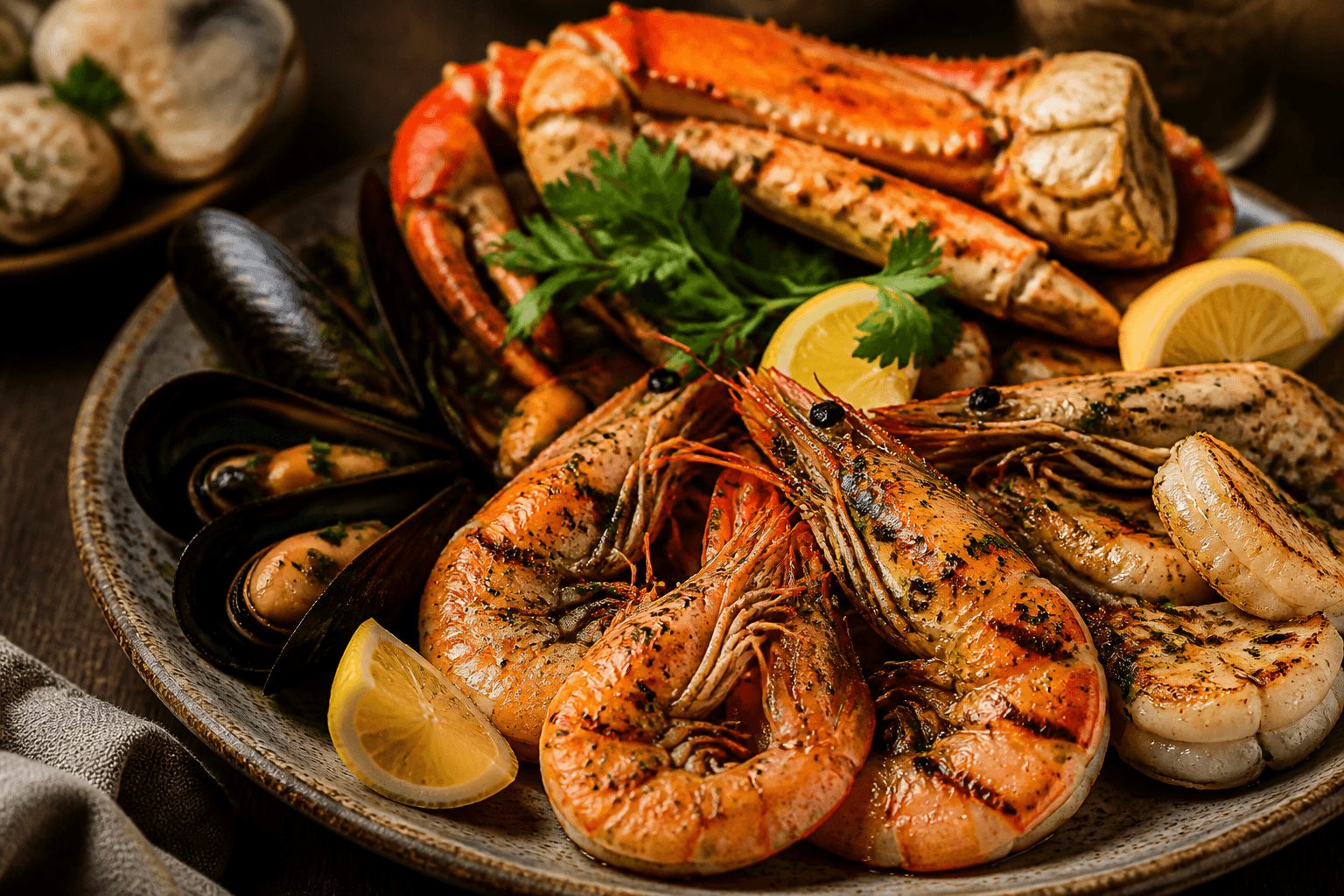
Prawns and shrimp are the global seafood default: they cook in minutes, take spice and citrus well, and show up from Spanish gambas to Gulf BBQ and Japanese tempura. On menus the words overlap; in the case, size and smell matter more than the label.
Use the species cards and count calculator above for portions and timing, then the restaurant map for rooms that actually feature shellfish.
How to buy prawns
Look for firm bodies, a clean sea smell, and shells that are not sticky or glassy. Frozen can be excellent if it was frozen fresh — thaw in the fridge and pat completely dry before a sear.
Prefer dry-pack or chemical-free labels. Phosphate soaks (STPP) add water weight and kill browning. Head-on shells add sauce for grills; peeled tails are faster for garlic oil.
Best ways to cook them
High heat, short clock: once the flesh is opaque and the curl looks like a relaxed “C”, pull them. Overcooked meat tightens into a rubbery “O”. Garlic oil, charcoal, and salted boiling water are the honest tests of quality.
At restaurants, order the simple preparation first — gambas, scampi, or head-on BBQ — before cream-heavy dishes that hide tired product.
 Global standard