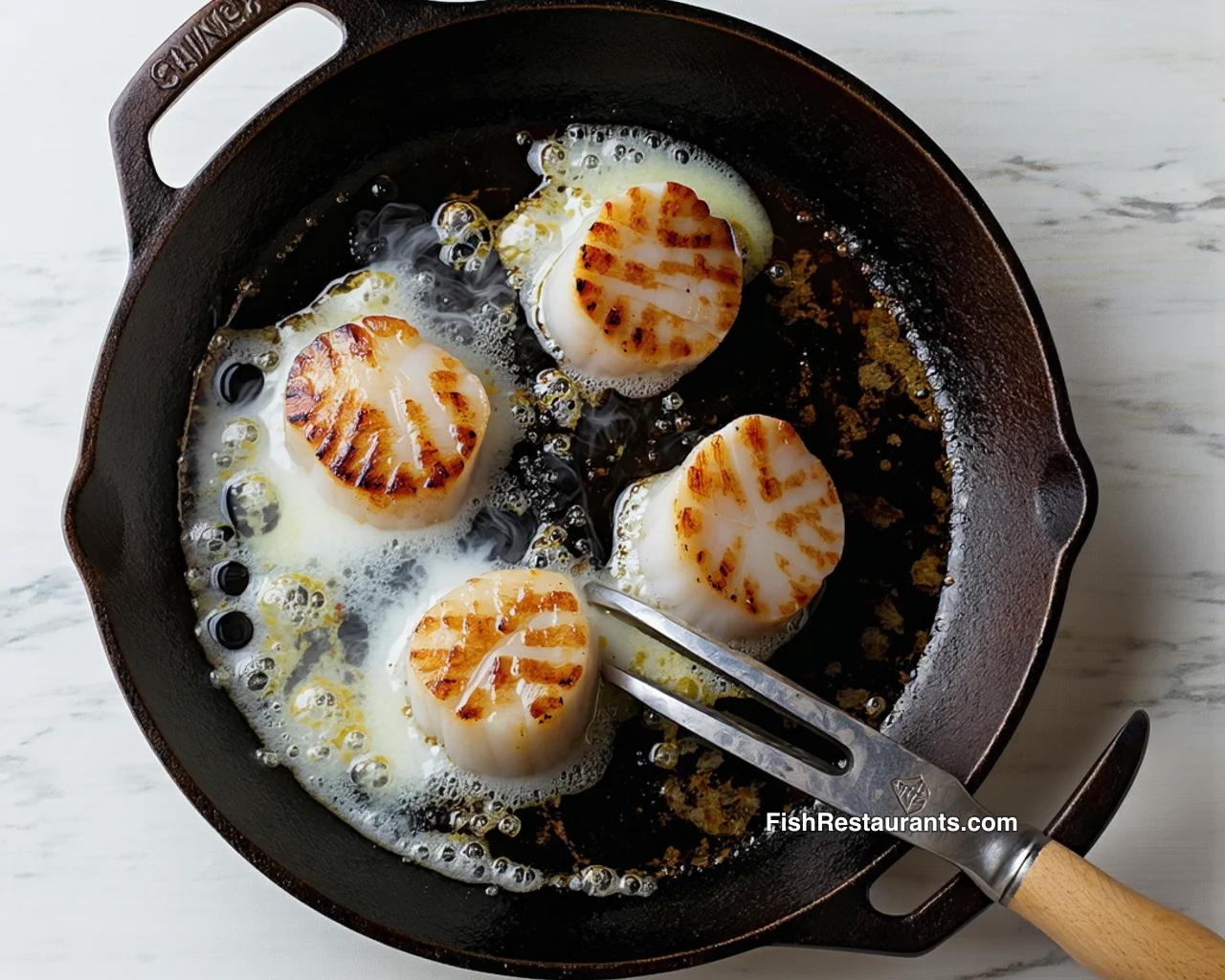
Searing scallops starts after thaw, when each piece is cold but dry on the outside. Wet surfaces steam; dry surfaces brown.
Frozen scallops can sear as beautifully as fresh if you manage purge water. Market terms like “dry” versus “wet” are explained on the scallops hub—here is thaw-to-pan technique.
Fridge thaw on a rack
Lay scallops on paper towels set on a wire rack. Thaw 6–10 hours for typical U10 portions. Lift the towel once midway to swap wet layers.
Expect a cloudy puddle—that is phosphate solution or natural purge, not automatic spoilage.
Drying is non-negotiable
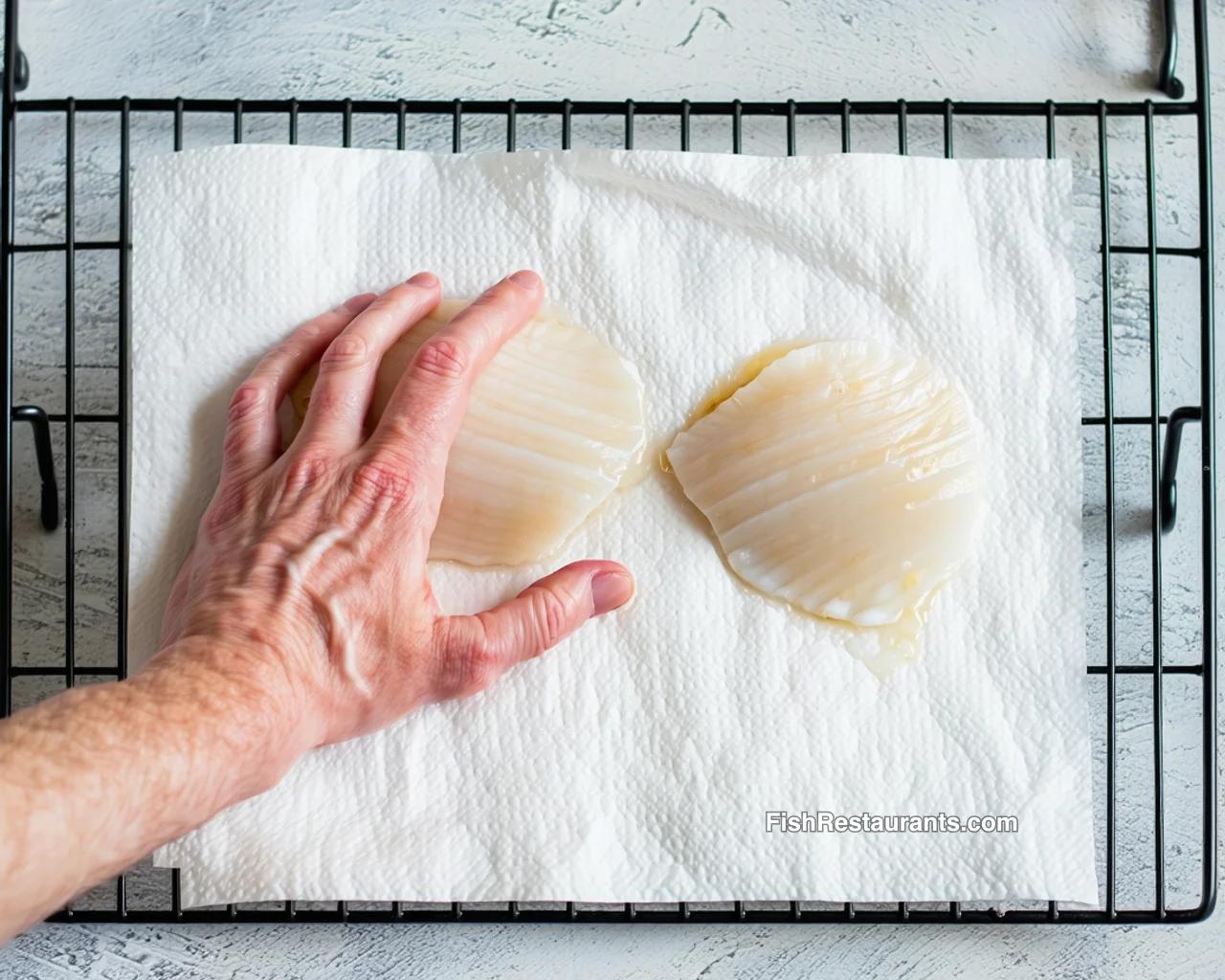
Blot each scallop between fresh towels until the surface feels almost tacky. Some cooks briefly salt five minutes ahead to pull moisture, then blot again.
Leave scallops uncovered in the fridge 15 minutes after drying if time allows—surface dehydration helps the Maillard reaction.
Pan choice and oil
Cast iron or heavy stainless holds heat. Use a high-smoke oil; butter alone browns slowly unless you finish with a butter baste after the crust forms.
Heat until oil shimmers and faint smoke appears, then add scallops with space between.
Sear timing
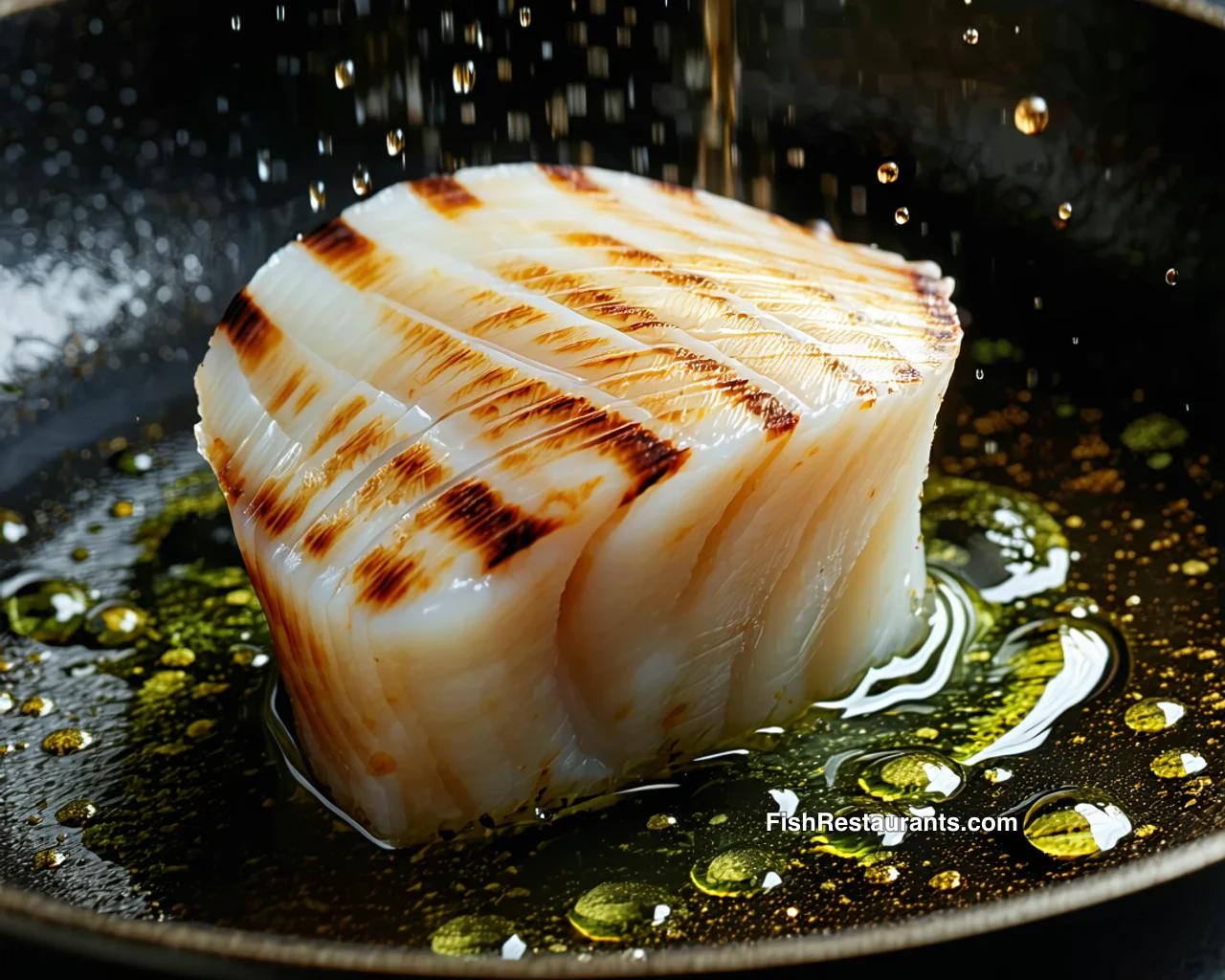
90 seconds on the first side without moving builds a walnut crust. Flip once; second side needs 60–90 seconds. Centers should read 45–50 °C for tender translucence.
Crowding drops pan temperature and guarantees gray steam, not caramel.
When scallops will not brown
Wet-packed product with heavy STPP may never crust well—buy better product next round. If ice glaze was heavy, extra drying time helps only so much.
Stove smoke and ventilation
Searing requires ripping-hot pans; scallops release butter notes fast. Turn on the hood before fish hits oil. If the crust is pale at 90 seconds, your pan was not hot enough—heat longer empty, then oil, then fish.
Side muscle and transparency
The side muscle on some scallops is woody; peel it. Translucent centers with opaque sides indicate medium-rare scallop texture prized in bistros.
FAQ
Can I cook scallops from frozen?
High-heat sear from frozen risks cold centers; thaw at least partially.
Should I remove the side muscle?
Yes; it toughens on heat.
Is the orange roe attached OK?
Edible; some chefs remove for uniform color.
Why do mine release milk?
Overcooked or wet surfaces; dry and pull sooner.
Size counts explained?
See U8/U10 tables on the scallops guide.