International · Medium
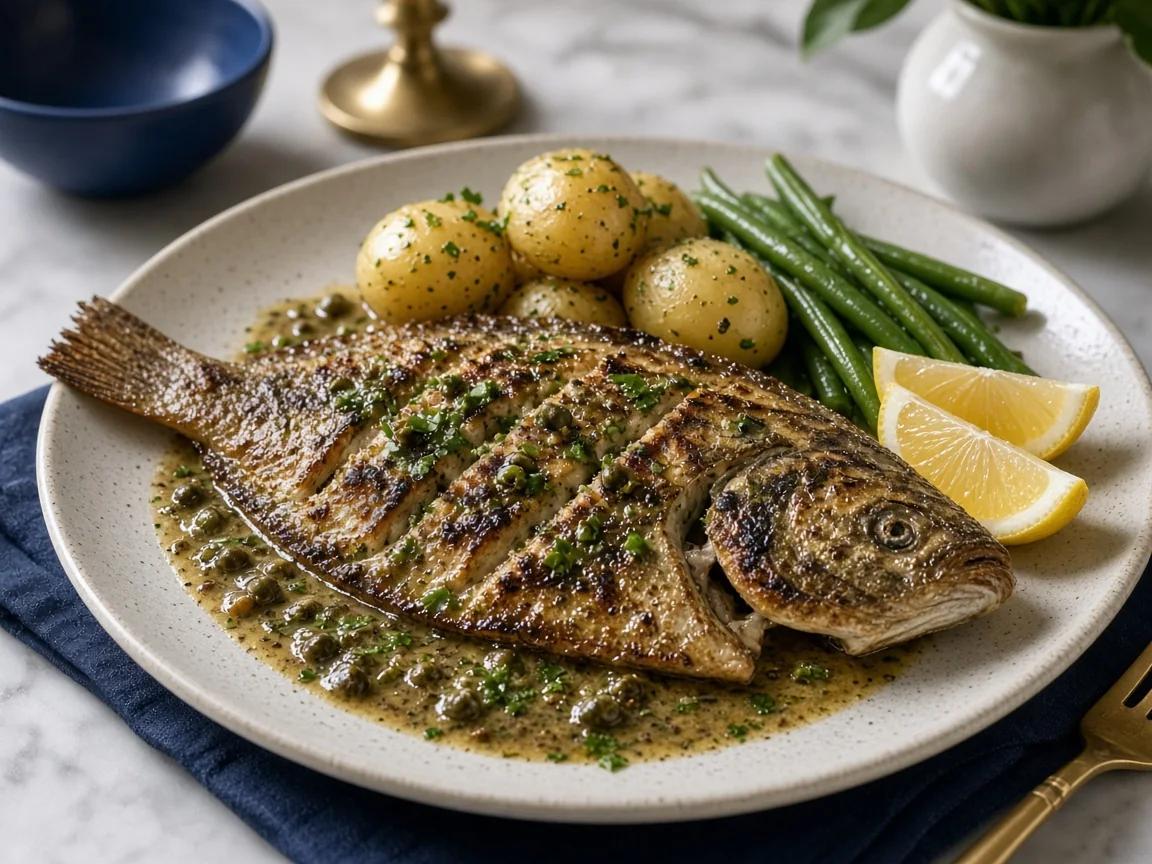
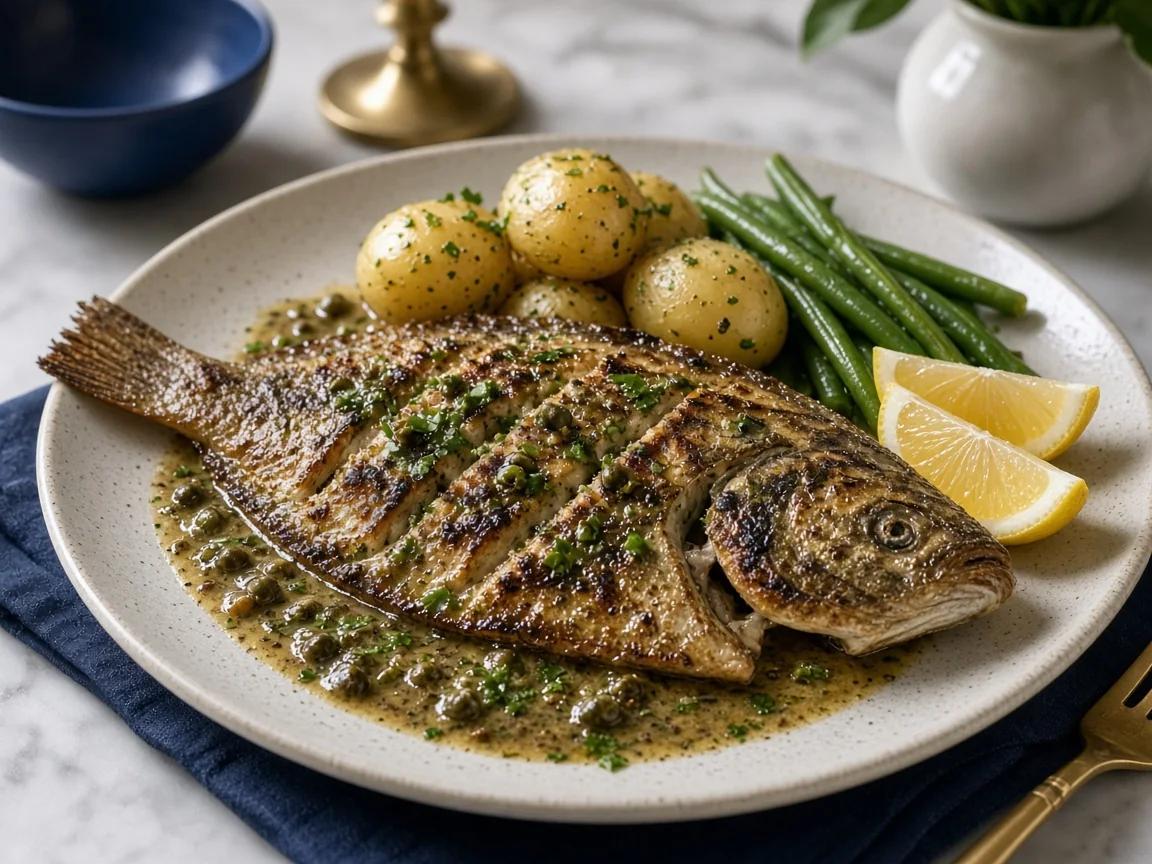
Grilled Whole Plaice with Brown Butter and Capers
A whole plaice grilled on the bone, so it stays juicy, then finished with nutty brown butter, capers and lemon. It's simple and very British, and it's ready in 20 minutes.
plaice guide
European plaice, *Pleuronectes platessa*
Plaice is a flatfish from the North Atlantic and North Sea with sweet, delicate white flesh, and it's one of Britain's best-loved and best-value fish.
mild, sweet and delicate, with soft, fine white flakes · late spring to autumn; it's thin and watery just after spawning in winter
Ask the Fish Guide about plaice — grounded in this species hub.
Scientific name
European plaice, *Pleuronectes platessa*
Type
right-eyed flatfish (both eyes on the right side of its head)
Looks
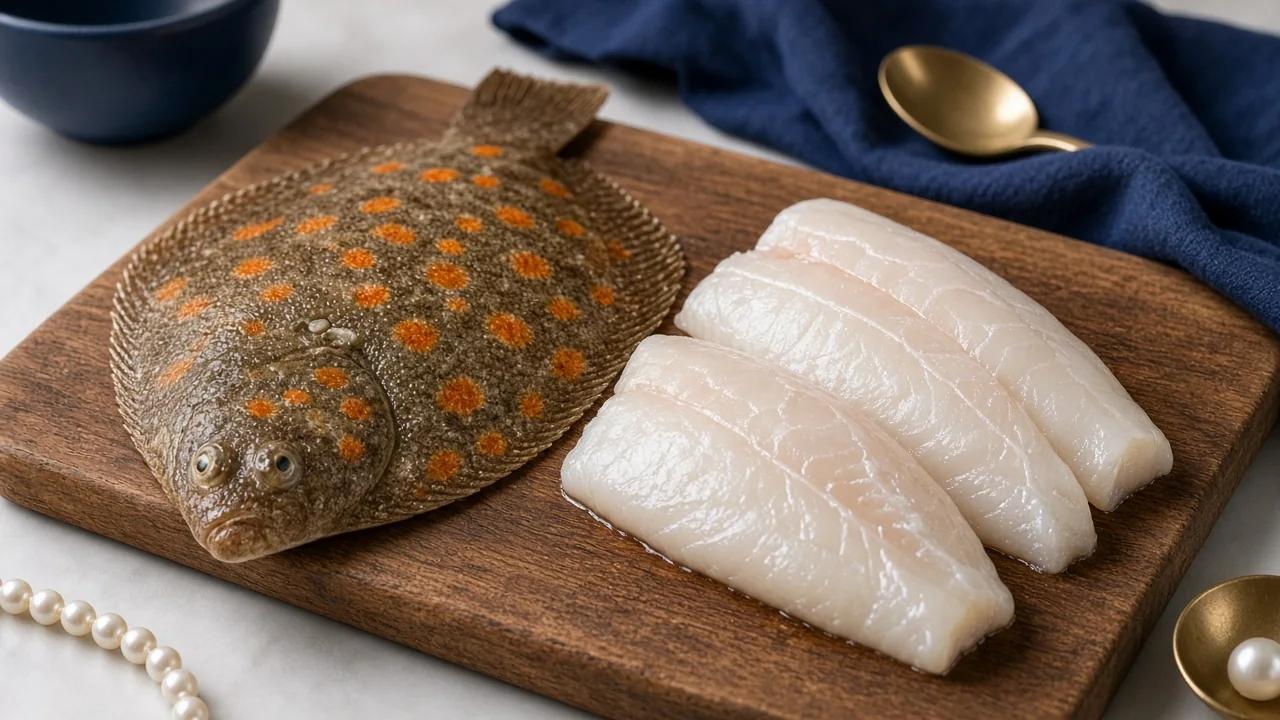
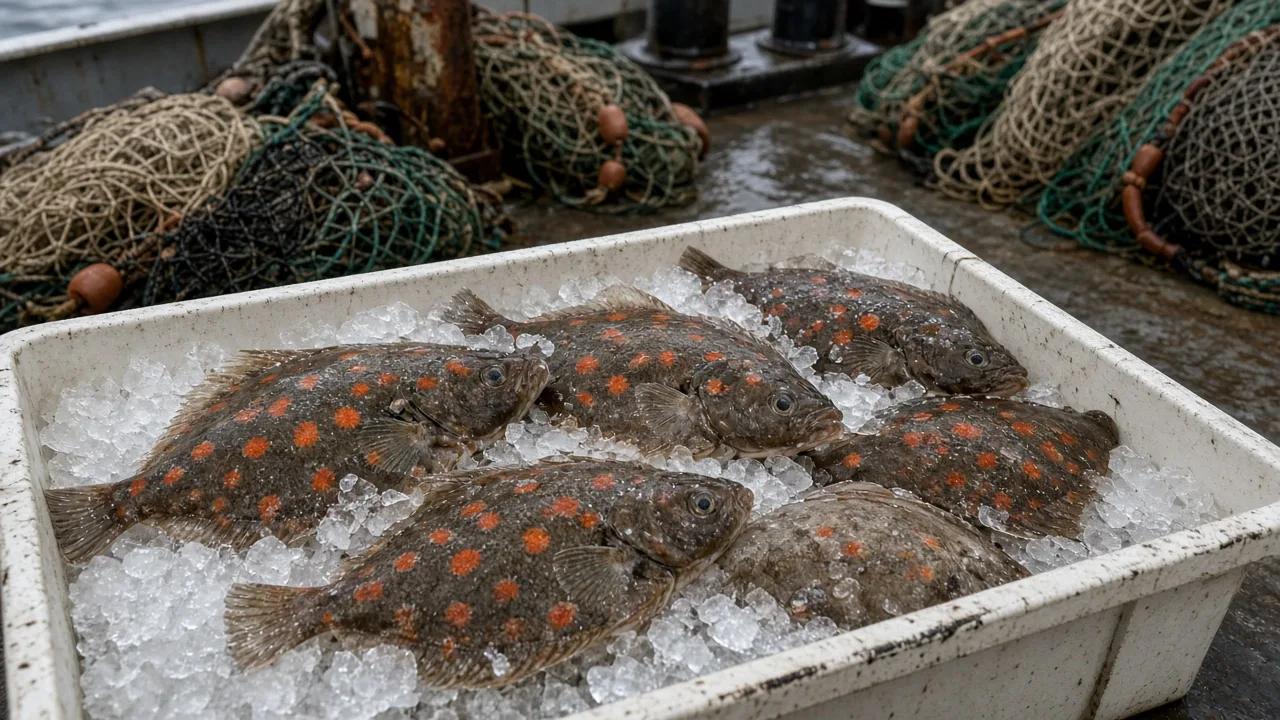
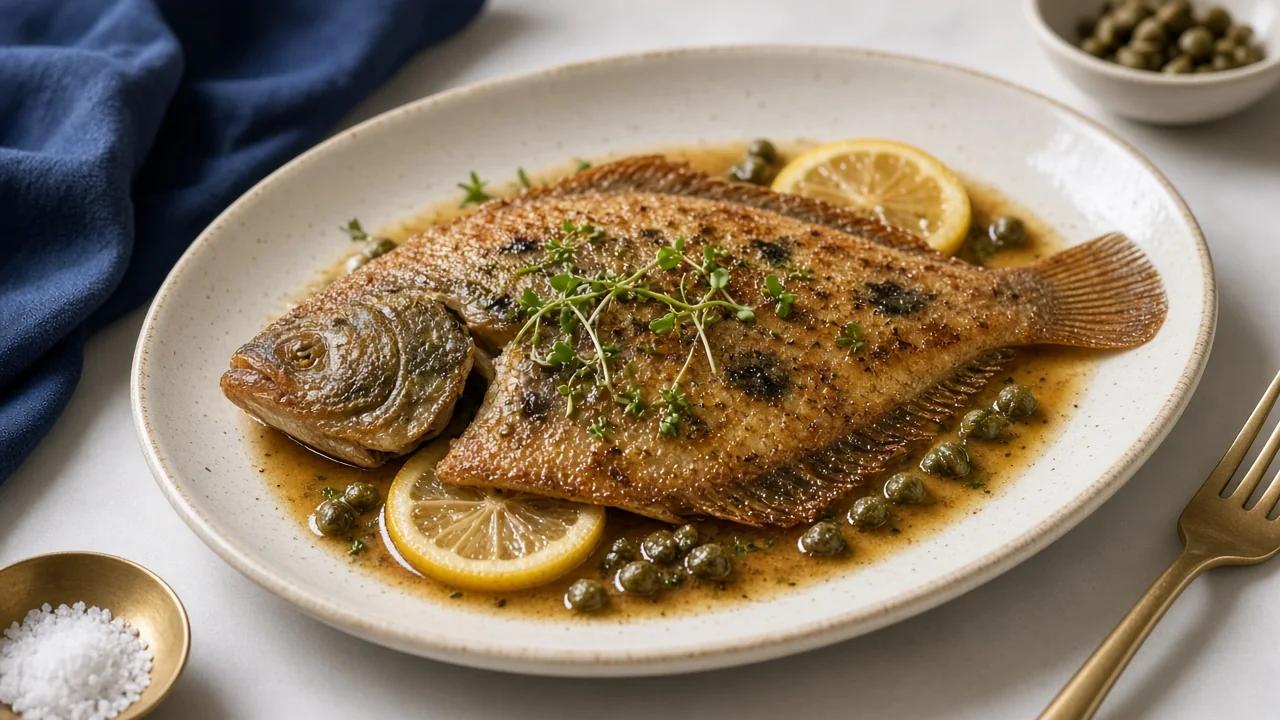
smooth brown or greenish skin with distinctive orange-red spots; white underside
Where it lives
sandy and muddy seabeds of the Northeast Atlantic, North Sea, English Channel, Irish Sea and Baltic
Goût
mild, sweet and delicate, with soft, fine white flakes
Saison
late spring to autumn; it's thin and watery just after spawning in winter
Recipes
Step-by-step methods from our recipe pages — same hero photos you will see on each dish.
International · Medium
A whole plaice grilled on the bone, so it stays juicy, then finished with nutty brown butter, capers and lemon. It's simple and very British, and it's ready in 20 minutes.
Plaice is a flatfish from the North Atlantic and North Sea with sweet, delicate white flesh, and it's one of Britain's best-loved and best-value fish.
Buying links may earn a commission. Restaurant listings are editorial — not paid placements in this block.
Catch & season
Species guide
Plaice is a flatfish from the North Atlantic and North Sea with sweet, delicate white flesh, and it's one of Britain's best-loved and best-value fish. You'll know it by the bright orange spots on its brown upper side. It's a chip-shop classic in parts of England, and it's quick and easy to cook at home, either as fillets or whole on the bone.
Plaice is a flatfish, which means it lives lying flat on the seabed. It begins life as a normal, upright larva, but as it grows its left eye moves around to the right side of its head, and it settles on its left side. The brown upper side, with its orange spots, helps it blend in with the sand and gravel; the underside is pure white.
It feeds on worms, small shellfish and crustaceans, and can live for more than 20 years. In the UK, most plaice is landed by beam trawlers and seine netters fishing the North Sea and the English Channel (Seafish).
People often mix up the flatfish on a fishmonger's slab. Here's how plaice compares:
| Fish | How to spot it | Flavour and texture | Best for |
|---|---|---|---|
| Plaice | Brown with orange spots | Sweet, soft, delicate | Pan-frying, grilling, fish and chips |
| Dover sole | Long and oval, brown, no spots | Firm, rich, meaty | Meunière, grilling on the bone |
| Lemon sole | Lighter brown, a little mottled | Sweet, delicate | Pan-frying, baking |
| Flounder | Like plaice but duller, rough skin, faint spots | Milder, softer | Frying, baking |
| Turbot | Large, round, knobbly skin | Firm, rich, luxurious | Roasting whole |
| Halibut | Very large, thick | Firm, meaty | Steaks, roasting |
Plaice is softer and sweeter than Dover sole and much more affordable. It's closer to lemon sole, and the two can be swapped in most recipes.
Plaice spawns in winter and early spring, roughly January to March. During and after spawning the fish are thin and their flesh is soft and watery. They feed up through spring and summer, so plaice is at its best from about May to late autumn, when it's plump and full of flavour (Marine Conservation Society). Many UK fishmongers and chefs say plaice is best in "the months without an R" and into early autumn.
North Sea plaice has been a real success story. Stocks rose to record levels after fishing pressure was reduced, and the Marine Conservation Society rates North Sea plaice caught by most methods as a good choice. Several plaice fisheries are certified by the Marine Stewardship Council. Plaice from the Irish Sea and Celtic Sea may be rated differently, so check the MCS Good Fish Guide for the area on the label.
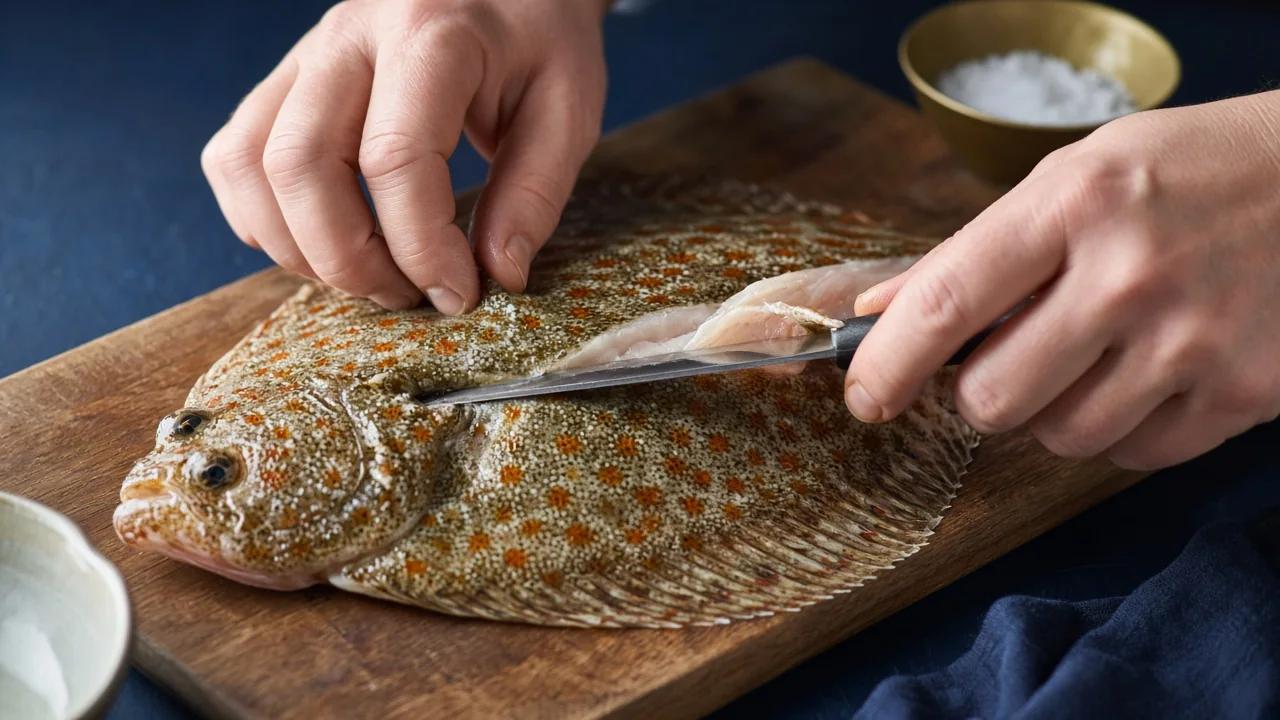
How to prepare a plaice: your fishmonger can do this, but it's easy at home.
How to prepare plaice fillets: a flatfish gives four fillets. Lay the fish dark side up, cut down the centre line along the backbone, then slide a flexible knife between the flesh and the bones, working outwards, to lift off each fillet. Turn it over and repeat. Run your fingers over the fillets to check for bones.
How to cook plaice: because it's thin and delicate, plaice cooks in minutes. It's done when the flesh is opaque and flakes easily, or 63°C (145°F) in the thickest part (FoodSafety.gov).
How to cook plaice fillets in a pan:
Brush a whole, scored plaice with melted butter, season, and cook under a hot grill for 5 to 7 minutes per side for a (450 g) fish, until the flesh lifts easily off the bone. See the full recipe below.
Roll fillets around a filling of spinach and herbs, or lay them flat in a buttered dish with white wine and lemon, cover with foil and bake at 190°C (375°F) for 10 to 12 minutes.
In Yorkshire and the north-east of England, fried plaice is a chip-shop favourite. Coat fillets in egg and breadcrumbs or a light batter and shallow- or deep-fry until golden.
Plaice is delicate and best eaten fresh, ideally on the day you buy it. Keep it covered in the coldest part of the fridge for no more than a day or two. Fillets freeze well for up to 3 months if wrapped tightly; thaw them in the fridge and pat dry before cooking.
| Method | Cut | Time |
|---|---|---|
| Pan-fried | Fillets | 2 minutes on the first side, 1 minute on the second |
| Grilled | Whole, about 1 lb (450 g) | 5 to 7 minutes per side |
| Grilled | Fillets | 3 to 4 minutes, no need to turn |
| Baked | Rolled or flat fillets | 10 to 12 minutes at 190°C / 375°F |
| Roasted | Whole | 15 to 20 minutes at 200°C / 400°F |
| Deep-fried | Battered or breaded fillets | 3 to 4 minutes at 180°C / 350°F |
| Check | Fresh | Past its best |
|---|---|---|
| Spots | Bright orange-red | Faded and dull |
| Skin | Shiny, with a clear slime | Dry, sticky or discoloured |
| Eyes | Clear and bulging | Cloudy and sunken |
| Smell | Clean, of the sea | Sour or strongly fishy |
| Flesh | Firm, springs back when pressed | Soft; fingerprints remain |
Plaice is a lean white fish, low in fat and high in protein. USDA FoodData Central does not list European plaice separately; its entry for flounder and sole species gives a good guide. Values per 100 g (flatfish, raw):
| Nutrient | Amount |
|---|---|
| Calories | 70 kcal |
| Protein | 12.4 g |
| Fat | 1.93 g |
| Cholesterol | 45 mg |
| Selenium | 26.6 µg |
| Vitamin B12 | 1.13 µg |
| Phosphorus | 252 mg |
The NHS recommends at least two portions of fish a week, including one of oily fish such as mackerel (NHS).
Plaice is also one of the best-value fish on the British fish counter. It's often cheaper than cod, haddock or sole, it's quick to cook, and a whole fish on the bone makes an impressive but easy dinner for one or two people.
Our step-by-step recipe, with a photo for every step:
More seafood recipes on our site that use the same techniques:
Every recipe on this page works with our ready-made regional spice blends. For plaice, try Greek Lemon-Oregano, part of our 10-blend World Seafood Spice Pack. Each blend is a complete seasoning: warm a spoonful in oil or butter, add your seafood, and cook.
Prefer someone else to cook? Browse our fish and chips restaurants or find the best fish restaurants in Whitby, Scarborough, Leeds, London.
Part of our North Atlantic white fish guides in the fish and seafood guide hub.
What is plaice? A North Atlantic flatfish (*Pleuronectes platessa*) with orange-spotted brown skin and sweet, delicate white flesh.
How do you cook plaice? Pan-fry fillets for about 2 minutes on one side and 1 minute on the other, or grill a whole plaice for 5 to 7 minutes per side.
How do you cook plaice fillets? Dust them in seasoned flour and fry them in oil and butter over medium-high heat for 3 minutes in total. Finish with lemon and capers.
How do you prepare a plaice? Trim off the fins and tail, gut it if needed, and either cook it whole or cut it into four fillets along the backbone.
Is plaice the same as sole? No. They're both flatfish, but plaice has orange spots and softer, sweeter flesh. Dover sole is firmer and richer.
When is plaice in season? It's best from late spring to autumn. Avoid it in winter and early spring, around spawning time, when the flesh is thin and watery.
Can you eat plaice skin? Yes. The thin skin is edible and crisps up nicely when pan-fried.
Is plaice a sustainable fish? North Sea plaice is rated a good choice by the Marine Conservation Society. Check the label for the catch area.
A North Atlantic flatfish (
Pan-fry fillets for about 2 minutes on one side and 1 minute on the other, or grill a whole plaice for 5 to 7 minutes per side.
Dust them in seasoned flour and fry them in oil and butter over medium-high heat for 3 minutes in total. Finish with lemon and capers.
Trim off the fins and tail, gut it if needed, and either cook it whole or cut it into four fillets along the backbone.
No. They're both flatfish, but plaice has orange spots and softer, sweeter flesh. Dover sole is firmer and richer.
It's best from late spring to autumn. Avoid it in winter and early spring, around spawning time, when the flesh is thin and watery.
Yes. The thin skin is edible and crisps up nicely when pan-fried.
North Sea plaice is rated a good choice by the Marine Conservation Society. Check the label for the catch area.
Cookies. Essential cookies always run. Analytics and ads need your choice — manage or accept below. Essential cookies run the site. Google Analytics runs by default outside the UK, EEA and Switzerland, and only after you accept it there. Opt out any time in Cookie settings. Ads (Meta, Pinterest) load only with your permission. · Privacy