French · Medium
French Sole Meunière (Classic Paris Fish Recipe)
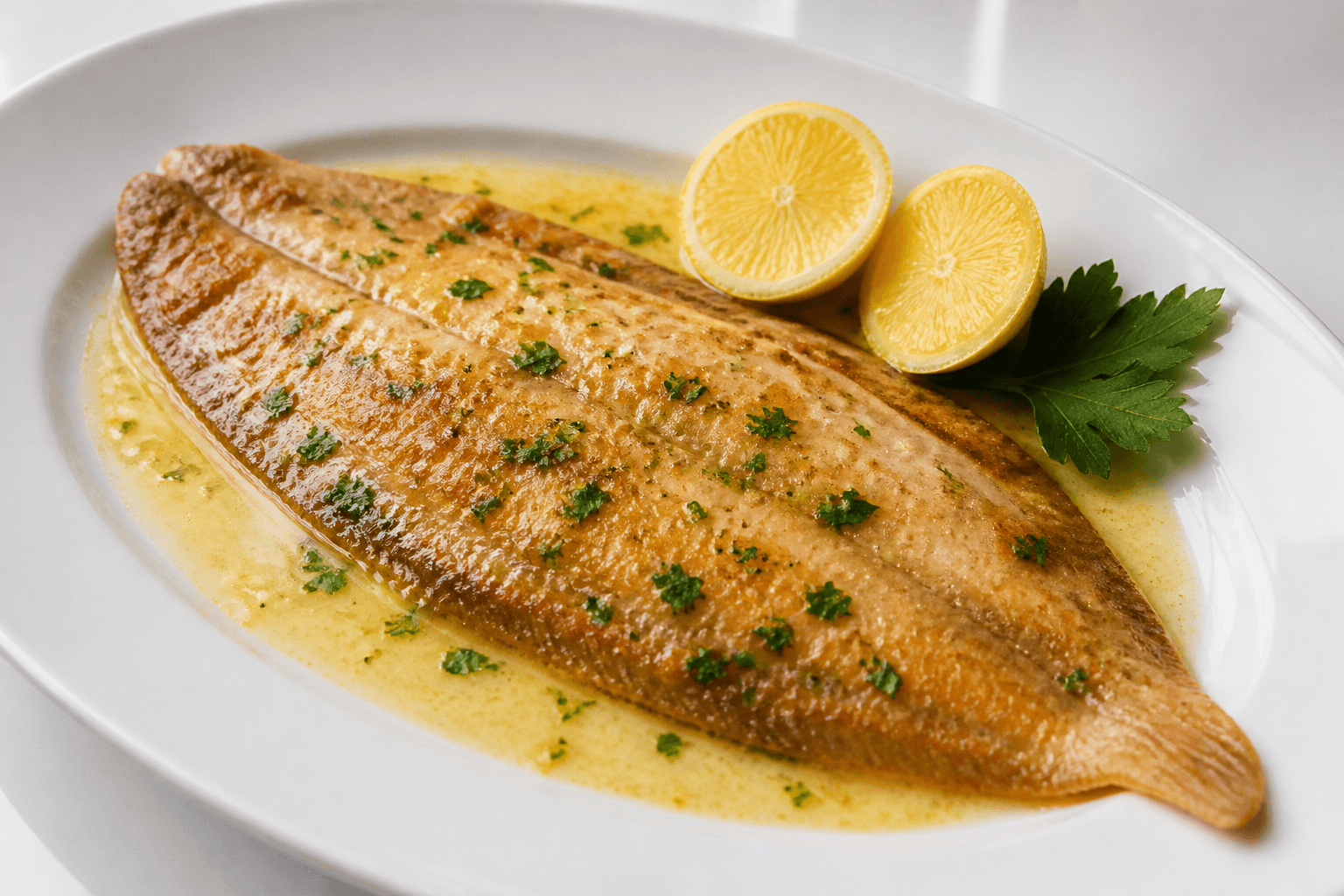
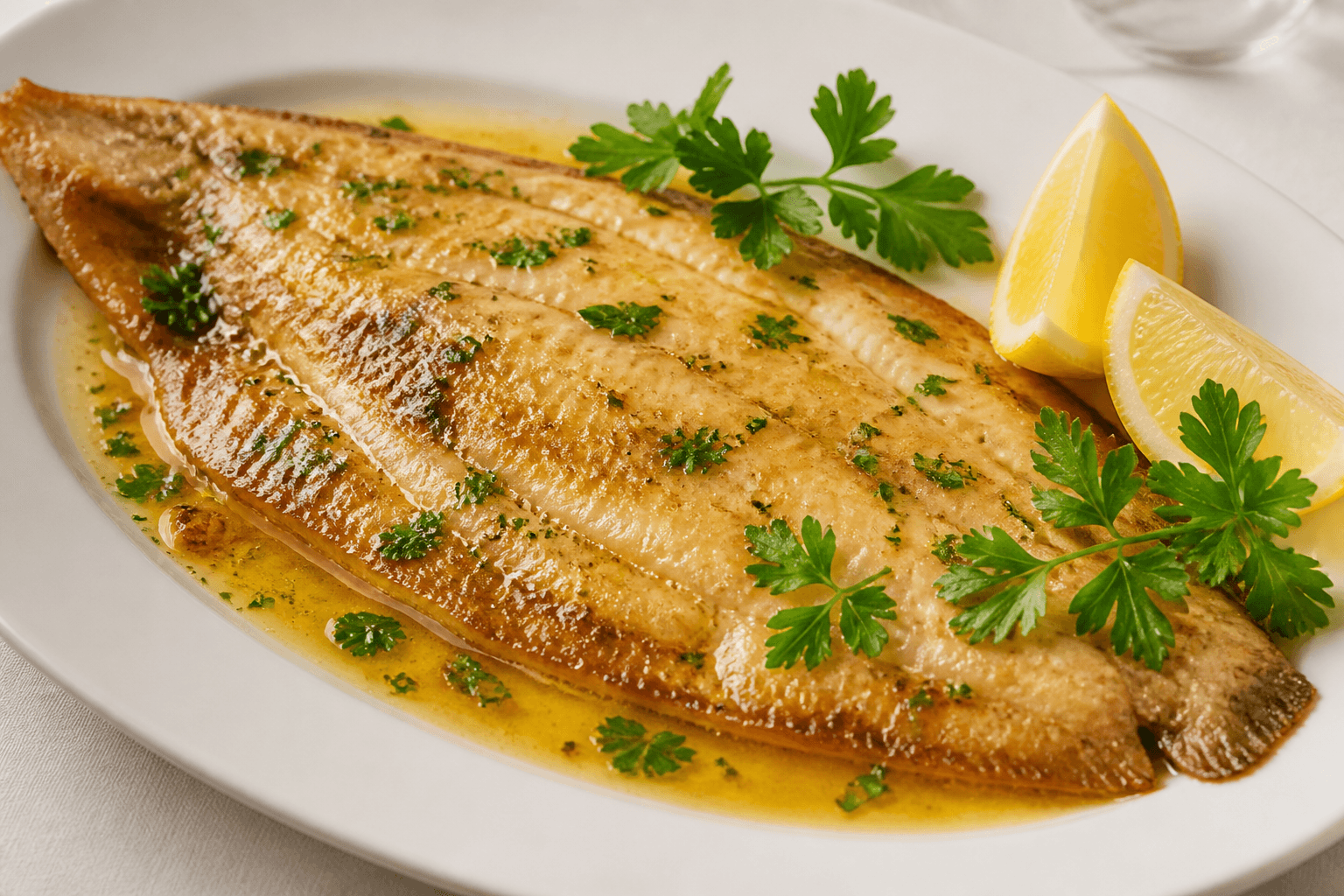
The Paris fish-restaurant classic — delicate sole finished in nutty brown butter, lemon, and parsley.
dover sole guide
*Solea solea* (common sole) (FishBase)
Dover sole is a European flatfish with firm, fine, sweet white flesh, and it's one of the most prized fish in classic French and British cooking.
mild and sweet, with firm, fine-textured flesh · Available much of the year from North Sea and Atlantic fisheries; quality varies with handling. · common sole, sole (France: sole)
Ask the Fish Guide about dover sole — grounded in this species hub.
Scientific name
*Solea solea* (common sole) (FishBase)
Also called
common sole, sole (France: sole)
Taste
mild and sweet, with firm, fine-textured flesh
Habitat
sandy and muddy seabeds of the Northeast Atlantic and Mediterranean (FishBase)
Goût
mild and sweet, with firm, fine-textured flesh
Saison
Available much of the year from North Sea and Atlantic fisheries; quality varies with handling.
Habitat
common sole, sole (France: sole)
Recipes
Step-by-step methods from our recipe pages — same hero photos you will see on each dish.
French · Medium
The Paris fish-restaurant classic — delicate sole finished in nutty brown butter, lemon, and parsley.
Dover sole is a European flatfish with firm, fine, sweet white flesh, and it's one of the most prized fish in classic French and British cooking.
Buying links may earn a commission. Restaurant listings are editorial — not paid placements in this block.
Tips
Best methods: Meunière, Grill, Pan fry whole, À la plancha.
Catch & season
Species guide
Dover sole is a European flatfish with firm, fine, sweet white flesh, and it's one of the most prized fish in classic French and British cooking. Served whole on the bone as sole meunière, finished in brown butter and lemon, it is a fine-dining staple from Paris to London. This guide explains what Dover sole is, how to buy it sustainably and how to cook it. It's part of our Fish & Seafood Guide.
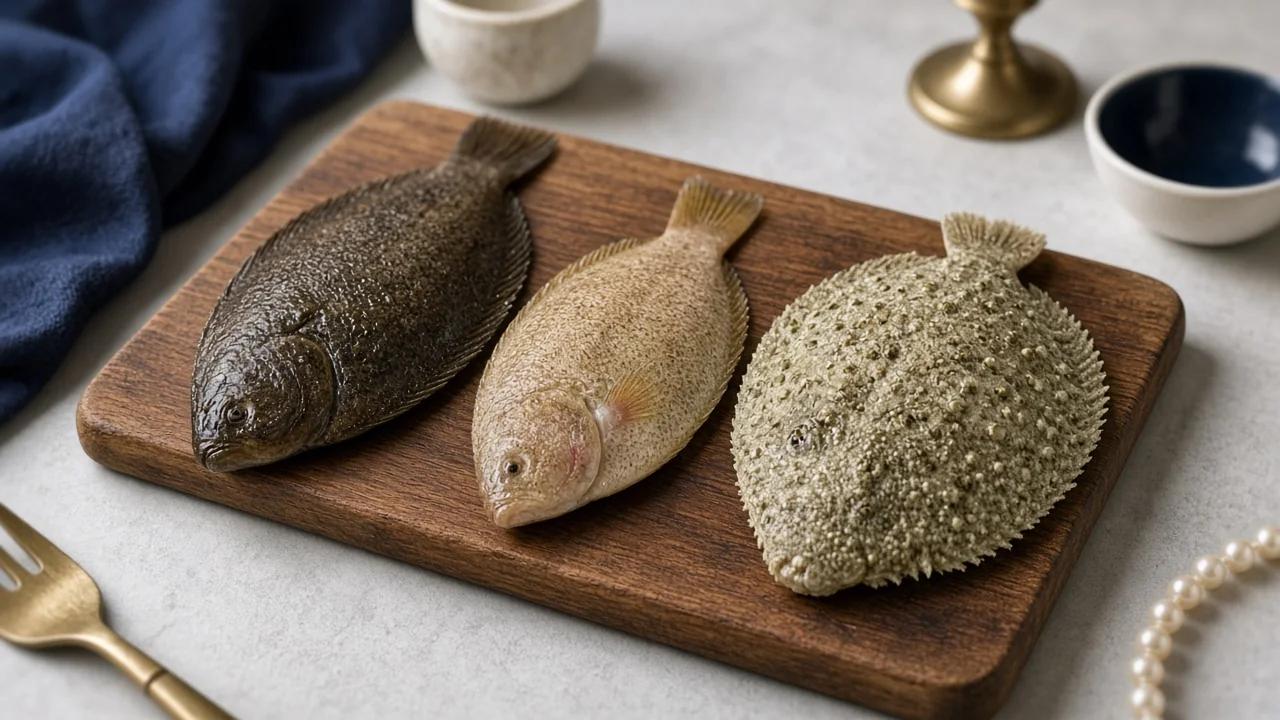
What is Dover sole? Dover sole (*Solea solea*) is a true sole, a flatfish that lives on sandy and muddy bottoms in the Northeast Atlantic and Mediterranean (FishBase). Like all flatfish, both of its eyes are on one side of its body, and it lies on the seabed camouflaged on its blind side. The name "Dover" comes from the English port that once supplied London's markets.
FishBase says common sole range from Trondheim Fjord in Norway south to Senegal, including the North Sea, the western Baltic and the Mediterranean. They usually live at 10 to 60 m and are mostly solitary. They burrow into sandy and muddy bottoms, retreat to deeper water in winter, and spend their first 2 to 3 years in coastal nurseries. They reach up to 70 cm and 3 kg, and can live as long as 26 years.
Don't confuse it with "Pacific Dover sole", which is a different flatfish from the US West Coast, or with lemon sole (*Microstomus kitt*), a different, softer flatfish.
Dover sole has a mild, sweet, delicate flavour and a firm, meaty texture for a flatfish. It holds together well on the bone, which is why it's served whole.
| Fish | Flavour | Texture |
|---|---|---|
| Dover sole | Sweet, delicate | Firm, fine |
| Lemon sole | Mild, delicate | Softer |
| Turbot | Rich, sweet | Firm, thick fillets |
| Halibut | Mild, clean | Firm, meaty |
The Marine Conservation Society says Dover sole sustainability depends on how and where it was caught:
Ask your fishmonger where and how the fish was caught.
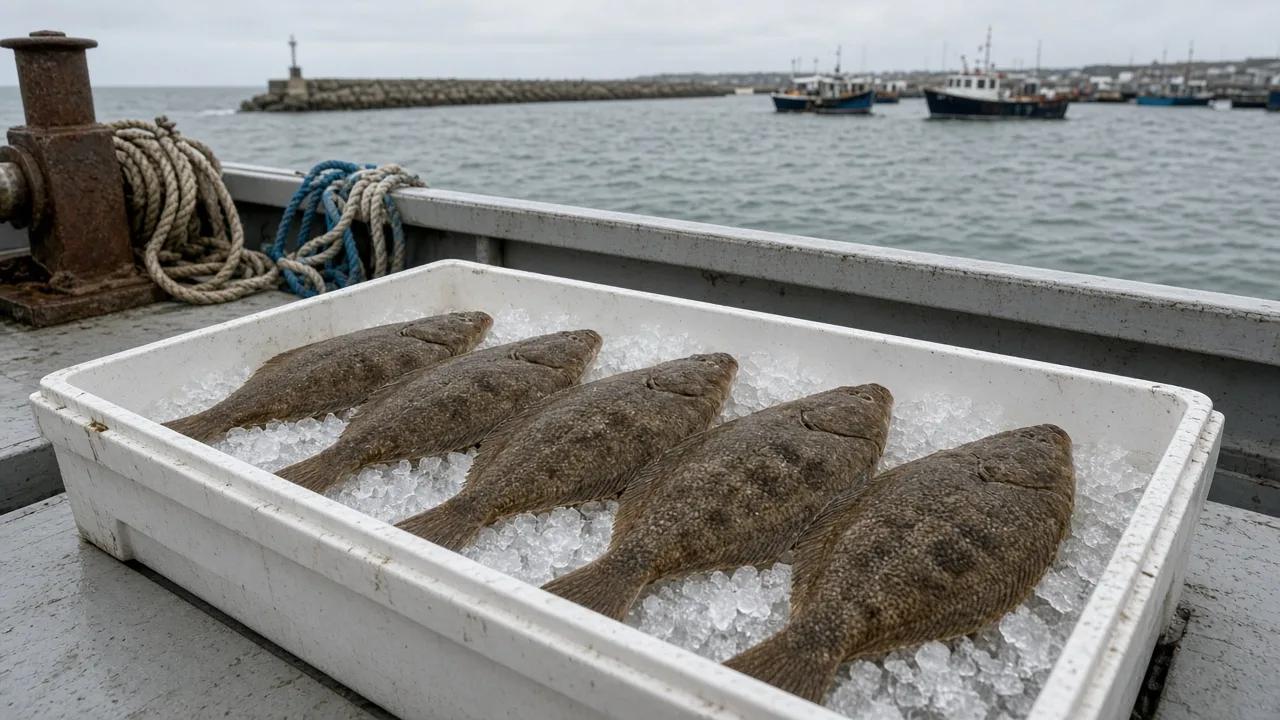
Dover sole is usually sold whole. Keep it refrigerated and cook within 1 to 2 days.
Fillets are thin, so cook them fast: 1. Season the fillets and dust them lightly in flour. 2. Heat butter with a little oil until foaming. 3. Cook for 1 to 2 minutes per side until golden and opaque. 4. Finish with lemon, parsley and capers.
Rolled fillets (*paupiettes*) can also be poached gently in white wine and stock for 6 to 8 minutes, until opaque throughout.
The fish is done when the flesh is opaque and lifts easily from the bone, at 145°F (63°C) (FDA).
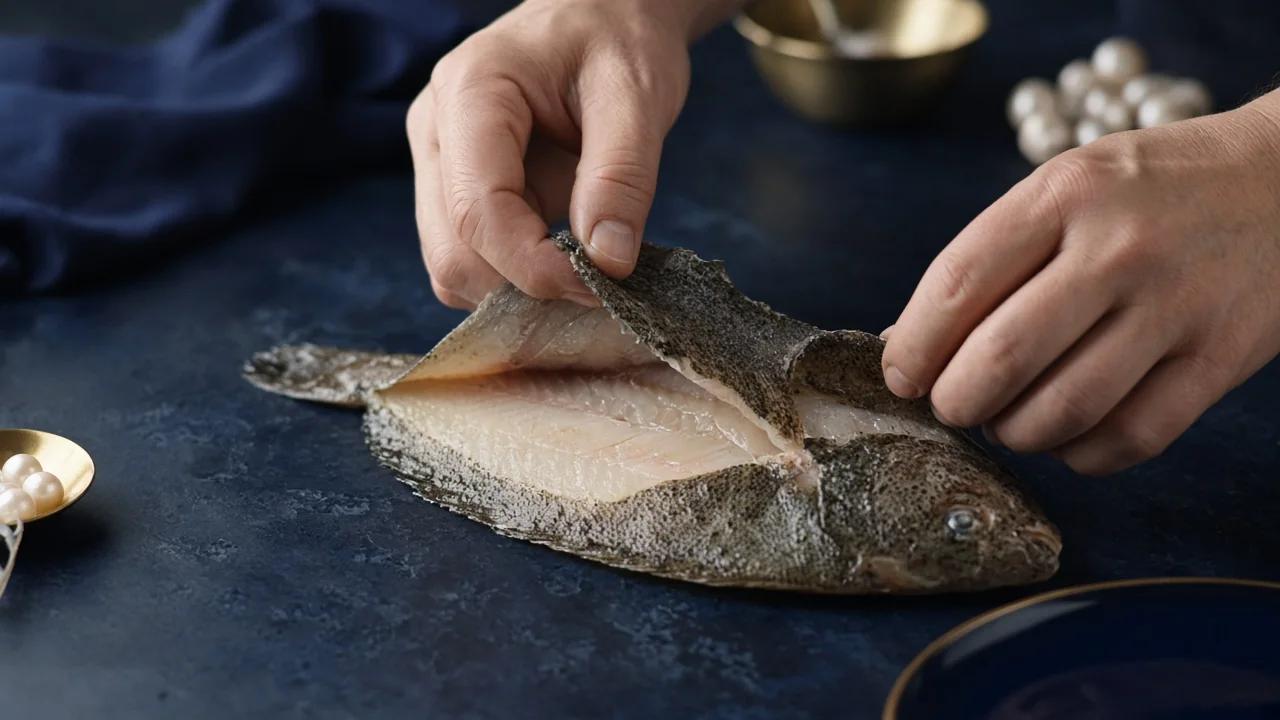
Run a spoon down the central line, push the fillets apart, lift them off, then lift out the backbone to free the lower fillets.
Dover sole is a wild-caught fish with limited supply and strong restaurant demand. The Marine Conservation Society notes that only certain fisheries are Best Choices, mainly otter-trawled sole from the western English Channel. Classic restaurant service, cooking it whole on the bone and filleting it at the table, adds to the menu price.
Dover sole is usually served one whole fish per person as a main course. For fillets, allow two to four, depending on size.
London is famous for Dover sole: read London: oysters and Dover sole, the London seafood guide and London fish restaurants. Also browse fine dining seafood.
USDA FoodData Central (flatfish, flounder and sole species, raw; values per 100 g):
| Nutrient | Amount |
|---|---|
| Calories | 70 kcal |
| Protein | 12.4 g |
| Fat | 1.93 g |
| Cholesterol | 45 mg |
| Selenium | 26.6 µg |
| Vitamin B12 | 1.13 µg |
These USDA values are for mixed flatfish, not Dover sole specifically. The FDA lists sole as a "Best Choice" for low mercury.
What is Dover sole? A true sole (*Solea solea*), a flatfish of the Northeast Atlantic and Mediterranean prized for its firm, sweet flesh (FishBase).
How do you cook Dover sole? Flour it and pan-fry it whole in butter for 3 to 4 minutes per side, then finish with brown butter and lemon (meunière).
How do you cook Dover sole fillets? Dust them in flour and pan-fry in foaming butter for 1 to 2 minutes per side.
How do you prepare Dover sole? Trim the fins and pull off the dark skin from tail to head. Gut it if needed, and pat it dry.
Why is Dover sole so expensive? Limited wild supply, high restaurant demand and only a few Best Choice fisheries (MCS).
Is Dover sole sustainable? Choose otter-trawled sole from the western English Channel, and avoid eastern Channel sole (MCS).
Is Pacific Dover sole the same fish? No. It's *Microstomus pacificus*, a different West Coast flatfish (NOAA Fisheries).
Is Dover sole high in mercury? No. The FDA lists sole as a Best Choice.
A true sole (
Flour it and pan-fry it whole in butter for 3 to 4 minutes per side, then finish with brown butter and lemon (meunière).
Dust them in flour and pan-fry in foaming butter for 1 to 2 minutes per side.
Trim the fins and pull off the dark skin from tail to head. Gut it if needed, and pat it dry.
Limited wild supply, high restaurant demand and only a few Best Choice fisheries (MCS).
Choose otter-trawled sole from the western English Channel, and avoid eastern Channel sole (MCS).
No. It's
No. The FDA lists sole as a Best Choice.
Cookies. Essential cookies always run. Analytics and ads need your choice — manage or accept below. Essential cookies run the site. Google Analytics runs by default outside the UK, EEA and Switzerland, and only after you accept it there. Opt out any time in Cookie settings. Ads (Meta, Pinterest) load only with your permission. · Privacy