seafood boil guide
Seafood boil tips: timing and hosting
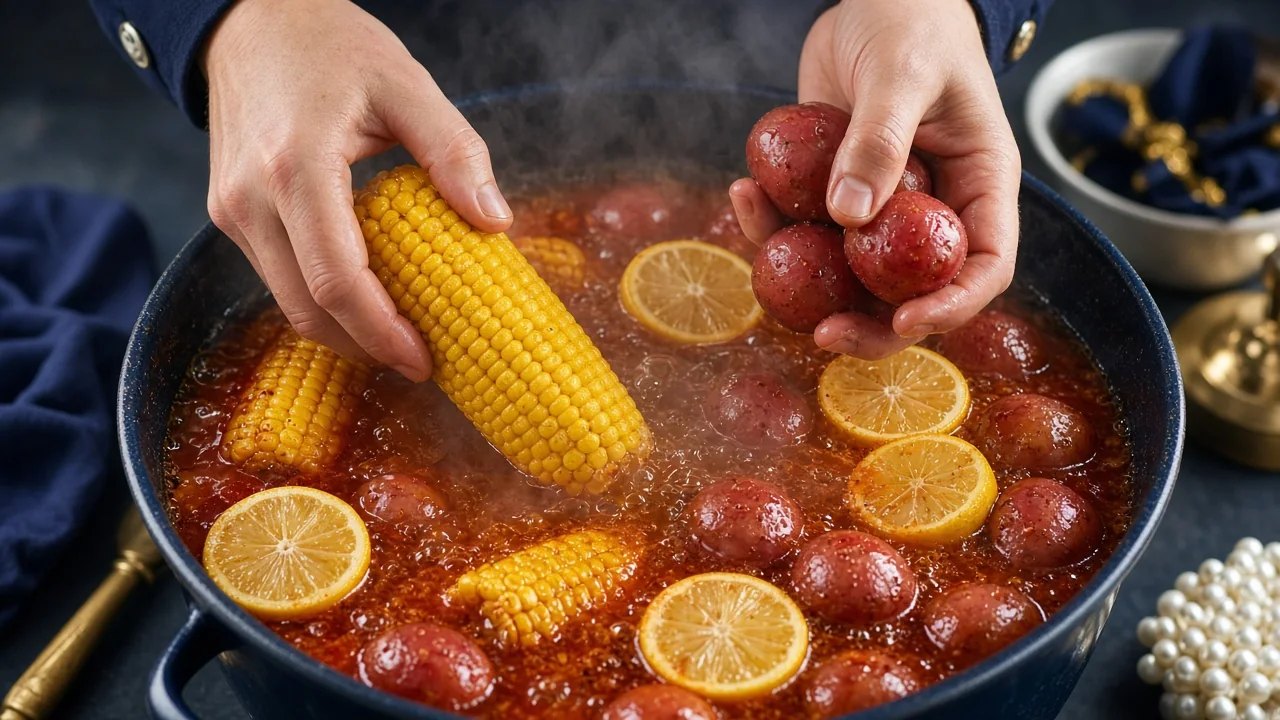
Timing is everything: add each ingredient so it all finishes together.
Cooking order
- Potatoes first (about 15 minutes).
- Sausage and corn next (about 5–8 minutes).
- Raw shellfish last: shrimp take 2–3 minutes; cooked crab legs only need warming.
Cook shellfish safely
Cook shrimp until pink and opaque, and clams and mussels until they open (FoodSafety.gov).
Cook Times and Temperatures by Ingredient
Add ingredients in this order. Times are from the moment the water returns to a boil, and they vary with pot size and quantity, so always check for doneness rather than trusting the clock.
- Fish in a boil: cook to 145°F (63°C), or until it flakes and is opaque.
- Shellfish: no single temperature. Use the visual cues in the table (FoodSafety.gov).
- Keep the water at a rolling boil when you add cold seafood; add it in batches if the boil stops.
| Ingredient | When to add | Done when |
|---|---|---|
| Small red potatoes | First | A knife slides in easily |
| Smoked sausage | With or after the potatoes | Heated through |
| Corn on the cob | After the potatoes | Kernels are bright and tender |
| Live crawfish | After the corn | Shells turn bright red and the tails are firm |
| Blue crab or crab clusters | After the corn | Shells are red; meat is opaque |
| Clams and mussels | Near the end | Shells open (discard any that stay shut) |
| Shell-on shrimp | Last | Flesh is pearly, opaque and pink |
How to Tell a Seafood Boil Is Done
Check the slowest item first. If a potato is tender all the way through, the starches are done. Then pull one shrimp or one crawfish tail and look inside: it should be opaque all the way through, not glassy.
After you turn off the heat, the seafood keeps cooking in the hot water. Many cooks soak for flavor, but if you soak, take the pot off the burner and add ice or cold water to the pot so the shrimp do not overcook.
Prep: Cleaning and Purging Shellfish
- Live crawfish: rinse them in cool water several times until the water runs clear, and discard any that are dead before cooking.
- Clams and mussels: scrub the shells, pull off mussel beards, and throw away any with cracked shells or that do not close when tapped.
- Shrimp: leave the shells on for a boil; they protect the meat and hold the seasoning. Devein with scissors if you like.
- Crab: keep live crabs cold and cook them the same day.
- Keep everything cold (40°F / 4°C or below) until it goes in the pot.
Source: US FDA – Selecting and Serving Fresh and Frozen Seafood Safely
Common Seafood Boil Mistakes
- Adding everything at once, which leaves the potatoes hard and the shrimp rubbery.
- Under-seasoning the water. The water should taste strongly of salt and spice, because that is the only chance to season the inside of the potatoes and corn.
- Overcooking the shrimp. They need only a few minutes; add them last.
- Cooking dead shellfish. Discard crawfish, clams and mussels that are dead before cooking.
- Leaving the boil out too long. Refrigerate leftovers within 2 hours (1 hour if it is above 90°F / 32°C).
Flavor Pairings and Seasonings
A Cajun or Creole blend gives the classic Louisiana heat. Old Bay-style seasoning suits a Lowcountry or Chesapeake boil. Lemon halves, whole garlic heads and onion in the water add depth for little effort. For the sauce, melt butter with garlic, lemon and a spoonful of the same blend you used in the pot.
FAQs
What temperature should seafood in a boil reach?
Fish should reach 145°F (63°C). For shellfish, FoodSafety.gov uses visual cues: shrimp and crab are pearly and opaque, and clams and mussels open.
Should you rinse crawfish before a boil?
Yes. Rinse live crawfish in cool water several times until the water runs clear, and discard any that are already dead.
Shells on or off for a boil?
On. Shells protect the meat and hold the seasoning.
Why is my boil shrimp rubbery?
They were overcooked. Add shrimp last and take them out as soon as they turn opaque.