International · Medium
Pan-Fried Walleye Shore Lunch
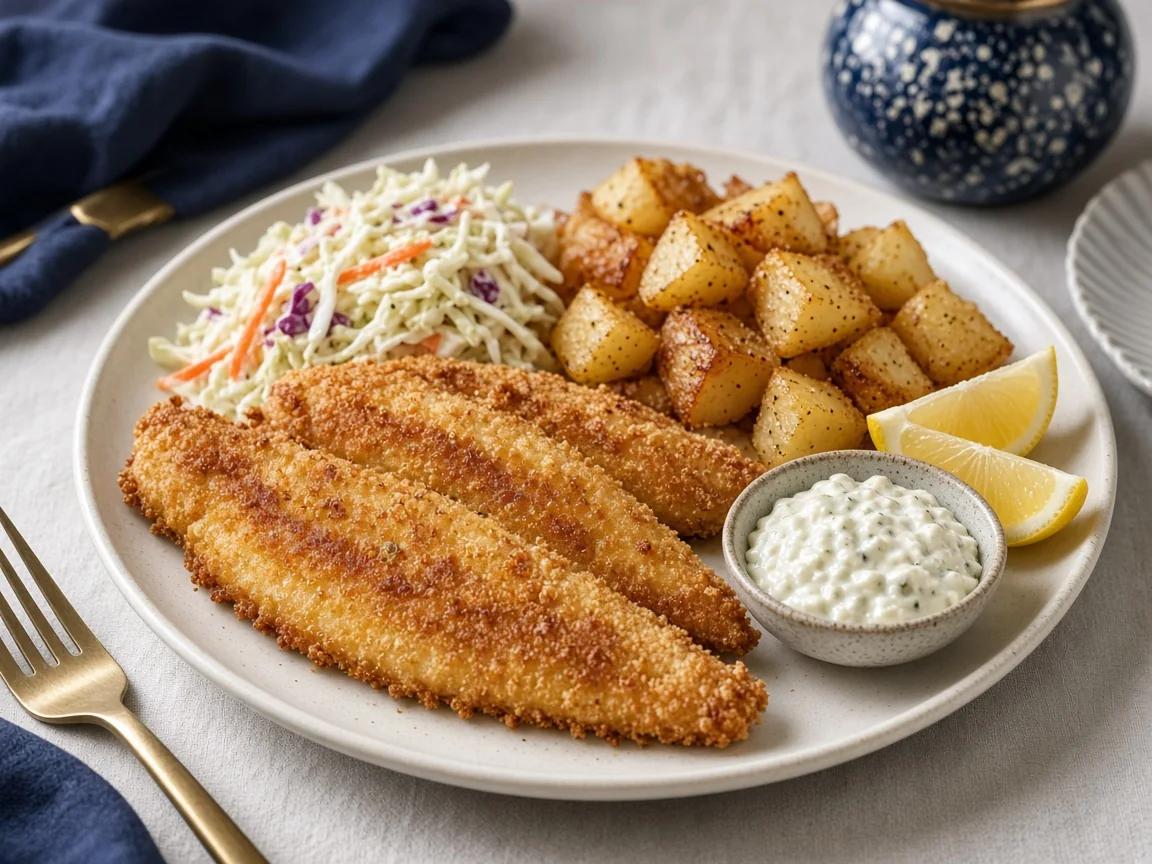
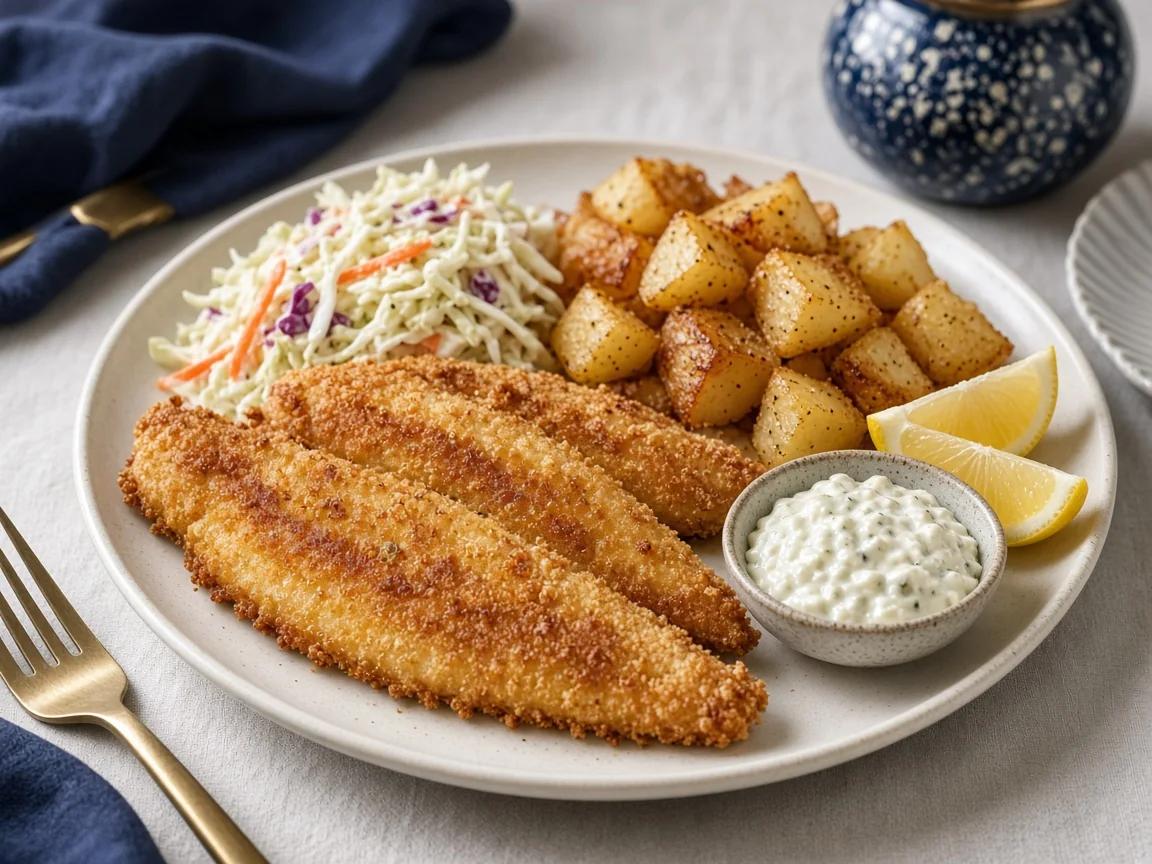
The Northwoods classic: walleye fillets in a crisp cracker crust, pan-fried in butter and oil. Simple, fast and the best way to enjoy a mild, sweet fish.
walleye guide
*Sander vitreus*
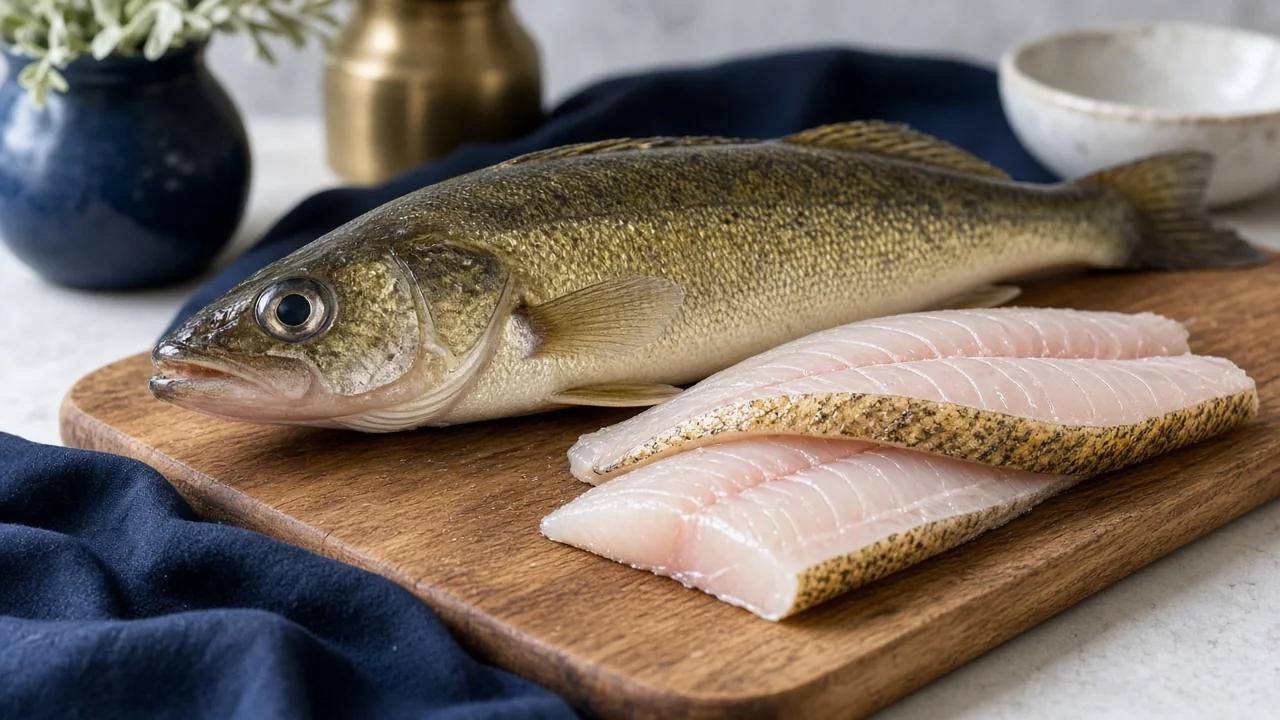
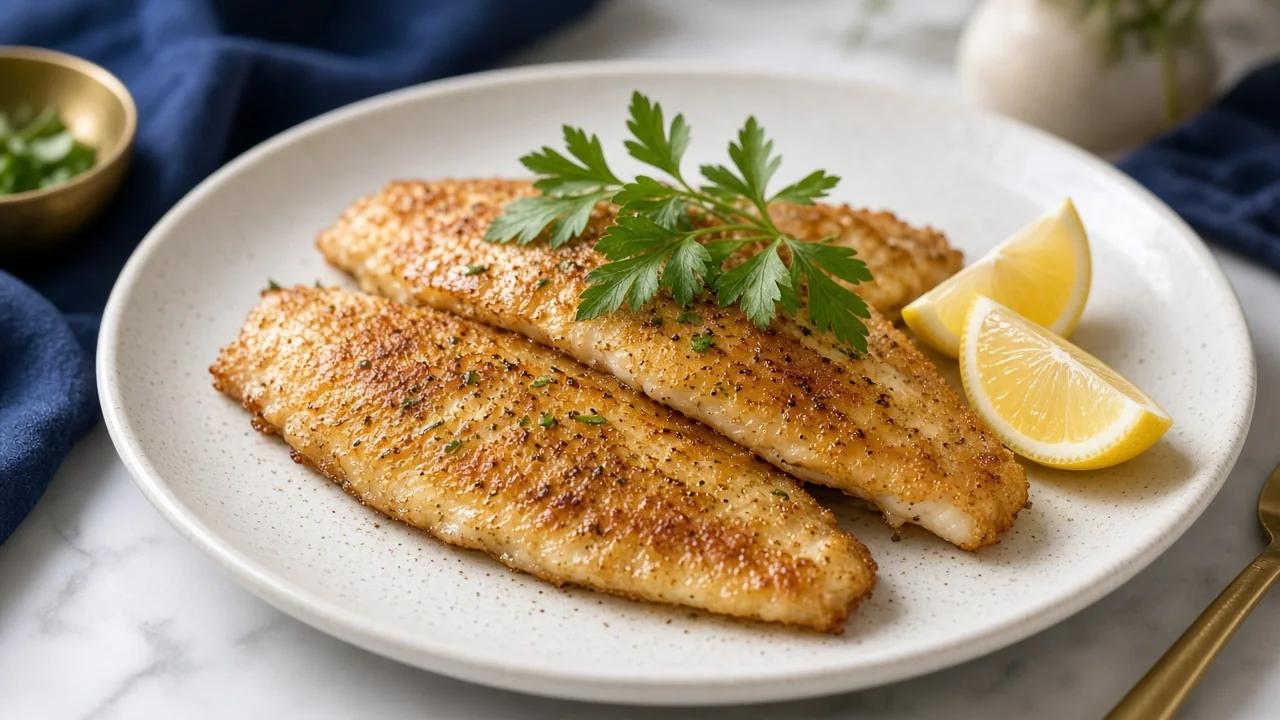
Walleye is a freshwater fish of the perch family, found in lakes and rivers across Canada and the northern United States, and it's one of the best-tasting freshwater fish you can eat.
mild, slightly sweet, with firm, fine, white flakes and almost no "fishy" flavour · perch family (Percidae)
Ask the Fish Guide about walleye — grounded in this species hub.
Scientific name
*Sander vitreus*
Family
perch family (Percidae)
Also called
pickerel or yellow pickerel in parts of Canada, walleyed pike, doré (French Canada)
Where it lives
cool freshwater lakes and rivers from the Northwest Territories and Quebec down to the Great Lakes and Upper Mississippi
Sabor
mild, slightly sweet, with firm, fine, white flakes and almost no "fishy" flavour
Hábitat
perch family (Percidae)
Recipes
Step-by-step methods from our recipe pages — same hero photos you will see on each dish.
International · Medium
The Northwoods classic: walleye fillets in a crisp cracker crust, pan-fried in butter and oil. Simple, fast and the best way to enjoy a mild, sweet fish.
Walleye is a freshwater fish of the perch family, found in lakes and rivers across Canada and the northern United States, and it's one of the best-tasting freshwater fish you can eat.
Buying links may earn a commission. Restaurant listings are editorial — not paid placements in this block.
Catch & season
Species guide
Walleye is a freshwater fish of the perch family, found in lakes and rivers across Canada and the northern United States, and it's one of the best-tasting freshwater fish you can eat. Its fillets are white, mild, slightly sweet and firm, which is why walleye is the star of shore lunches in Minnesota and Ontario and of the Friday fish fry in Wisconsin and Michigan.
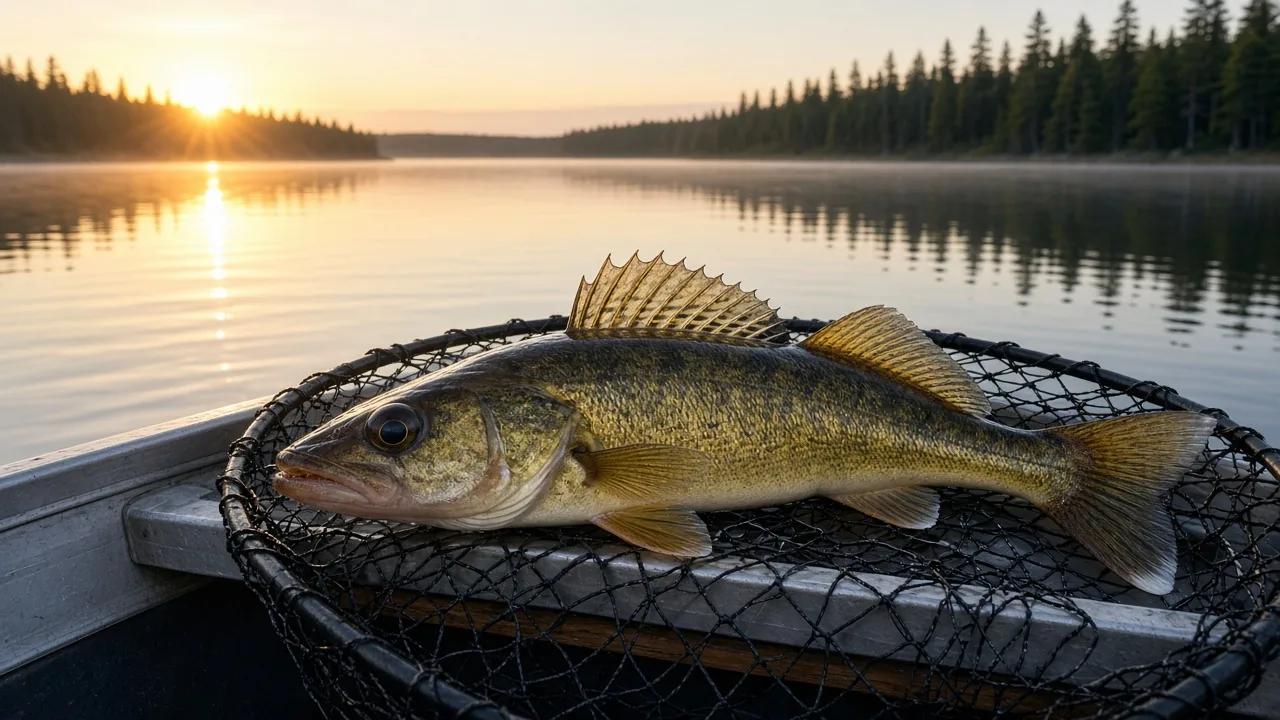
Walleye is the largest member of the perch family in North America. It has an olive-gold back, a white belly, a white tip on the bottom of its tail fin and big, cloudy-looking eyes. Those eyes have a reflective layer called the tapetum lucidum that helps walleye see in dim, murky water and at night, which is why anglers catch most of them at dawn, at dusk and after dark (Minnesota Department of Natural Resources).
Walleye is the state fish of Minnesota, and also of South Dakota and Vermont. Several towns claim to be the "walleye capital of the world", and many have giant walleye statues to prove it.
Is walleye the same as pickerel? In Canada, especially Ontario and Manitoba, walleye is often sold and served as "pickerel" or "yellow pickerel". Biologically, though, walleye is not a true pickerel: true pickerels (such as the chain pickerel) are small members of the pike family. So if you order "pickerel" in a Canadian restaurant, you'll almost always get walleye.
| Fish | Family | How to tell it apart | On the plate |
|---|---|---|---|
| Walleye | Perch | Large glassy eyes; white tip on the tail; no spots on the first dorsal fin | Mild, sweet, firm white flakes |
| Sauger | Perch | Smaller; dark spots on the first dorsal fin; no white tail tip | Very similar to walleye |
| Saugeye | Perch | A walleye-sauger hybrid stocked in some lakes | Similar |
| Yellow perch | Perch | Smaller; yellow with dark vertical bars | Sweet, delicate |
| Chain pickerel / northern pike | Pike | Long, torpedo-shaped; sharp teeth | Firm, but full of Y-bones |
What does walleye taste like? It's one of the mildest fish there is: clean, slightly sweet and buttery, with a firm, fine flake that holds together in the pan but melts in the mouth. It doesn't taste "fishy" or muddy, especially when it comes from cold, clean water. People who don't usually like fish often enjoy walleye.
Compared with other popular fish: - It's milder and sweeter than trout. - It's firmer than tilapia and has a cleaner flavour. See our tilapia guide. - It's similar to Atlantic cod or haddock but with a finer, more delicate texture.
Wild walleye are native to Canada and the northern US, from the Great Lakes region west through Minnesota and the Dakotas and north into the Canadian Shield. They've also been stocked in reservoirs across much of the US.
Most walleye in US shops and restaurants comes from Canada, where there are commercial freshwater fisheries on lakes such as Lake Erie (Ontario) and Lake Winnipeg (Manitoba), or from Lake Erie in the US. Commercial walleye fishing is banned or tightly restricted in many US states, where walleye is reserved for anglers. That's one reason it's prized: much of what people eat is caught by friends and family.
Each state and province sets its own rules, so always check before you fish. In Minnesota, for example, the inland walleye season usually opens in mid-May (the famous "Fishing Opener") and closes in late February, with daily bag limits and size limits on many lakes (Minnesota Department of Natural Resources). Spring closures protect walleye while they spawn over rocky shorelines and river riffles after the ice goes out.
How to cook walleye: keep it simple to let its mild flavour shine. Fish is done at 145°F (63°C), or when it turns opaque and flakes easily (FoodSafety.gov).
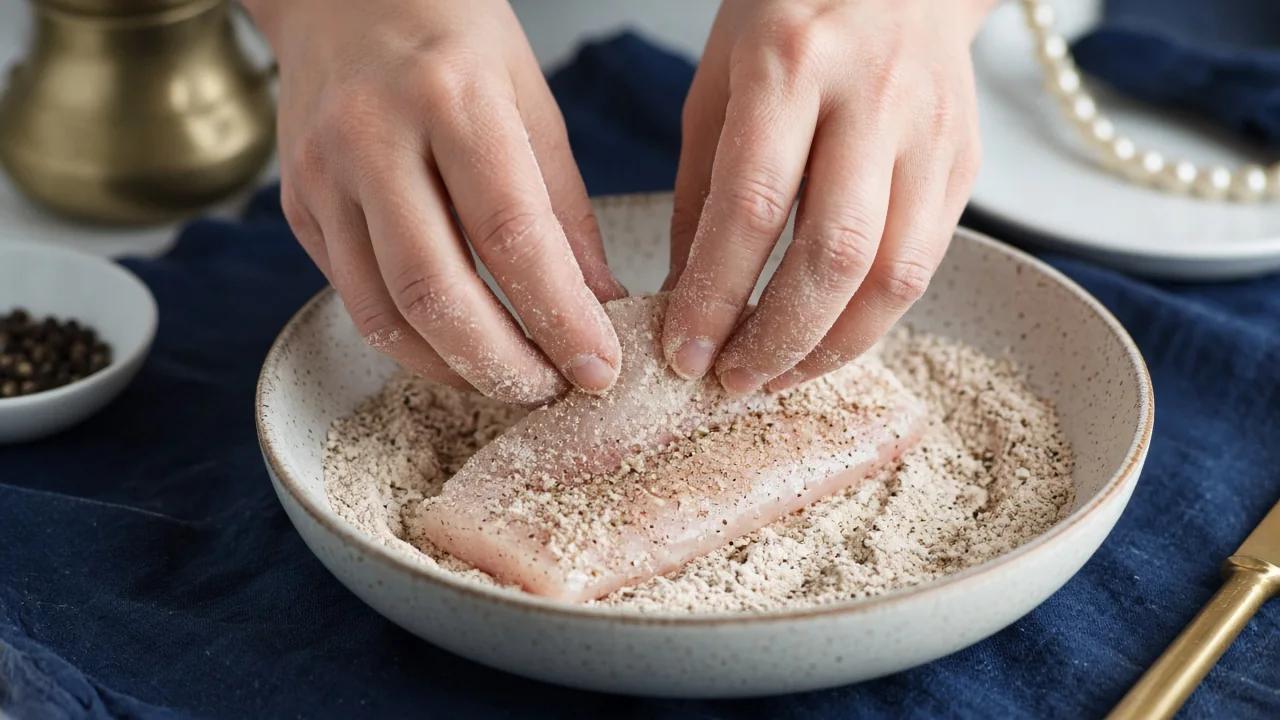
The classic: dredge the fillets in seasoned flour, crushed crackers or cornmeal, and fry in oil or butter over medium-high heat for 2 to 4 minutes per side, until golden. Serve with fried potatoes, onions and baked beans. See the full recipe below.
Dip the fillets in a light beer batter and deep-fry at 350 to 375°F (175 to 190°C) for 3 to 5 minutes. This is the Midwestern Friday fish fry favourite, with coleslaw, rye bread and tartar sauce.
Lay the fillets in a buttered dish, top with butter, lemon, garlic, parsley and a few breadcrumbs, and bake at 400°F (200°C) for 12 to 15 minutes.
Because the fillets are delicate, grill them skin-on on a well-oiled grill basket or a sheet of foil over medium heat for 6 to 10 minutes, without flipping.
Its mild flavour is perfect for bold seasoning. Try a light Cajun seasoning coat, or blacken it like redfish using our blackened seasoning guide.
Fresh walleye is best eaten within a day or two. Keep it cold on ice or in the coldest part of the fridge. Anglers often freeze fillets in water in zip-top bags or vacuum-seal them, which protects them from freezer burn; use frozen fillets within 3 to 6 months. Thaw them slowly in the fridge overnight.
| Method | Temperature | Time (fillet about 3/4 inch / 2 cm thick) |
|---|---|---|
| Pan-fried | Medium-high | 2 to 4 minutes per side |
| Deep-fried in batter | 350 to 375°F / 175 to 190°C | 3 to 5 minutes |
| Baked | 400°F / 200°C | 12 to 15 minutes |
| Grilled, skin on | Medium | 6 to 10 minutes, no turning |
| Air-fried, breaded | 400°F / 200°C | 8 to 10 minutes |
Walleye is a predator and lives a long time, so large, older fish can build up mercury and other contaminants, depending on the lake. Many US states and Canadian provinces publish lake-by-lake fish consumption advice that tells you how many walleye meals are safe per month, often with lower limits for women who may become pregnant and children. Before eating walleye you've caught yourself, check your state's fish consumption advisory (for example, the Minnesota Department of Health's "Eat Fish Often?" guidance), and choose smaller fish where possible. Commercially sold walleye is generally considered a good choice in the FDA's advice about eating fish.
USDA FoodData Central values per 100 g (walleye pike, raw):
| Nutrient | Amount |
|---|---|
| Calories | 93 kcal |
| Protein | 19.1 g |
| Fat | 1.22 g |
| Cholesterol | 86 mg |
| Selenium | 12.6 µg |
| Vitamin B12 | 2.0 µg |
| Phosphorus | 210 mg |
| Potassium | 389 mg |
It's very lean, high in protein and a good source of B12 and potassium. Frying adds fat, so baking or grilling is the lighter choice.
Our step-by-step recipe, with a photo for every step:
More seafood recipes on our site that use the same techniques:
Every recipe on this page works with our ready-made regional spice blends. For walleye, try Louisiana Cajun Blackening, part of our 10-blend World Seafood Spice Pack. Each blend is a complete seasoning: warm a spoonful in oil or butter, add your seafood, and cook.
Prefer someone else to cook? Browse our grilled fish restaurants or find the best fish restaurants in Minneapolis, Chicago, Milwaukee, Toronto, Winnipeg.
Part of our Freshwater fish guides in the fish and seafood guide hub.
What does walleye taste like? Mild, clean and slightly sweet, with firm, fine, white flakes. It isn't fishy, which makes it popular with people who don't usually like fish.
How do you cook walleye? Pan-fry it in seasoned flour or crackers, beer-batter and deep-fry it, or bake it with butter and lemon at 400°F (200°C) for 12 to 15 minutes.
Is walleye the same as pickerel? In Canada, walleye is often called pickerel or yellow pickerel. Biologically, it's a member of the perch family, while true pickerels are in the pike family.
Is walleye a good fish to eat? Yes. It's one of the best-tasting freshwater fish. For fish you catch yourself, check your local fish consumption advice about mercury.
Does walleye have a lot of bones? No. It's easy to fillet, and the fillets have only a short line of pin bones, which are easy to remove. Unlike northern pike, it has no Y-bones.
What is the difference between walleye and sauger? Sauger is a smaller relative with dark spots on its first dorsal fin and no white tip on its tail. They taste very similar.
Why is it called walleye? Because of its large, glassy eyes, which point slightly outward and reflect light. They help it see in dim water.
Where does walleye come from? Freshwater lakes and rivers in Canada and the northern US. Most commercially sold walleye comes from Canada and Lake Erie.
Mild, clean and slightly sweet, with firm, fine, white flakes. It isn't fishy, which makes it popular with people who don't usually like fish.
Pan-fry it in seasoned flour or crackers, beer-batter and deep-fry it, or bake it with butter and lemon at 400°F (200°C) for 12 to 15 minutes.
In Canada, walleye is often called pickerel or yellow pickerel. Biologically, it's a member of the perch family, while true pickerels are in the pike family.
Yes. It's one of the best-tasting freshwater fish. For fish you catch yourself, check your local fish consumption advice about mercury.
No. It's easy to fillet, and the fillets have only a short line of pin bones, which are easy to remove. Unlike northern pike, it has no Y-bones.
Sauger is a smaller relative with dark spots on its first dorsal fin and no white tip on its tail. They taste very similar.
Because of its large, glassy eyes, which point slightly outward and reflect light. They help it see in dim water.
Freshwater lakes and rivers in Canada and the northern US. Most commercially sold walleye comes from Canada and Lake Erie.
Cookies. Essential cookies always run. Analytics and ads need your choice — manage or accept below. Essential cookies run the site. Google Analytics runs by default outside the UK, EEA and Switzerland, and only after you accept it there. Opt out any time in Cookie settings. Ads (Meta, Pinterest) load only with your permission. · Privacy