International · Medium
Crispy Oven-Baked Pollock Fish Sticks
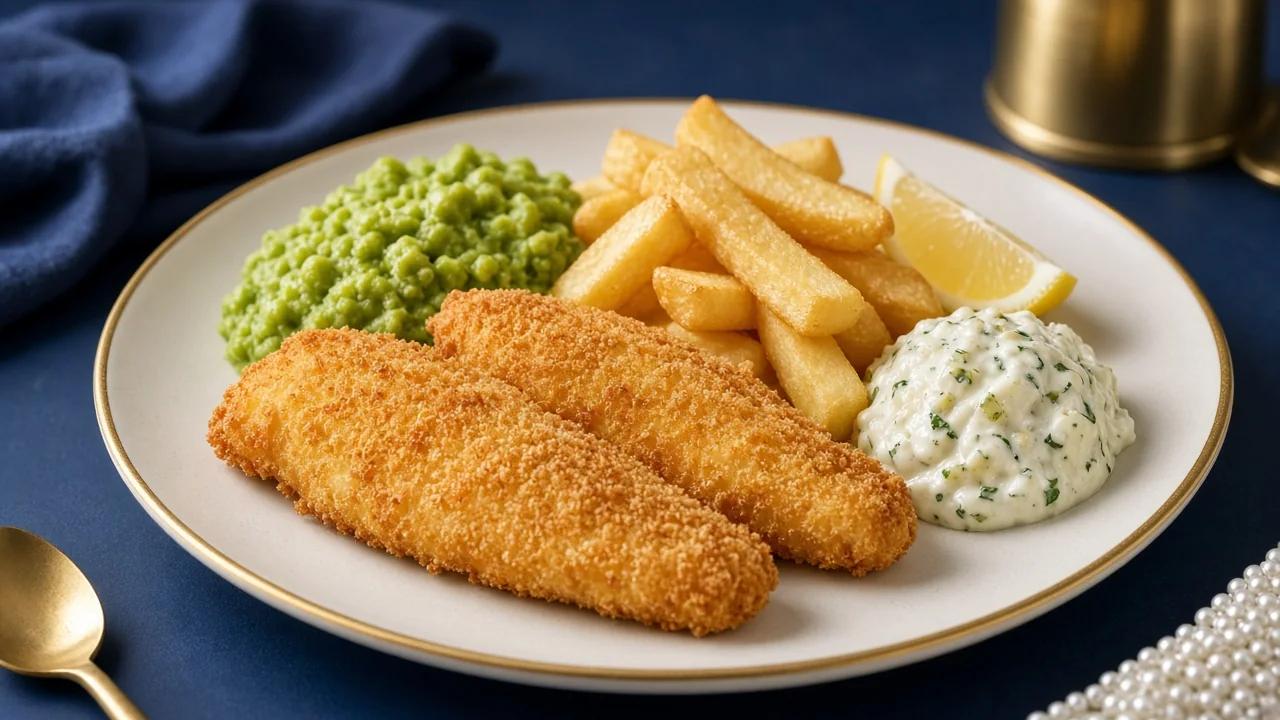
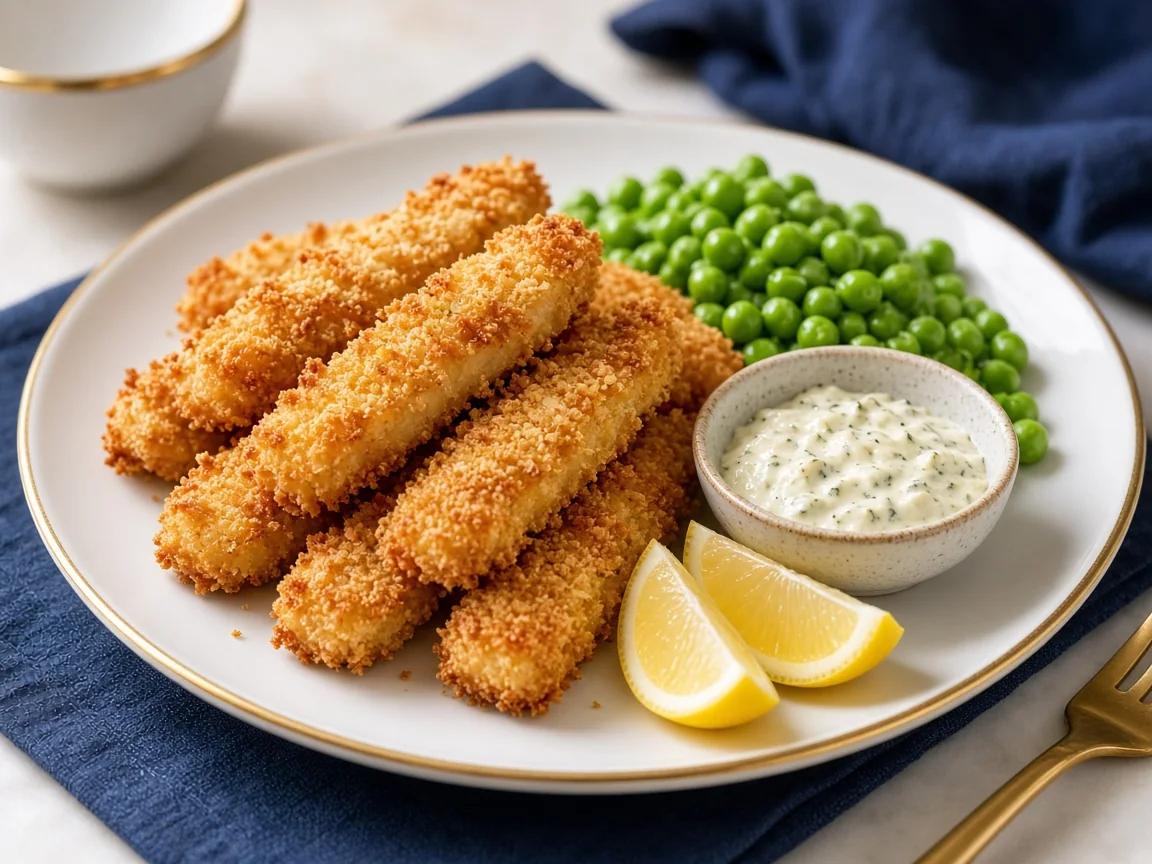
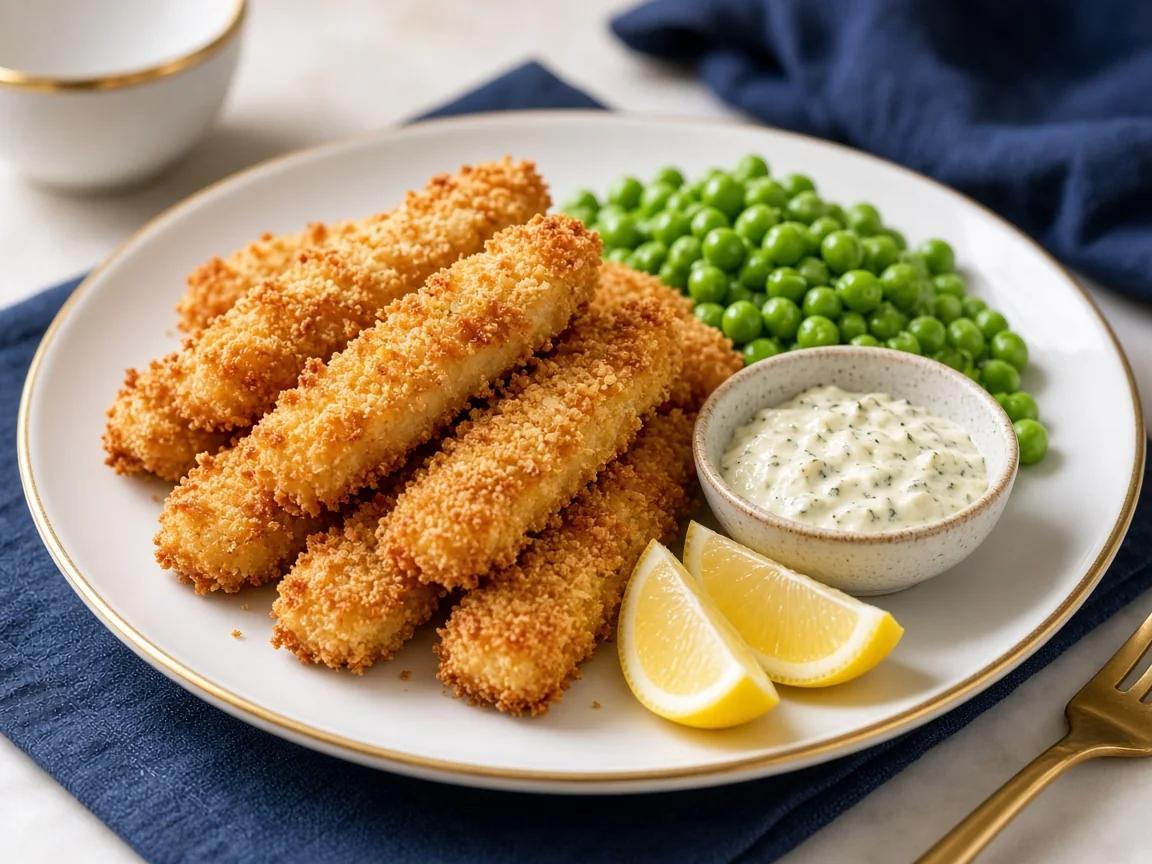
Homemade fish sticks with tender Alaska pollock and a golden panko crust, baked instead of fried. Better than the boxed kind, and freezer-friendly.
pollock guide
Pollock is a mild, lean white fish from the cod family, and Alaska pollock is one of the largest food fish catches in the world.
mild, slightly sweet; delicate white flakes · cod family (Gadidae)
Ask the Fish Guide about pollock — grounded in this species hub.
Main types
Alaska pollock (*Gadus chalcogrammus*) and Atlantic pollock (*Pollachius virens*), also called saithe or coley in the UK
Family
cod family (Gadidae)
Taste
mild, slightly sweet; delicate white flakes
Where it comes from
Alaska pollock from the Bering Sea and Gulf of Alaska; Atlantic pollock from the North Atlantic
Sabor
mild, slightly sweet; delicate white flakes
Hábitat
cod family (Gadidae)
Recipes
Step-by-step methods from our recipe pages — same hero photos you will see on each dish.
International · Medium
Homemade fish sticks with tender Alaska pollock and a golden panko crust, baked instead of fried. Better than the boxed kind, and freezer-friendly.
Pollock is a mild, lean white fish from the cod family, and Alaska pollock is one of the largest food fish catches in the world.
Buying links may earn a commission. Restaurant listings are editorial — not paid placements in this block.
Catch & season
Species guide
Pollock is a mild, lean white fish from the cod family, and Alaska pollock is one of the largest food fish catches in the world. You've almost certainly eaten it: it's the fish in most fish sticks, fast-food fish sandwiches, frozen breaded fillets and imitation crab, and it's a great, affordable fish to cook at home.
What is pollock? The name covers two related fish in the cod family.
When a US package just says "pollock", it's almost always Alaska pollock.
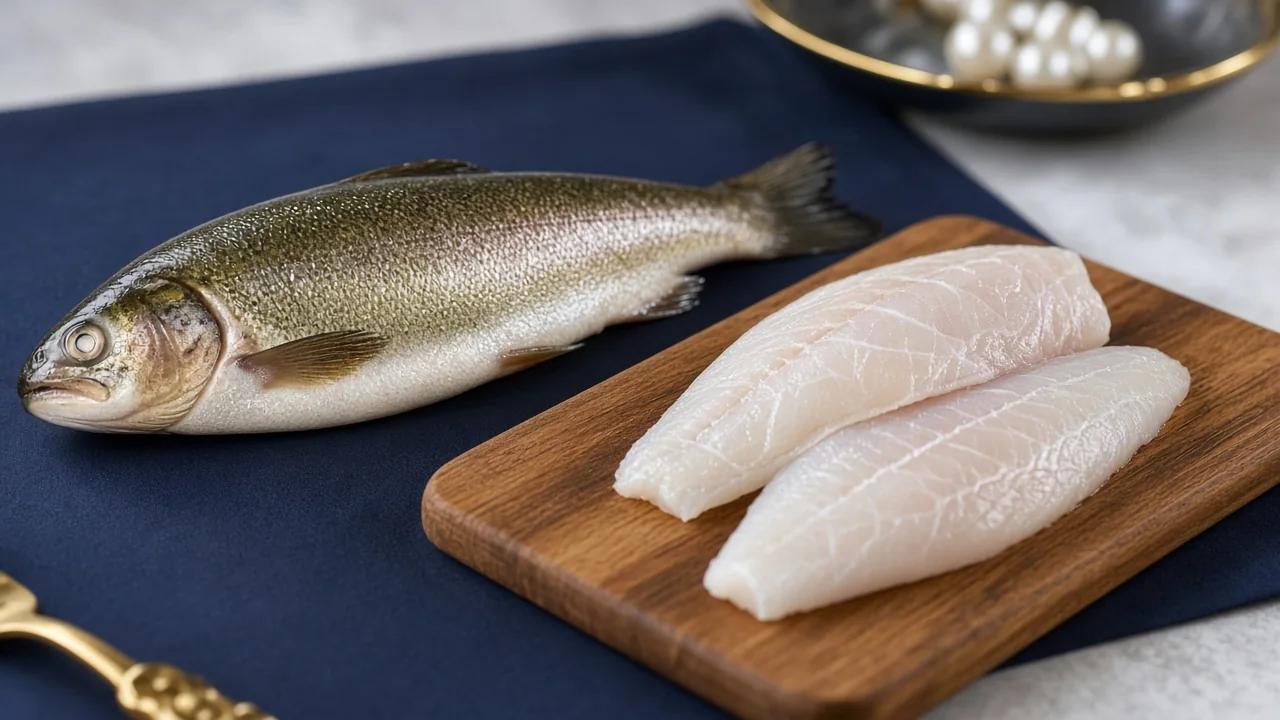
What is pollock fish like to eat? Alaska pollock has a mild, clean flavour, slightly sweet, with white, fine-grained flesh that cooks into small, tender flakes. It's softer and more delicate than cod. Atlantic pollock (coley) is a little firmer and stronger tasting, and its raw flesh is greyer, but it turns white when cooked.
Because the flavour is so mild, pollock takes on whatever you season it with. That's exactly why it's so popular for breaded and battered products, fish tacos and spicy dishes.
Is pollock a good fish to eat? Yes, for three reasons:
The one downside is that it's delicate, so it needs gentle handling in the pan.
| Pollock (Alaska) | Atlantic cod | Haddock | |
|---|---|---|---|
| Flavour | Very mild, slightly sweet | Mild, clean | Slightly sweeter |
| Texture | Soft, small flakes | Large, chunky flakes | Fine, tender flakes |
| Best for | Fish sticks, tacos, baking, breading | Fish and chips, roasting | Fish and chips, smoking |
| Price | Lowest | Highest | Middle |
Pollock is a great budget swap for Atlantic cod or haddock in most recipes, especially breaded or battered ones. See also our haddock guide.
Most imitation crab is made from surimi, a paste of finely minced, washed white fish, and Alaska pollock is the main fish used for it. The paste is mixed with starch, egg white, salt and flavourings, then shaped and coloured to look like crab legs. Read the full story in our imitation crab guide.
How to cook pollock fish: keep it simple and don't overcook it, because the fillets are thin and lean. Fish is done at 145°F (63°C), or when the flesh is opaque and flakes easily (FoodSafety.gov).
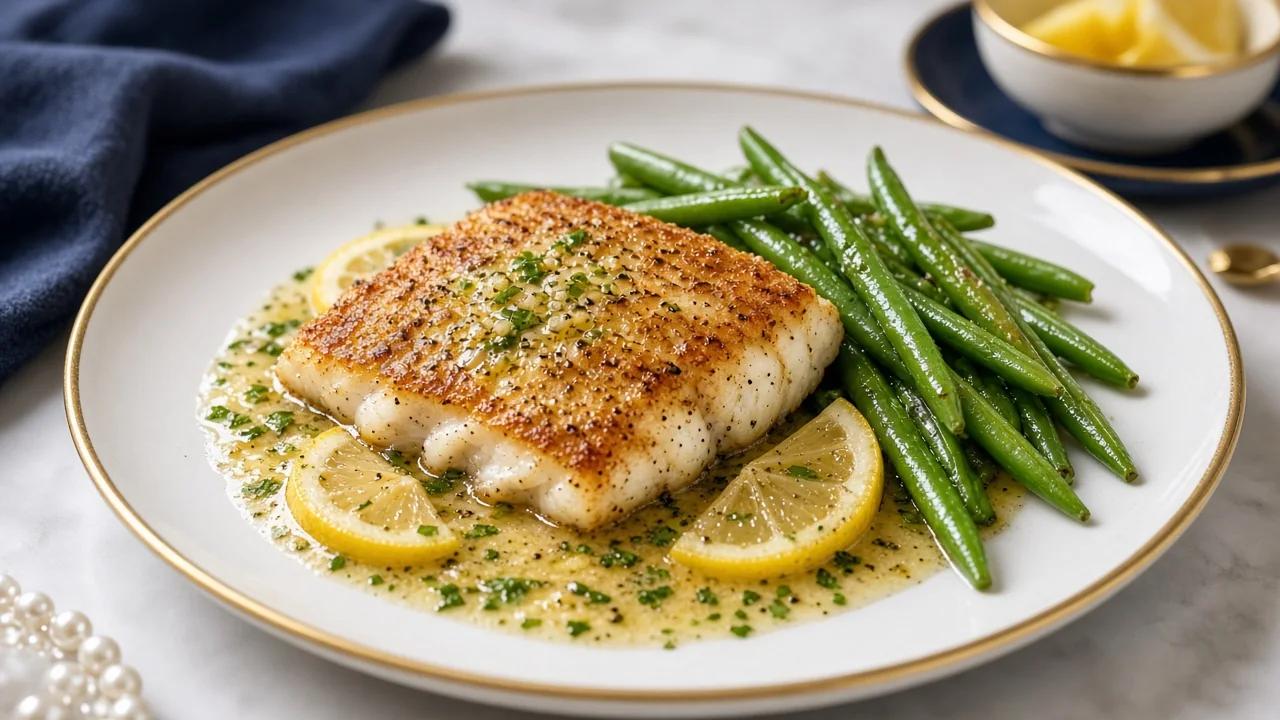
How to bake pollock fish: heat the oven to 400°F (200°C). Put the fillets in an oiled dish, brush with melted butter or olive oil, and season with salt, pepper, garlic, paprika and lemon. Bake for 10 to 15 minutes (or 15 to 20 minutes from frozen), until the fish flakes. A breadcrumb or parmesan topping adds crunch.
Dust the dried fillets lightly with seasoned flour. Fry in a little oil and butter over medium-high heat for 2 to 3 minutes per side. Flip only once, gently, with a fish spatula.
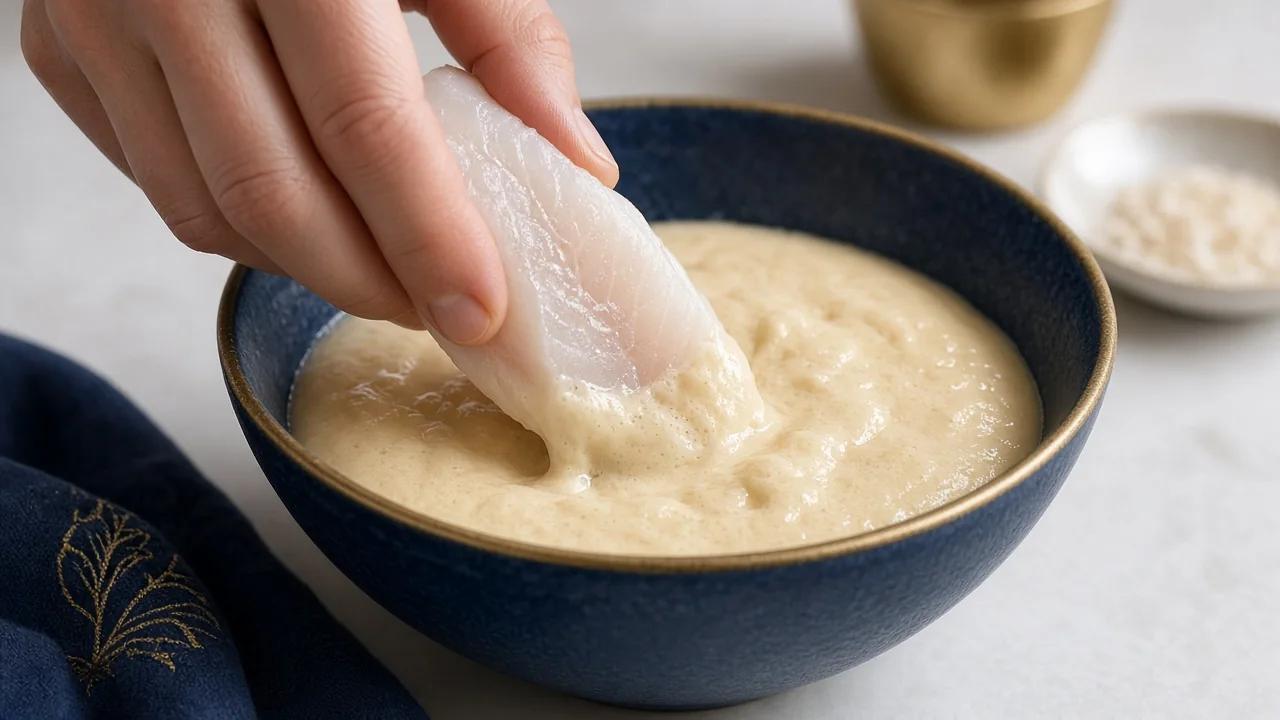
Coat the fillets in egg and panko breadcrumbs, spray with oil and air-fry at 400°F (200°C) for 8 to 12 minutes, turning once, until golden.
Season the fillets with Cajun seasoning or chilli and lime, pan-fry or grill, then flake into warm tortillas with cabbage slaw and lime crema.
Yes. Rinse off any ice glaze, pat dry, and bake at 400°F (200°C) for 15 to 20 minutes, or until it reaches 145°F (63°C). For pan-frying and breading, thaw it first in the fridge overnight.
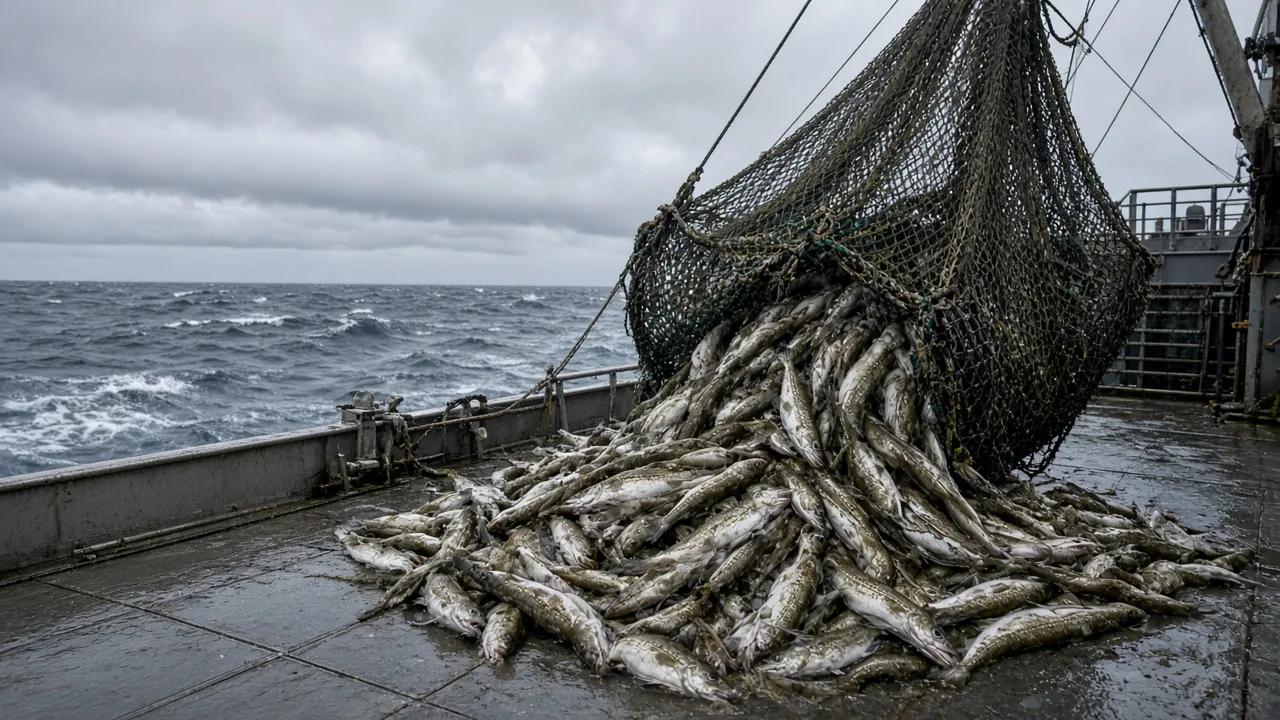
Alaska pollock is caught by large factory trawlers and shore-based vessels in the eastern Bering Sea, the Aleutian Islands and the Gulf of Alaska. Much of the catch is processed at sea into frozen fillet blocks, surimi and roe. Fishing is managed by NOAA Fisheries and the North Pacific Fishery Management Council with annual catch limits, observers on board and closed areas to protect Steller sea lions (NOAA Fisheries). Russia is the other major producer.
Atlantic pollock (saithe or coley) is caught in the North Sea, around Iceland, the Faroe Islands and Norway, and in the Gulf of Maine. The Marine Conservation Society rates saithe from several Northeast Atlantic stocks as a good choice; check the MCS Good Fish Guide for the stock on the label.
In Japan and Korea, pollock roe is a delicacy. Salted pollock roe is called *tarako*, and roe marinated with chilli is *mentaiko* (in Korea, *myeongnan-jeot*). It's eaten with rice, in onigiri rice balls, mixed into pasta with butter, and on toast. Most of the roe comes from Alaska pollock caught in the winter "A season", when the fish are full of eggs.
Most pollock is sold frozen, so quality depends mainly on how it was handled. Look for frozen fillets that are solid, with no ice crystals or white, dry patches (freezer burn) inside the pack. Once thawed, the flesh should be white or slightly pinkish-grey, moist and glossy, with a mild, clean smell. Any sour or strong fishy smell means it's past its best. For fresh Atlantic pollock (coley), the flesh may look greyer than cod when raw, which is normal; it turns white when cooked.
Is pollock healthy? Very. USDA FoodData Central values per 100 g (Alaska pollock, raw):
| Nutrient | Amount |
|---|---|
| Calories | 76 kcal |
| Protein | 17.2 g |
| Fat | 0.82 g |
| Cholesterol | 61 mg |
| Sodium | 159 mg |
| Phosphorus | 190 mg |
| Potassium | 331 mg |
It's lean and low in saturated fat. It has less omega-3 than oily fish such as salmon or mackerel, so mix it with oily fish across the week. Breading and deep-frying add a lot of fat and calories, so baking or air-frying is the lighter way to enjoy it.
Pollock is also one of the most affordable fish you can buy, which makes it a great everyday choice for families. Swapping some of your cod or haddock for pollock is an easy way to eat fish more often without spending more.
Our step-by-step recipe, with a photo for every step:
More seafood recipes on our site that use the same techniques:
Every recipe on this page works with our ready-made regional spice blends. For pollock, try Brazilian Moqueca and Chesapeake Bay Crab Boil, part of our 20-blend World Seafood Spice Collection. Each blend is a complete seasoning: warm a spoonful in oil or butter, add your seafood, and cook.
Prefer someone else to cook? Browse our fish and chips restaurants or find the best fish restaurants in Seattle, Boston, London.
Part of our North Atlantic white fish guides in the fish and seafood guide hub.
What is pollock? A lean white fish in the cod family. In the US, "pollock" usually means Alaska pollock, a mild fish used for fish sticks, fillets and imitation crab.
What is pollock fish like? Mild and slightly sweet, with soft, white flakes. It's more delicate than cod.
Is pollock a good fish to eat? Yes. It's lean, high in protein, low in mercury (an FDA Best Choice) and sustainably fished in Alaska.
How do you cook pollock fish? Bake it at 400°F (200°C) for 10 to 15 minutes, pan-fry it for 2 to 3 minutes per side, or bread it and air-fry it.
How long do you bake pollock? About 10 to 15 minutes at 400°F (200°C) for thawed fillets, or 15 to 20 minutes from frozen.
Is pollock the same as cod? No, but they're relatives. Alaska pollock is now in the same genus as Atlantic cod. Pollock is milder, softer and cheaper.
What is coley or saithe? UK names for Atlantic pollock (*Pollachius virens*), an affordable alternative to cod and haddock.
Is imitation crab made from pollock? Usually, yes. Most imitation crab is made from surimi, a paste of white fish that's mainly Alaska pollock.
A lean white fish in the cod family. In the US, "pollock" usually means Alaska pollock, a mild fish used for fish sticks, fillets and imitation crab.
Mild and slightly sweet, with soft, white flakes. It's more delicate than cod.
Yes. It's lean, high in protein, low in mercury (an FDA Best Choice) and sustainably fished in Alaska.
Bake it at 400°F (200°C) for 10 to 15 minutes, pan-fry it for 2 to 3 minutes per side, or bread it and air-fry it.
About 10 to 15 minutes at 400°F (200°C) for thawed fillets, or 15 to 20 minutes from frozen.
No, but they're relatives. Alaska pollock is now in the same genus as Atlantic cod. Pollock is milder, softer and cheaper.
UK names for Atlantic pollock (
Usually, yes. Most imitation crab is made from surimi, a paste of white fish that's mainly Alaska pollock.
Cookies. Essential cookies always run. Analytics and ads need your choice — manage or accept below. Essential cookies run the site. Google Analytics runs by default outside the UK, EEA and Switzerland, and only after you accept it there. Opt out any time in Cookie settings. Ads (Meta, Pinterest) load only with your permission. · Privacy