International · Medium
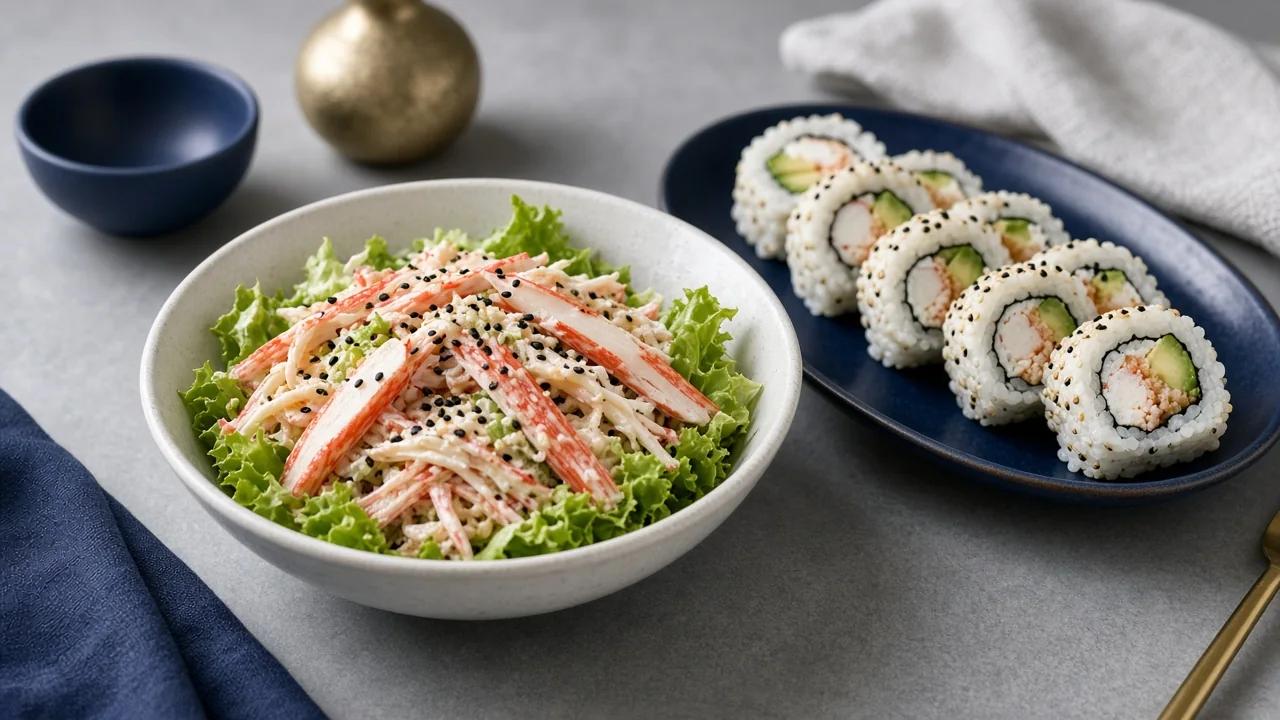
Spicy Kani Salad (Japanese Crab Stick Salad)
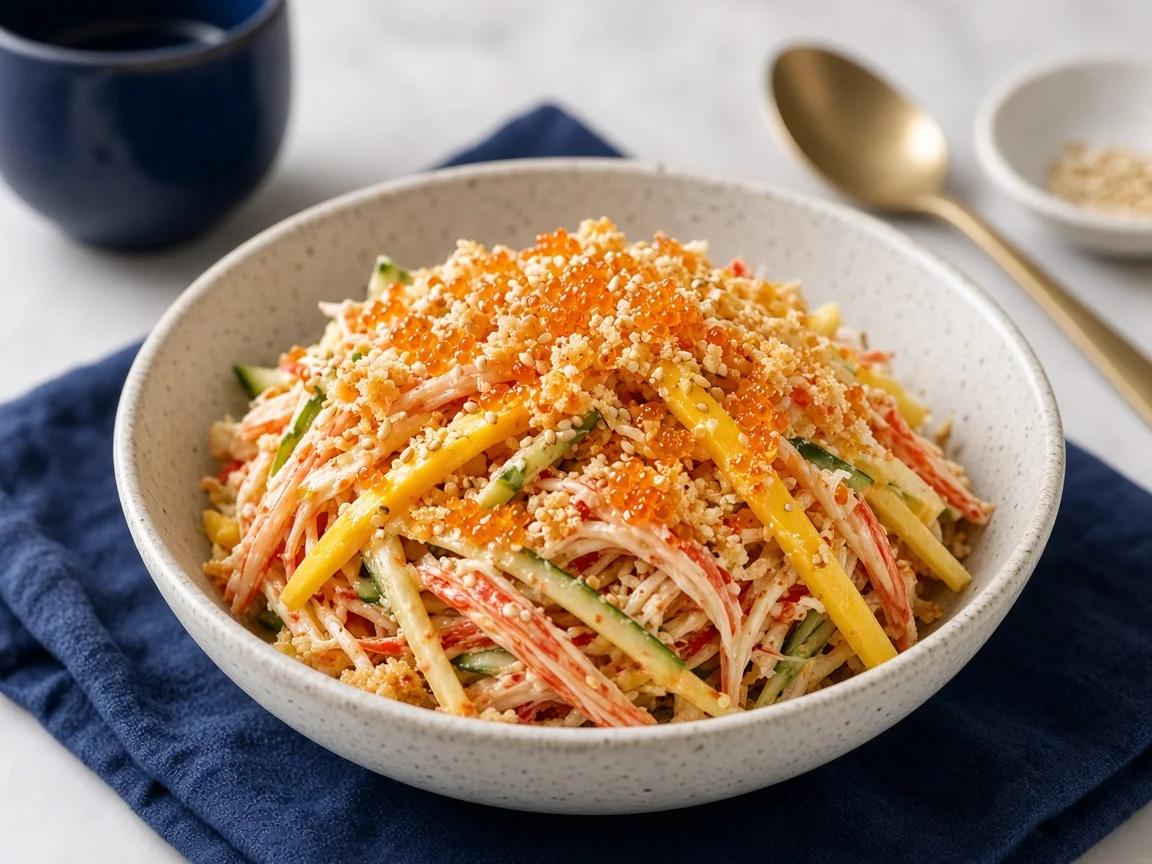
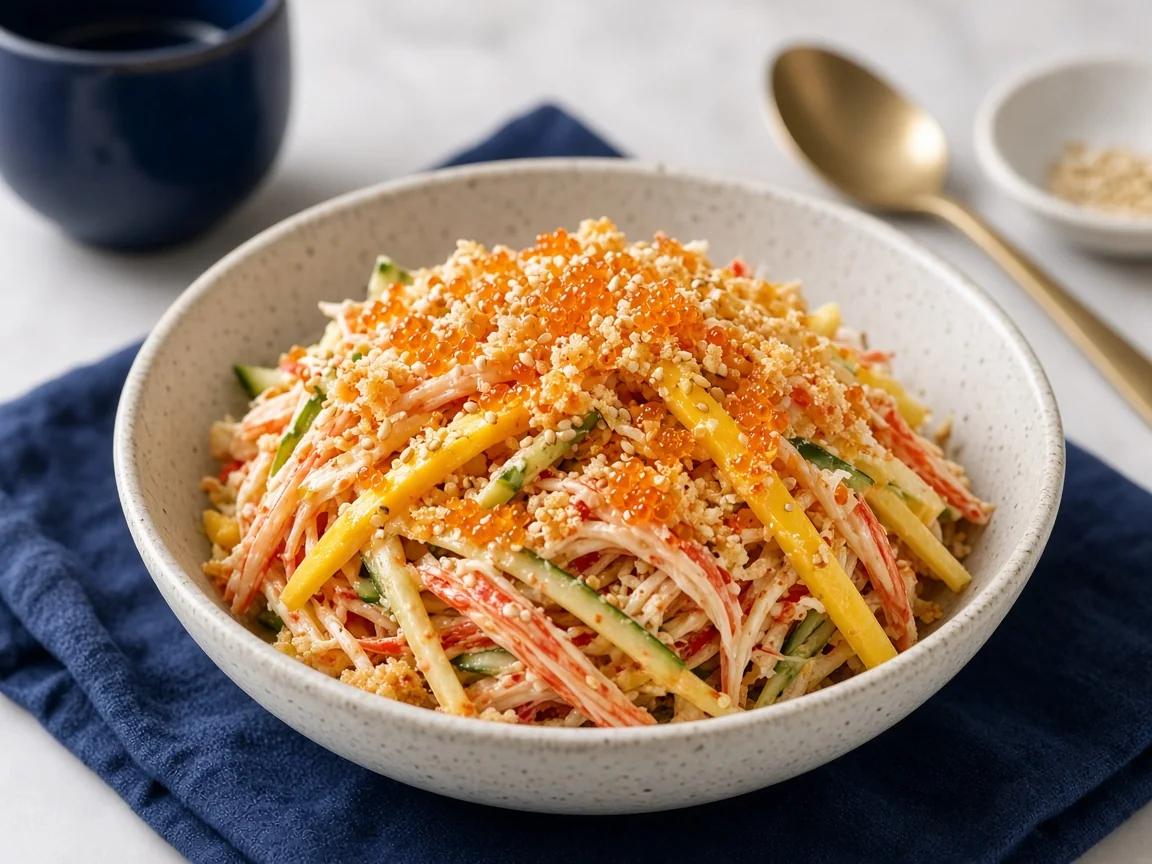
The sushi-bar favourite at home: shredded crab sticks with crunchy cucumber, sweet mango and a creamy, spicy mayo dressing. No cooking needed.
imitation crab guide
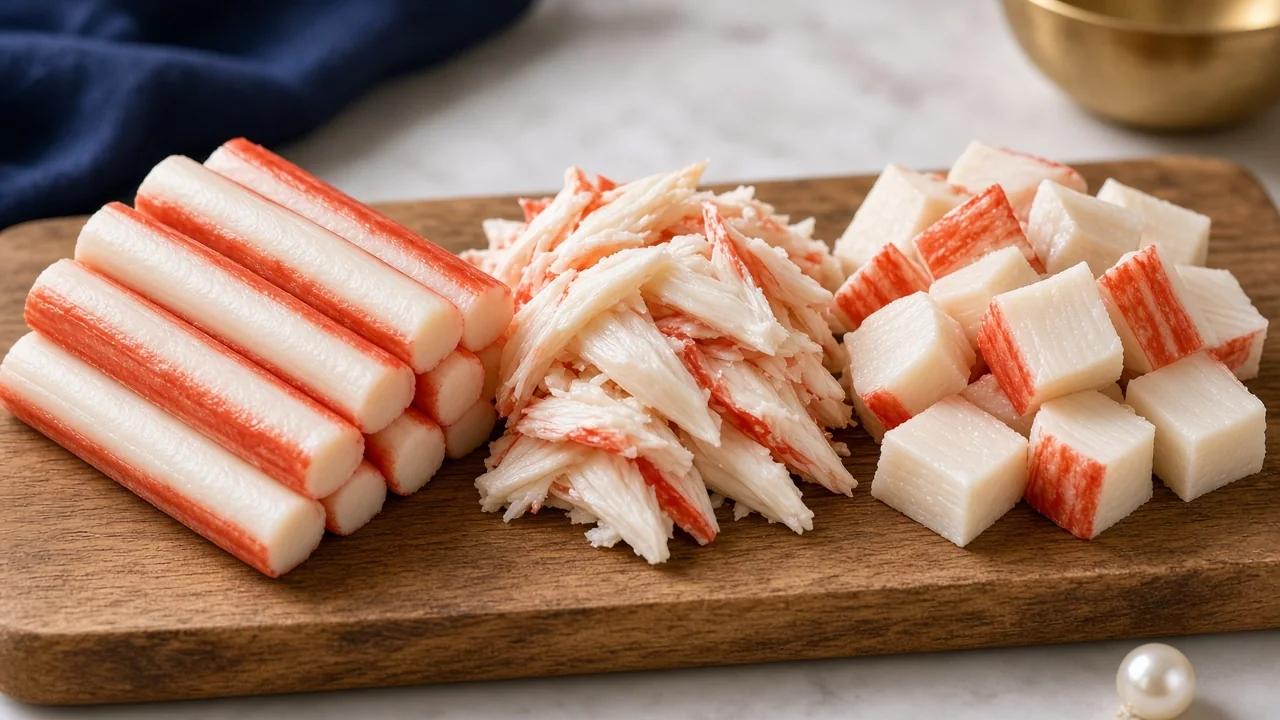
Imitation crab is a seafood product made from surimi, a paste of minced white fish (usually Alaska pollock), shaped, flavoured and coloured to look and taste like crab legs.
crab sticks, seafood sticks, krab, kanikama or kani (Japanese), surimi sticks, "crab-flavored seafood"
Ask the Fish Guide about imitation crab — grounded in this species hub.
Also called
crab sticks, seafood sticks, krab, kanikama or kani (Japanese), surimi sticks, "crab-flavored seafood"
Main ingredient
surimi made from white fish, most often Alaska pollock
Other ingredients
starch, water, egg white, sugar, salt, vegetable oil, crab flavouring, and colourings such as paprika or carmine
Already cooked
yes, ready to eat cold or warm
Hábitat
crab sticks, seafood sticks, krab, kanikama or kani (Japanese), surimi sticks, "crab-flavored seafood"
Recipes
Step-by-step methods from our recipe pages — same hero photos you will see on each dish.
International · Medium
The sushi-bar favourite at home: shredded crab sticks with crunchy cucumber, sweet mango and a creamy, spicy mayo dressing. No cooking needed.
Imitation crab is a seafood product made from surimi, a paste of minced white fish (usually Alaska pollock), shaped, flavoured and coloured to look and taste like crab legs.
Buying links may earn a commission. Restaurant listings are editorial — not paid placements in this block.
Catch & season
Species guide
Imitation crab is a seafood product made from surimi, a paste of minced white fish (usually Alaska pollock), shaped, flavoured and coloured to look and taste like crab legs. It's the "crab" in most California rolls, seafood salads and kani salads, and it's a cheap, ready-to-eat shortcut, but it isn't actually crab.
What is imitation crab? It's a processed fish product designed to copy crab meat. In the US it must be labelled clearly, for example as "imitation crab", "crab-flavored seafood" or "surimi seafood", so shoppers know it isn't real crab (FDA). In Japan it's called *kanikama*, short for *kani kamaboko* (crab fish cake), and it was developed there in the 1970s from the centuries-old Japanese tradition of making fish cakes (kamaboko) from fish paste.
What is imitation crab made of? The main ingredient is surimi. Typical ingredients on the label are:
| Ingredient | Why it's there |
|---|---|
| Surimi (fish protein, usually Alaska pollock; sometimes Pacific whiting or other white fish) | The base; gives the springy, meaty texture |
| Water | Texture and juiciness |
| Starch (wheat, potato, corn or tapioca) | Firmness and lower cost |
| Egg white | Binding and a glossy, white colour |
| Sugar and sorbitol | Sweetness, and protects the fish proteins during freezing |
| Salt | Flavour and helps the proteins bind |
| Vegetable oil | Texture |
| Crab flavouring or crab extract | The "crab" taste |
| Colour (paprika, carmine, lycopene or annatto) | The red-orange outer layer |
| Additives such as monosodium glutamate (MSG) or phosphates | Flavour and moisture |
So when people ask "what is imitation crab meat made of?" the honest answer is: mostly fish and starch, plus flavourings. The exact recipe varies by brand, so always read the label, especially if you have allergies.
How is imitation crab made? In several steps, usually in large factories close to where the fish is caught:
Is imitation crab healthy? It's a mixed picture. It's low in fat and calories, but compared with real crab it has less protein, more carbohydrate and sugar, fewer vitamins and minerals, and often more additives. USDA FoodData Central values per 100 g:
| Nutrient | Imitation crab (made from surimi) | Alaska king crab, cooked |
|---|---|---|
| Calories | 95 kcal | 97 kcal |
| Protein | 7.62 g | 19.4 g |
| Fat | 0.46 g | 1.54 g |
| Sodium | 529 mg | 1,070 mg |
| Selenium | 22.3 µg | 40 µg |
| Vitamin B12 | 0.57 µg | 11.5 µg |
So imitation crab has less than half the protein of real crab, and much less B12. It does have less sodium than brine-cooked king crab, but it's still a fairly salty food. If you love it, enjoy it as part of a balanced diet, and choose real crab, shrimp or white fish more often.
Imitation crab is already cooked and pasteurised, and it's made mostly from Alaska pollock, which the FDA lists as a "Best Choice" fish that's low in mercury (FDA). It's generally considered fine to eat in pregnancy as long as it's been stored properly, kept refrigerated and eaten before its use-by date. Avoid it in sushi or salads that have been left out at room temperature, and if you're unsure, ask your doctor or midwife.
| Imitation crab | Real crab | |
|---|---|---|
| What it is | Surimi made from white fish | Crab meat |
| Taste | Sweet, mild, slightly fishy | Sweet, briny and rich |
| Texture | Uniform, springy, rubbery | Fibrous, delicate, flaky |
| Protein | Lower | Higher |
| Cost | Much cheaper | Expensive |
| Ready to eat | Yes | Usually needs picking from the shell |
Want the real thing? See our crab guide, crab legs guide and snow crab guide.
Imitation crab is mainly fish, so it isn't safe for people with fish allergies. Many brands also add crab extract or other shellfish flavouring, so it isn't automatically safe for people with shellfish allergies either. It also often contains egg and wheat (so it's not gluten-free). Always check the allergen statement on the label.
Imitation crab is fully cooked, so you can use it straight from the pack. The best ways to use it:
Don't cook it for long. It's already cooked, and extra heat makes it tough and rubbery.
| Dish | How to use it | Tip |
|---|---|---|
| California roll | Shredded or whole sticks with avocado and cucumber | Pat dry so the rice doesn't go soggy |
| Seafood salad | Chopped, with mayo, celery, lemon and dill | Make it 30 minutes ahead so the flavours blend |
| Crab rangoon | Chopped, mixed with cream cheese and spring onion | Fry or air-fry until crisp |
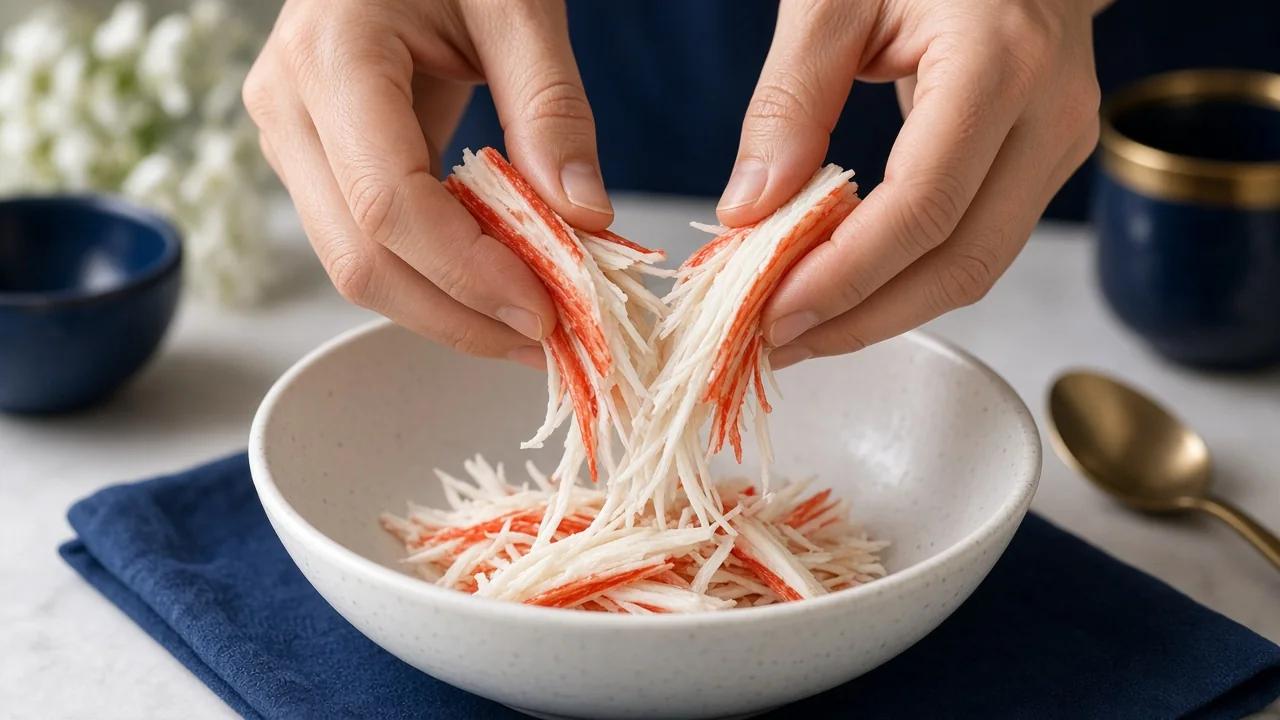
| Kani salad | Shredded, with cucumber, mango and spicy mayo | Dress just before serving |
| Fried rice | Chopped, added in the last minute | Don't overcook |
| Pasta | Flaked into a garlic butter or cream sauce at the end | Add lemon and parsley |
| Crab cakes | Mixed with real crab or on its own | Add egg and breadcrumbs to bind |
Not all imitation crab is the same. Brands vary in how much fish they contain, how much starch and sugar they add, and whether they use MSG, phosphates or artificial colours. To pick a better one:
Gluten: many brands use wheat starch, so most imitation crab is not gluten-free. Some brands use potato or tapioca starch instead and are labelled gluten-free. Always check the label if you have coeliac disease or a gluten intolerance.
Low-carb and keto: imitation crab is higher in carbohydrate than real crab, because of the added starch and sugar. Real crab contains almost no carbohydrate, so if you're following a low-carb diet, real crab, shrimp or white fish are better choices.
Vegetarian and vegan: imitation crab is made from fish, so it isn't vegetarian. Plant-based "crab" products made from konjac, jackfruit or other plants do exist, but they're different products.
If you like imitation crab for its convenience and price, a few other budget seafood options give you more protein and nutrients: frozen cooked shrimp (ready to eat after thawing), tinned crab meat, tinned salmon or tuna, and frozen pollock fillets. All work in salads, sushi bowls and pasta.
Keep it refrigerated at 40°F (4°C) or below, and eat it by the use-by date. Once opened, use it within about 3 days. You can freeze it, but it gets more watery and stringy when thawed, so frozen imitation crab is best for cooked dishes rather than salads (FoodSafety.gov).
Our step-by-step recipe, with a photo for every step:
More seafood recipes on our site that use the same techniques:
Every recipe on this page works with our ready-made regional spice blends. For imitation crab, try Japanese Shichimi Togarashi, part of our 20-blend World Seafood Spice Collection. Each blend is a complete seasoning: warm a spoonful in oil or butter, add your seafood, and cook.
Prefer someone else to cook? Browse our sushi and omakase restaurants or find the best fish restaurants in Seattle, San Francisco, New York.
Part of our Crab guides in the fish and seafood guide hub.
What is imitation crab made of? Mainly surimi, a paste of washed, minced white fish (usually Alaska pollock), mixed with starch, egg white, sugar, salt, oil, crab flavouring and colour.
What is imitation crab? A processed seafood product made to look and taste like crab meat. It's also called crab sticks, krab, kanikama or kani.
Is imitation crab healthy? It's low in fat and calories, but has less protein, more carbohydrate and more additives than real crab. Enjoy it in moderation.
Does imitation crab have real crab in it? Usually not, or only a small amount of crab extract for flavour. Check the label.
Is imitation crab cooked? Yes. It's fully cooked and pasteurised, so it's safe to eat straight from the pack.
Is imitation crab safe during pregnancy? Generally yes, because it's cooked and made from low-mercury fish. Keep it refrigerated and eat it fresh. Ask your doctor if you're unsure.
Can people with shellfish allergies eat imitation crab? Not safely without checking. Many brands contain crab extract or other shellfish, and all contain fish.
What is kani? The Japanese word for crab. In sushi restaurants, "kani" usually means imitation crab sticks (kanikama).
Imitation crab (surimi) works well in crab rangoon, California-style rolls and creamy salads. For a lump-crab texture, use real crab in crab cakes.
Mainly surimi, a paste of washed, minced white fish (usually Alaska pollock), mixed with starch, egg white, sugar, salt, oil, crab flavouring and colour.
A processed seafood product made to look and taste like crab meat. It's also called crab sticks, krab, kanikama or kani.
It's low in fat and calories, but has less protein, more carbohydrate and more additives than real crab. Enjoy it in moderation.
Usually not, or only a small amount of crab extract for flavour. Check the label.
Yes. It's fully cooked and pasteurised, so it's safe to eat straight from the pack.
Generally yes, because it's cooked and made from low-mercury fish. Keep it refrigerated and eat it fresh. Ask your doctor if you're unsure.
Not safely without checking. Many brands contain crab extract or other shellfish, and all contain fish.
The Japanese word for crab. In sushi restaurants, "kani" usually means imitation crab sticks (kanikama).
Cookies. Essential cookies always run. Analytics and ads need your choice — manage or accept below. Essential cookies run the site. Google Analytics runs by default outside the UK, EEA and Switzerland, and only after you accept it there. Opt out any time in Cookie settings. Ads (Meta, Pinterest) load only with your permission. · Privacy