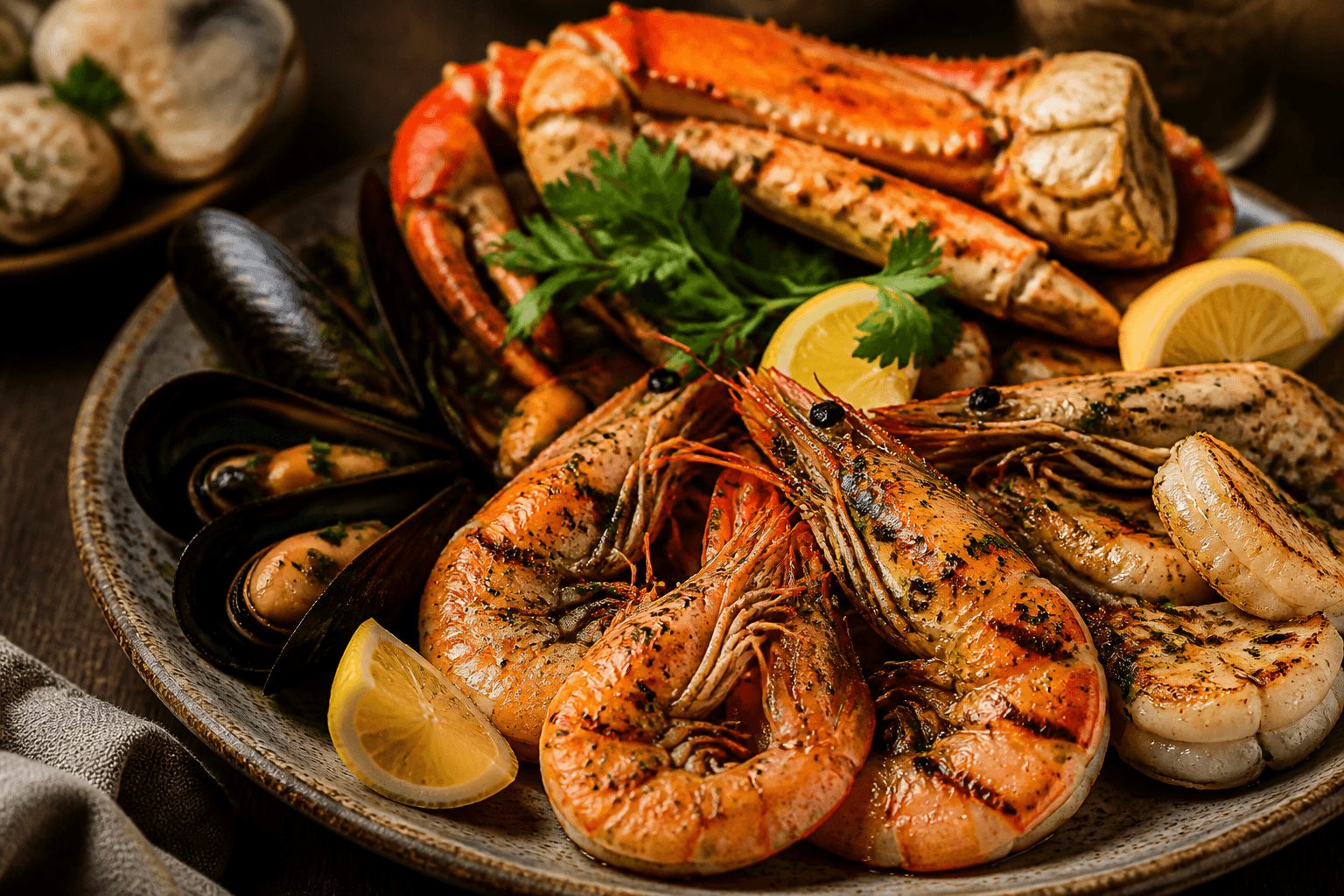
هذا الدليل باللغة الإنجليزية. التصفح وقوائم المطاعم مترجمة بالكامل.

Crustacean guide

Shrimp & prawns

The world’s most ordered shellfish — sweet, quick-cooking, and brilliant from garlic oil to charcoal grills.

OrderDecapoda crustaceans
SizingCount per lb (U/10…51/60)
TextureSnap when just cooked
BuyingDry-pack, not STPP
Fresh raw prawns on ice with lemon wedges and herbs

Cold-water wild

Argentine red shrimp

Pleoticus muelleri · sweet, fast-cooking

Taste: Sweet, delicate, and slightly oceanic; head-on prawns taste richer from the shell juices.

Season: Farmed and wild supply is year-round; peak local seasons vary by coast.

Species & fisheries

Eight shrimp & prawn species worth knowing

Cold-water animals grow slowly and taste sweeter; warm-water tigers and whites take heat and spice. Filter by habitat, then match count size to the recipe below.

Pacific white shrimp on iceGlobal standard

Pacific white shrimp

Litopenaeus vannamei

The farmed default on most menus — mild, clean sweetness and a firm snap when you do not overcook it.

Habitat
East Pacific · tropical ponds
Texture
Firm, snappy
Kitchen
Stir-fry, tempura, skewers

Typical count: 21/25 · 26/30

Large tiger prawns with dark bandingColossal tiger

Black tiger prawn

Penaeus monodon

Dark banding and real mass — the prawn that reads like lobster meat on a grill.

Habitat
Indo-Pacific · SE Asia
Texture
Dense, robust
Kitchen
Charcoal split, roast

Typical count: U/10 · U/12

Spot prawn with white spots on the shellSashimi grade

Pacific spot prawn

Pandalus platyceros

Two white spots on the first segment — sweet enough for amaebi when the season is right.

Habitat
Alaska to British Columbia
Texture
Silky, melting
Kitchen
Raw nigiri, flash blanch

Typical count: Wild trap 12/16

Argentine red shrimp, naturally red when rawWild South Atlantic

Argentine red shrimp

Pleoticus muelleri

Already red in the case — cooks faster than white farmed tails and tastes almost lobster-sweet.

Habitat
Patagonian shelf
Texture
Tender, buttery
Kitchen
Gambas, scampi

Typical count: 10/20 · 16/20

Deep red carabinero prawnDeep Atlantic

Scarlet prawn (carabinero)

Aristaeopsis edwardsiana

Deep-water crimson shell — the head coral is the point, not an afterthought.

Habitat
E Atlantic · Mediterranean
Texture
Rich, succulent
Kitchen
Plancha head-on

Typical count: Colossal U/8

Small pink northern shrimpArctic fisheries

Northern coldwater pink

Pandalus borealis

Tiny wild shrimp for cocktails and open sandwiches — sweetness in a small package.

Habitat
Greenland · Norway · Maine
Texture
Delicate, sweet
Kitchen
Chilled cocktails

Typical count: 90/120 · 150/250

Gulf brown shrimp for boils and BBQGulf heritage

Gulf brown & white shrimp

Farfantepenaeus aztecus

Wild Gulf trawl shrimp — mineral, iodine, and enough chew for Cajun spice and cast-iron BBQ.

Habitat
Gulf of Mexico · S Atlantic
Texture
Snappy, hearty
Kitchen
BBQ, gumbo, boils

Typical count: 16/20 · 21/25

Royal red deep-water shrimpDeep shelf

Royal red shrimp

Pleoticus robustus

Caught far down the continental slope — soft texture with scallop-like sweetness if you stay gentle.

Habitat
Gulf shelf · Atlantic trench
Texture
Silky melt
Kitchen
Butter poach, steam

Typical count: 16/20 wild

U/10

Colossal count

Dry-pack

Skip STPP soaks

~35%

Head weight

C shape

Done, not rubber

Commercial sizing

Count per pound & cook-time window

U/10 means under ten shrimp per pound. Headless counts look “smaller” for the same number because the head is roughly a third of the weight — adjust portions when you peel.

Select count label

Weight per piece

48 g

About 1.7 oz raw per shrimp

Pieces per kg
18–22 / kg
Peel yield (tail-on)
~82% tail meat
Head-on yield
~65% with head on

Good fit: Split-back grill, head-on plancha, butter-poached centerpieces.

Timing (per side unless noted)

U/10 · Colossal

Pull when the flesh is opaque and the curl looks like a relaxed “C”. A tight “O” usually means rubbery and dry.

Pan sear2m 00shigh heat
Rolling boil3m 30ssalted water
Charcoal2m 15sdirect heat

Buying & anatomy

Dry-pack shrimp, STPP soaks & what to remove

Supermarket bags are often phosphate-treated — they look plump until the pan weeps milky water. Head-on shells still carry the best pan sauce; the back vein is optional on tiny counts, worth it on jumbo.

Spotting STPP (E451)

Sodium tripolyphosphate forces water into the meat — glassy raw shells, no sear, sometimes a soapy finish. Ask for dry-pack or labels that list only shrimp and salt.

  • Raw look: overly translucent, wet
  • In the pan: puddles instead of browning
  • Fix: buy chemical-free or rinse and dry hard (second best)

Back vein vs belly line

The dark dorsal line is the digestive tract — harmless when cooked but gritty in large shrimp. Slit the back shallowly and lift it out. The faint belly line is the nerve cord; leave it.

  • 16/20 and up: de-vein for clean bite
  • 51/60: usually skip

Head-on “coral”

The hepatopancreas in the head concentrates fat and glutamates. Sear head-on for gambas, paella, and bisque — then simmer shells for stock instead of throwing them away.

  • Spanish rooms: plancha with head intact
  • Gulf BBQ: head-on cast-iron classic

Recipes

Start with garlic oil

Scale the shopping list for our published gambas al ajillo page — then open the full recipe for steps and city links.

All seafood recipes →

Dinner portions

Spanish gambas al ajillo in olive oil with garlic

Tapas · high heat

Gambas al ajillo

~10 min prep · ~4 min cook · 4 servings scaled below

Scaled ingredients

  • 460 g large raw shrimp (16/20, peeled, tails on)
  • 120 ml extra virgin olive oil
  • 8 garlic cloves, thinly sliced
  • 2 dried guindilla or pinch chili flakes
  • 2 tbsp dry sherry or white wine
  • Smoked sweet paprika, parsley, flaky salt, bread for dipping

Pat shrimp dry, infuse oil with garlic on medium-low, then flash-sear — full walkthrough on the recipe page.

Open full gambas recipe →

Also on the site: Portuguese cataplana, Singapore chilli crab (crab-forward, shared seafood pot).

Shrimp restaurants directory

Near you

Shrimp & prawn restaurants close to you

We match the shrimp & shellfish category, then boost rooms that name prawns, gambas, or scampi on the listing.

Or start from a focus city:

Supply chain

Shrimp & prawn suppliers in our directory

Wholesalers and specialists with public profiles — useful when you want to trace cold-water pinks or live spot prawns back to a name.

Shellfish and shrimp wholesale display

Seattle · USA

Seattle Shrimp & Seafood Company

Pacific Northwest shrimp & shellfish

Wholesale and retail shellfish on the Puget Sound corridor — spot prawn season shows up here first.

Supplier profile →
Raw prawns on ice

British Columbia · Canada

BC Live Spot Prawns & Fresh Seafood

Live spot prawns

BC live spot prawn supply — the sashimi-grade trap fishery west-coast counters watch every spring.

Supplier profile →
Northern pink shrimp for export

Norway

Hafrsfjord Shrimp and Shellfish

Cold-water pink shrimp

Nordic cold-water processing — the small sweet pinks that end up on Scandinavian smørrebrød and cocktails.

Supplier profile →

Browse the full seafood supplier directory

At the table

Order and cook with a short clock

Prawns and shrimp are the global seafood default: they cook in minutes, take spice and citrus well, and show up from Spanish gambas to Gulf BBQ and Japanese tempura. On menus the words overlap; in the case, size and smell matter more than the label.

Use the species cards and count calculator above for portions and timing, then the restaurant map for rooms that actually feature shellfish.

How to buy prawns

Look for firm bodies, a clean sea smell, and shells that are not sticky or glassy. Frozen can be excellent if it was frozen fresh — thaw in the fridge and pat completely dry before a sear.

Prefer dry-pack or chemical-free labels. Phosphate soaks (STPP) add water weight and kill browning. Head-on shells add sauce for grills; peeled tails are faster for garlic oil.

Best ways to cook them

High heat, short clock: once the flesh is opaque and the curl looks like a relaxed “C”, pull them. Overcooked meat tightens into a rubbery “O”. Garlic oil, charcoal, and salted boiling water are the honest tests of quality.

At restaurants, order the simple preparation first — gambas, scampi, or head-on BBQ — before cream-heavy dishes that hide tired product.

أسئلة شائعة — Prawn

What is the difference between shrimp and prawns?+

On menus the words are often interchangeable. Biologically, many “prawns” are dendrobranchiates (branching gills, three pairs of claw legs) and many “shrimp” are pleocyemates (lamellar gills, two claw pairs). For cooking, count size and freshness beat taxonomy.

What does U/10 or 16/20 shrimp sizing mean?+

It is the number of shrimp per pound. U/10 means under ten per pound (colossal). 16/20 means between sixteen and twenty per pound. Headless counts look smaller for the same number because the head is roughly a third of the weight.

What is STPP and why avoid treated shrimp?+

Sodium tripolyphosphate (E451) is a soak that binds extra water into the meat — up to about a fifth by weight. It can look glassy raw, refuse to sear, and taste faintly soapy. Look for dry-pack or ingredient lists that say shrimp and salt only.

Should you remove the black vein before cooking?+

The dark dorsal line is the digestive tract. It is safe when cooked but can be gritty in large shrimp. De-veining is optional on small salad counts; worth it on jumbo. The faint belly line is a nerve cord — leave it.

Why cook shrimp with heads on?+

The head holds fats and glutamates that enrich pan sauces and paella. Head-on Gulf BBQ and Spanish plancha are classic because the juices stay in the pot.