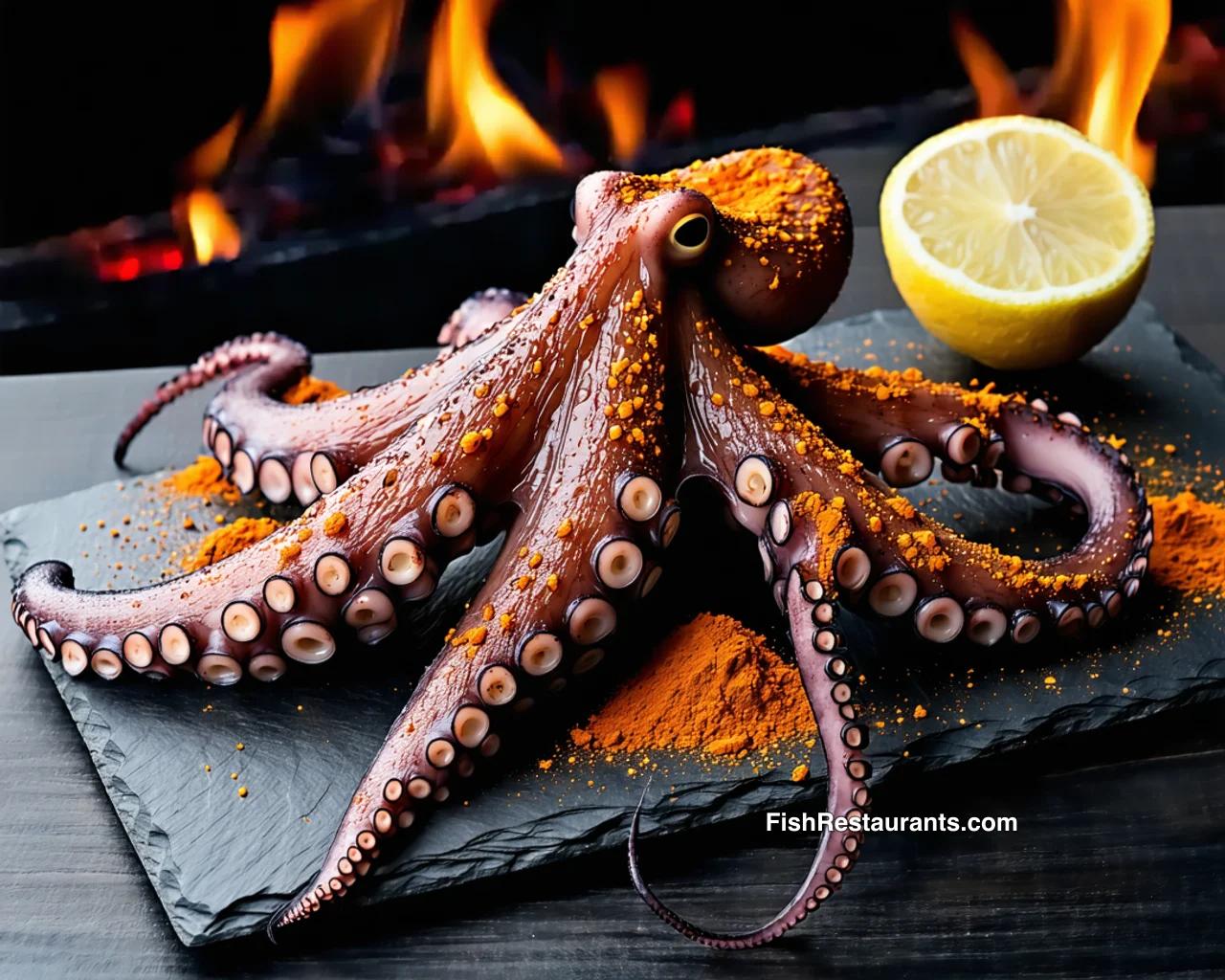
Tender octopus chars on a hot grate when it is fully cooked first, bone-dry, lightly oiled, and laid across the bars—not dragged along glue-hot metal.
Grilled octopus with smoky edges starts in a pot, not on the coals. Buying and cleaning notes live on the hub; grill technique is here.
Simmer to tenderness
Boil in salted water with bay and peppercorns 45–90 minutes depending on size—knife should slide into the thickest tentacle without resistance.
Cool completely; char step is after chill so skin dries.
Dry like steak
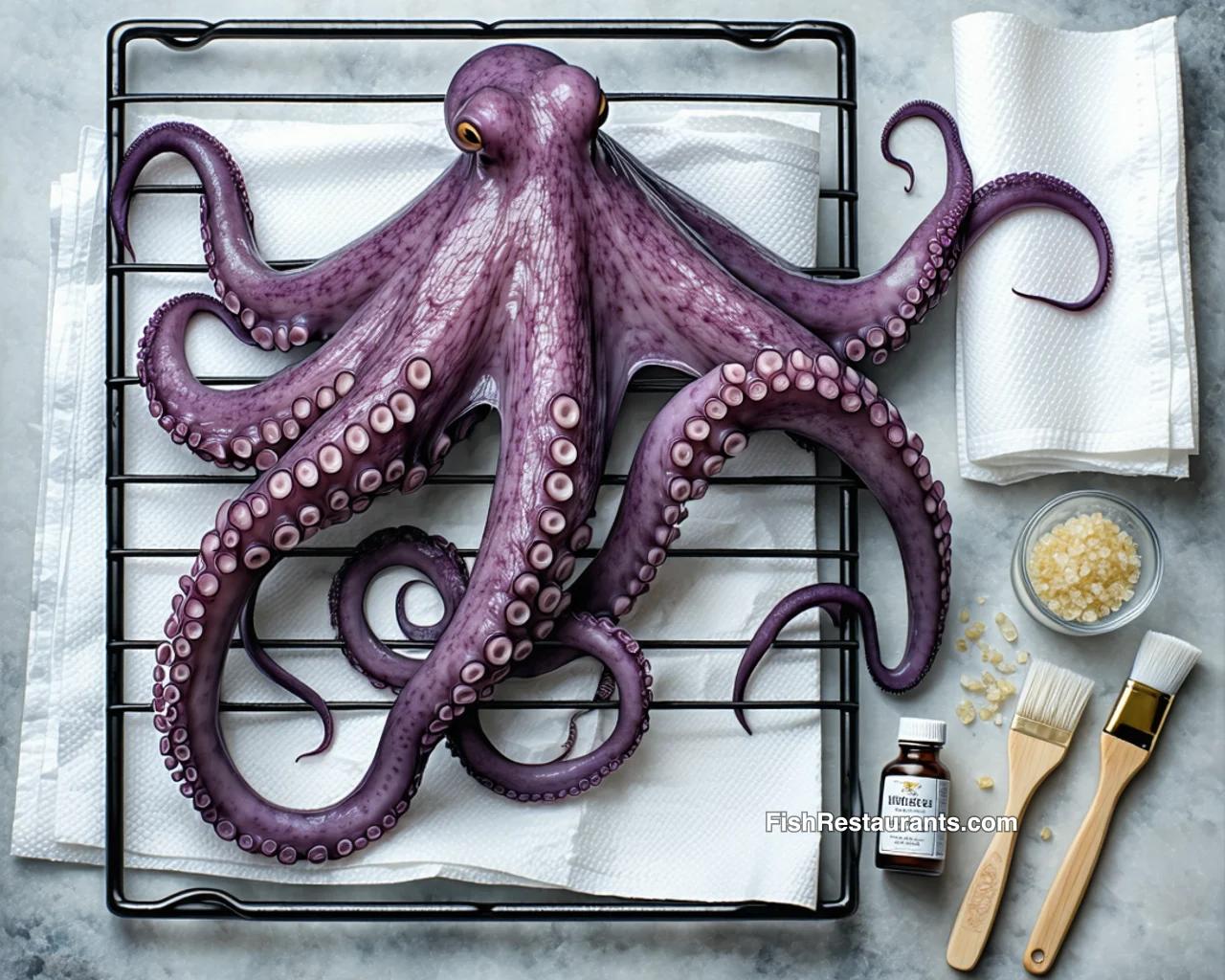
Pat tentacles dry; air-dry on rack in fridge 30 minutes optional. Wet skin steams and sticks.
Brush with high-smoke oil (grapeseed or light olive).
Grate prep
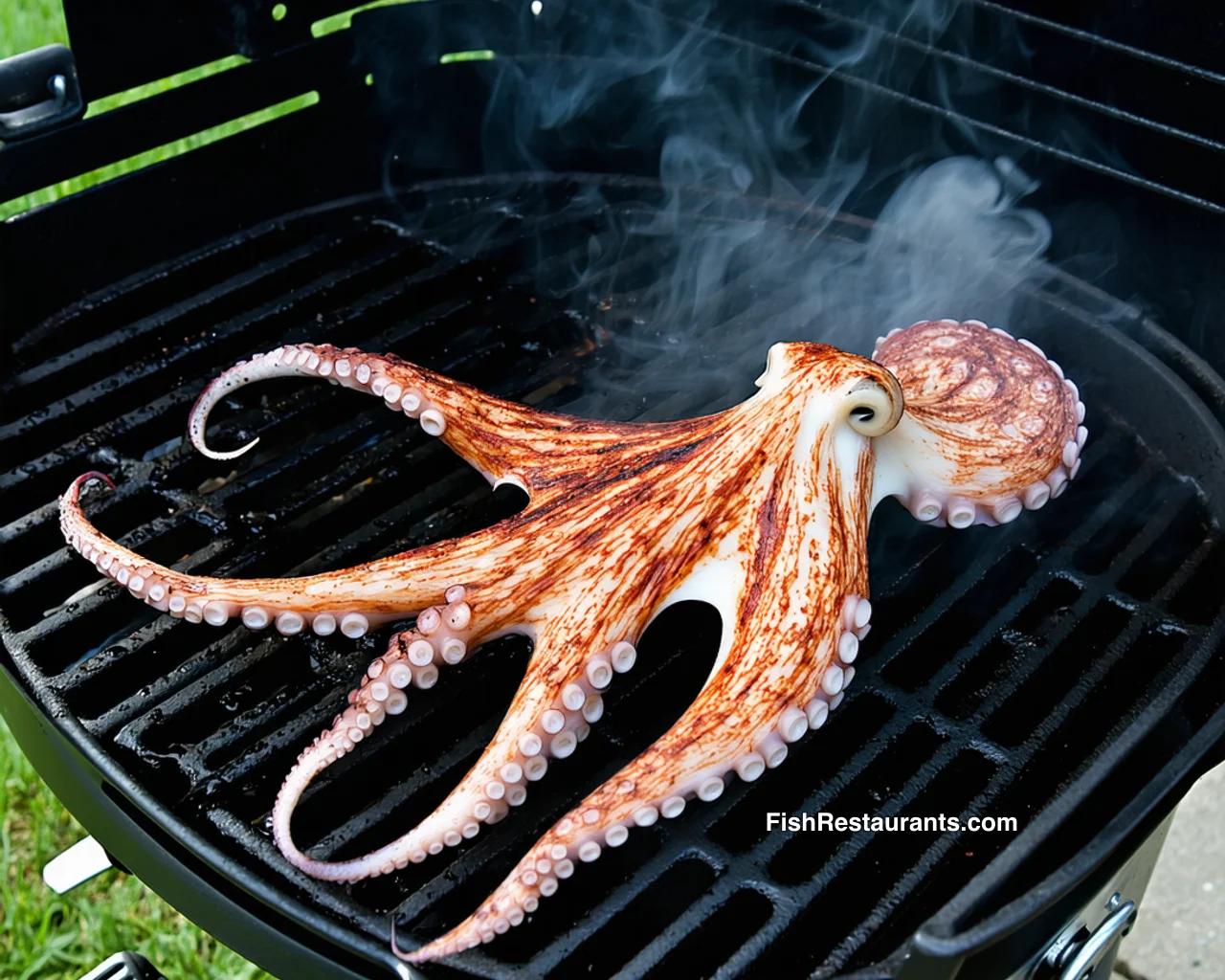
Scrub grates, oil with towel and tongs, heat until smoking. Lay tentacles across bars, not parallel in valleys.
2–3 minutes per side for marks only—you are reheating, not cooking through.
Finish flavors
Lemon, smoked paprika, parsley, crunchy salt. Slice tentacles on bias for bites.
Indoor alternative
Cast-iron grill pan or broiler on rack achieves similar color if outdoor heat is off.
Tentacle curling
Long tentacles warp on the grate. Weight with a cast-iron press or slice into manageable lengths after tender boil.
Acid after heat
Lemon before grill promotes sticking; acid after char preserves crust.
Rest charred octopus five minutes before slicing so juices set; cutting immediately after the grill squeezes moisture onto the board and cools the crust you worked for.
FAQ
Pressure cooker first?
Cuts simmer time; still dry before char.
Frozen octopus?
Thaw fully; often pre-tenderized—check label.
Sticking anyway?
Grate not hot enough or skin too wet.
Greek versus Spanish prep?
Both start tender; marinade after boil varies.
Whole tentacle versus cut?
Whole looks better; tips char faster—watch closely.
More octopus prep?
See cleaning and sizing on the octopus guide.
Whole grilled fish with skin-on blister and a citrus finish is the fastest quality check — the flesh should flake at the bone, not mush under heavy sauce.