Esta guía está en inglés. La navegación y los listados de restaurantes están traducidos.
Guía de especie · Brachyura (true crabs — species vary by coast)
Types of Crab: Legs, Claws, and What to Order
Four crabs share one menu word. Leg clusters, whole swimmers, Pacific halves, and Florida claws are not the same plate.
Boil default
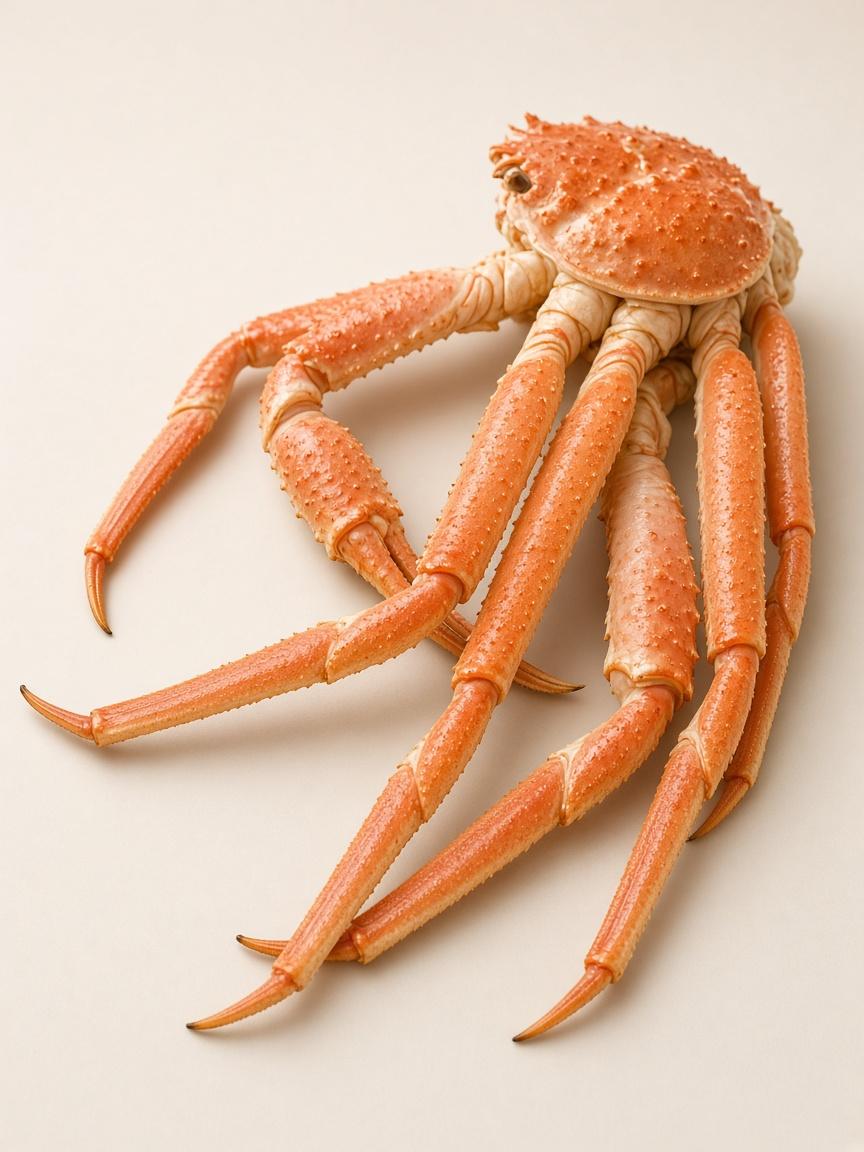
Snow leg clusters
Claws only
Stone crab
Whole plate
Dungeness & swimmer
Yield tax
You pay for the shell
Sabor
Leg meat is sweet and stringy. Body lump is denser. Stone claws are firm and almost always cold.
Temporada
Stone crab follows Florida rules; Dungeness peaks in winter on the Pacific; snow and swimmer crabs are often frozen year-round — ask what landed.
Hábitat
Snow: cold northern oceans. Blue swimmer: warm seas. Dungeness: Pacific Northwest. Stone: Florida and Gulf.
Types of crab
Four crabs. One word on the menu.
Leg clusters, whole swimmers, Pacific halves, and Florida claws are not interchangeable. The species tells you whether you are cracking for an hour or eating cold meat in three bites.
Did you know?
A blue crab must shed its shell — molt — about twenty times on the way to market size. Kitchens call soft-shell season the window when the new shell is still paper-thin. Stone crab is the opposite trade: only the claw is harvested, and the animal goes back to grow another.
North Pacific & Atlantic
Snow crab
Chionoecetes opilio
Shape
Long legs sold as clusters — the boil default
Meat
Sweet strands in the legs; pick, do not slice
Menu words
Snow cluster, opilio, queen crab (regional)
Order it
Boiled or steamed, cracked on the tray
Most “crab leg” towers in a boil are this animal. You are paying for leg length, not body lump.
Indian Ocean, Asia, Mediterranean
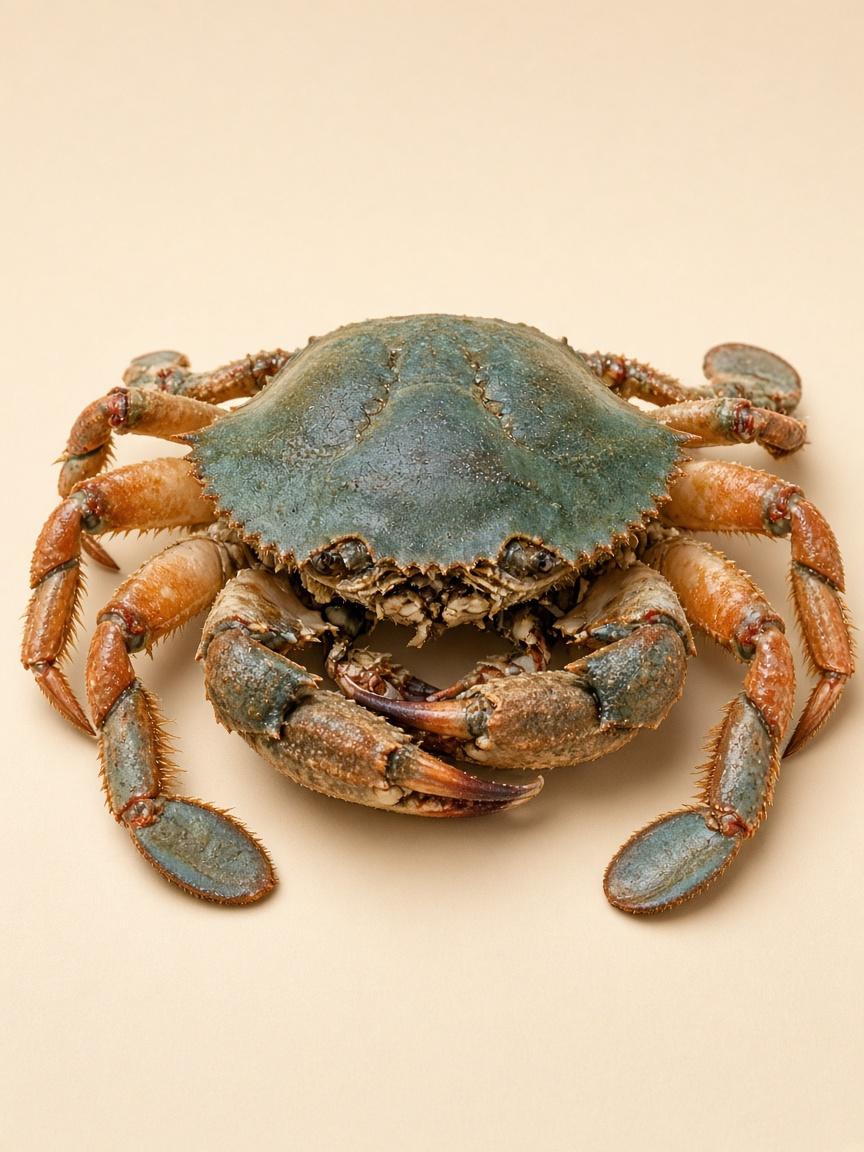
Blue swimmer
Portunus pelagicus
Shape
Wide carapace, rear legs like paddles
Meat
Moist body and claw meat; smaller pieces than Dungeness
Menu words
Blue swimmer, flower crab, sand crab
Order it
Whole in spice, or broken into a boil
Common on UK boil cards as “five pieces” — fast eating, more shell per bite than a leg cluster.
Pacific Northwest
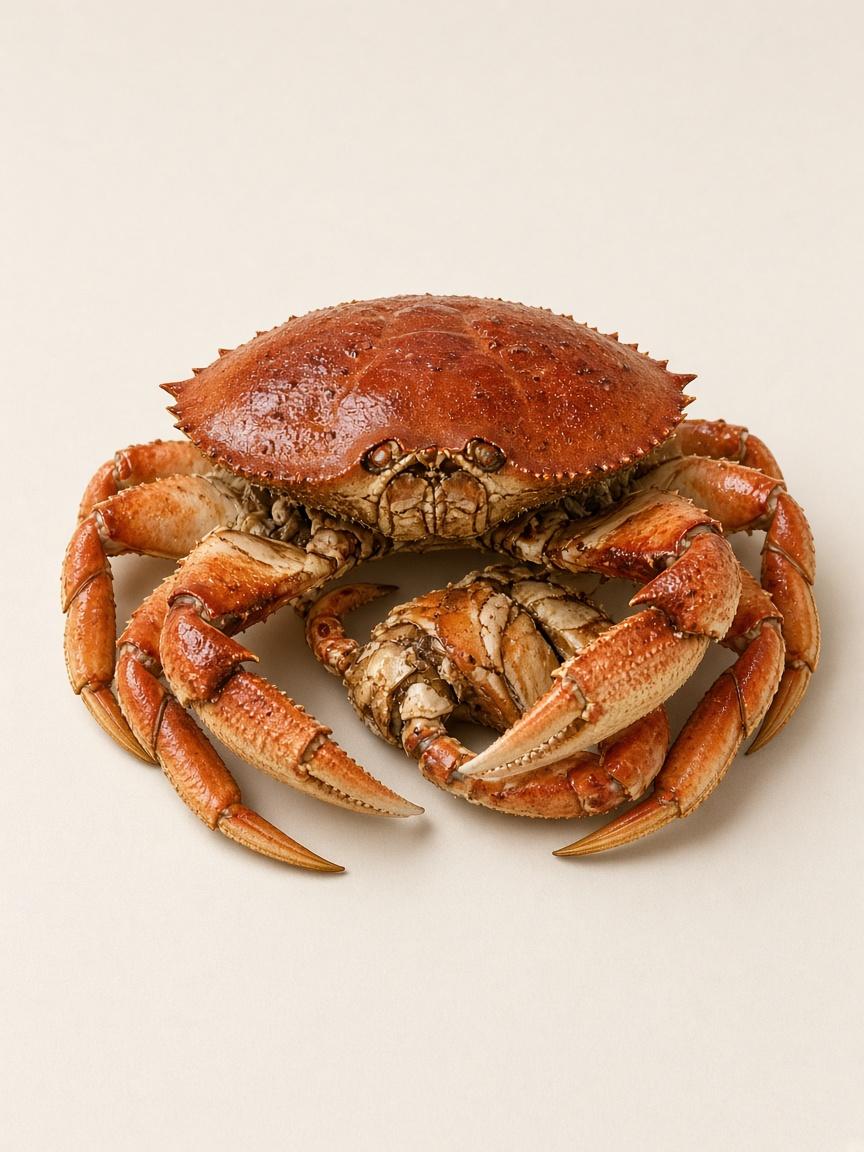
Dungeness
Metacarcinus magister
Shape
Wide, heavy body — half crab is a meal
Meat
Sweet lump and leg meat; body worth the work
Menu words
Dungeness, Pacific crab, half-and-half
Order it
Steamed whole, cioppino, or cold with mayo
The West Coast celebration crab. Ask if it is local Dungeness or a frozen import before you pay celebration prices.
Florida & Gulf of Mexico
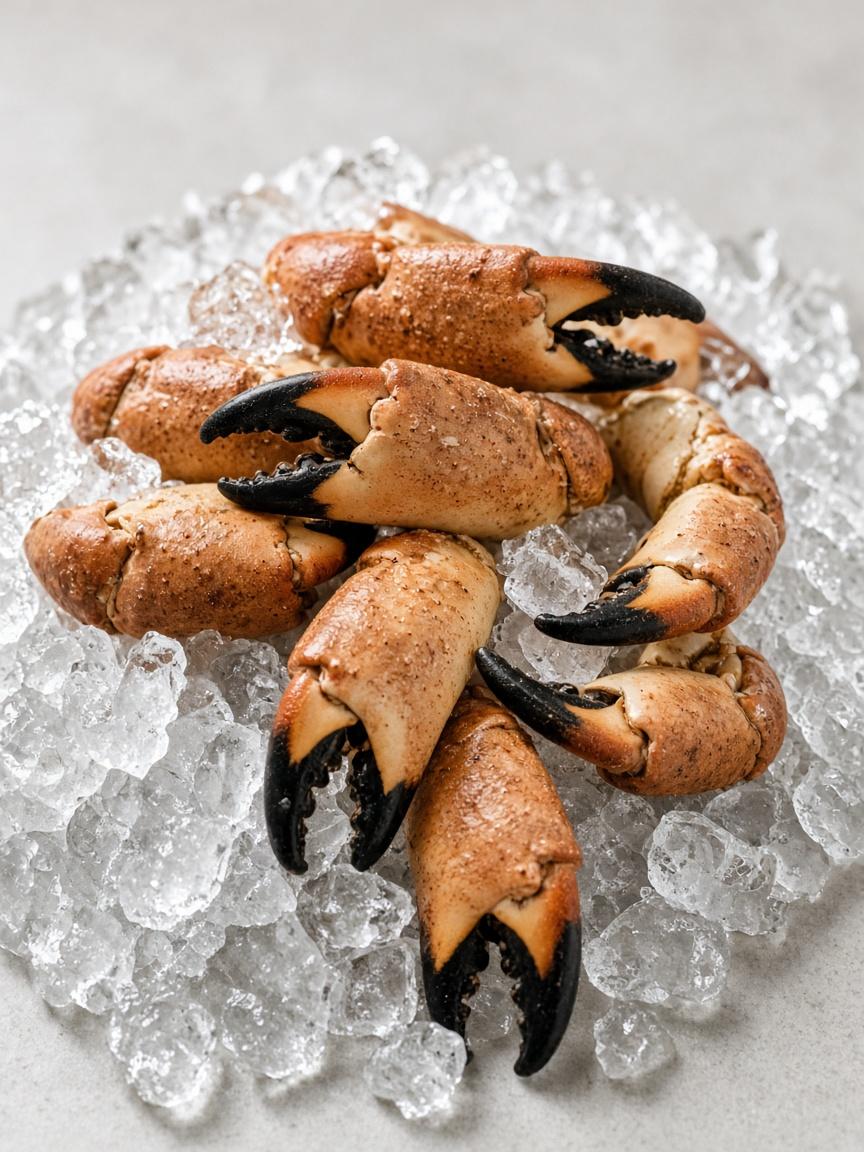
Stone crab
Menippe mercenaria
Shape
Claws only — black tips, no whole animal on the plate
Meat
Firm, cold, almost no cooking at the table
Menu words
Stone claws, mustard sauce, jumbo / large
Order it
Chilled with mustard; confirm size grade and price
Fishermen take one claw and return the crab; the claw grows back. Season and size grade move the bill more than sauce.
A menu that only says crab is hiding the animal. Snow crab arrives as long legs in a cluster. Blue swimmer is a whole, wide crab broken into a spice boil. Dungeness is a half or whole Pacific plate. Stone crab is chilled claws and almost no cracking at the table.
The work changes with the species. Leg clusters reward patience and a pick. Stone claws are three bites and done. A whole Dungeness is worth it only if you will eat the body, not just the easy legs.
También llamado
Crab · Crabe · Cangrejo · Caranguejo
Mejores métodos de cocina
Boil or steam clusters · Chilli with whole crab · Cold claws and mustard · Soft-shell, briefly fried
What to ask before you order
Ask the species, whether the price is per cluster, per piece, or market, and if the crab was frozen. Shell weight is most of what you carry to the table. A “seafood boil” without a named crab is often snow legs — confirm before you compare it to a Dungeness half elsewhere.
Soft-shell is a calendar, not a species swap: it is a blue crab that has molted and not yet hardened. If the card says swimmer or flower crab, you are in warm-water whole-crab territory, not Maine-style leg towers.
How a good kitchen treats each one
Snow and king legs want a timed boil and immediate service — butter or Cajun spice, then off the heat. Re-steaming at a buffet turns leg meat chalky. Blue swimmer and Dungeness can take spice and still need a clock; overcooked body meat tastes like wet paper.
Stone crab is cooked in the kitchen and chilled for service. Mustard sauce is tradition in Miami, not a cover for old claws. Size grade — medium, large, jumbo — moves the bill more than the garnish.
Near you
Top-rated crab and boil rooms close to you
We look for menus that name crab, boils, or claw plates, then rank what is near you. Use your location or pick a city.
What is the difference between snow crab and king crab?+
Both arrive as legs in boils. Snow crab (opilio) has thinner, longer legs and smaller pieces of meat. King crab legs are thicker, often from Alaska or Russia, and usually cost more per cluster. Ask which one the kitchen is using.
Why is crab so expensive?+
You pay for shell, freight, and picking labour. Leg clusters look large but yield less meat than the price suggests. Always confirm market price on stone crab and Dungeness.
Whole crab or claws only?+
Stone crab is claws only by design — the fishery returns the animal. Whole Dungeness or swimmer crabs are better value if you eat the body. Leg clusters are for people who like the pick, not the lump.
What is blue swimmer crab on a UK menu?+
Portunus pelagicus — a warm-water crab with paddle-shaped rear legs, often sold in pieces for spice boils and curries. It is not the same as Atlantic blue crab (Callinectes sapidus) on a Maryland card.