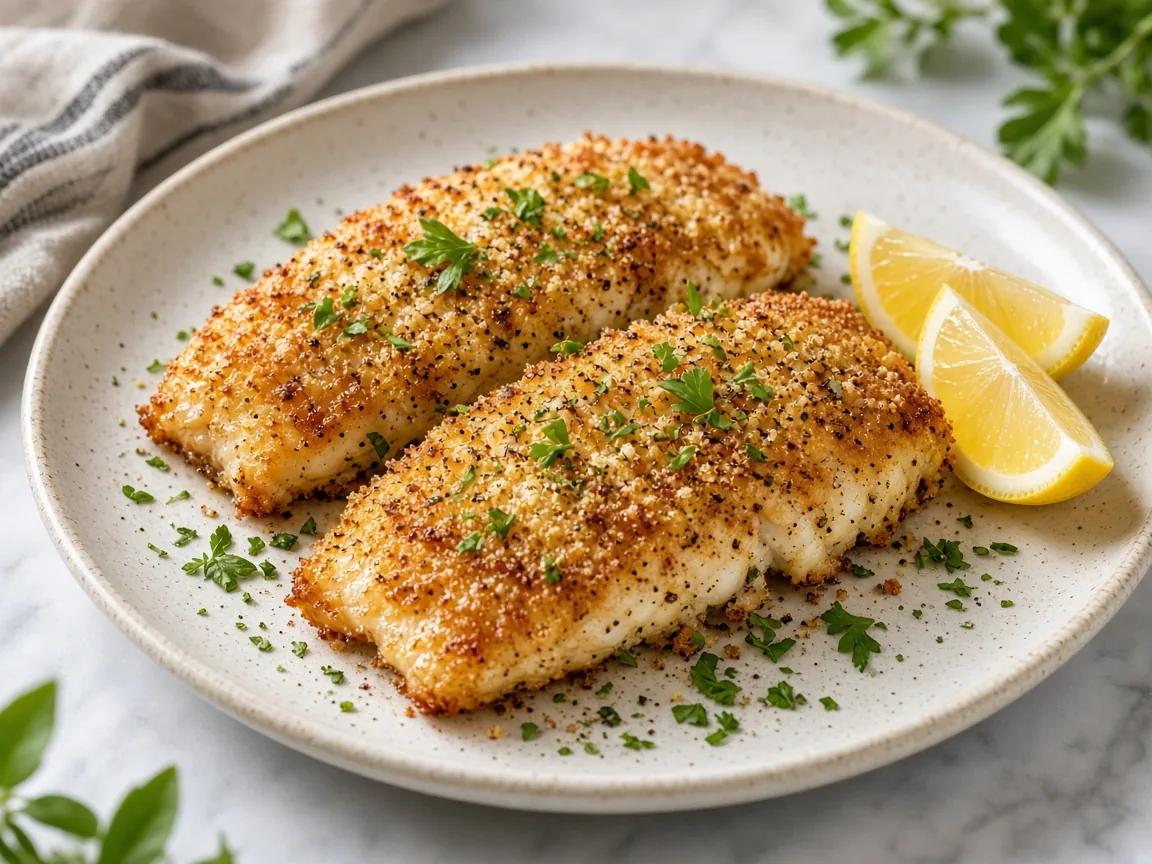
American · Easy
Air Fryer Cod with Crispy Crumbs
Air fryer cod works best with a dry coating, not wet beer batter. A quick flour, egg and panko coat gives a crisp shell around soft, flaky fish.
atlantic cod guide
*Gadus morhua*
Atlantic cod is the classic North Atlantic white fish, with a mild, clean flavour and big, tender flakes that make it a favourite for fish and chips, fish pie and simple baked dinners.
mild and clean; sweeter than Pacific cod (NOAA Fisheries) · Landed across colder seasons in traditional fisheries; quality frozen product is common. · cod (US and UK); cabillaud (France), bacalao (Spain, also salt cod), bacalhau (Portugal, salt cod)
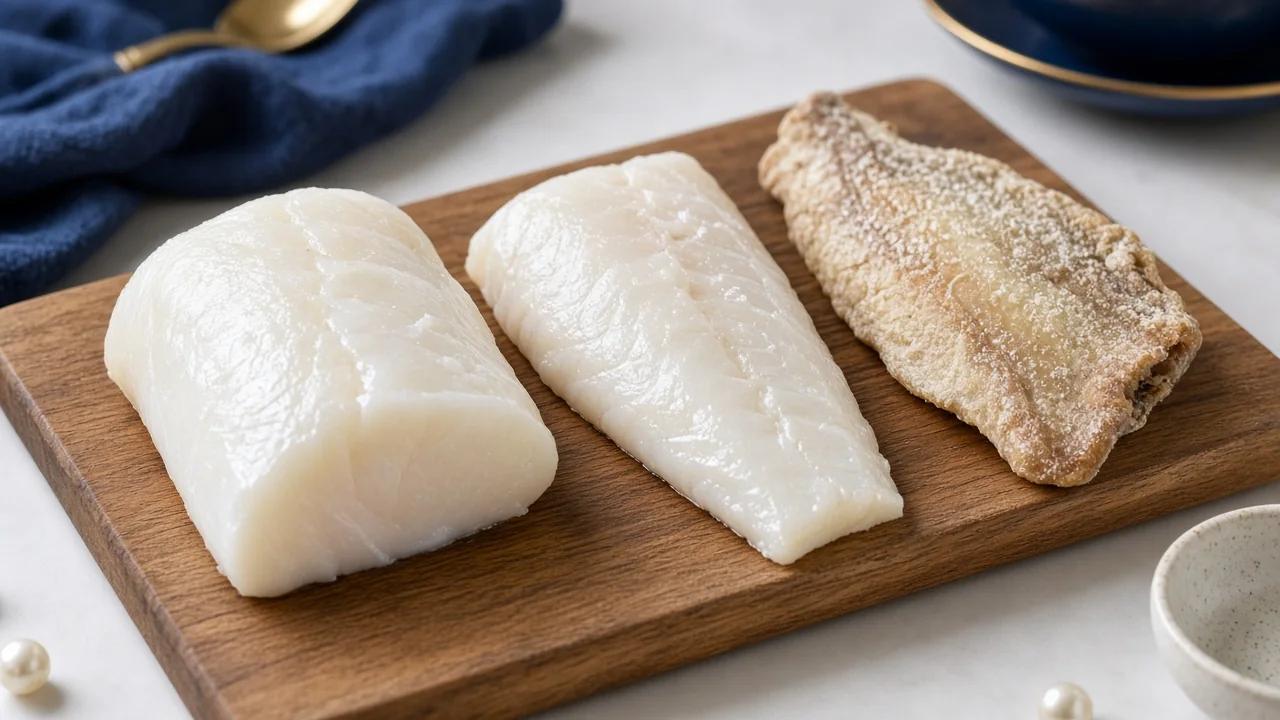 Info
Cod vs haddock vs Pacific cod, taste and nutrition.
Open →Cook5 recipes: beer-battered, baked, pan-seared, air fryer.
Open →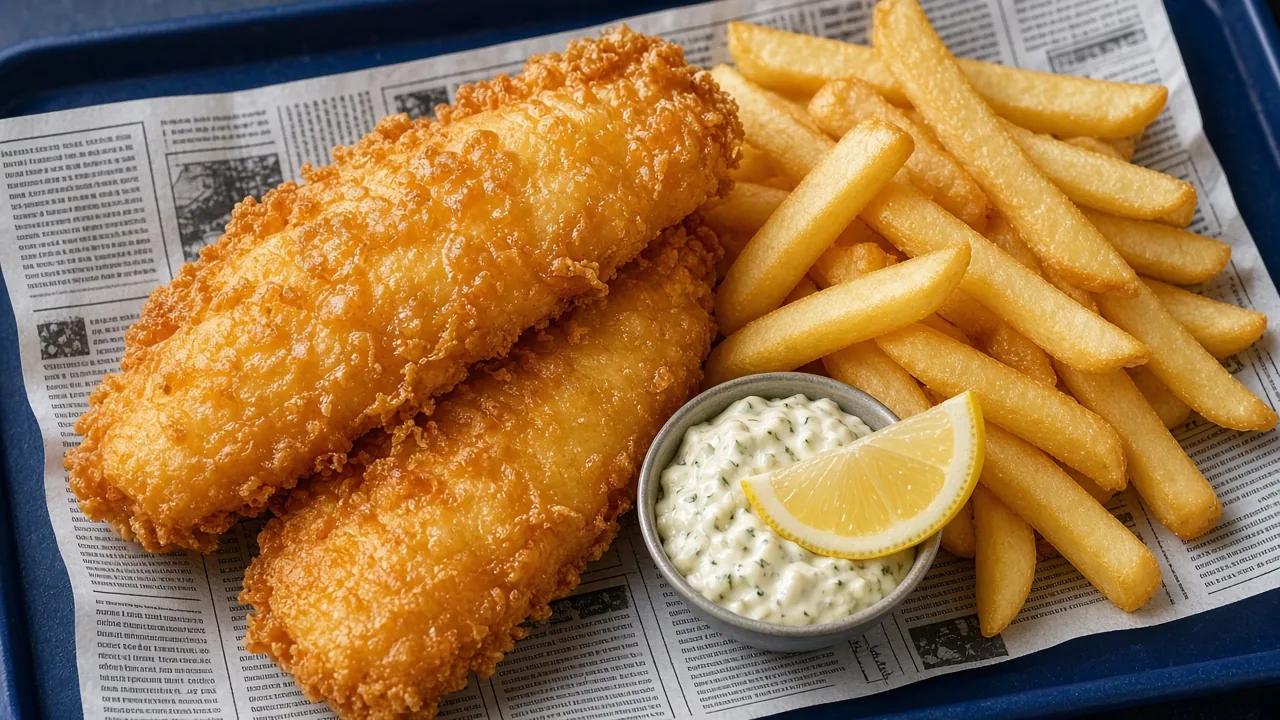 Eat
Cod and fish & chips on real menus near you.
Open → Buy
Loin vs fillet, Icelandic vs North Sea, markets near you.
Open →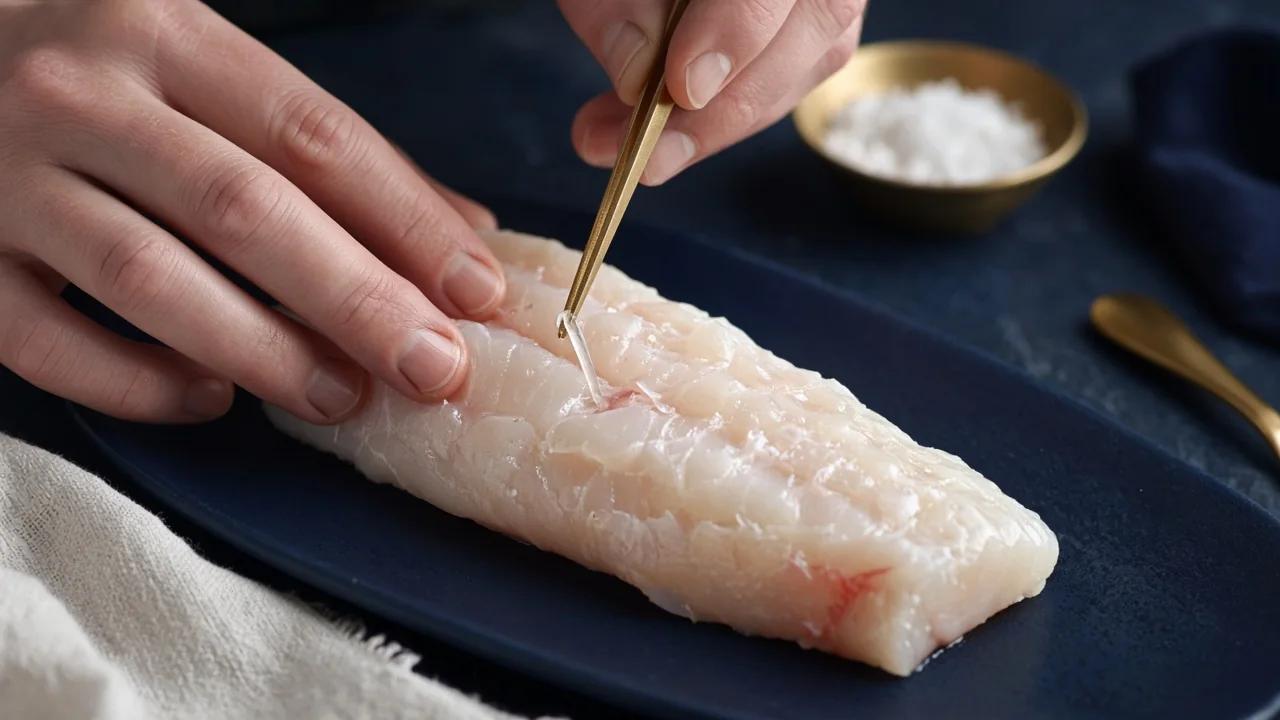 Tips
Oven times by thickness, dry it, turn once.
Open →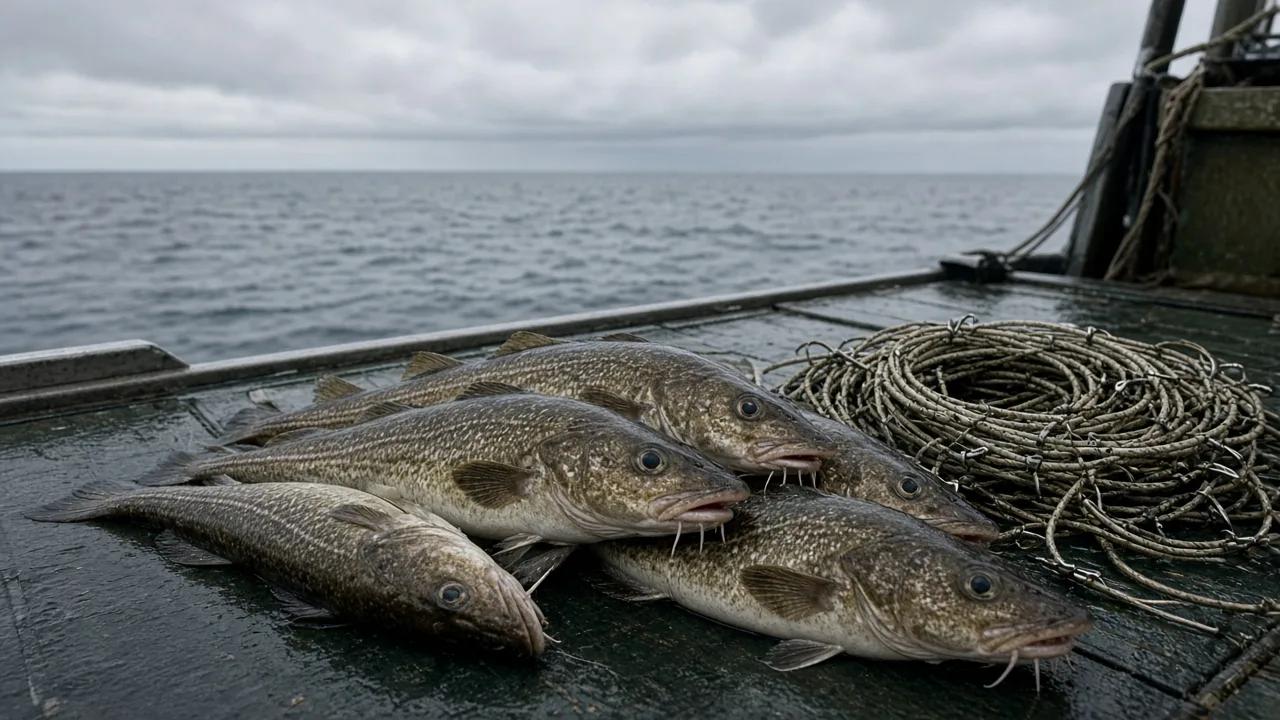 Catch
Iceland, Norway, Gulf of Maine; gear and quotas.
Open →Ask the Fish Guide about atlantic cod — grounded in this species hub.
Also called
cod (US and UK); cabillaud (France), bacalao (Spain, also salt cod), bacalhau (Portugal, salt cod)
Scientific name
*Gadus morhua*
Taste
mild and clean; sweeter than Pacific cod (NOAA Fisheries)
Texture
large flakes; less firm than haddock (NOAA Fisheries)
Taste
mild and clean; sweeter than Pacific cod (NOAA Fisheries)
Season
Landed across colder seasons in traditional fisheries; quality frozen product is common.
Habitat
cod (US and UK); cabillaud (France), bacalao (Spain, also salt cod), bacalhau (Portugal, salt cod)
Recipes
Step-by-step methods from our recipe pages — same hero photos you will see on each dish.
American · Easy
Air fryer cod works best with a dry coating, not wet beer batter. A quick flour, egg and panko coat gives a crisp shell around soft, flaky fish.
British / American · Easy
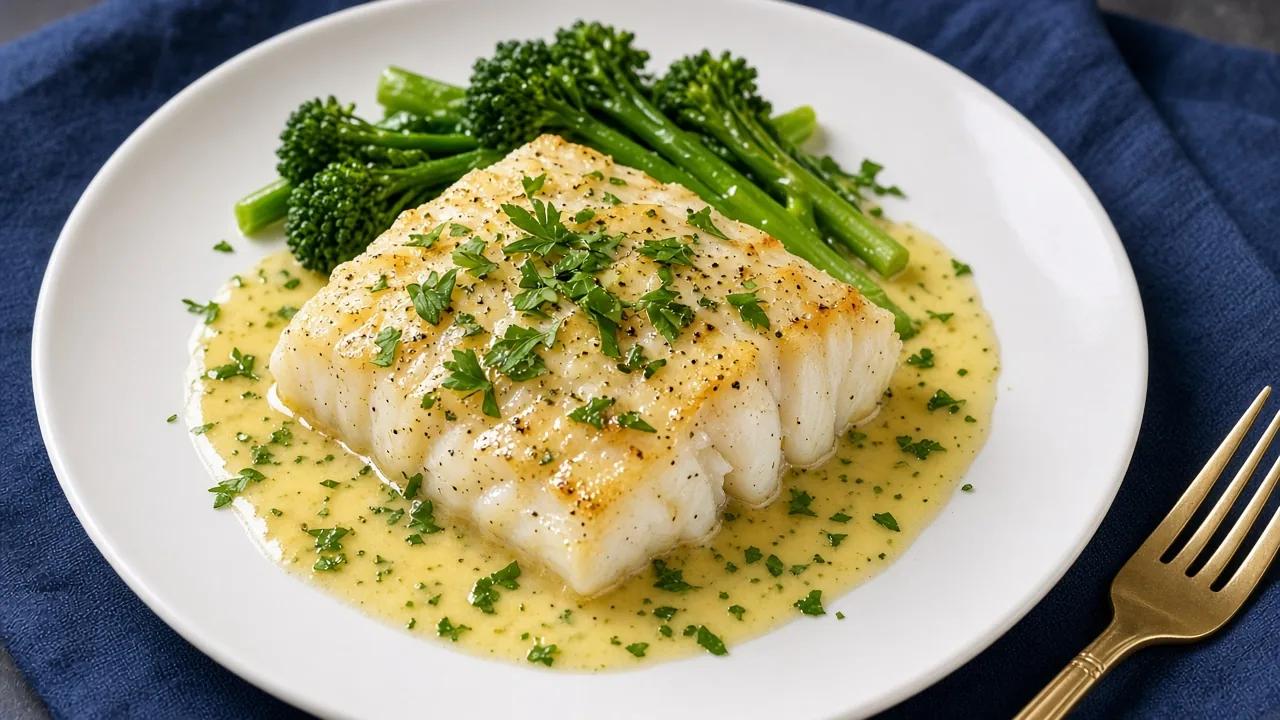
Baked cod in lemon butter is a gentle, hands-off dinner. The butter keeps the lean fish moist and turns into a sauce you can spoon over potatoes or rice.
British · Medium
Beer-battered cod and chips is about temperature: a very cold batter, oil that stays hot, and chips cooked twice. The result is a crisp, light shell around big, moist flakes of cod.
International · Easy
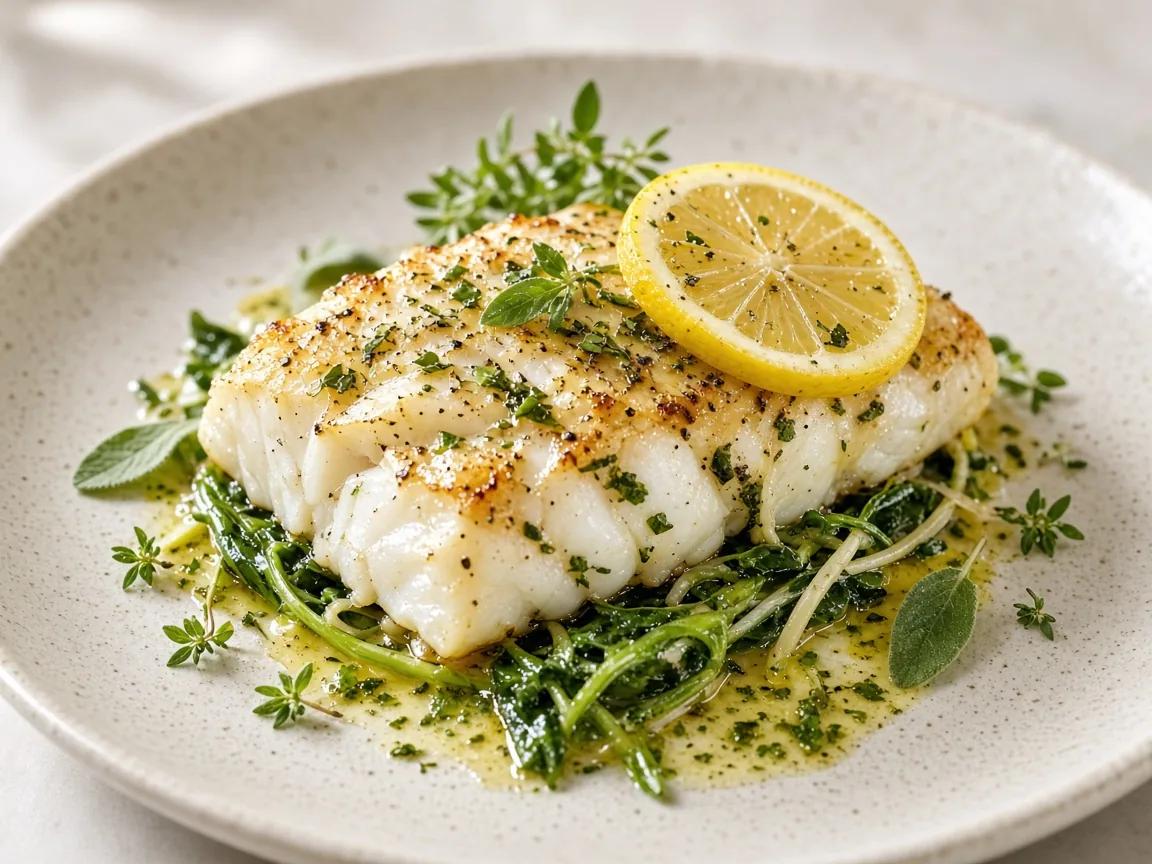
Cod is mild and forgiving, but it has big, soft flakes that fall apart if you push it around. Choose a method that suits the cut: thick loins for baking and pan-searing, thinner tails for air frying or batter.
International · Medium
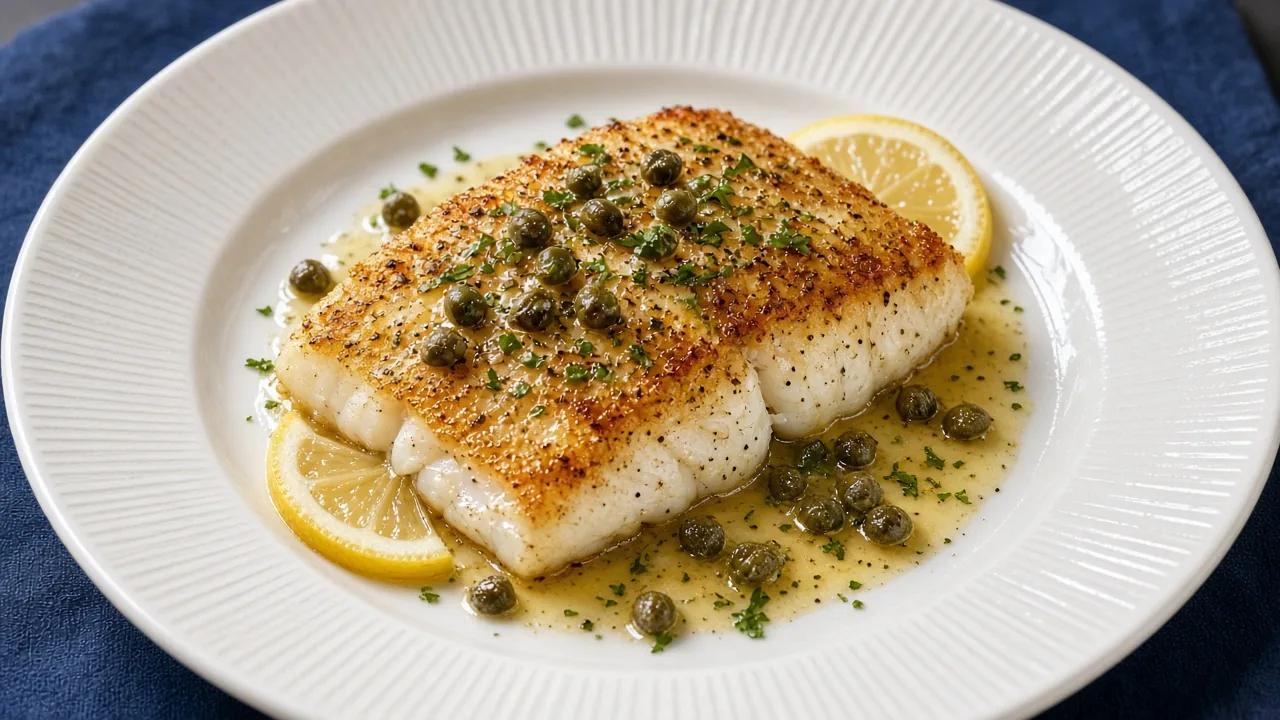
Pan-seared cod should have a golden crust on one side and big, moist flakes inside. The trick is a dry loin, a hot pan and only one turn.
For cooking at home, see our homemade seafood seasonings.
For cooking at home, see our lemon pepper seasoning.
For cooking at home, see our seafood seasoning.
Atlantic cod is the classic North Atlantic white fish, with a mild, clean flavour and big, tender flakes that make it a favourite for fish and chips, fish pie and simple baked dinners.
Buying links may earn a commission. Restaurant listings are editorial — not paid placements in this block.
Tips
Best methods: Beer-battered fry, Bake with lemon-butter, Salt cod preparations, Chowder cubes.
Catch & season
Species guide
Atlantic cod is the classic North Atlantic white fish, with a mild, clean flavour and big, tender flakes that make it a favourite for fish and chips, fish pie and simple baked dinners. It has fed Europe and North America for centuries, and today the key questions are how it compares with haddock and Pacific cod and how to choose cod that comes from a healthy stock. This guide is part of our Fish & Seafood Guide.
What is Atlantic cod? It is a large, bottom-living fish from the cod family (Gadidae), found on both sides of the North Atlantic. It is a top predator in the bottom community, feeding on many kinds of invertebrates and fish (NOAA Fisheries).
Cod can reproduce at 2 to 3 years old, when they are 12 to 16 inches long. They spawn near the ocean floor from winter to early spring, and larger females can produce 3 to 9 million eggs (NOAA Fisheries).
Cod has a long history in trade, from dried and salted cod (bacalhau) in Portugal to the fish-and-chip shops of Britain.
| Atlantic cod | Haddock | Pacific cod | |
|---|---|---|---|
| Flavour | Mild, clean, sweeter than Pacific cod | Slightly sweeter | Milder |
| Texture | Large flakes, softer | Finer, firmer flakes | Large flakes |
| Best for | Fish and chips, baking, fish pie | Fish and chips, smoking | Frying, tacos |
For the full comparison, see our haddock vs cod section in the haddock guide.
Atlantic cod has a mild, clean flavour and is sweeter than Pacific cod. Its flakes are large and tender, and it is less firm than haddock (NOAA Fisheries). It is never strong or oily, which makes it a safe choice for children and for people who think they don't like fish.
US Atlantic cod is wild-caught from Maine to Virginia and is available year-round (NOAA Fisheries). Most cod sold in the UK comes from Iceland or the Arctic (Marine Conservation Society).
It depends a lot on the stock.
Check the label for the catch area and method, and look for the blue MSC label.
Store cod in the coldest part of the fridge and cook it within a day or two. Thaw frozen cod overnight in the fridge and pat it dry before cooking.
Cod is cooked when the flesh is opaque and separates easily with a fork, or reaches 145°F (63°C) inside (FDA).
At 400°F (200°C), a 1-inch (2.5 cm) cod fillet takes about 12 to 15 minutes. Brush it with butter or olive oil, add lemon and herbs, and top with breadcrumbs for crunch.
| Thickness | 400°F (200°C) | 425°F (220°C) |
|---|---|---|
| ½ inch (1.3 cm) tail | 8–10 min | 6–8 min |
| 1 inch (2.5 cm) fillet | 12–15 min | 10–12 min |
| 1½ inch (4 cm) loin | 18–20 min | 15–18 min |
These are approximate. Cod is done at 145°F (63°C), when it's no longer translucent and separates easily with a fork (FoodSafety.gov).
No. Cod is one of the leanest fish you can buy, high in protein and very low in fat. Frying it in batter adds most of the calories, so baking, poaching or grilling keeps it light. The NHS recommends at least 2 portions of fish a week, and white fish like cod counts toward that.
Store fresh cod at 40°F (4°C) or below and use it within 2 days (FDA). Clemson Extension says lean fish such as cod keeps 6 to 8 months in the freezer, wrapped tightly.
Find a chippy on our fish and chips restaurants page, or browse fish restaurants in London, Boston and the Lisbon seafood guide for bacalhau. More places to try: Boston seafood guide.
According to NOAA Fisheries (Atlantic cod; values per 100 g):
| Nutrient | Amount |
|---|---|
| Calories | 82 kcal |
| Protein | 17.81 g |
| Fat | 0.67 g |
| Saturated fat | 0.13 g |
| Cholesterol | 43 mg |
| Selenium | 33.1 µg |
| Sodium | 54 mg |
Cod is a very lean, high-protein fish. The FDA lists cod as a "Best Choice" for low mercury (2 to 3 servings a week).
How do you cook cod fish? Bake it at 400°F for 12 to 15 minutes per inch, pan-fry it in butter for 3 to 4 minutes per side, poach it, or batter and fry it.
How long do you bake cod fish? About 12 to 15 minutes at 400°F (200°C) for a 1-inch fillet, until it reaches 145°F.
Is cod fish good for you? Yes. It's lean, high in protein and low in fat, and it's an FDA Best Choice for low mercury.
Is cod fish fattening? No. It's very lean; frying in batter adds most of the calories.
How do you prepare cod fish? Thaw it in the fridge, pat it dry, remove pin bones and portion it evenly before seasoning.
What does cod taste like? Mild and clean, with large, moist white flakes.
What's the difference between cod and haddock? Both are mild white fish in the cod family. Haddock is slightly sweeter with finer flakes; cod has larger, firmer flakes.
Is Atlantic cod sustainable? It depends on the stock. Check MCS ratings or look for MSC-certified cod.
The cooking sections on this hub stay in place. These recipe pages go deeper on plated methods:
For a haddock version of battered fish, see beer-battered haddock and chips.
Bake it at 400°F for 12 to 15 minutes per inch, pan-fry it in butter for 3 to 4 minutes per side, poach it, or batter and fry it.
About 12 to 15 minutes at 400°F (200°C) for a 1-inch fillet, until it reaches 145°F.
Yes. It's lean, high in protein and low in fat, and it's an FDA Best Choice for low mercury.
No. It's very lean; frying in batter adds most of the calories.
Thaw it in the fridge, pat it dry, remove pin bones and portion it evenly before seasoning.
Mild and clean, with large, moist white flakes.
Both are mild white fish in the cod family. Haddock is slightly sweeter with finer flakes; cod has larger, firmer flakes.
It depends on the stock. Check MCS ratings or look for MSC-certified cod.
Cookies. Essential cookies always run. Analytics and ads need your choice — manage or accept below. Essential cookies run the site. Google Analytics runs by default outside the UK, EEA and Switzerland, and only after you accept it there. Opt out any time in Cookie settings. Ads (Meta, Pinterest) load only with your permission. · Privacy