Species guide
Cod vs Haddock
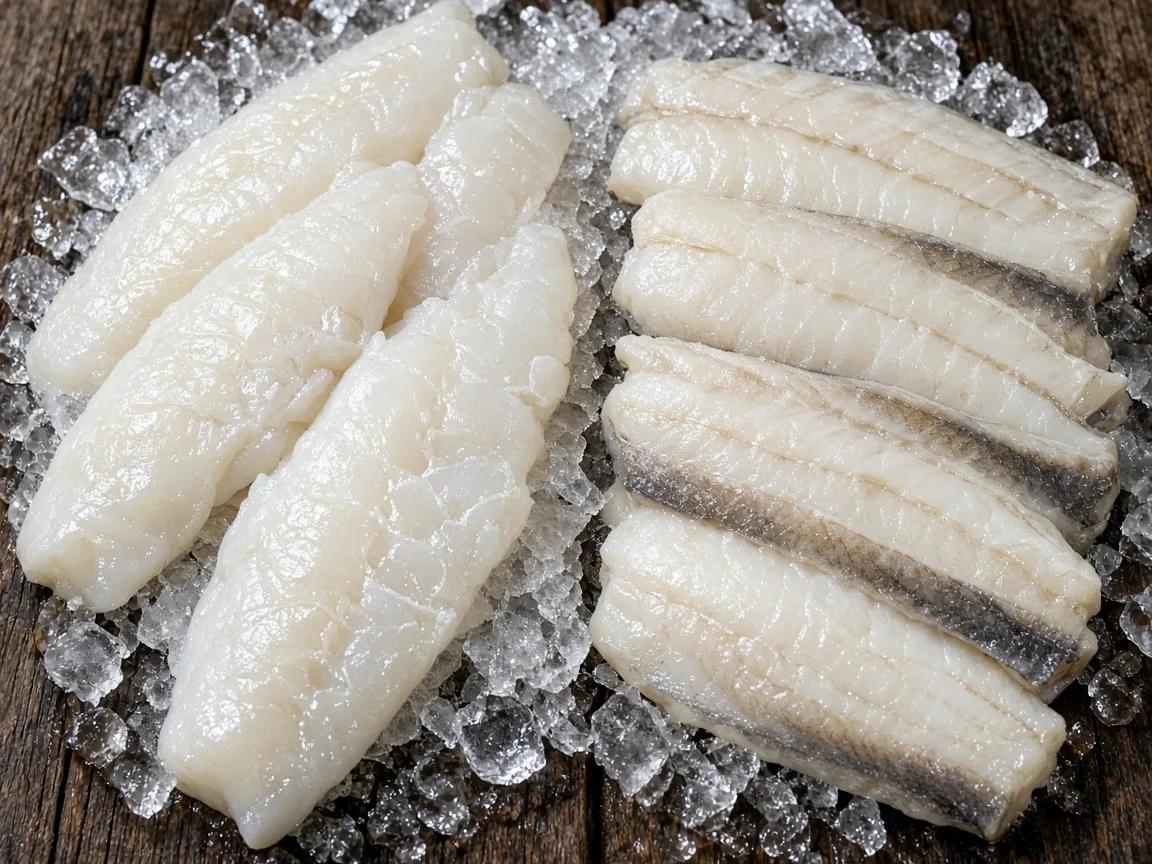
Cod and haddock are both mild, white North Atlantic fish, and either can make excellent fish and chips. Cod has larger, moister flakes; haddock is slightly sweeter and a little firmer. The “better” fish is the one you like and the one your fryer or oven handles well.
Quick comparison
| Atlantic cod | Haddock | |
|---|---|---|
| Scientific name | Gadus morhua | Melanogrammus aeglefinus |
| Flake | Large, chunky, very moist | Finer, slightly firmer |
| Flavour | Very mild | Mild, a touch sweeter |
| Skin | Pale, few markings | Darker, with a distinctive black lateral line |
| Fish and chips | Soft, big flakes inside the batter | Holds together a little more firmly |
| Other cooking | Bake, pan-sear, air fry | Bake, smoke (finnan haddie), pan-sear |
Taste and texture
Cod is the milder of the two, with big pearly flakes that fall into moist chunks when it is cooked. Haddock tastes a little sweeter and cooks into smaller flakes that hold their shape in batter or a fishcake. If you have only had one, the difference is real but not huge.
Which is better for fish and chips?
Both are traditional. In much of England, haddock is the chip-shop favourite; in other places, cod is the default. Batter both the same way, keep the oil hot, and cook until the crust is deep gold and the fish reaches 145°F / 63°C.
Those two recipes should stay on their own fish. Do not treat the haddock page as a second battered-cod recipe.
Other ways to cook them
Cod and haddock swap cleanly in baked and pan recipes. Try baked cod with lemon butter, pan-seared cod or air fryer cod. For a method overview, see how to cook cod.
Buying notes
Look for moist, milky-white flesh and a clean smell. For freshness and storage, see how to buy and store cod. Haddock follows the same rules. Stocks and advice change, so check current MSC or MCS ratings if sustainability is important to you.
The main species guide is Atlantic cod. Haddock has its own page at haddock.