Species guide
Atlantic vs Pacific Salmon
Atlantic salmon is one species, and almost all of it sold today is farmed; Pacific salmon is five main wild species, from rich king and sockeye to lean pink and chum. That split explains most of what you notice at the counter: colour, fat, flavour and how forgiving the fish is to cook.
If you only remember one thing: farmed Atlantic is mild, fatty and consistent; wild Pacific is leaner, firmer and more strongly flavoured, and it varies a lot by species.
Quick comparison
| Atlantic salmon | Pacific salmon | |
|---|---|---|
| Species | One: Salmo salar | Five main: king (Chinook), sockeye, coho, pink, chum |
| Wild or farmed on sale | Almost always farmed | Mostly wild-caught |
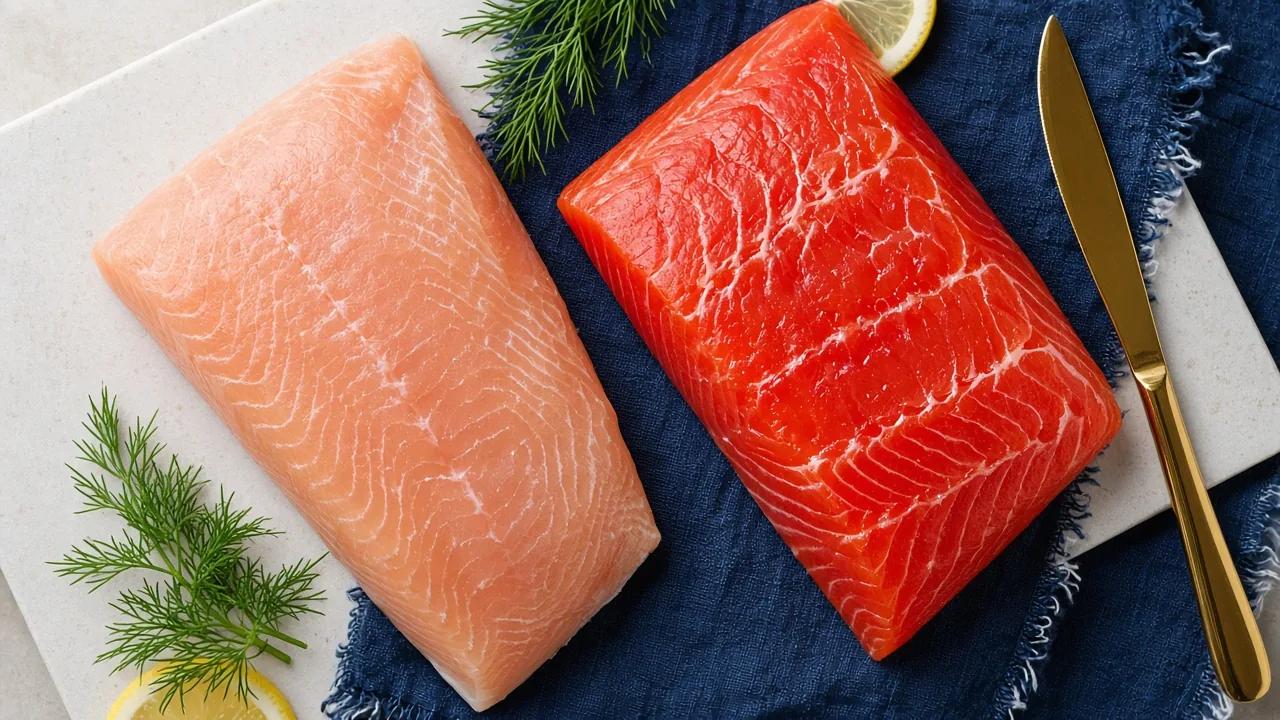
| Flesh colour | Pale to medium orange, wide white fat lines | Light pink (pink, chum) to deep red (sockeye) |
| Fat and texture | High fat, soft, buttery | Lean to rich depending on species; firmer |
| Flavour | Mild | Mild (pink) to pronounced (sockeye, king) |
| Most forgiving method | Roasting, pan-searing | Gentle heat; stop early |
Why almost all Atlantic salmon is farmed
Wild Atlantic salmon numbers are very low, and the Marine Conservation Society advises avoiding wild Atlantic salmon. The Atlantic salmon you see in supermarkets and restaurants is farmed, mostly in Norway, Scotland, Chile, Canada and the Faroe Islands. Look for ASC-certified or organic labels if you want a farmed choice with independent standards.
The five Pacific salmon species
- - King (Chinook): the largest and richest, with high fat and a silky texture. Often the most expensive.
- - Sockeye (red): deep red flesh, firm, with the strongest "salmon" flavour. See our sockeye salmon guide.
- - Coho (silver): medium fat, milder than sockeye, a good everyday wild fillet.
- - Pink: small, lean and mild. Most of it is canned.
- - Chum (keta): lean and pale; often sold frozen, smoked or as roe (ikura).
Taste and texture
Farmed Atlantic salmon has more fat between the muscle flakes, so it tastes rich but mild and stays moist even if you cook it a little too long. Wild Pacific salmon swims long distances and carries less fat, so it tastes cleaner and more "of the sea", and the flakes are firmer. Sockeye and king are the two to choose if you want a salmon that tastes clearly of salmon.
Colour: what it does and does not tell you
Salmon flesh gets its colour from carotenoids in its diet. Wild Pacific salmon eat krill and small crustaceans; farmed salmon get carotenoids in their feed. The FDA notes that colour alone is not a reliable sign of freshness or quality, so judge by smell, moisture and firmness instead.
How to cook each one
- - Farmed Atlantic: roast at 400°F / 200°C for 12 to 15 minutes for a 1-inch fillet, or pan-sear skin side down until crisp. Its fat makes it forgiving. Try baked salmon with lemon garlic or pan-seared salmon with crispy skin.
- - Wild sockeye and coho: use the same methods but check 2 to 3 minutes earlier. Lean fillets dry out quickly. Grilled salmon fillet works well with sockeye.
- - King: rich enough for simple grilling or slow roasting at a lower temperature.
- - Pink and chum: best in fishcakes, salads, smoking or canned recipes.
The FDA safe internal temperature for fish is 145°F / 63°C. Many cooks take wild salmon off the heat a little before and let it rest.
Which should you buy?
- - Want mild, rich and easy? Farmed Atlantic, ideally ASC-certified or organic.
- - Want strong flavour and a firm bite? Wild sockeye.
- - Want a balanced everyday wild fillet? Coho.
- - Cooking for a special occasion? King.
For freshness checks and storage times, see how to buy and store salmon. For the full species overview, go back to the salmon guide.