fishrestaurants.com
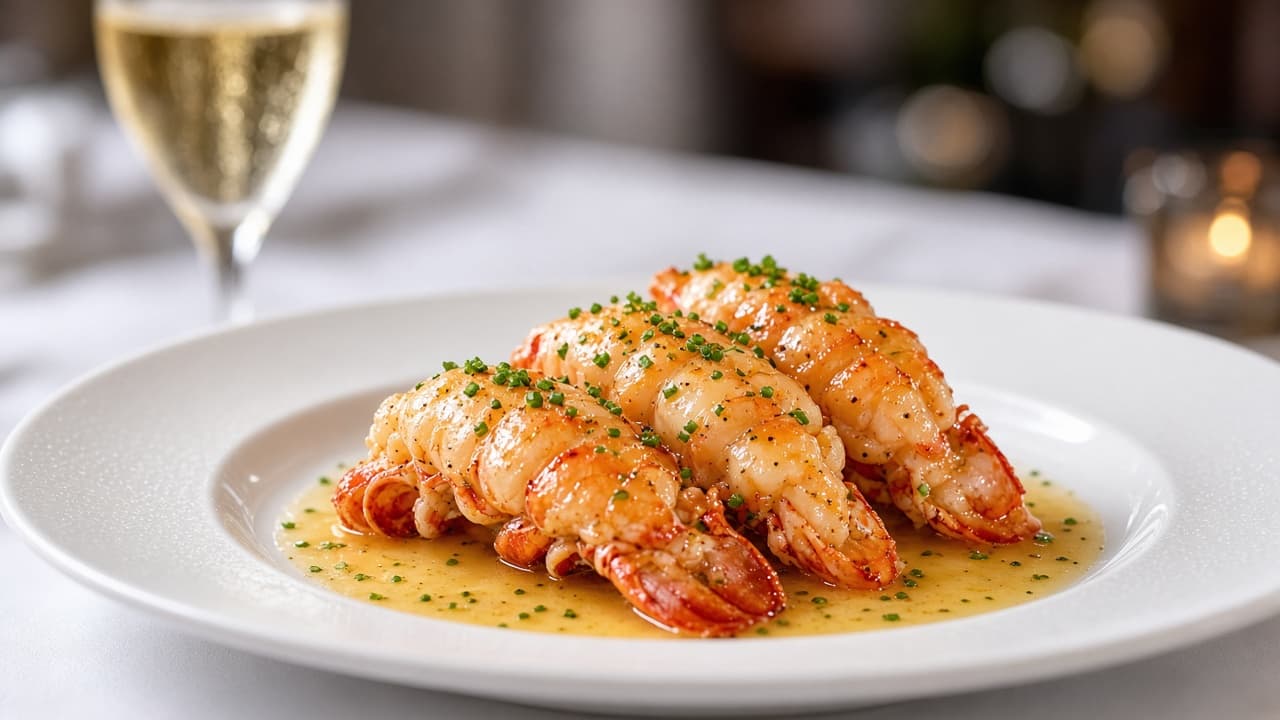
Butter-poached lobster tail with champagne beurre blanc on a white plate

French-American · United States

Butter-Poached Lobster Tail with Champagne Beurre Blanc

Restaurant-style lobster without the tank — gentle butter poaching, a tight Champagne sauce, and tails that stay springy instead of rubbery.

Share this recipe: www.fishrestaurants.com/recipes/luxury-butter-poached-lobster-tailStep photos below are sized for Instagram carousels and Reels covers.

Prep

25 min

Cook

35 min

Servings

2

Difficulty

Advanced

Butter-poaching is how luxury kitchens keep lobster tender: the meat cooks in fat held just below a simmer, so it never hits the violent boil that turns tails chewy. The sauce here is a classic Champagne beurre blanc — sharp, silky, and rich enough to match sweet shellfish without masking it.

Buy cold-water tails (Maine or Atlantic Canadian) with firm, translucent raw meat. If you would rather eat out first, compare texture at a serious New England room — then come back and poach at home with the same restraint.
Method

  1. 1

    Split, clean, and season the tails

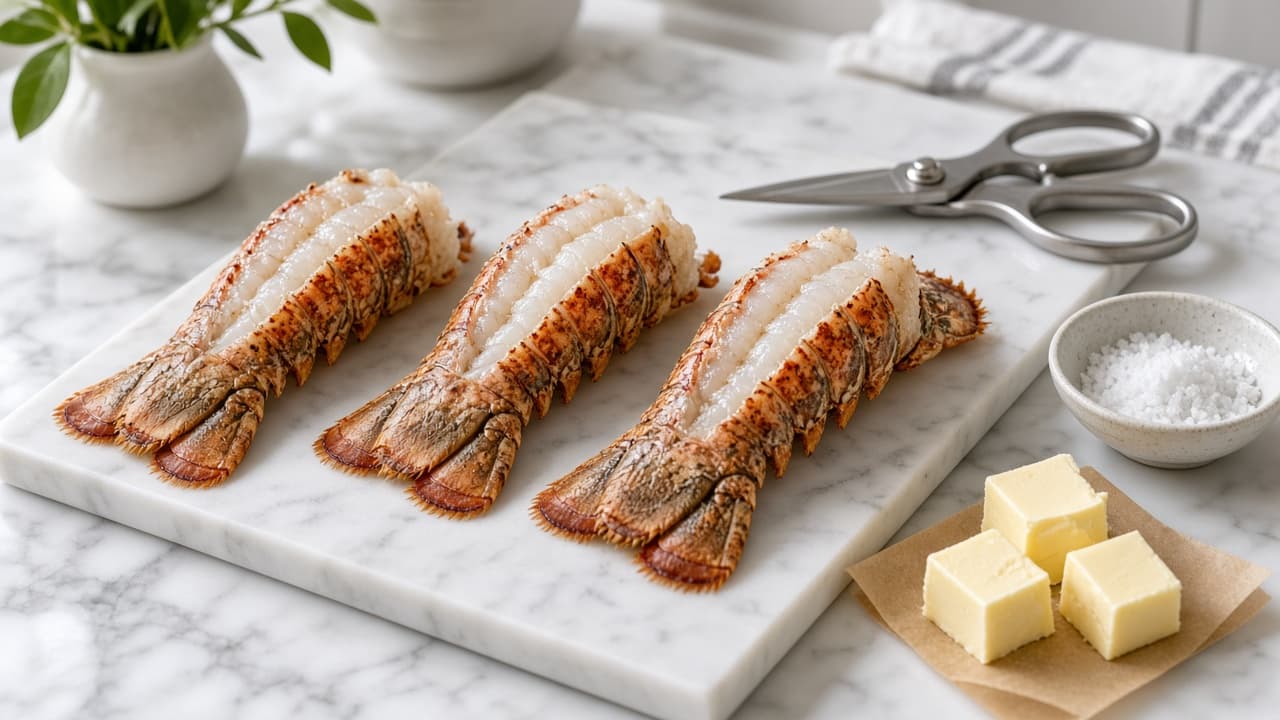
    Pat tails dry. With kitchen shears, cut through the top shell lengthwise; lift meat slightly and remove the dark vein. Leave meat attached at the fan. Season flesh with fleur de sel and white pepper. Rest 10 minutes on a rack so the surface dries — wet lobster steams instead of poaching cleanly.

    Prep Maine lobster tails with fleur de sel before butter poaching
  2. 2

    Clarify butter and poach the tails

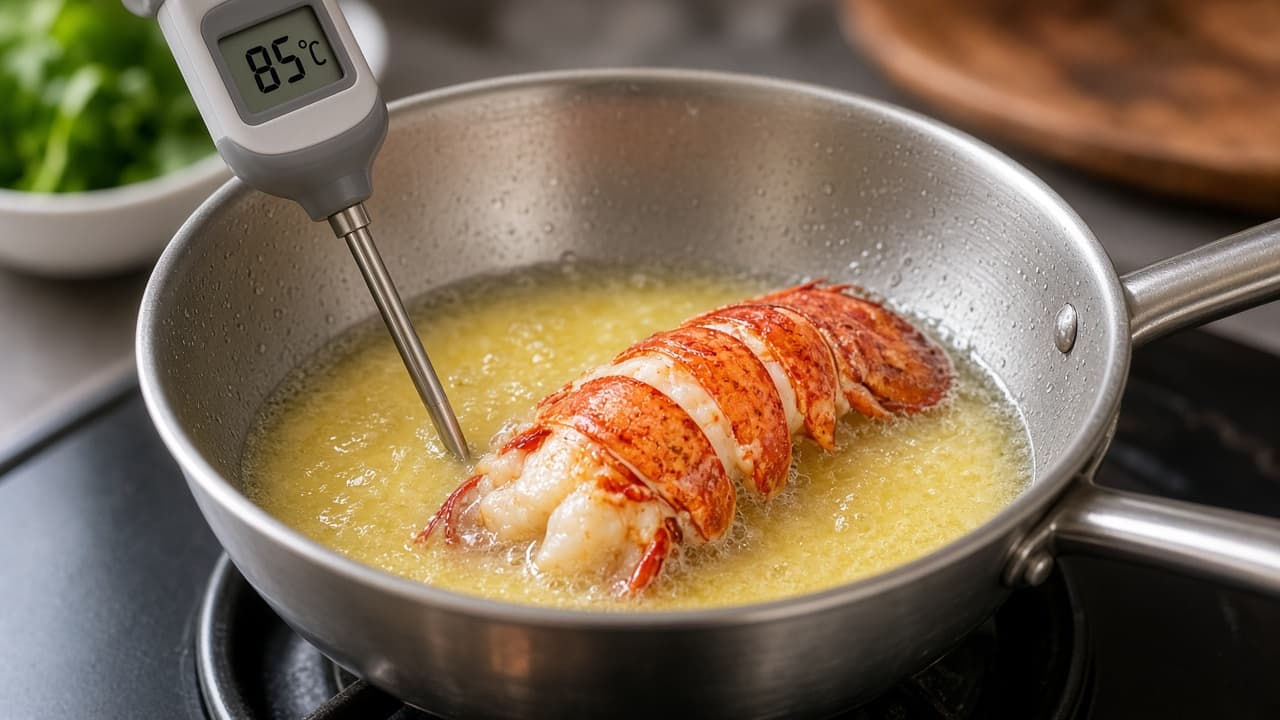
    Melt 340 g butter slowly; skim foam and pour off clear golden fat, discarding milk solids. In a wide saucepan, bring clarified butter to 82–85°C (180–185°F) on a thermometer — a few tiny bubbles, never a rolling simmer. Submerge tails shell-down, flesh up, fully covered in butter. Poach 6–9 minutes for 8 oz tails, 9–12 minutes for 10 oz, until the thickest part reads 52–54°C (125–129°F) on an instant-read probe. Transfer to a warm plate; tent lightly with foil while you finish the sauce.

    Lobster tails poaching in clarified butter with thermometer
  3. 3

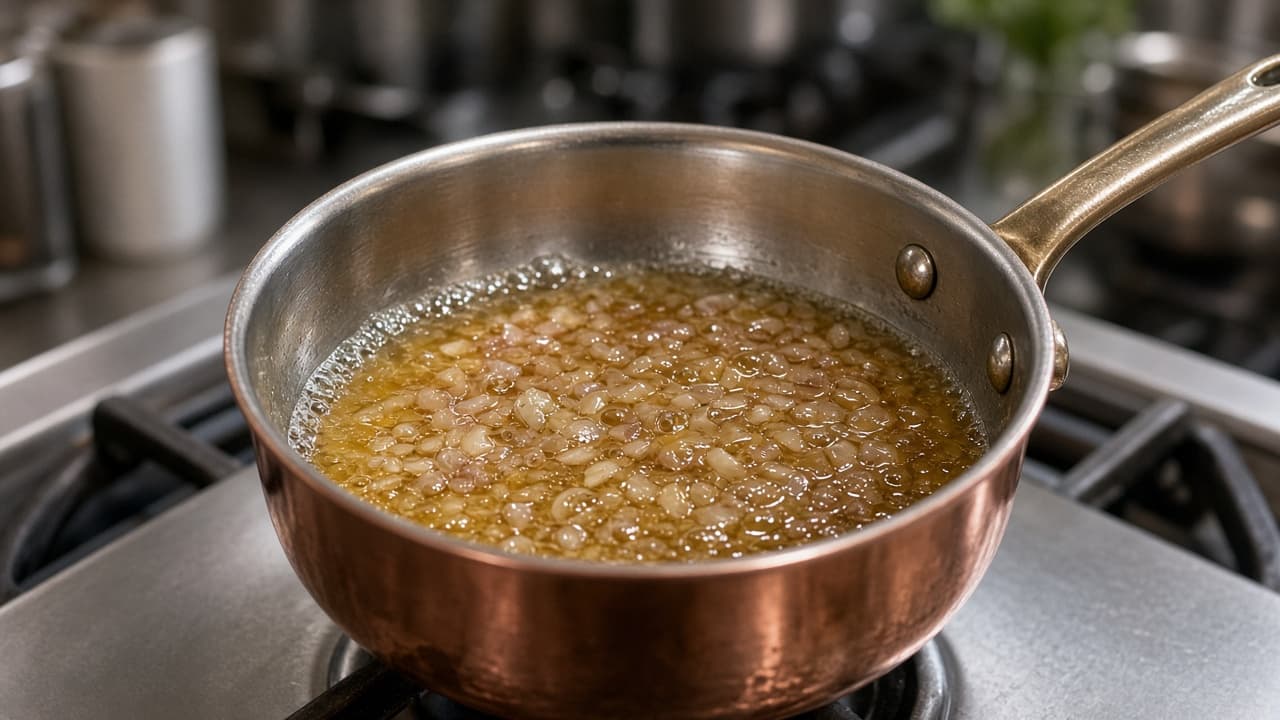
    Reduce Champagne with shallots

    In a small saucier, simmer shallots with Champagne until almost dry — about two tablespoons of liquid left. This concentrated base is what keeps beurre blanc bright instead of flat.

    Champagne and shallot reduction in a copper saucier
  4. 4

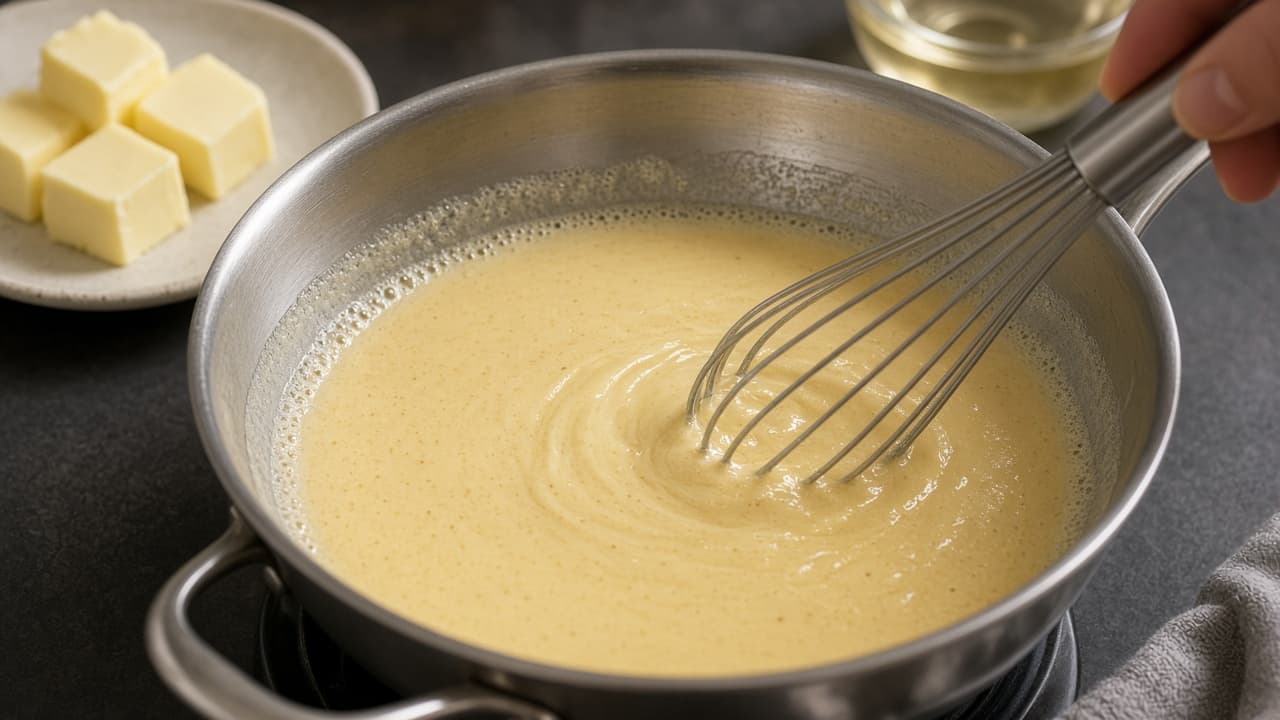
    Mount the beurre blanc

    Lower heat to medium-low. Whisk in cold butter cubes a few at a time, emulsifying until glossy. Off heat, whisk in crème fraîche, lemon zest, a drop of juice, and chives. Season with fleur de sel and white pepper. Strain for a silken finish if you like.

    Whisking cold butter into Champagne beurre blanc
  5. 5

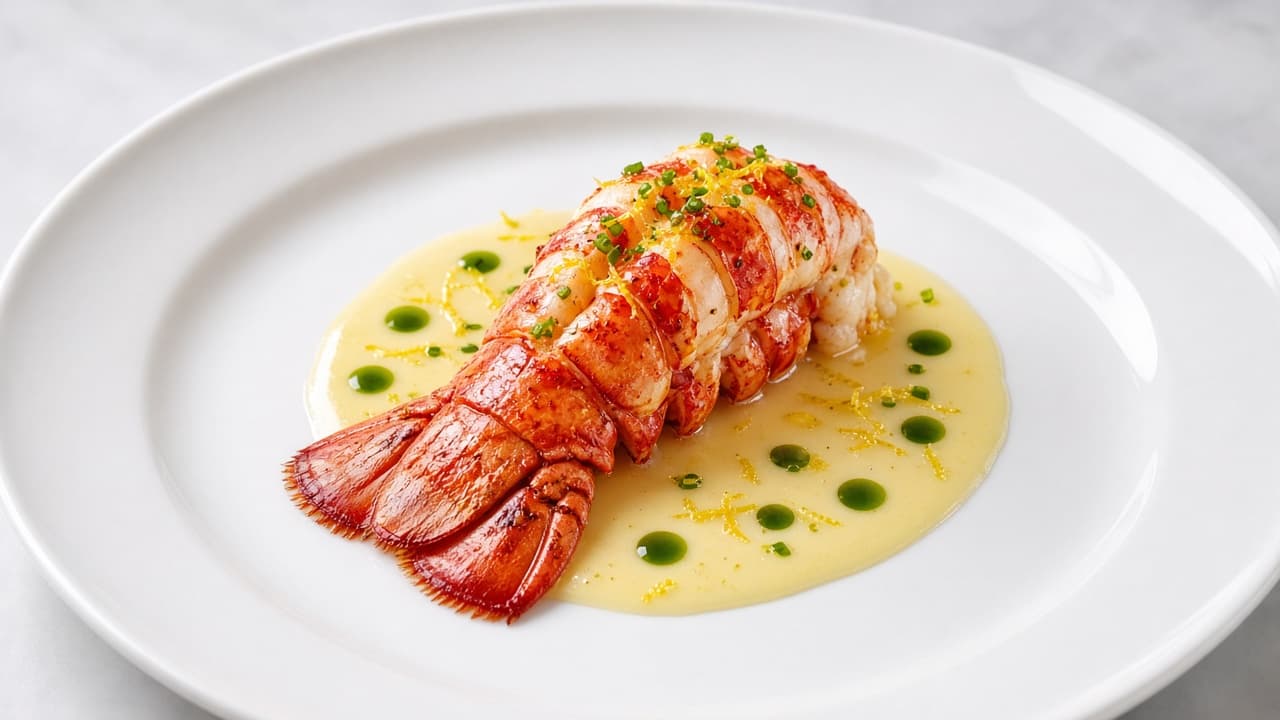
    Plate and serve immediately

    Optional: torch or broil the shell lip 30 seconds for colour. Slice meat partially on the shell or remove and fan on the plate. Pool beurre blanc, spoon a little clarified poaching butter if desired, and top with chives and optional caviar. Serve with Champagne or crisp Chablis.

    Plated butter-poached lobster tail with Champagne beurre blanc

Chef tips

  • Frozen tails are fine if thawed overnight in the refrigerator — never microwave.
  • If butter drops below 75°C during poaching, gently reheat before the tails go back in; cold butter clots on the flesh.
  • Make beurre blanc last. It breaks if held on high heat — keep warm, not hot, until plating.

Lobster species guide →

Dine out

Want the restaurant version in Boston? See seafood restaurants in Boston · United States

FAQ — Butter-Poached Lobster Tail with Champagne Beurre Blanc

Can I reuse the poaching butter?+

Yes for another seafood dish the same day. Strain, refrigerate, and use within 48 hours — it will taste of lobster and is excellent for risotto or brushed on grilled fish.

What if I do not have Champagne?+

Use a dry sparkling wine or a dry white (Sancerre, Muscadet). Avoid sweet prosecco — the sauce needs acidity, not sugar.

Is butter-poaching the same as boiling lobster?+

No. Boiling shocks the meat and pushes out moisture. Butter-poaching at controlled temperature keeps proteins tender — the method fine-dining kitchens use when they are not steaming live lobster to order.