
By FishRestaurants.com Editorial. Menus and techniques on this page were reviewed for editorial accuracy. Editorial policy · Updated 2026-11-26
What to Order at a Cantonese Seafood Restaurant
*Images on this page are illustrative. This is a dining-order guide, not a recipe and not a page pretending to be any one restaurant.*
!Illustration: A whole steamed fish on a long plate with scallion and soy (illustrative)
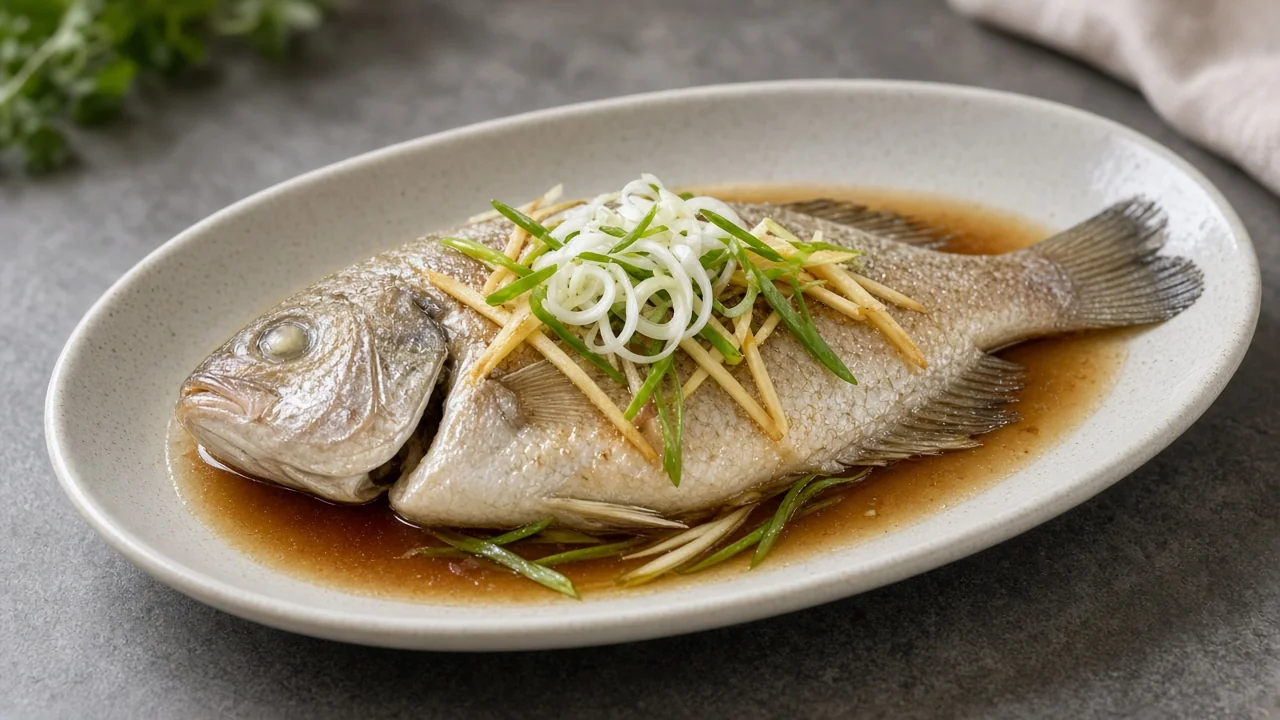
A Cantonese seafood restaurant is built around freshness and a wok or steamer, not around a paper bag of seasoned shellfish. The useful order is usually a whole fish or a crab, one or two stir-fried plates, and a vegetable or soup, shared. Menus can look long because they list many cuts and many sauces; you do not need to order all of them. For a worked example from one verified Malden room, see our Ming's Seafood Restaurant guide, which is based on that restaurant's official takeout menu, dated 14 November 2024 when we checked it on 10 November 2026 — confirm dishes on the day.
This page does not replace a live-tank walk-through with the house. If the restaurant keeps fish or shellfish swimming, ask what came in, and be willing to have the kitchen recommend a cooking method rather than guessing at one.
Start with the fish
A whole steamed fish — often flounder, sea bass, or whatever is on the board — is the clearest expression of this kind of room. Steaming with ginger, scallion and a soy dressing is the classic Cantonese treatment. Pan-seared or fried whole fish is a richer alternative. If you only want a fillet, say so, but you will miss the collar and the gelatin around the bone that many diners come for.
Do not confuse a "seafood bird's nest" or a mixed seafood clay pot with a whole-fish course. Those are sauced plates of mixed shellfish and sometimes fish. They are useful as a second dish, not as a substitute if what you wanted was a single steamed fish.
Crab, shrimp and clams
Salt-and-pepper soft-shell crab, crab in black bean sauce, and baked crab with ginger and scallion are common printed names. A whole crab is a shared, messy plate; how to eat whole crab at a restaurant still applies, even when the seasoning is Cantonese rather than a Low Country boil. Shrimp may be salt-and-pepper, wok-tossed, or in a supreme or XO sauce. Clams and oysters often appear steamed or in black bean sauce.
If the tank has geoduck, lobster or a large crab, ask the price and the market size at the table — we do not publish those figures, and they change. Agree the animal and the cooking method before it is pulled.
!Illustration: Salt-and-pepper shrimp on a plate (illustrative)
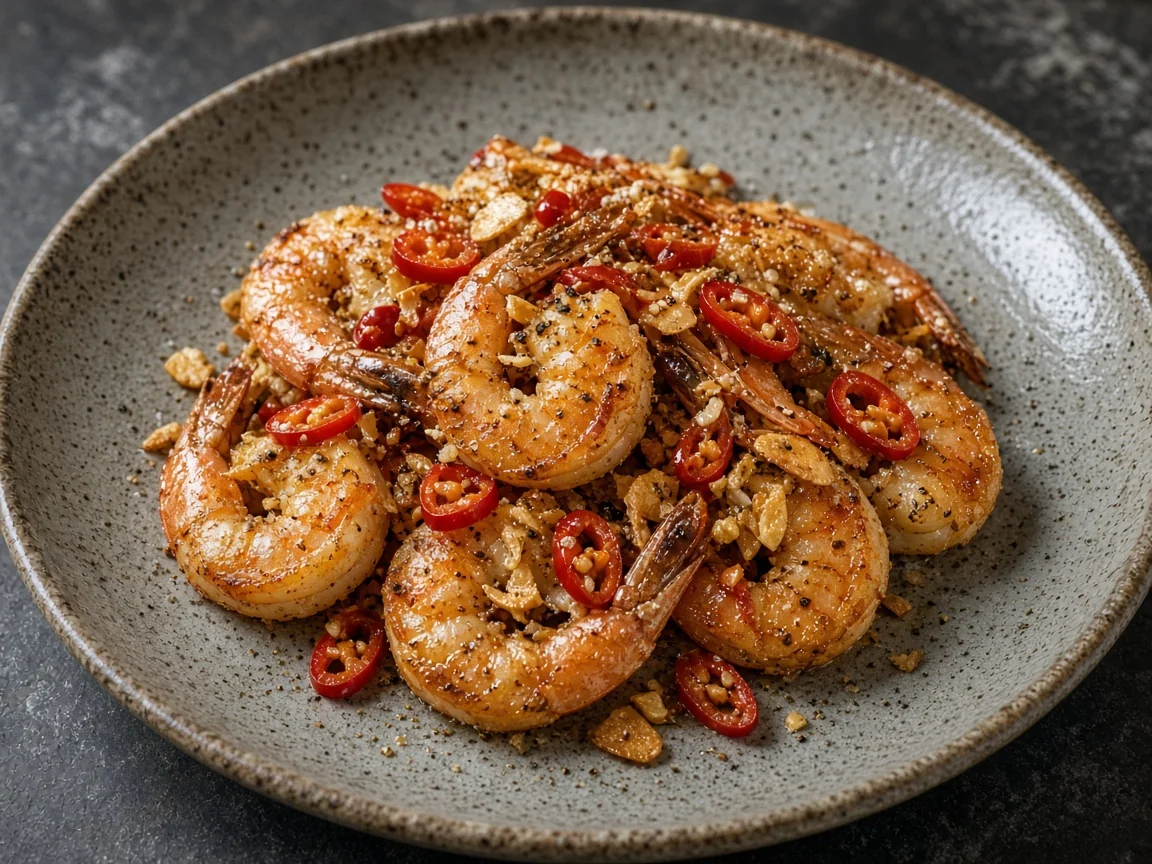
*Illustrative image: AI-generated, not taken at a restaurant.*
How to build the rest of the table
A vegetable — gai lan, pea shoots, or mixed greens — keeps the meal from being only rich sauces. A simple soup or a fried-rice or noodle plate is useful if the table wants a starch. Appetizers such as crab rangoon, shrimp toast or a cold jelly-fish salad are optional starts; they should not crowd out the fish.
Share. Cantonese seafood plates are not usually meant as one dish per person in isolation. Order fewer, better plates, and add a vegetable if you still have room. For Boston-area seafood more broadly, including rooms that are not Cantonese, see the live Boston seafood guide rather than a second city article.
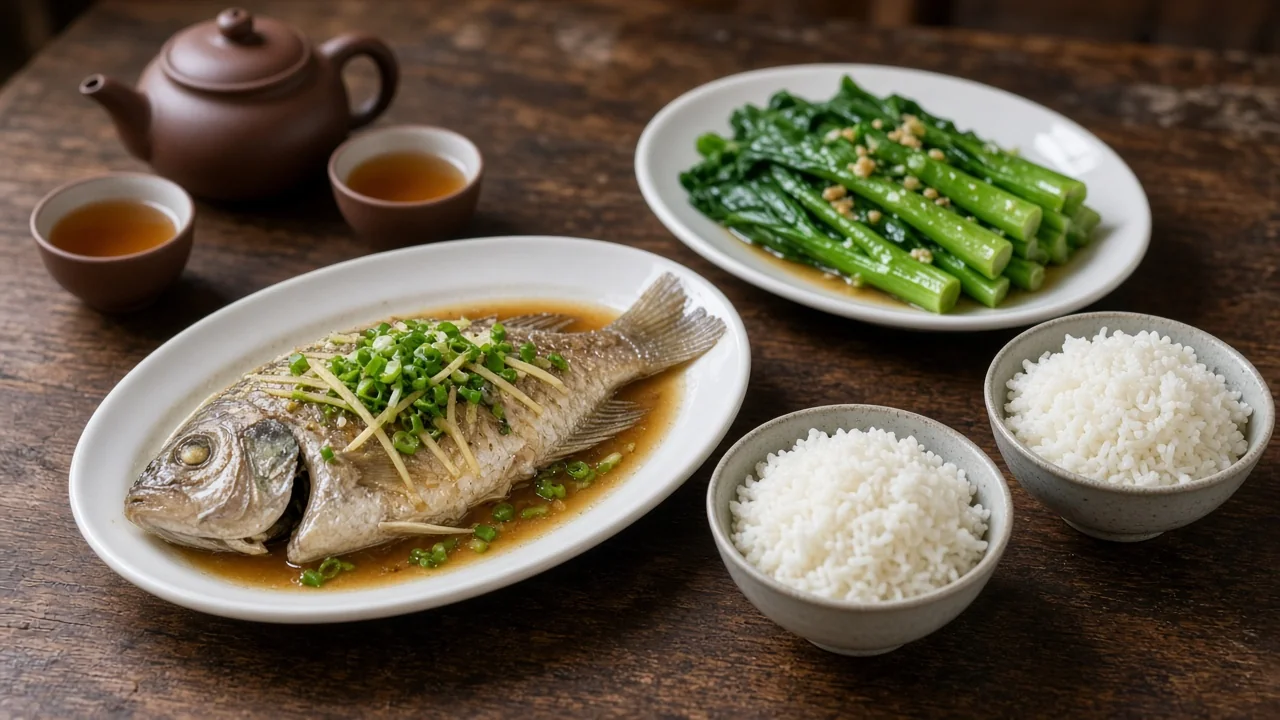
*Illustrative image: AI-generated, not taken at a restaurant.*