
By FishRestaurants.com Editorial. Menus and techniques on this page were reviewed for editorial accuracy. Editorial policy · Updated 2026-11-26
How to Eat Whole Crab at a Restaurant
*Images on this page are illustrative. This is table technique, not a recipe, and not medical advice.*
!Illustration: A cooked whole crab on a tray with a cracker and lemon (illustrative)
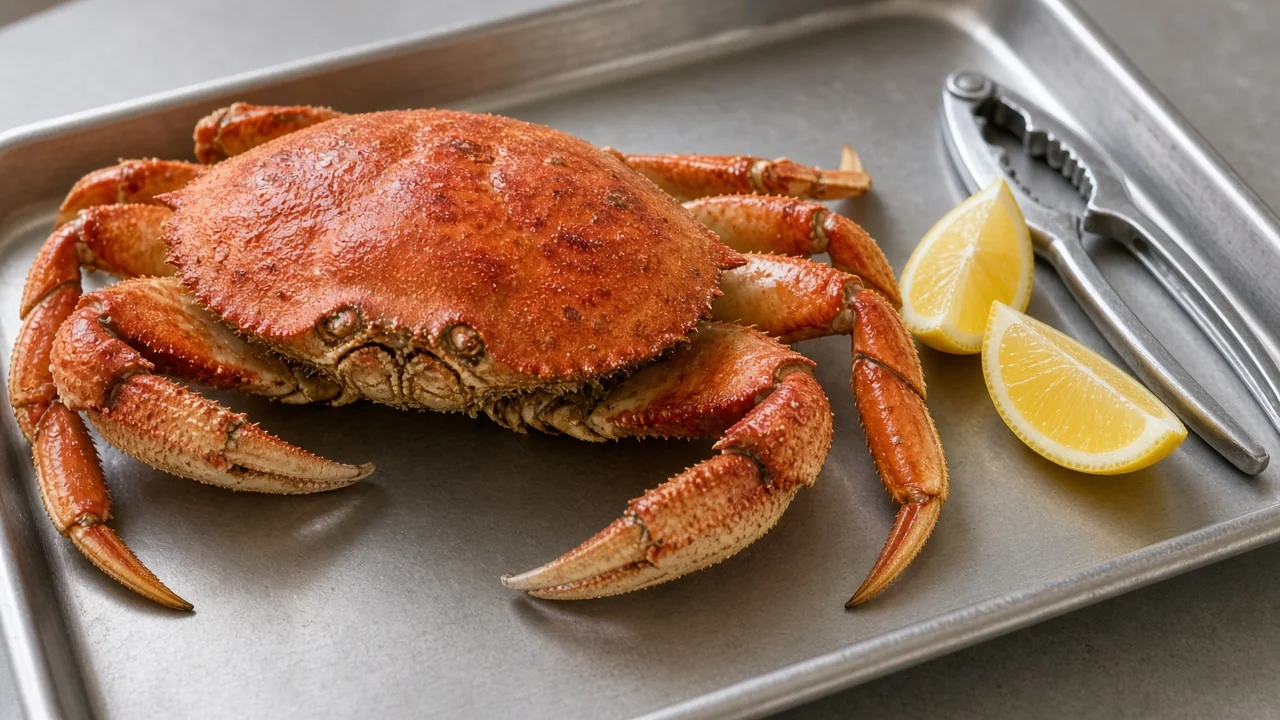
A whole crab or a crab cluster looks more complicated than it is. The kitchen has usually already cooked it. Your job is to open the shell without filling the meat with fragments, and to know which part you are being served. A Dungeness or a live boil-house crab is a different plate from a pile of snow-crab legs or a dish of already-cracked stone crab claws. For cooking crab at home, see our crab guide and recipes such as boiled Dungeness crab with garlic butter.
Know what arrived
Stone crab is usually just the claws, often already cracked, served chilled with a mustard sauce. You still may need to pull the shell off the finger, but you are not dissecting a body. Snow crab and king crab usually arrive as legs or clusters; you crack each section at the joint. Dungeness and many boil-house "whole" crabs include the body, where a lot of the sweet meat sits in small chambers.
If the server offers to crack the claws in the kitchen, you can say yes. You can also ask for a better cracker if the one on the table is flimsy.
The basic crack
Work over the paper or tray, not over your neighbour's plate. Bend legs at the natural joints first; many will open with a twist. Use the cracker on the thickest part of a knuckle, one firm squeeze, not a series of crushes. Pull the shell away and use a pick or a small fork for the narrow channels. For a body, lift or twist off the top shell, discard the feathery gills, and split the body so you can pick meat from each compartment.
!Illustration: Cracked crab legs with a pick and lemon (illustrative)
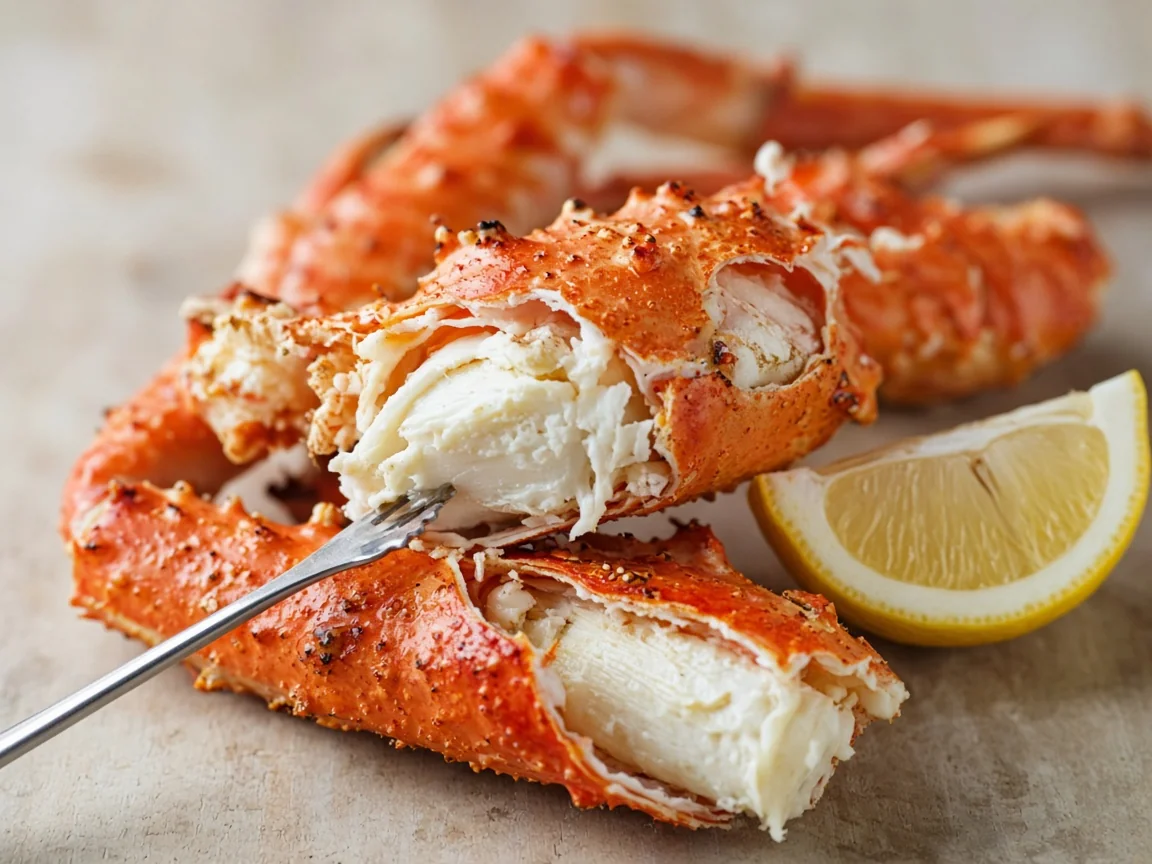
*Illustrative image: AI-generated, not taken at a restaurant.*
Sauce, pace and shells
Melted butter, mustard sauce, or the boil seasoning already on the shell are all normal. Taste the meat first, then dip. Keep a shell pile. Do not put picked shells back in the communal pan. Wash your hands before you handle a glass or your phone.
This is slow, shared food. It is fine to talk between cracks. If you are eating crab as part of a boil, the wider table method is in how to eat a seafood boil. Crawfish are a different animal and a different motion; see how to eat crawfish at a restaurant.
Las Vegas rooms that list stone crab or king crab on official menus are in where to eat seafood in Las Vegas. Seattle Dungeness stops are in where to eat seafood in Seattle and where to eat crab in Seattle.
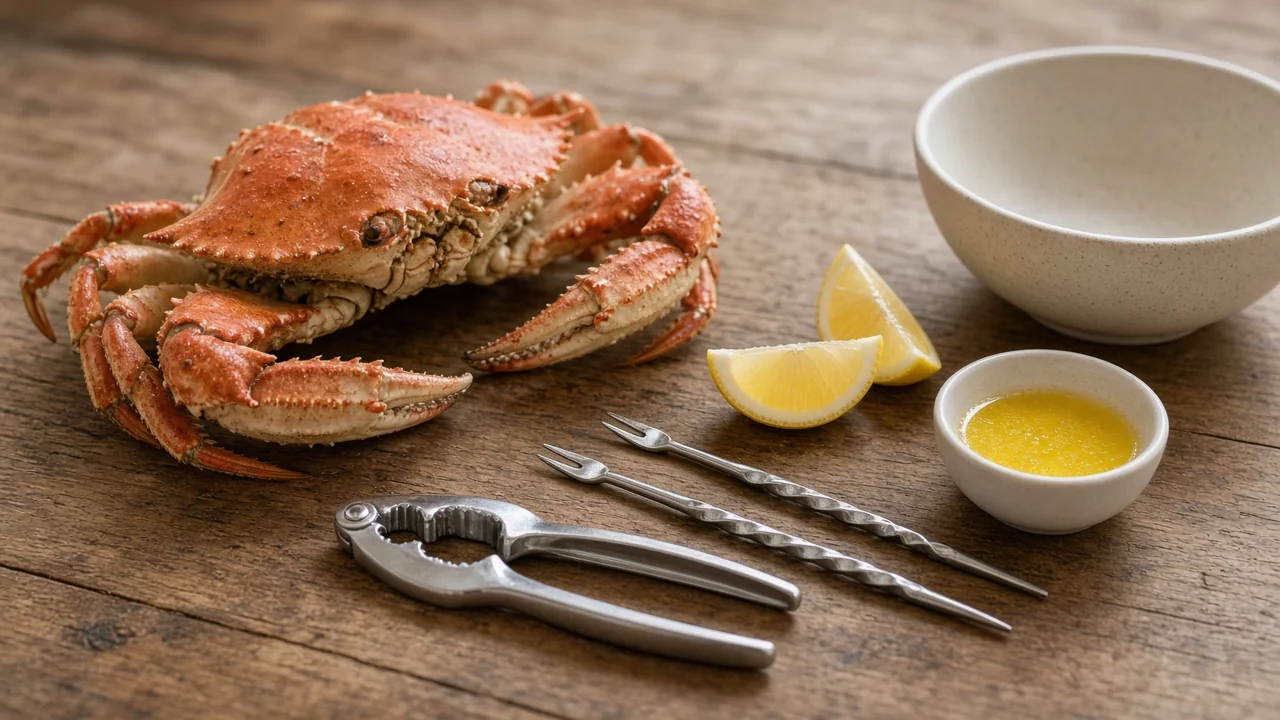
*Illustrative image: AI-generated, not taken at a restaurant.*
King crab legs are larger and need a firmer crack; snow-crab clusters are narrower and often easier to pick. If both are on the same boil, start with the smaller legs so they do not go cold while you wrestle a king-crab knuckle. A whole Dungeness takes longer than a plate of already-sectioned legs because you still have to open the body. Budget time for that, and do not order a second whole crab until you have seen the size of the first.
If a fragment of shell gets into a bite, stop, take it out, and keep a napkin handy. It happens. A squeeze of lemon or a dip of butter should follow the meat, not hide a crunch. When the table is finished, leave the shell pile in the bowl or paper the house provided so staff can clear it in one go.