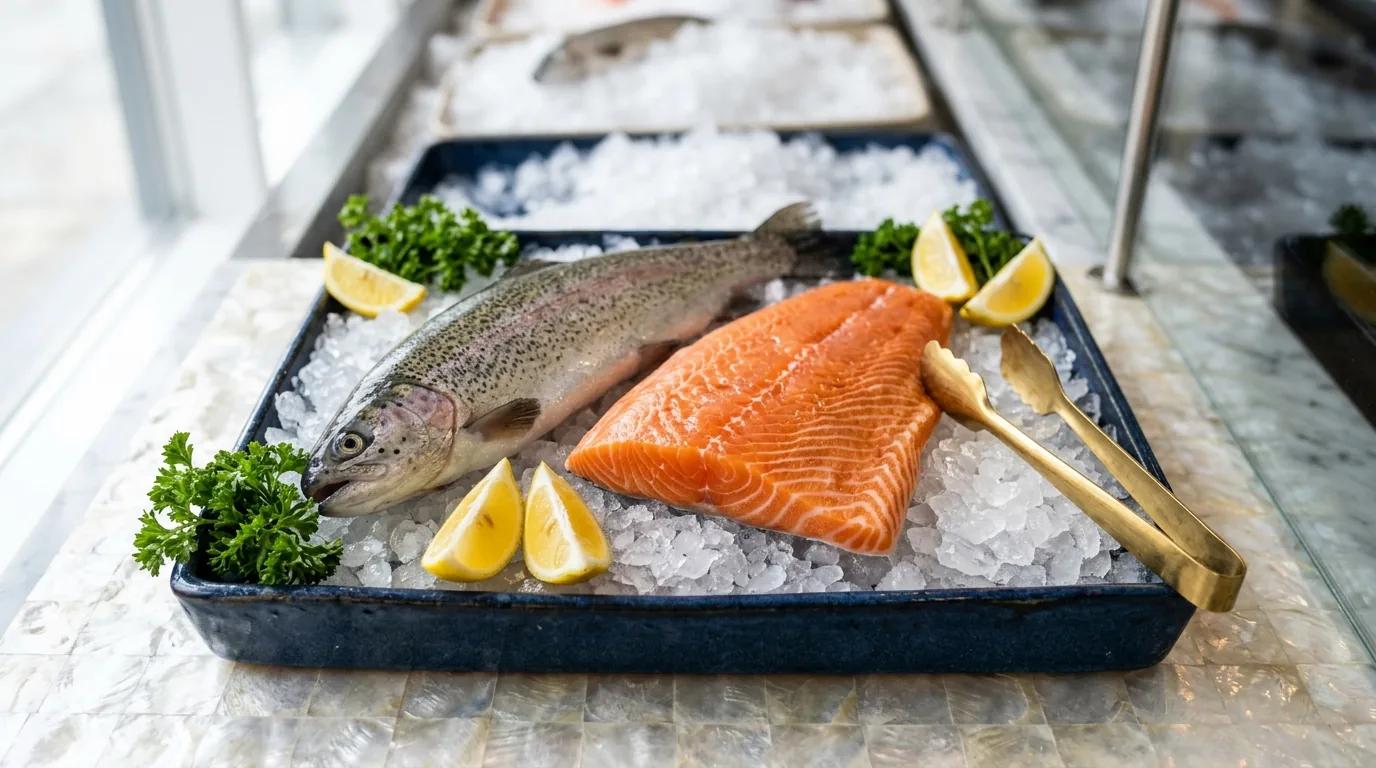
Species guide
Trout vs Salmon
Trout and salmon are close relatives in the same family, but they are not the same fish. Trout is usually milder, smaller and more delicate; salmon is richer, oilier and more strongly flavoured. Knowing the difference helps you choose the right fillet and the right cooking time.
Quick comparison
| Trout (usually rainbow) | Salmon | |
|---|---|---|
| Typical size | Smaller fillets or a whole 12–16 oz fish | Thicker fillets, often 5–8 oz portions |
| Fat | Moderate; delicate | Higher, especially farmed Atlantic |
| Flavour | Mild, slightly nutty | Richer, more pronounced |
| Flesh colour | Pale pink to orange | Medium orange to deep red |
| Best everyday methods | Pan-fry, bake whole, grill | Roast, grill, pan-sear, air fry |
| Overcooking risk | High — thin fillets cook fast | High for lean wild salmon; farmed is more forgiving |
They are related, not identical
Salmon and trout are both salmonids. Rainbow trout and Pacific salmon even share the genus Oncorhynchus. Steelhead is a sea-run rainbow trout and can taste closer to a lean salmon — see steelhead vs rainbow trout. For species detail, start with the trout guide and the salmon guide.
Taste and texture
Rainbow trout is mild and slightly nutty, with fine flakes. It takes lemon, herbs, almonds and light spice well. Salmon has a richer, oilier taste and larger flakes. Farmed Atlantic salmon is buttery and mild; wild sockeye is firmer and more intense.
How to cook them
Both are done at 145°F / 63°C in the thickest part (FDA). Trout fillets are thinner, so they often finish in 8 to 12 minutes in a pan or oven. Salmon fillets usually need 12 to 15 minutes at 400°F / 200°C.
- - Trout recipes: pan-fried rainbow trout with lemon butter, trout amandine, how to cook rainbow trout.
- - Salmon recipes: baked salmon with lemon garlic, pan-seared salmon with crispy skin.
Nutrition basics
Both are sources of protein and omega-3 fats. Exact figures depend on species and whether the fish is farmed or wild. For intake advice, follow FDA or NHS fish guidance rather than treating either fish as a medical product.
When to choose which
- - Weeknight pan dinner: trout.
- - A richer roast or grill: salmon.
- - A whole fish for the table: trout is easier to handle.
- - Stronger flavour and deeper colour: sockeye salmon.