
Mexican · Medium
Mexican Grilled Red Snapper (Huachinango a la Plancha)
Whole red snapper with citrus heat — the Cancun and Caribbean-Mexican grill classic.
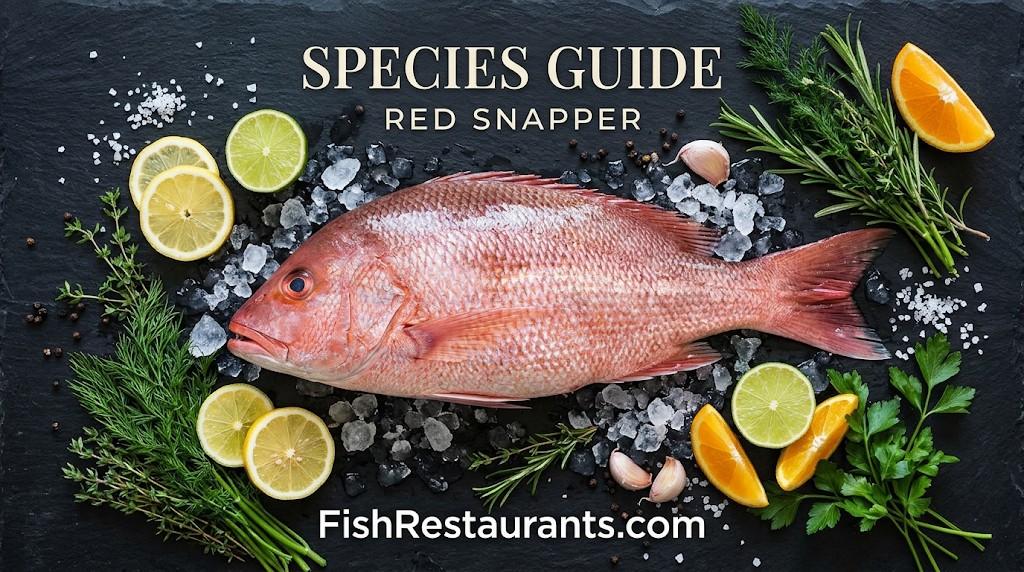
Red snapper guide
Lutjanus campechanus (and related Lutjanus species on menus)
A tropical grill favourite — sweet white flesh, dramatic whole-fish presentation, and a star of Miami, Mexican, and Caribbean seafood menus.
Mildly sweet, clean, and versatile — firmer than cod, less oily than mackerel. · Warm-water fisheries vary by region; restaurants often feature it year-round when supply is strong. · Warm Atlantic and Gulf waters; related snappers appear across tropical menus worldwide.
 Info
True red snapper ID, taste, nutrition and look-alikes.
Open →Cook5 recipes: whole grilled, ceviche, tacos, pan-seared.
Open →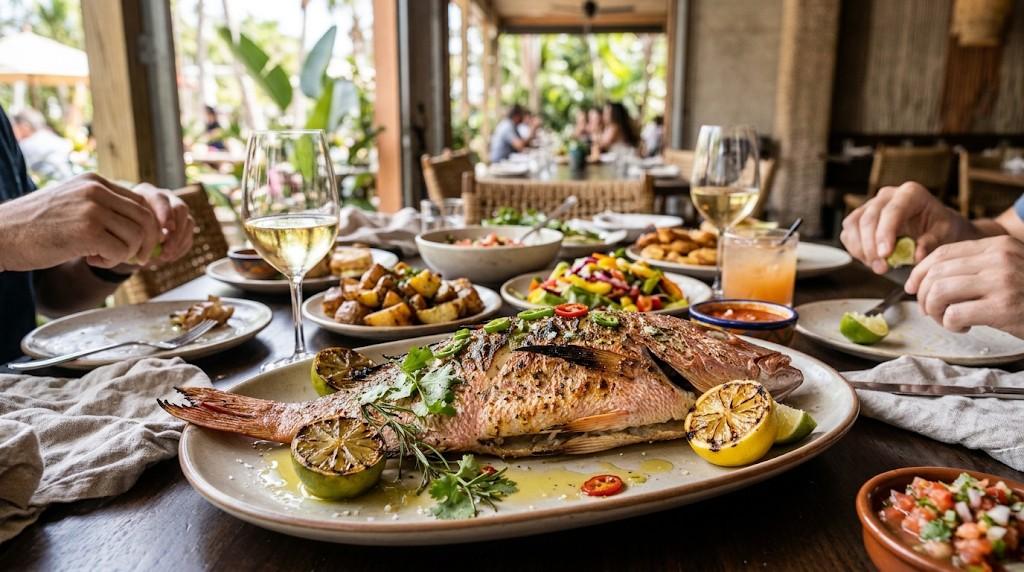 Eat
Snapper on real menus in New York, San Diego, Miami and more.
Open → Buy
Spot the real thing, whole vs fillet, markets near you.
Open →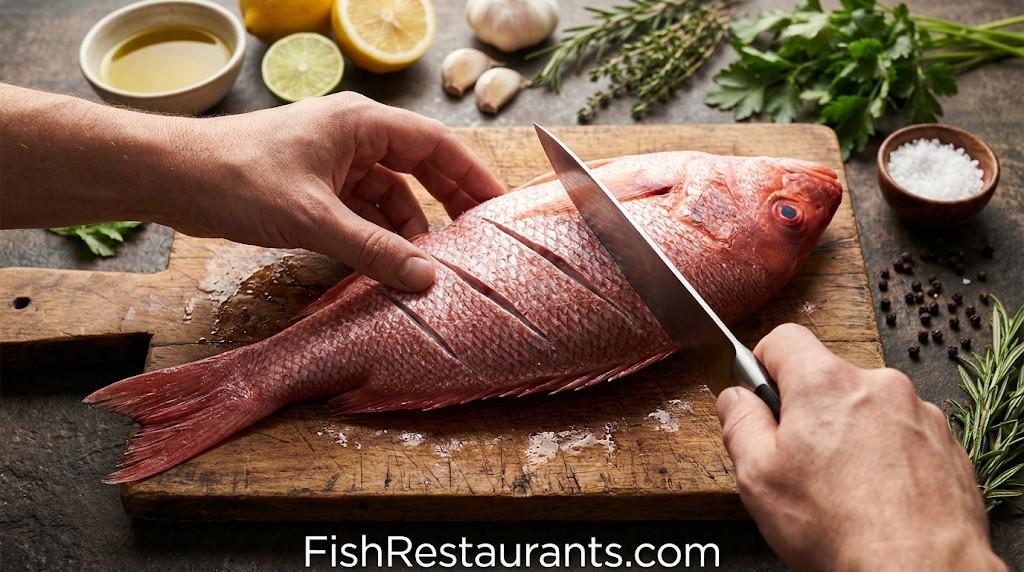 Tips
Score, season and grill a whole fish without sticking.
Open →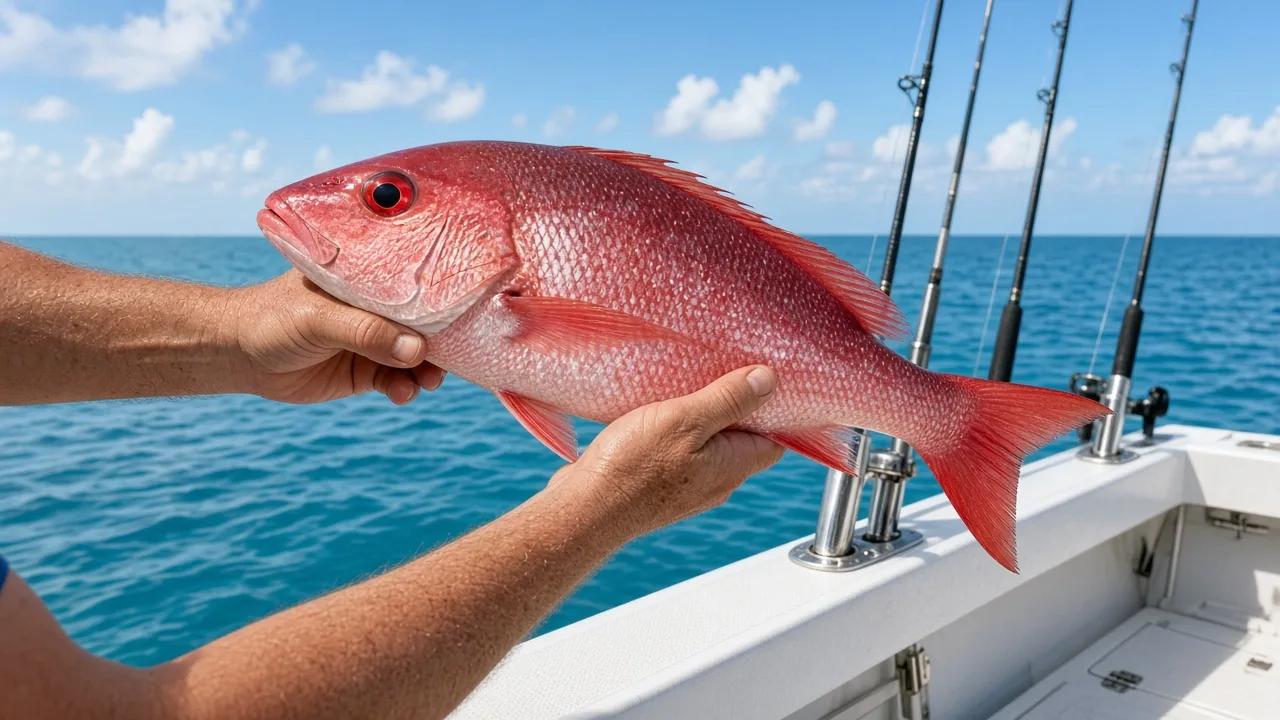 Catch
Gulf & South Atlantic seasons, gear and rules.
Open →Ask the Fish Guide about Red snapper — grounded in this species hub.
Flavour
Mild, sweet, clean
Texture
Firm, flaky
Best for
Whole fish theatre
Oiliness
Low to medium
Sabor
Mildly sweet, clean, and versatile — firmer than cod, less oily than mackerel.
Temporada
Warm-water fisheries vary by region; restaurants often feature it year-round when supply is strong.
Hábitat
Warm Atlantic and Gulf waters; related snappers appear across tropical menus worldwide.
Recipes
Step-by-step methods from our recipe pages — same hero photos you will see on each dish.
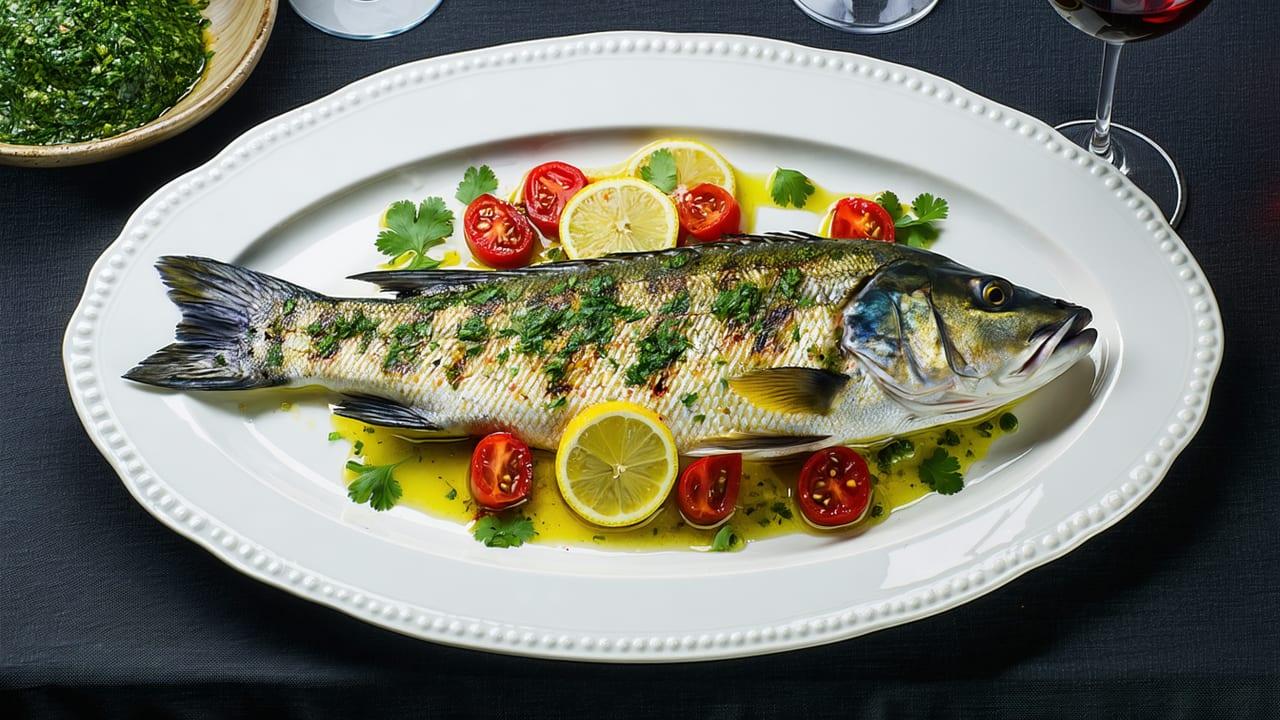
Mexican · Medium
Whole red snapper with citrus heat — the Cancun and Caribbean-Mexican grill classic.

Florida / Caribbean-American · Medium
Whole snapper, hard heat, citrus and chilli — the Miami grill plate you cook after a weekend of ceviche and stone crab.
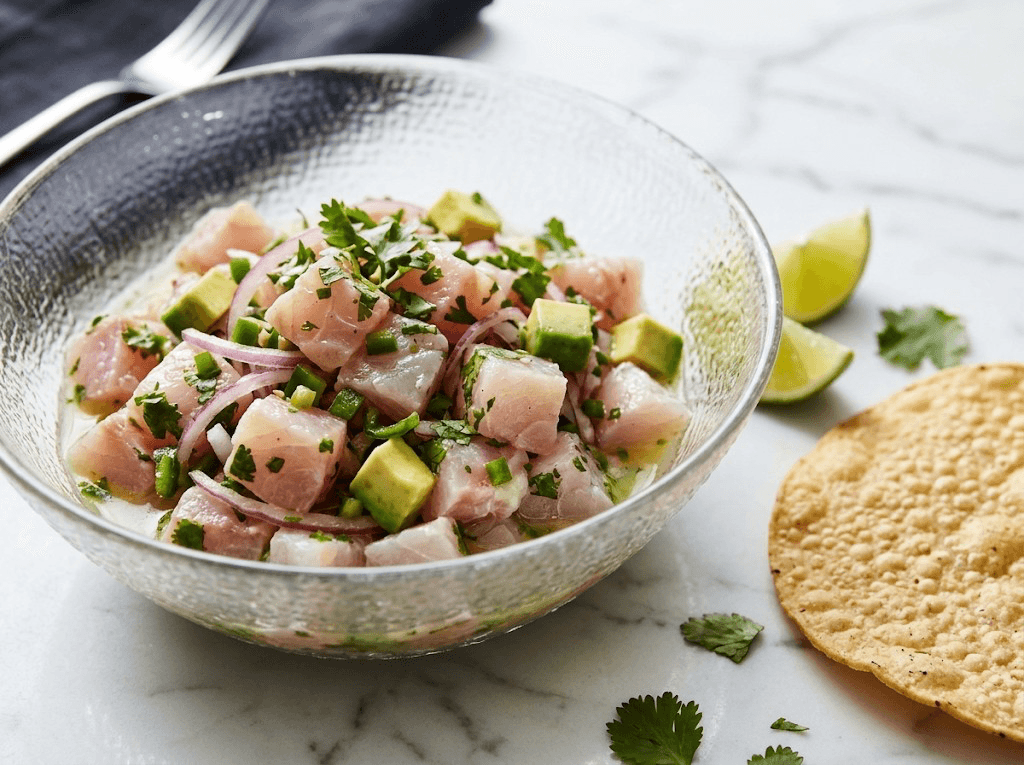
Mexican / Latin · Easy
Snapper cured in lime until opaque — the counter-order you want before a whole grilled fish on vacation.
American / Gulf Coast · Medium
Lean snapper fillets need a hot pan and a thermometer — crisp skin outside, 145°F at the centre, lemon butter at the end.
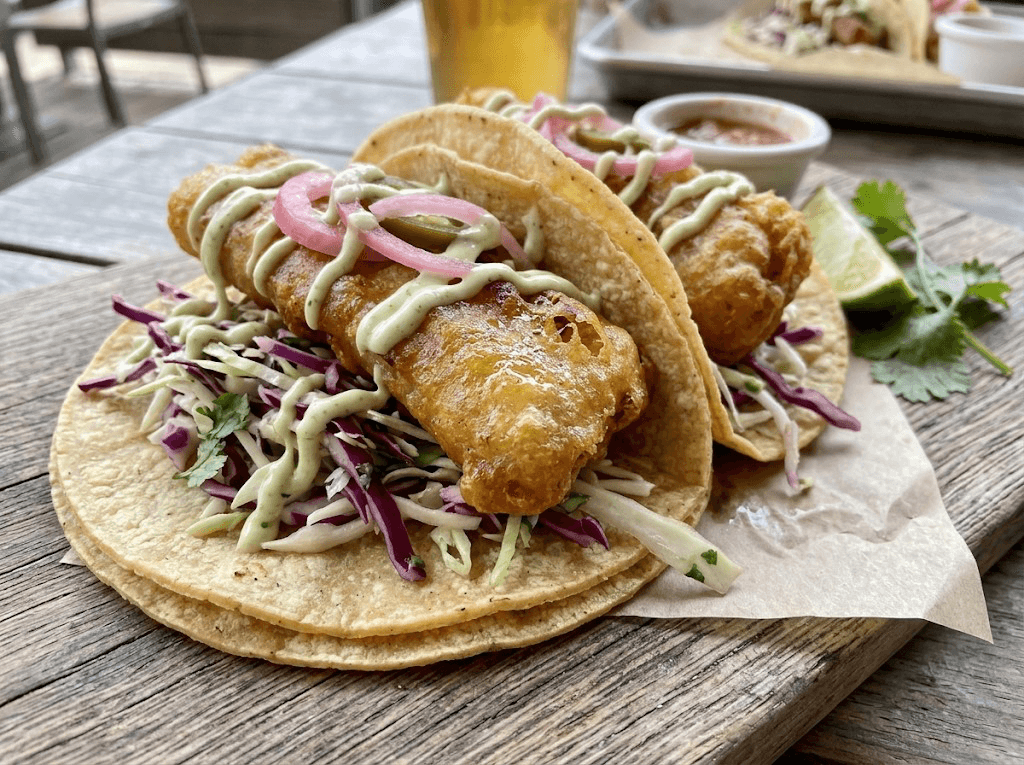
Baja / Mexican-American · Medium
Shattered batter, snapper that stays sweet inside — the weeknight taco move when whole fish feels like too much.
For cooking at home, see our blackened seasoning recipe.
For cooking at home, see our jerk seasoning recipe.
Whole grilled fish with skin-on blister and a citrus finish is the fastest quality check — the flesh should flake at the bone, not mush under heavy sauce.
Red snapper is the showpiece fish of many warm-water restaurants: served whole, crisp-skinned, and finished with citrus, chili, or garlic oil. On Mexican menus you may see huachinango; in Florida and the Caribbean it is a grill and fry classic.
Because “snapper” can cover multiple species, ask what you are getting — then enjoy one of the most photogenic and crowd-pleasing seafood orders.
Buying links may earn a commission. Restaurant listings are editorial — not paid placements in this block.
Tips
Best methods: Whole grill, Fry, Ceviche, Oven roast, Tacos.
Catch & season
Mislabeling
Slimmer body, larger eye, forked tail. Often sold beside true Gulf red snapper — compare on our photo ID chart.
See ID photos →West Coast “snapper” substitute. Cheaper, different fin spines — check the rockfish comparison image before you pay snapper prices.
Spot fakes →Thicker white fillets, different flake. Common on Florida and Gulf menus when snapper is off the boat.
Grouper guide →On the menu
Snapper is not one dish — it is a blank canvas for Latin grills, raw bars, and Baja fryers. Use the photo guide above to confirm you are paying for true snapper, then pick the preparation that matches how you like to eat fish.
The showpiece order: scored skin, citrus and chilli, rice and beans on the side. Ask for the species name and whether it is Gulf red snapper or a local substitute.
Mexican grilled recipe →Florida rooms love blistered skin, lime, and scotch bonnet without drowning the fish. Same whole-fish logic, slightly more tropical garnish.
Florida grill recipe →Raw cure in lime until the snapper turns opaque — the starter before a whole grilled fish on vacation. Only with very fresh fish.
Snapper ceviche recipe →Skinless fillets in cold batter, slaw, crema, pickled onion — the weeknight move when a whole fish feels like too much theatre.
Baja taco recipe →Eating out instead? Jump to snapper-friendly restaurants (Miami loads first) or browse grilled-fish and ceviche rooms.
Restaurants
We start from grilled-fish and whole-fish rooms, then boost listings that mention snapper, huachinango, or ceviche on the menu. Default view is Miami — the US snapper capital on FishRestaurants.
Or pick another focus city:
Species guide
Ask a fishmonger in Miami, New York, or Los Angeles for red snapper, and there is a statistically significant chance the fish handed to you is not Lutjanus campechanus. A landmark 2013 Oceana investigation tested 120 red snapper samples purchased from restaurants and retailers across the United States and found that 87% were mislabeled — a figure that has since moderated but never disappeared. This guide gives you the biological knowledge, the market intelligence, and the culinary technique to buy, cook, and serve the real thing with confidence.
Lutjanus campechanus belongs to the family Lutjanidae, a diverse group of roughly 110 snapper species distributed across tropical and subtropical marine environments worldwide. Within that family, only L. campechanus holds the legal designation "red snapper" under US federal labeling standards (FDA Seafood List). The species is endemic to the western Atlantic, ranging from the Gulf of Mexico — where the largest commercial stocks exist — northward along the US Atlantic coast to the Carolinas, and southward to the Yucatán Peninsula.
Adult L. campechanus are deep-bodied, laterally compressed fish with a continuous dorsal fin bearing 10 spines and 14 soft rays. The body coloration shifts from a vivid crimson-red on the dorsal surface to a lighter rose-pink on the flanks and a pale white-pink on the belly. Juveniles under 30 cm display a dark spot on the upper lateral line — a feature that fades with age. The eye is proportionally large, with a distinctly red iris that remains vivid even post-harvest, making it one of the most reliable field identification markers. The snout is pointed, the mouth moderately large, and the pectoral fins extend past the origin of the anal fin when folded against the body.
Red snapper are demersal reef-associated fish, inhabiting hard bottom structures, artificial reefs, and rocky outcroppings at depths of 30–620 feet (9–189 m). They are slow-growing and long-lived — individuals exceeding 50 years of age have been documented — which makes them particularly vulnerable to overfishing and slow to recover. Spawning occurs offshore from June through October, with females capable of producing millions of eggs per season. Their diet consists primarily of fish, shrimp, crab, and cephalopods, which contributes to the complex, sweet flavor profile of their flesh.
Lutjanus campechanus (Poey, 1860)
Lutjanidae (Snappers)
Gulf of Mexico; US South Atlantic coast to the Carolinas
39 inches (99 cm) total length; up to 50+ lbs (22.7 kg)
Up to 57 years (NOAA documented)
Vulnerable (VU) — recovering under US federal management
No species in the American seafood market has a longer, better-documented history of mislabeling than red snapper. The combination of high consumer demand, premium market positioning, limited domestic supply, and the visual similarity of dozens of related species creates a persistent incentive for substitution at every point in the supply chain — from dockside processors to restaurant kitchens.
DNA barcoding studies and FDA enforcement actions have identified a consistent roster of species sold as red snapper in the United States:
| Species | Scientific Name | Common Substitution Context | Key Visual Differences from True Red Snapper |
|---|---|---|---|
| Vermilion Snapper | Rhomboplites aurorubens | Most frequent US Gulf/Atlantic substitute; often sold whole | Slimmer body, smaller eye, lighter pink-red color, forked tail more pronounced |
| Silk Snapper | Lutjanus vivanus | Deep-water Gulf catch; sold as fillets | Yellow iris (not red), more uniform pink coloration, less body depth |
| Lane Snapper | Lutjanus synagris | Smaller fish sold whole in ethnic markets | Horizontal yellow stripes on flanks, smaller maximum size, rounder snout |
| Pacific Rockfish | Sebastes spp. | West Coast restaurants and retail; sold as fillets | Entirely different family (Sebastidae); spiny head, rougher texture, no red iris |
| Tilapia / Other White Fish | Various | Low-end retail; detected via DNA testing only | Indistinguishable as skinless fillets without laboratory analysis |
The single most effective consumer protection strategy is purchasing whole fish with the skin, scales, and eyes intact. A true L. campechanus will display: (1) a deep body with a dorsal-to-belly depth approximately one-third of total body length; (2) a large eye with a clearly red iris — not yellow, not orange, not brown; (3) vivid crimson-to-rose skin with large, firmly attached scales; (4) a pointed snout with the upper jaw slightly projecting beyond the lower; and (5) a continuous dorsal fin with 10 distinct spines. If a vendor cannot or will not show you the whole fish, ask for documentation of the species name and harvest location. Reputable fishmongers in cities like Boston and San Francisco increasingly provide chain-of-custody documentation for premium species.
Unlike salmon or tuna, there is no universally standardized USDA grading system specifically for red snapper. Quality assessment in the trade relies on a combination of freshness indicators, harvest method, and handling protocols. Understanding these factors helps buyers — whether home cooks or professional chefs — make informed sourcing decisions.
| Quality Tier | Freshness Indicators | Harvest Method | Best Use |
|---|---|---|---|
| Sashimi / Sushi Grade | Harvested within 24–48 hrs; ike jime or live-well handled; clear cornea, bright red iris, firm flesh with spring-back | Hook-and-line, live-well boat | Crudo, ceviche, Japanese-style sashimi |
| Premium Whole | 48–72 hrs post-harvest; bright eyes, red gills, no ammonia odor, scales intact | Hook-and-line, handline | Whole roasting, salt-crust baking, steaming |
| Market Grade Fillet | 3–5 days post-harvest; pinkish-white flesh, mild ocean scent, no browning at edges | Commercial longline, trawl | Pan-searing, grilling, en papillote |
| Frozen / IQF | No freezer burn, vacuum-sealed, clear glaze; thaw in refrigerator 24 hrs | Various; often offshore longline | Soups, stews, tacos, braised preparations |
The Gulf of Mexico commercial red snapper season is federally managed with annual catch limits set by NOAA and the Gulf of Mexico Fishery Management Council. The commercial season typically opens in June and runs through late summer or until the quota is reached, which in recent years has occurred within weeks. This creates a genuine seasonal scarcity that drives much of the substitution problem — when Gulf snapper quota closes, demand does not disappear, and inferior substitutes fill the gap. For the most reliable access to true L. campechanus, seek out federally permitted Gulf vessels selling direct-to-consumer or through Community Supported Fishery (CSF) programs based in Gulf Coast cities. The South Atlantic fishery operates under a separate quota with somewhat different seasonal windows, providing a secondary domestic source.
True red snapper occupies a distinctive position in the flavor spectrum of American food fish. The flesh is lean — fat content is low — yet it retains exceptional moisture during cooking due to a relatively high collagen content in the connective tissue, which converts to gelatin under heat and self-bastes the flesh from within. This is why whole-roasted red snapper consistently outperforms fillet preparations in terms of juiciness: the bones and skin act as a moisture reservoir.
The flavor is mild but not bland. There is a clean marine sweetness on the front palate, followed by a subtle nuttiness that intensifies with high-heat cooking methods like wood-fire roasting or charcoal grilling. The flesh is firm enough to hold up to bold marinades — including the herb-forward intensity of a Moroccan chermoula — without being overwhelmed. This makes it one of the most versatile large food fish in American waters. Explore more preparation ideas in our whole roasted red snapper recipe and our red snapper ceviche guide.
Vermilion snapper has a similar but noticeably thinner, less complex flavor — adequate but lacking the depth of L. campechanus. Pacific rockfish (Sebastes spp.) is firmer and slightly more pronounced in its oceanic character, but the texture is drier and the flavor less sweet. Lane snapper is delicate and pleasant but smaller-bodied, making it unsuitable for whole-fish presentations. None of the substitutes replicate the specific combination of sweetness, moisture, and structural integrity that defines the true species.
Red snapper is one of a small number of American food fish that genuinely rewards whole-fish preparation over fillet cooking. The reasons are structural and chemical: the skeleton acts as a heat diffuser, slowing the rate of protein denaturation in the thickest part of the flesh and allowing the exterior to develop color and crust without the interior overcooking. The skin, rich in collagen and fat, renders and crisps under high heat while simultaneously protecting the flesh beneath. The result is a fish that is simultaneously crisp-skinned and succulent — a combination nearly impossible to achieve with a skinless fillet.
1. Selection: Choose a fish between 2 and 4 lbs (0.9–1.8 kg) whole weight for even cooking. Have the fishmonger scale, gut, and remove the gills, but keep the head and tail intact.
2. Scoring: Using a sharp boning knife, make diagonal cuts through the skin and into the flesh at 1-inch intervals on both sides, angled at approximately 45 degrees toward the head. This prevents the skin from contracting and buckling during cooking, ensures marinade penetration, and creates more surface area for browning.
3. Seasoning: For a Moroccan chermoula preparation, combine fresh cilantro, flat-leaf parsley, garlic, preserved lemon, cumin, smoked paprika, and olive oil into a coarse paste. Pack the paste into the score cuts, the cavity, and over the exterior. Allow to marinate for a minimum of 30 minutes at room temperature or up to 4 hours refrigerated.
4. Roasting: Preheat oven to 425°F (218°C). Place the fish on a lightly oiled roasting rack set over a sheet pan. Roast for 18–25 minutes depending on size, rotating the pan once at the halfway point.
5. Temperature: The USDA minimum safe internal temperature for finfish is 145°F / 63°C. Insert an instant-read thermometer into the thickest part of the flesh near the backbone, avoiding contact with bone. Many experienced chefs pull the fish at 140°F / 60°C and tent loosely with foil for 3–4 minutes, allowing carryover cooking to reach the safe threshold while preserving maximum moisture. The flesh should be opaque and flake cleanly along the natural muscle segments (myomeres) when tested with a fork.
Salt-Crust Baking: Encasing a whole red snapper in a thick shell of kosher salt mixed with egg whites and herbs creates a sealed steam environment that produces extraordinarily moist flesh. The salt crust is cracked tableside for dramatic presentation — a technique favored by upscale restaurants in Chicago and New York. Internal temperature target remains 145°F / 63°C.
Whole-Fish Grilling: A well-oiled fish basket or heavily oiled grill grates are essential to prevent the skin from tearing. Grill over medium-high direct heat (approximately 400°F / 204°C surface temperature) for 6–8 minutes per side for a 2.5 lb fish. The score cuts will open and char slightly, adding a smoky complexity that pairs exceptionally well with citrus-forward sauces.
Steaming (Cantonese Style): Whole red snapper steamed over high heat for 10–12 minutes and finished with hot ginger-scallion oil is a classic preparation that showcases the fish's natural sweetness without interference. This method is particularly popular in the Chinese seafood restaurants of San Francisco's Richmond District.
Pan-Seared Fillet: For fillet preparations, score the skin side lightly, season, and place skin-side down in a cold stainless steel or carbon steel pan with a thin film of high-smoke-point oil. Bring the heat up to medium-high gradually — this allows the skin to adhere to the pan and crisp evenly rather than contracting immediately. Cook 70–80% of the way through on the skin side, then flip briefly to finish. Target internal temperature: 145°F / 63°C.
The Gulf of Mexico red snapper story is one of the more instructive examples of fisheries management in the United States — a species that was severely overfished through the 1980s and 1990s and has since made a documented, if incomplete, recovery under federal oversight. NOAA Fisheries manages the Gulf stock under the Magnuson-Stevens Fishery Conservation and Management Act, with annual catch limits divided between the commercial sector (approximately 51%) and the recreational sector (approximately 49%). The stock has been above the minimum stock size threshold since 2018, though full rebuilding to target biomass levels remains ongoing.
The Monterey Bay Aquarium Seafood Watch rates US Gulf wild-caught red snapper as a "Good Alternative" — not yet a "Best Choice" due to bycatch concerns associated with some commercial gear types, but a responsible option compared to many imported substitutes. Hook-and-line caught fish from federally permitted vessels represents the highest sustainability tier within the domestic fishery. For deeper reading on sustainable seafood sourcing, see our sustainable seafood sourcing guide and our overview of Gulf of Mexico species.
Ask your fishmonger or restaurant supplier for the following information: (1) vessel name or permit number; (2) harvest date and port of landing; (3) whether the fish was caught in the Gulf of Mexico or South Atlantic; (4) the gear type used. Federally permitted Gulf commercial vessels are required to report landings to NOAA, creating a paper trail that can be verified. Some forward-thinking distributors now provide QR codes on packaging that link to vessel-level catch data — a standard that is becoming more common in premium seafood retail in cities like Boston and Miami.
Red snapper is a lean, high-protein fish with a favorable micronutrient profile. A standard 3.5 oz (100g) cooked serving provides approximately 20–22g of protein, with total fat content typically below 3g. It is a meaningful source of selenium — a trace mineral with antioxidant properties — as well as vitamin B12, potassium, and phosphorus. The omega-3 fatty acid content (EPA + DHA combined) is moderate compared to fatty fish like salmon or mackerel, but still contributes to the recommended weekly intake. Its low fat content makes it an excellent choice for high-frequency consumption without caloric concern, and its firm texture holds up well in preparations that would cause fattier fish to become greasy.
Explore Partner Plans →Not always — vermilion snapper, Pacific rockfish, and other substitutes get labeled “snapper” in some markets. Use our photo ID chart, ask the species name, and favour rooms that sell whole fish with the head on.
Whole fish holds moisture and looks like the restaurant plate. Skin-on fillets are better for tacos and quick pan sears — cook only until the centre turns opaque.
Mild sweetness, clean finish, firm flakes. It carries citrus, chilli, and garlic without turning mushy — closer to grouper than to oily mackerel.
Flesh should flake at the thickest part near the bone, or hit about 145°F (63°C) on a thermometer. On the grill, blistered skin and just-opaque flesh beat an overcooked dry fillet.
Only with sushi-grade handling: very fresh fish, clean prep, and acid cure long enough to turn the flesh opaque. When in doubt, use a quick sear or our cooked ceviche-style marinade for home.
Grouper is often thicker and more neutral; snapper can taste slightly sweeter and is the classic whole-grill showpiece. Price and freshness that day matter more than the name on the chalkboard.
Miami, Cancun, and Gulf Coast Latin seafood rooms are the reference — whole grilled huachinango, fried snapper, and ceviche tostadas. Use our Miami directory and the restaurant map on this page.
Citrus, garlic, cumin, and achiote (Yucatán-style) are the usual wins. Our species photo guide shows an achiote-rubbed whole fish; the shop block links the blend we use in tests.
Cookies. Essential cookies always run. Analytics and ads need your choice — manage or accept below. Essential cookies run the site. Google Analytics runs by default outside the UK, EEA and Switzerland, and only after you accept it there. Opt out any time in Cookie settings. Ads (Meta, Pinterest) load only with your permission. · Privacy