
French-American · Advanced
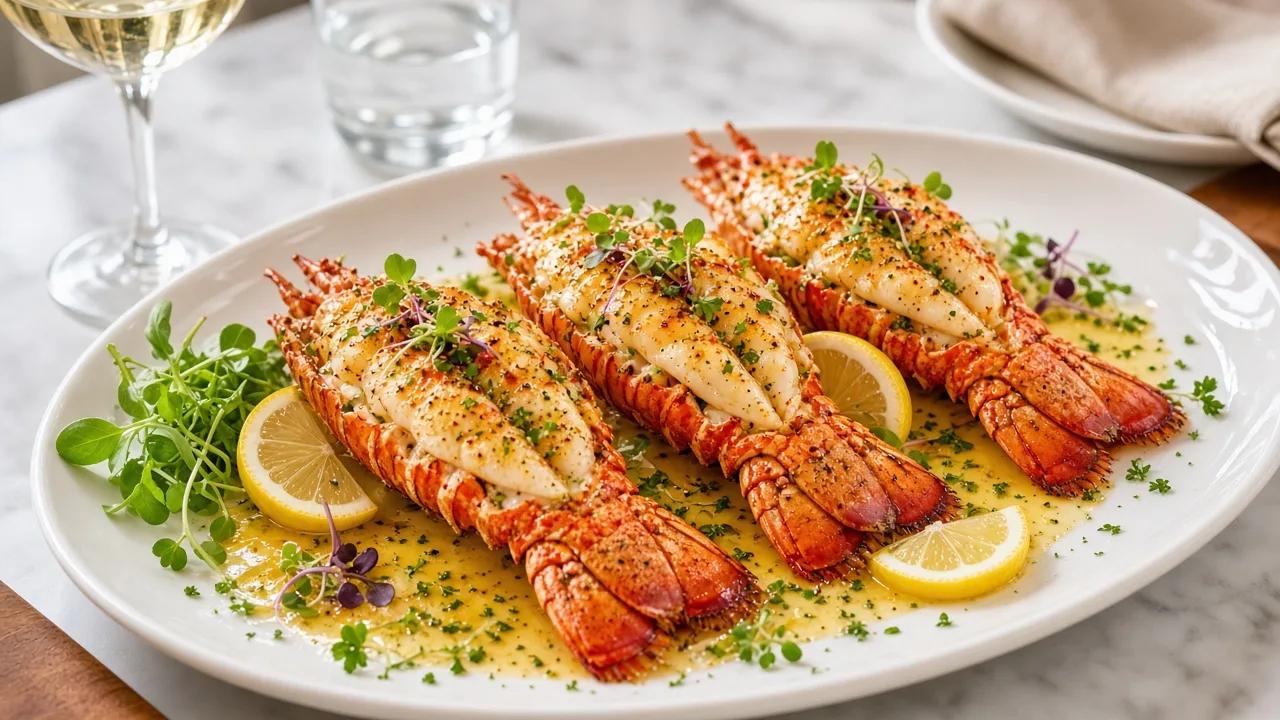
Butter-Poached Lobster Tail with Champagne Beurre Blanc
Restaurant-style lobster without the tank — gentle butter poaching, a tight Champagne sauce, and tails that stay springy instead of rubbery.
Lobster guide
Homarus, Panulirus, and the slipper lobsters (Scyllaridae)
Four animals share one menu word. Two of them have claws. Two of them are a tail, and that is the whole decision.
Cold-water claw meat is sweet and loose. Tail meat, especially spiny and slipper, is firmer and a little more oceanic. · Maine and Canadian seasons run cold-water months; Florida and Caribbean tails follow local rules. Ask what landed today. · American: Northwest Atlantic. European: Northeast Atlantic. Spiny: Caribbean and Florida. Slipper: Australia, the Mediterranean, the Indo-Pacific.
 Info
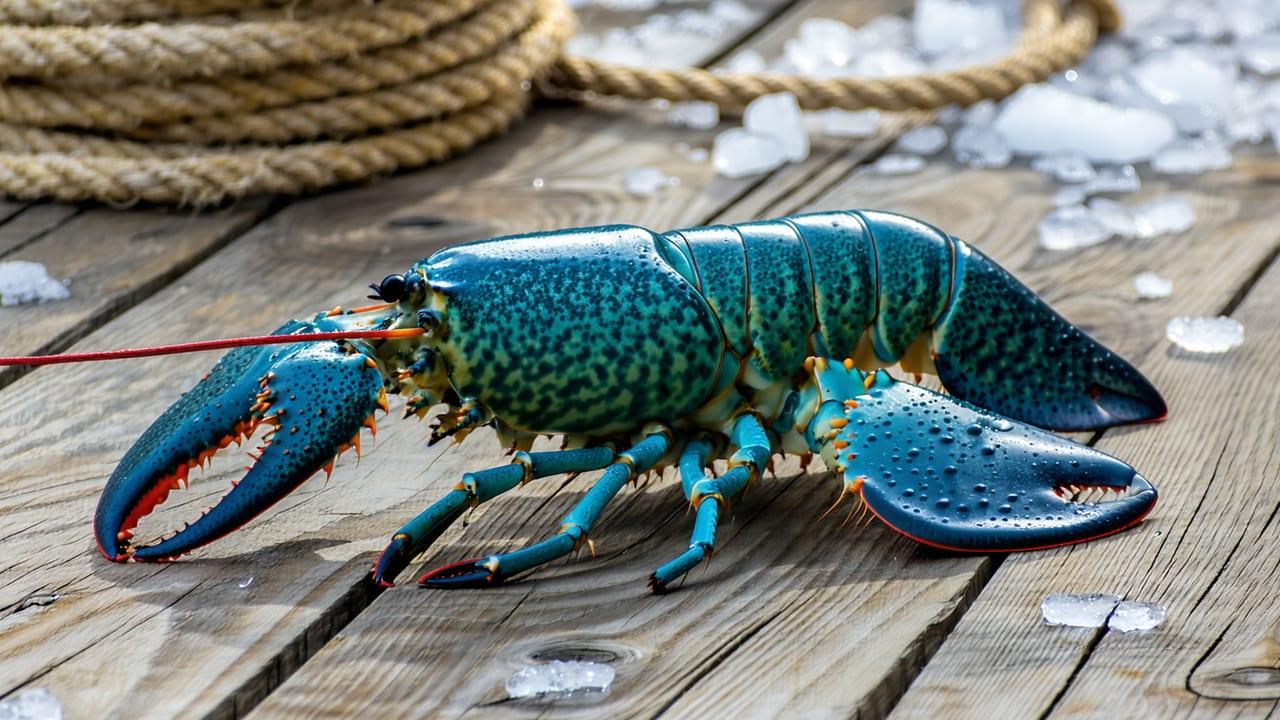
American, European, spiny, slipper.
Open →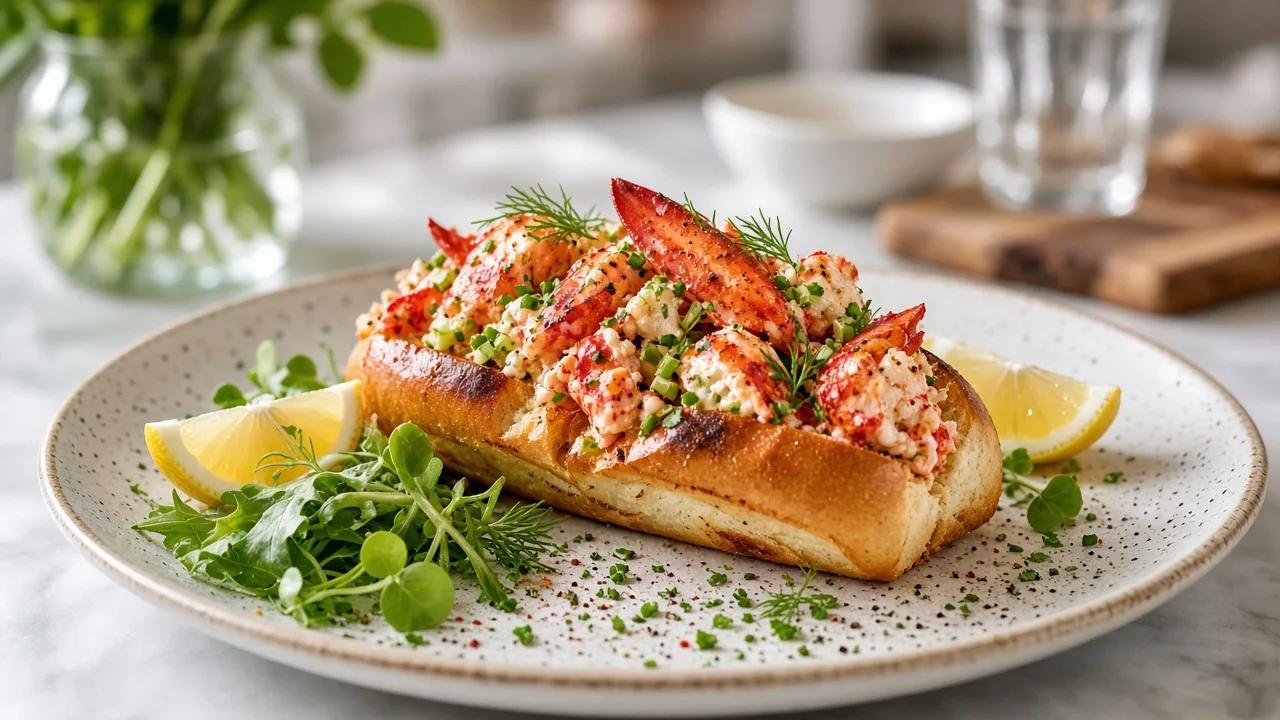 Cook
Lobster roll, boiled, butter-poached tails.
Open → Eat
Lobster on real menus in 26 of our cities.
Open →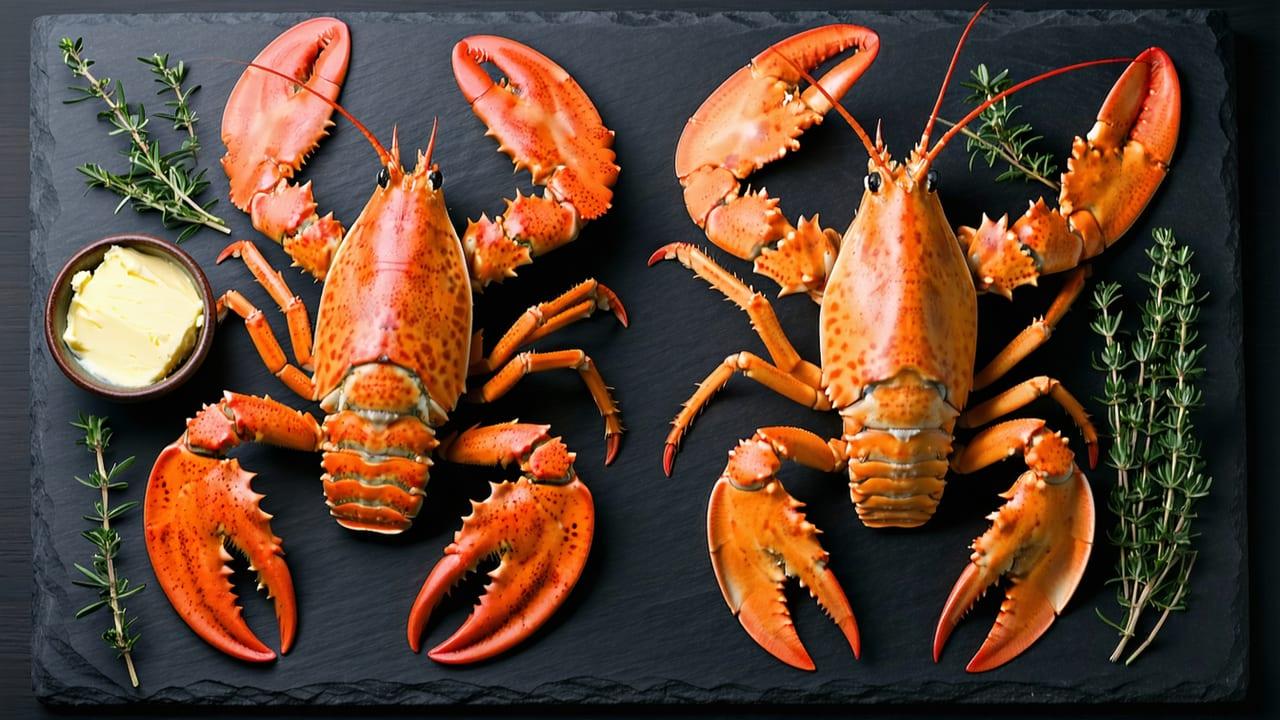 Buy
Live, tails or meat; markets near you.
Open →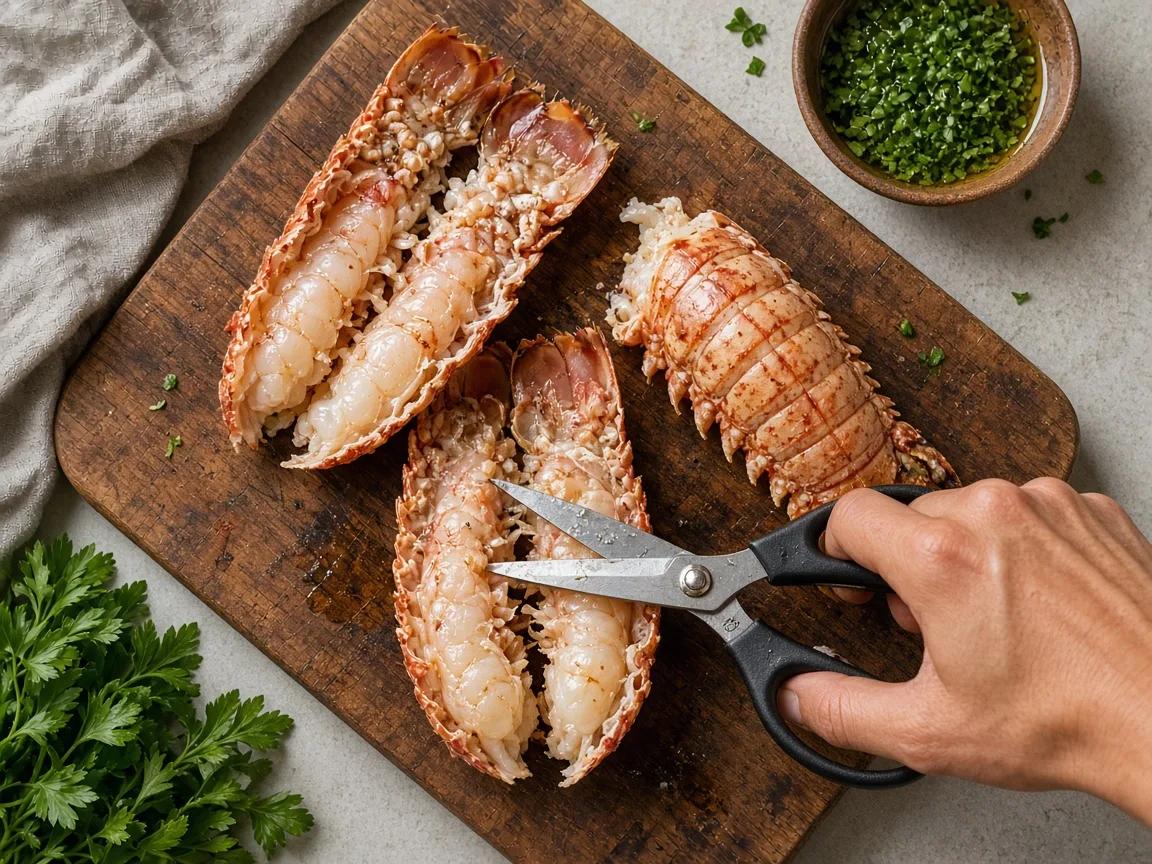 Tips
Butterfly tails, crack claws, doneness.
Open →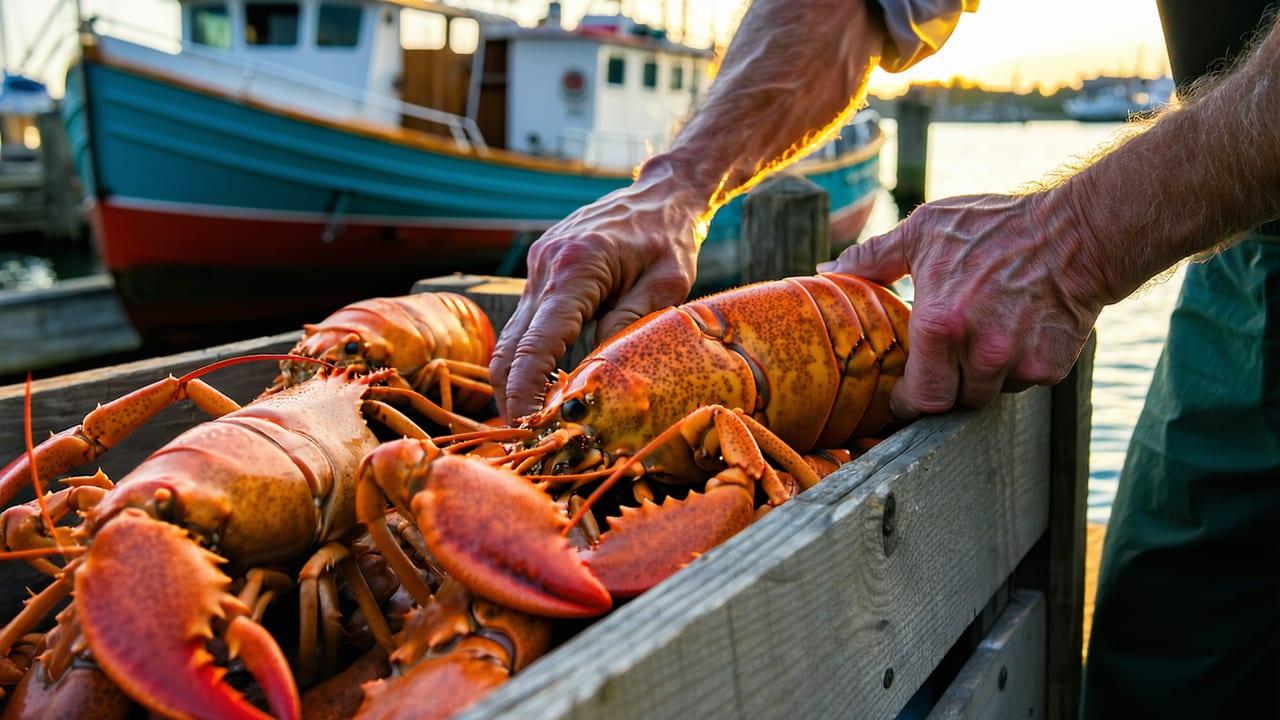 Catch
Traps, seasons, size limits.
Open →Ask the Fish Guide about Lobster — grounded in this species hub.
Clawed
American & European
Tail only
Spiny & slipper
Sweetest claw
The crusher
Overcooks first
The small tail
Sabor
Cold-water claw meat is sweet and loose. Tail meat, especially spiny and slipper, is firmer and a little more oceanic.
Temporada
Maine and Canadian seasons run cold-water months; Florida and Caribbean tails follow local rules. Ask what landed today.
Hábitat
American: Northwest Atlantic. European: Northeast Atlantic. Spiny: Caribbean and Florida. Slipper: Australia, the Mediterranean, the Indo-Pacific.
Recipes
Step-by-step methods from our recipe pages — same hero photos you will see on each dish.
French-American · Advanced
Restaurant-style lobster without the tank — gentle butter poaching, a tight Champagne sauce, and tails that stay springy instead of rubbery.
New England / International · Medium
Lobster is done when the shell is bright and the tail meat is opaque and firm, about 145°F / 63°C in the thickest part. Boiling and steaming are the most straightforward methods; broiling a split lobster gives you browned meat and a place
New England · Easy
A lobster roll is about cold or barely warm lobster in a toasted split-top bun, not a hot boiled lobster at the table. Maine-style uses a light mayonnaise dressing. A warm butter roll (sometimes called Connecticut-style) tosses the meat in
Warm clarified butter suits New England lobster rolls and whole shells alike — keep a shell cracker handy and confirm whether the meat is claw-only or mixed.
A menu that only says lobster is hiding the animal. American and European lobsters are the clawed, cold-water kind. Caribbean spiny lobster and slipper lobster have no crusher claw — you are paying for the tail.
The meat follows the body. Claw meat from a Homarus is sweeter and looser. Tail meat is denser. A thin slipper tail dries out if the grill runs long. A two-pound Maine lobster can take a steam.
Buying links may earn a commission. Restaurant listings are editorial — not paid placements in this block.
Tips
Best methods: Steam the clawed ones, Grill a split tail, Butter, briefly, Stop before it tightens.
Catch & season
Species & field recognition
Clawed lobsters give you claw and tail. Spiny and slipper give you the tail only. That is the difference that changes the plate, the price, and how long it should stay on the heat.
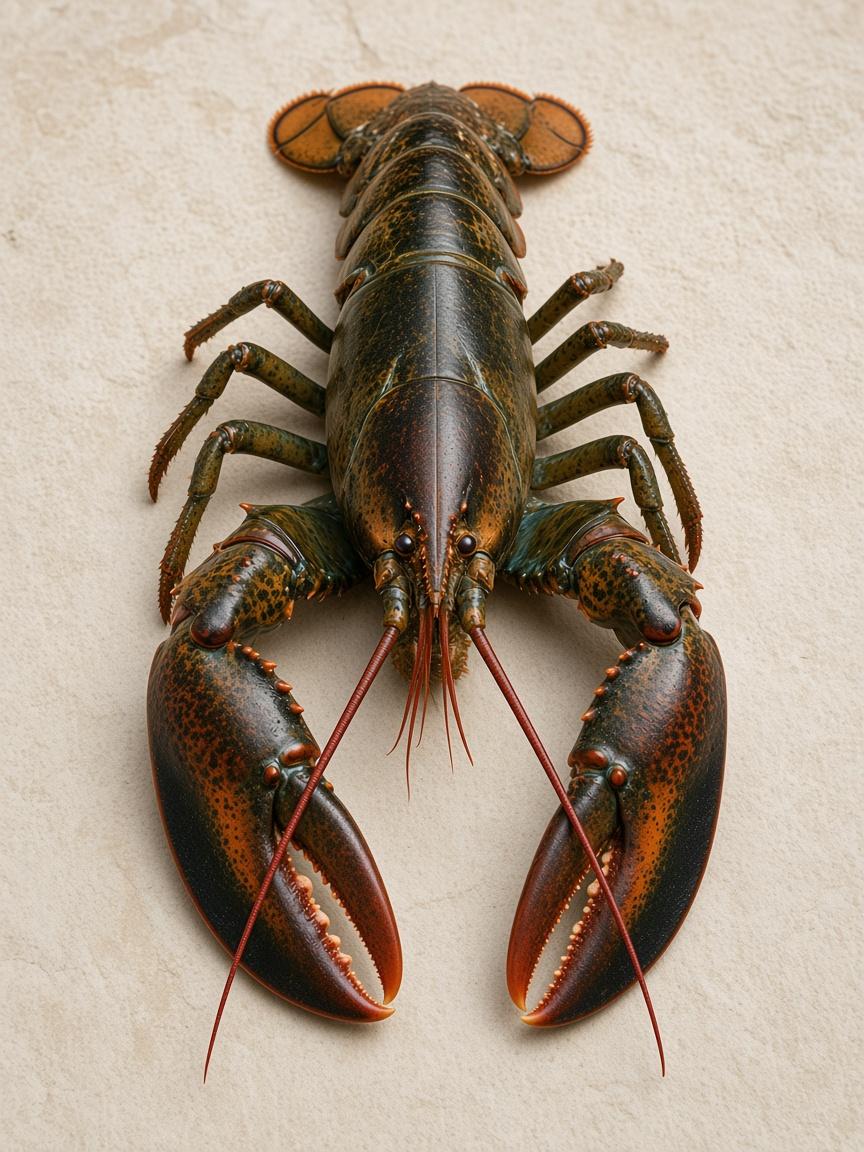
Maine to Atlantic Canada
Homarus americanus
Claws
Two large ones — a crusher and a pincer
Meat
Crusher claw is sweet and loose; tail is firmer
Water
Cold Northwest Atlantic
Order it
Steamed whole, or a roll of claw and tail
This is the heavy animal. A two-pound live lobster is mostly this species. Ask the weight. The price includes the shell.
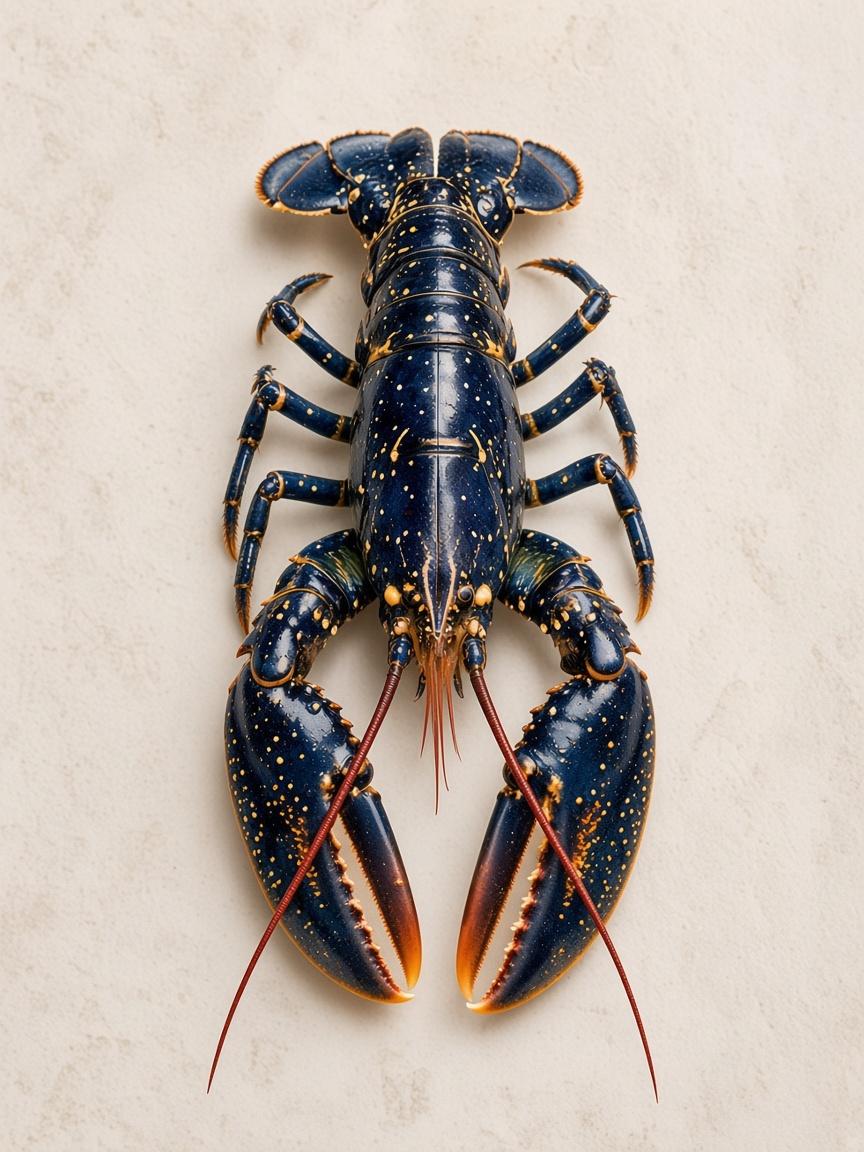
Britain, Brittany, Norway
Homarus gammarus
Claws
Yes — on a smaller, darker animal
Shell
Blue-black with pale spots, red after cooking
Meat
Dense and sweet, less of it than a Maine lobster
Order it
Split, with butter. Homard or bogavante on the card
Same family as the American, different coast. Kitchens that care will name the fishery instead of printing “lobster.”
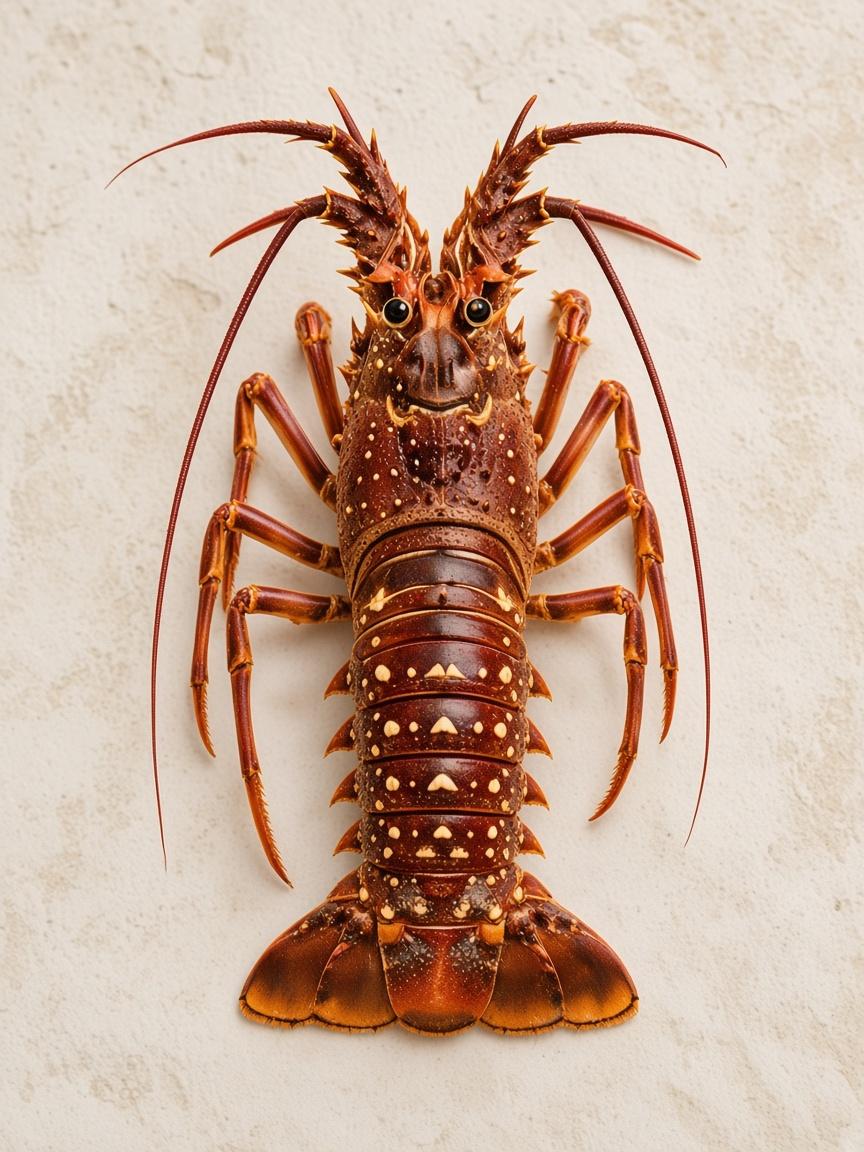
Florida, Bahamas, Caribbean
Panulirus argus
Claws
None worth eating
What you get
The tail. Long antennae, a spotted shell
Meat
Firmer, a little more oceanic than cold-water lobster
Order it
Split and grilled. A long boil dries it out
In Miami, “lobster” in local season is often this, not a ship-in from Maine. Langouste on a French card is the same idea.
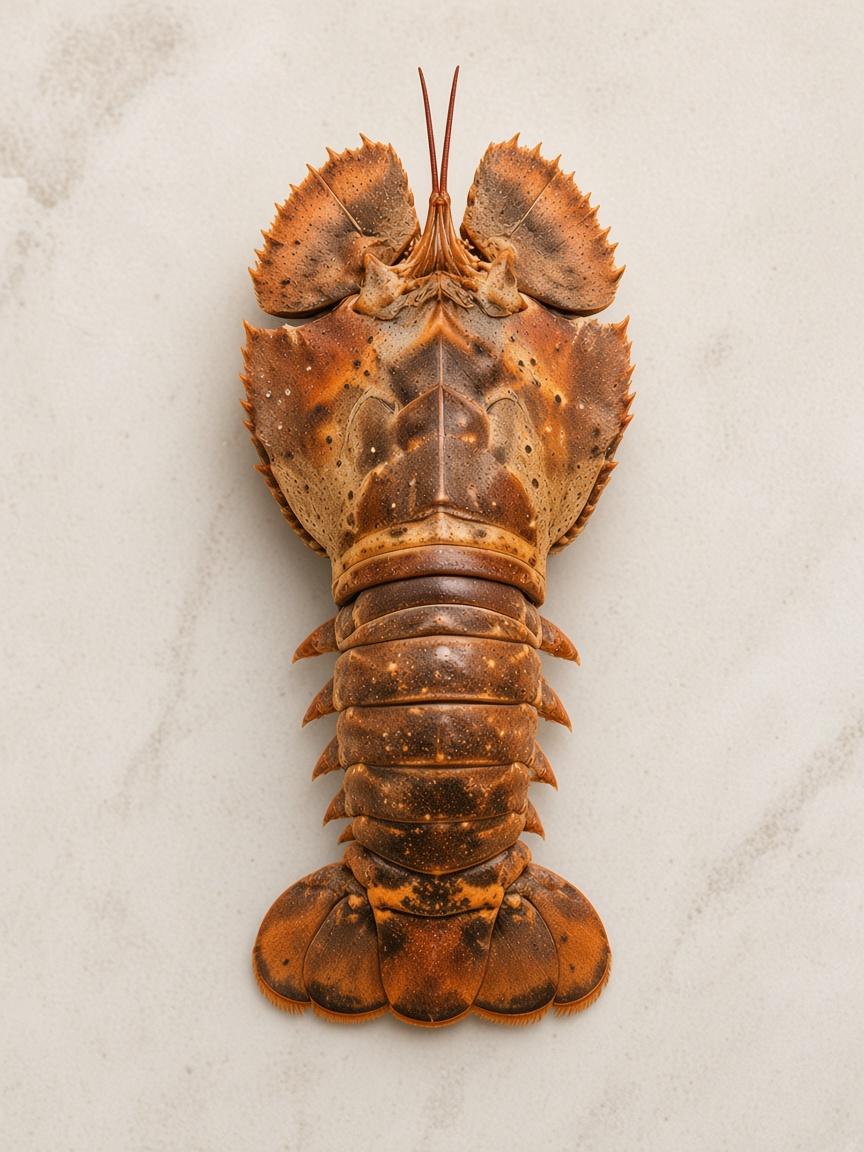
Australia and the Mediterranean
Scyllaridae
Shape
Flat, compact, shovel-shaped antennae
Claws
None
Names
Moreton Bay bug, Balmain bug, cigale
Order it
Hot and short — grill or butter. It overcooks fast
The tail is sweet and the piece is small. There is no claw meat coming to rescue a dry plate.
Kitchen timing
For American and European lobsters only. Spiny and slipper tails need less time on high heat — see the species cards above.
Live weight
Method
Target time
8 min 00 sec
Drop into a rolling boil head-first. Start the timer when the water returns to a full boil.
Recipes
We are building more roll and boil guides next. For now, start with the full recipe pages below — each links back to city directories when you want a restaurant night out.
French-American
Restaurant-style lobster without the tank — gentle butter poaching, a tight Champagne sauce, and tails that stay springy instead of rubbery.
Open recipe →New England / International
Lobster is done when the shell is bright and the tail meat is opaque and firm, about 145°F / 63°C in the thickest part. Boiling and steaming are the most straightforward methods; broiling a split lobster gives you browned meat and a place
Open recipe →New England
A lobster roll is about cold or barely warm lobster in a toasted split-top bun, not a hot boiled lobster at the table. Maine-style uses a light mayonnaise dressing. A warm butter roll (sometimes called Connecticut-style) tosses the meat in
Open recipe →Coming next: Maine and Connecticut lobster roll walkthroughs — same layout as this guide, with step photos and restaurant links in Boston and New York.
Near you
We look for rooms that actually name lobster, then sort the ones near you by distance. Use your location, or pick a city.
Or start from a city:
Species guide
Few ingredients carry the cultural and culinary weight of a live Maine lobster. From the weathered wharves of Boston's waterfront to the white-tablecloth dining rooms of New York City, Homarus americanus is the benchmark crustacean of American fine dining. Yet across the country in Miami, a different animal — the warm-water spiny lobster, Panulirus argus — commands equal devotion, starring in everything from Cuban langosta enchilada to Florida Keys boils. Understanding the biology, grading, and culinary behavior of both species is the foundation of any serious seafood program.
The single most important anatomical distinction between these two lobster groups is the presence or absence of chelae — the large claws. Maine lobster belongs to the infraorder Astacidea, family Nephropidae. It carries two asymmetric chelae: the larger crusher claw (used to crack shells) and the smaller cutter claw (used for tearing). These claws can account for up to 35% of the animal's total edible meat yield, which is why whole Maine lobster is sold and priced differently from tails alone.
Spiny lobsters — including the Caribbean spiny lobster (Panulirus argus), the California spiny lobster (Panulirus interruptus), and the Brazilian spiny lobster (Panulirus laevicauda) — belong to family Palinuridae. They have no chelae whatsoever. Instead, they defend themselves with long, heavily spined antennae that can exceed the body length. All commercial meat value is concentrated in the muscular abdomen (tail). This is why spiny lobster is almost universally sold as a frozen or fresh tail product rather than whole.
Both groups share the basic decapod crustacean body plan: a fused cephalothorax (head + thorax) covered by the carapace, a segmented abdomen, and a fan-shaped tail (telson + uropods). The carapace length (CL) — measured from the eye socket to the rear edge of the carapace — is the universal legal measurement used by fisheries managers to enforce minimum size limits. In Maine, the minimum CL is 3¼ inches (82.5 mm); in Florida, spiny lobster minimum CL is 3 inches (76.2 mm).
Homarus americanus H. Milne-Edwards, 1837
Panulirus argus (Latreille, 1804) — Caribbean; P. interruptus — California
Nephropidae (clawed) vs. Palinuridae (spiny) — two entirely separate evolutionary lineages
Maine: tail, claws, knuckles, legs. Spiny: tail only (85–90% of total yield)
H. americanus up to 44 lbs (20 kg) recorded; P. argus typically 2–8 lbs (0.9–3.6 kg) at market
Maine lobster: 50+ years estimated; spiny lobster: 10–15 years; both grow by molting throughout life
Lobsters cannot grow inside a rigid exoskeleton. To increase in size, they must molt — a process called ecdysis — during which the animal absorbs water to expand its body, splits the old shell at the carapace-abdomen junction, and withdraws from it entirely. The new shell is initially soft and pliable. Over the following weeks to months, calcium carbonate is deposited from the hemolymph (lobster blood) into the new cuticle, gradually hardening it.
This cycle creates the commercial distinction between hard-shell and soft-shell (shedder) lobsters — one of the most consequential quality variables in the live lobster trade.
A hard-shell Maine lobster has a fully calcified carapace that resists firm thumb pressure. These animals have completed their post-molt recovery, refilled their body cavity with muscle tissue, and carry the highest meat-to-body-weight ratio. Hard-shells survive live transport for 24–48 hours with proper refrigeration (38–42 °F / 3–6 °C) and moist seaweed packing, making them the preferred product for air-freight shipping to restaurants in Chicago, Los Angeles, and San Francisco.
Shedders are lobsters caught within weeks of molting. The shell yields slightly under firm pressure — experienced graders describe it as pressing on a rubber eraser versus pressing on a rock. Shedders contain more water in their body cavity and less developed muscle tissue, yielding 15–18% meat by body weight compared to 20–25% for hard-shells. However, the meat that is present is notably sweeter, more tender, and more delicate in flavor. New England lobster shacks prize summer shedders for rolls and boils precisely because of this textural quality. They do not ship well and are largely a local or regional product.
| Attribute | Hard-Shell | Soft-Shell (Shedder) |
|---|---|---|
| Shell resistance | Rigid, no flex under firm thumb pressure | Yields slightly; rubbery feel |
| Meat yield (% body weight) | 20–25% | 15–18% |
| Flavor profile | Rich, briny, full-bodied | Sweeter, more delicate, tender |
| Shipping durability | Excellent — 24–48 hrs live | Poor — best consumed locally within 12 hrs |
| Seasonal peak | Fall through spring (Oct–May) | Summer (June–September) post-molt surge |
| Best culinary application | Steaming, butter-poaching, thermidor | Lobster rolls, boils, quick sauté |
| Water content in cavity | Low — dense muscle fill | High — watery when cracked |
The New England Lobster Harvesters Association (NELHA) and major live lobster dealers use a five-tier grading system based on live weight, claw completeness, and shell condition. Understanding this system is essential for any seafood buyer, restaurant purchaser, or fish market operator placing wholesale orders.
| Grade | Live Weight Range | Shell Status | Claw Completeness | Typical Market Channel |
|---|---|---|---|---|
| Chix (Chicken) | 1 lb – 1¼ lbs (454–567 g) | Hard or soft | Both claws required | Casual dining, lobster rolls |
| Quarter | 1¼ – 1½ lbs (567–680 g) | Hard preferred | Both claws required | Mid-range restaurants, retail |
| Half | 1½ – 1¾ lbs (680–794 g) | Hard preferred | Both claws required | Fine dining, hotel programs |
| Large / Select | 1¾ – 2½ lbs (794 g – 1.13 kg) | Hard required | Both claws required | Fine dining, special events |
| Jumbo / Cull | 2½ lbs+ (1.13 kg+); Culls = missing claw | Hard required | One claw acceptable for Culls | Bisque, thermidor, value programs |
Culls — lobsters missing one or both claws due to predator encounters or trap injuries — are graded separately and typically directed toward processed applications: lobster bisque, lobster mac and cheese, or pre-picked claw and knuckle meat. They carry the same flavor profile as intact lobsters of the same grade but are discounted due to reduced whole-plate presentation value.
Because spiny lobsters are sold almost exclusively as tails, grading shifts to tail weight rather than whole-body weight. The industry standard uses ounce-based size brackets: 2–3 oz, 4–5 oz, 6–7 oz, 8–9 oz, and 10+ oz. Larger tails from P. argus are considered premium; California spiny lobster (P. interruptus) tails are naturally larger and command a regional premium on menus in Los Angeles and San Francisco during the October–March season.
Maine lobster is harvested almost exclusively by trap (pot) fishing — one of the most selective and low-bycatch commercial fishing methods in existence. Lobstermen set strings of wire-mesh traps baited with fish carcasses (typically herring or redfish frames) at depths of 10–300 fathoms. Legal-size lobsters are retained; undersized animals, egg-bearing females (v-notched and returned), and non-target species are released alive. The Maine lobster fishery has held Marine Stewardship Council (MSC) certification and is widely regarded as a model for sustainable crustacean management.
Caribbean spiny lobster (P. argus) is harvested by a combination of trap fishing and SCUBA/free-dive harvest. Florida's commercial and recreational spiny lobster fishery is managed by the Florida Fish and Wildlife Conservation Commission (FWC) and NOAA. The famous mini-season — a two-day recreational harvest window in late July preceding the commercial season — draws thousands of divers to the Florida Keys each year, making Miami the epicenter of US spiny lobster culture. California spiny lobster (P. interruptus) is managed by the California Department of Fish and Wildlife with strict trap and hoop-net regulations.
The flavor difference between Maine and spiny lobster is real and significant enough to drive distinct culinary applications. Maine lobster meat — particularly from the claws and knuckles — is rich, sweet, and carries a pronounced oceanic brininess underpinned by naturally occurring glycine (a sweet amino acid). The tail meat is firmer and slightly more savory. Fat content is low but the presence of omega-3 fatty acids (EPA and DHA) contributes to the perception of richness on the palate.
Spiny lobster tail meat is leaner, firmer, and milder — its flavor profile sits closer to a large shrimp or langoustine than to Maine lobster. This makes it highly versatile in bold preparations: Cuban langosta a la plancha, Haitian griot-style preparations, and Cajun boils where the spice profile is the star. The firmer texture also makes spiny lobster tails more forgiving on the grill — they hold their shape at higher heat without the risk of the delicate claw meat overcooking.
For deeper exploration of crustacean flavor science, see our guide to Dungeness Crab anatomy and cooking and our overview of Gulf shrimp species and grading.
Both species are unforgiving when overcooked. The primary protein in lobster tail muscle is myosin, which begins denaturing at 120 °F (49 °C) and becomes fully set — and increasingly rubbery — above 150 °F (66 °C). The USDA recommends a minimum internal temperature of 145 °F (63 °C) for shellfish. Most professional kitchens target 140 °F (60 °C) at the thickest point of the tail, relying on carry-over heat to reach the safe threshold during resting.
For recipe inspiration, explore our New England Lobster Boil recipe and our Cajun Spiny Lobster Tail recipe — both developed with professional kitchen testing at precise internal temperatures.
Geography and supply chain determine which lobster dominates a city's restaurant scene. Here is a practical breakdown for travelers and diners:
Boston: The undisputed capital of live Maine lobster dining. Boston seafood restaurants source directly from Maine and Massachusetts trap boats, often with same-day live delivery. Expect hard-shell lobsters year-round and a surge of shedder specials from July through September.
New York City: New York's seafood scene supports both species — Maine lobster dominates fine-dining and raw bar programs, while spiny lobster tails appear on Caribbean and Latin American restaurant menus throughout the outer boroughs.
Miami: Miami's restaurant landscape is the premier US destination for spiny lobster (langosta). Cuban, Haitian, and Bahamian restaurants serve P. argus in preparations that showcase its firm texture and mild flavor. The Florida Keys mini-season in late July turns the entire region into a lobster festival.
Los Angeles & San Francisco: California spiny lobster (P. interruptus) is a seasonal treasure on the West Coast. Los Angeles seafood restaurants and San Francisco fish houses feature it from October through March — larger, meatier tails than the Caribbean species, with a slightly sweeter flavor profile.
Chicago: Landlocked but well-supplied via overnight air freight, Chicago's fine-dining restaurants rely almost exclusively on hard-shell Maine lobster shipped live from New England dealers — a testament to how robust the cold-chain logistics for H. americanus have become.
Explore Partner Plans →The lobster boil is one of the oldest communal food traditions in North America, and it exists in two distinct regional dialects — the New England clambake and the Gulf Coast Cajun boil — each perfectly matched to its local lobster species.
Rooted in Indigenous Wampanoag cooking traditions, the New England clambake layers live Maine lobsters, littleneck clams, corn on the cob, red potatoes, and chorizo or linguiça over seaweed in a pit or large pot. The cooking liquid is seawater or heavily salted water — no spice blend, no aromatics beyond the ocean itself. The flavor is pure: sweet lobster, briny clams, starchy corn. Drawn butter is the only condiment. This is the preparation that showcases why hard-shell Maine lobster is worth its premium — the claw and knuckle meat, pulled from the shell at the table, is the centerpiece.
Elevate your home boil with a curated spice and seasoning pack designed for this exact tradition:
The Gulf Coast tradition — born in Louisiana and now practiced from Texas to Florida — takes a radically different approach. The cooking liquid is a heavily spiced broth built on crab boil seasoning (mustard seed, coriander, bay leaf, cayenne, dill), and the protein is typically spiny lobster tails, Gulf shrimp, blue crab, or crawfish. Corn, red potatoes, andouille sausage, and mushrooms absorb the spiced broth. The result is bold, fiery, and communal — served on newspaper-lined tables with no plates. Spiny lobster's firm texture and mild flavor make it an ideal canvas for this aggressive spice environment, absorbing the boil seasoning without losing its structural integrity.
Whether you are sourcing for a restaurant program or a home dinner, the same principles apply. For live Maine lobster: look for active movement (legs and antennae moving, tail curling under when lifted), intact antennae (a sign of recent harvest and low stress), and a shell that resists firm thumb pressure if you want hard-shell. Avoid lobsters that hang limp — they are near death and will have poor flavor and texture once cooked.
For fresh or frozen spiny lobster tails: look for tails with the shell still attached (not pre-split), a clean ocean smell with no ammonia, and firm white-to-translucent flesh visible at the cut end. Frozen tails should show no signs of freezer burn (white, dry patches on the flesh) and should be thawed slowly in the refrigerator overnight — never under running hot water, which begins cooking the outer layer while the center remains frozen.
Explore our full guide to buying live lobster and our frozen seafood thawing guide for step-by-step protocols. You can also browse premium lobster and boil seasoning products at shop.fishrestaurants.com.
Both have claws. American lobster (Homarus americanus) is the larger Northwest Atlantic animal, Maine through Atlantic Canada, with a lot of sweet claw meat. European lobster (Homarus gammarus) is usually smaller, dark blue with pale spots, and shows up as homard or bogavante.
Caribbean spiny lobster (Panulirus argus) is a different family. The meat worth ordering is the tail. Florida, the Bahamas, and Caribbean menus often mean this animal when they print “lobster,” especially in local season.
Slipper lobsters (Scyllaridae) are flat, clawless, and compact. Australia serves them as Moreton Bay bugs and Balmain bugs. France says cigale. The tail is sweet and it overcooks quickly because the piece is small.
You pay for live freight and for shell, not just the meat you eat. Ask the weight and whether the price is per animal or per 100 g before you order.
Lobster is lean protein with useful minerals. Restaurant butter and cream sauces add most of the calories — the meat itself is relatively low in fat.
Timing depends on weight and whether the animal is whole or split. Many kitchens boil roughly 8–12 minutes for a 1–1¼ lb lobster after the water returns to a rolling boil, then rest briefly before serving.
American lobster is in the FDA “Best Choices” group for mercury — a good option for most people when eaten in typical restaurant portions.
FDA guidance: shellfish flesh should be pearly and opaque throughout. Translucent or jelly-like meat needs more time; chalky, tight meat is overcooked.
Cookies. Essential cookies always run. Analytics and ads need your choice — manage or accept below. Essential cookies run the site. Google Analytics runs by default outside the UK, EEA and Switzerland, and only after you accept it there. Opt out any time in Cookie settings. Ads (Meta, Pinterest) load only with your permission. · Privacy