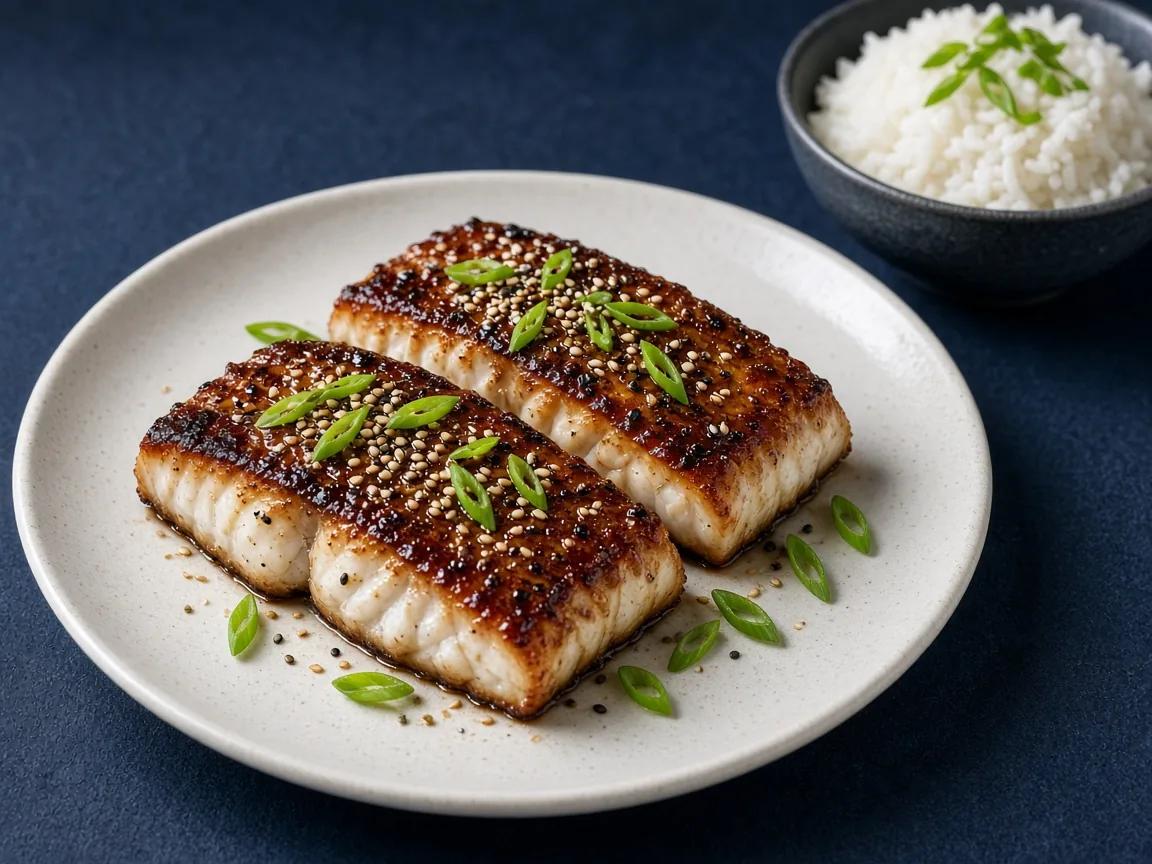
International · Medium
Miso-Glazed Chilean Sea Bass
Buttery Chilean sea bass marinated in a sweet miso glaze, then roasted and grilled until caramelised. A restaurant favourite made at home.
chilean sea bass guide
*Dissostichus eleginoides*
Chilean sea bass is the market name for the Patagonian toothfish, a deep-sea fish from the cold Southern Ocean with rich, buttery, snow-white flesh.
mild, rich and buttery; thick, large, moist flakes · can live 50 years or more (Marine Stewardship Council) · Chilean sea bass (US and UK menus), Patagonian toothfish (official name), mero (Chile and Spain), légine (France)
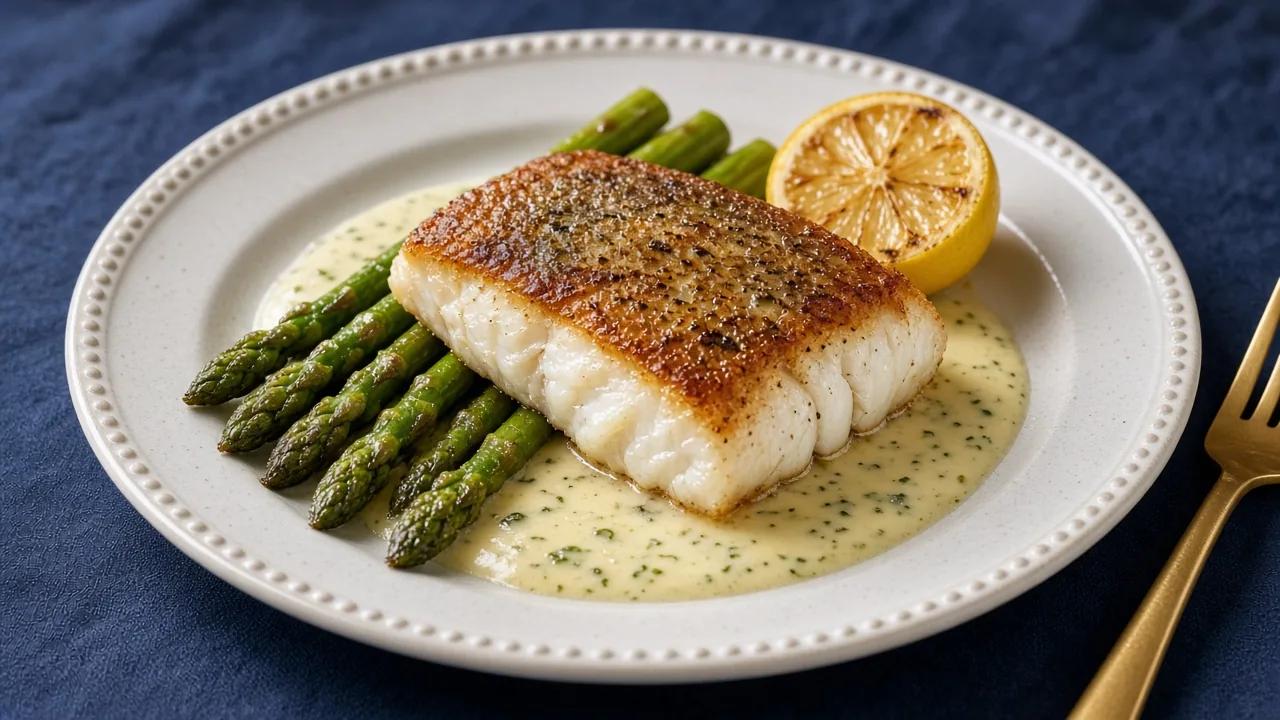 Info
Taste, cuts, cost.
Open →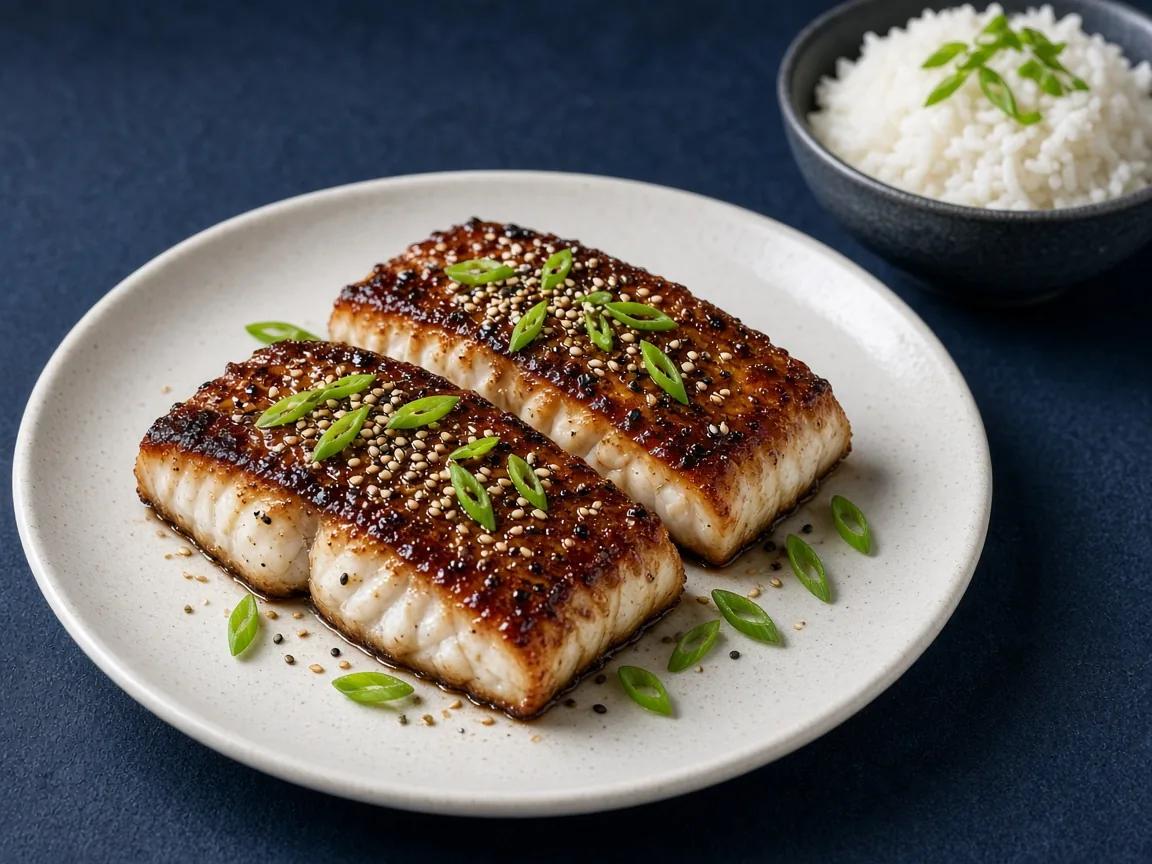 Cook
Miso, seared, roasted.
Open →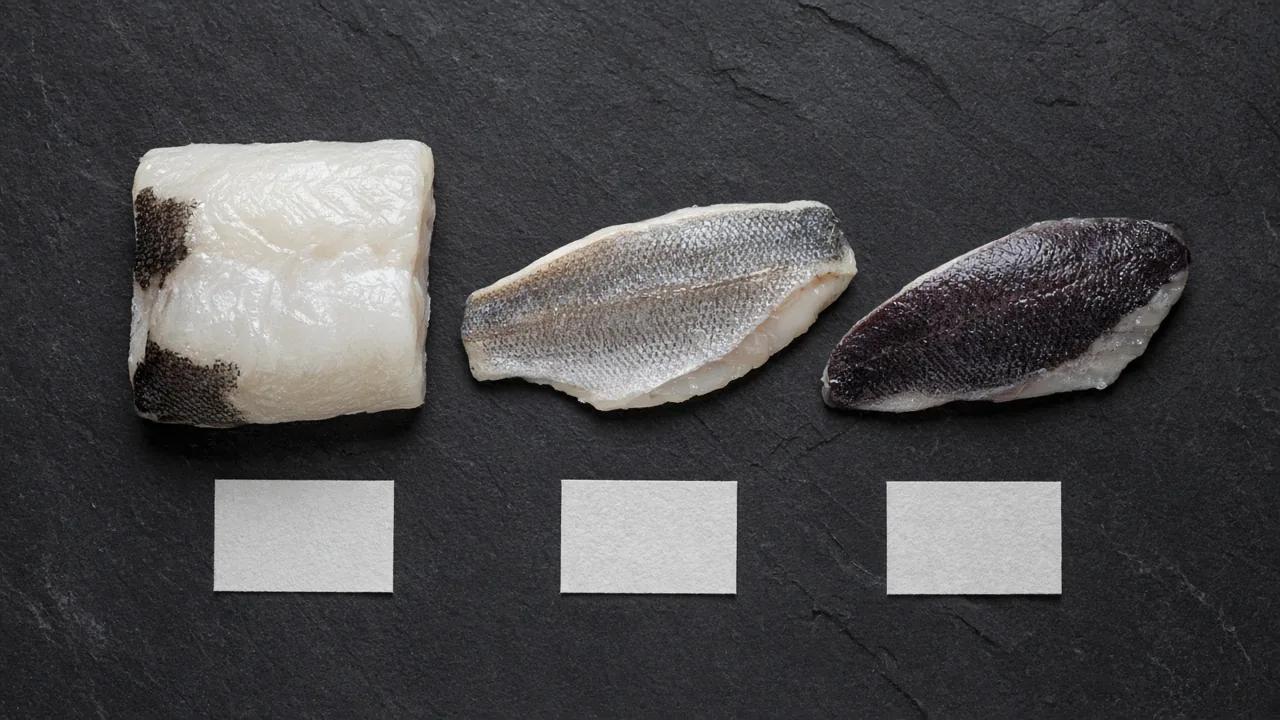 Buy
Cuts, labels, markets.
Open →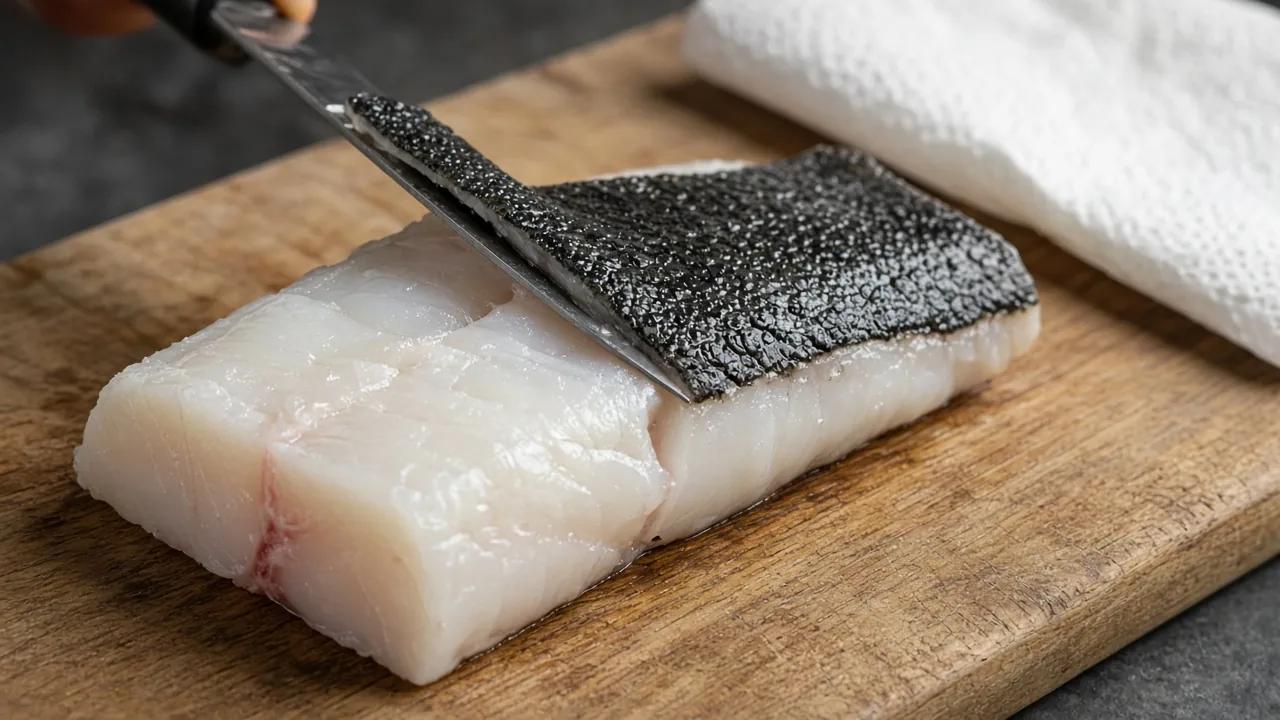 Tips
Skin, sear, mistakes.
Open →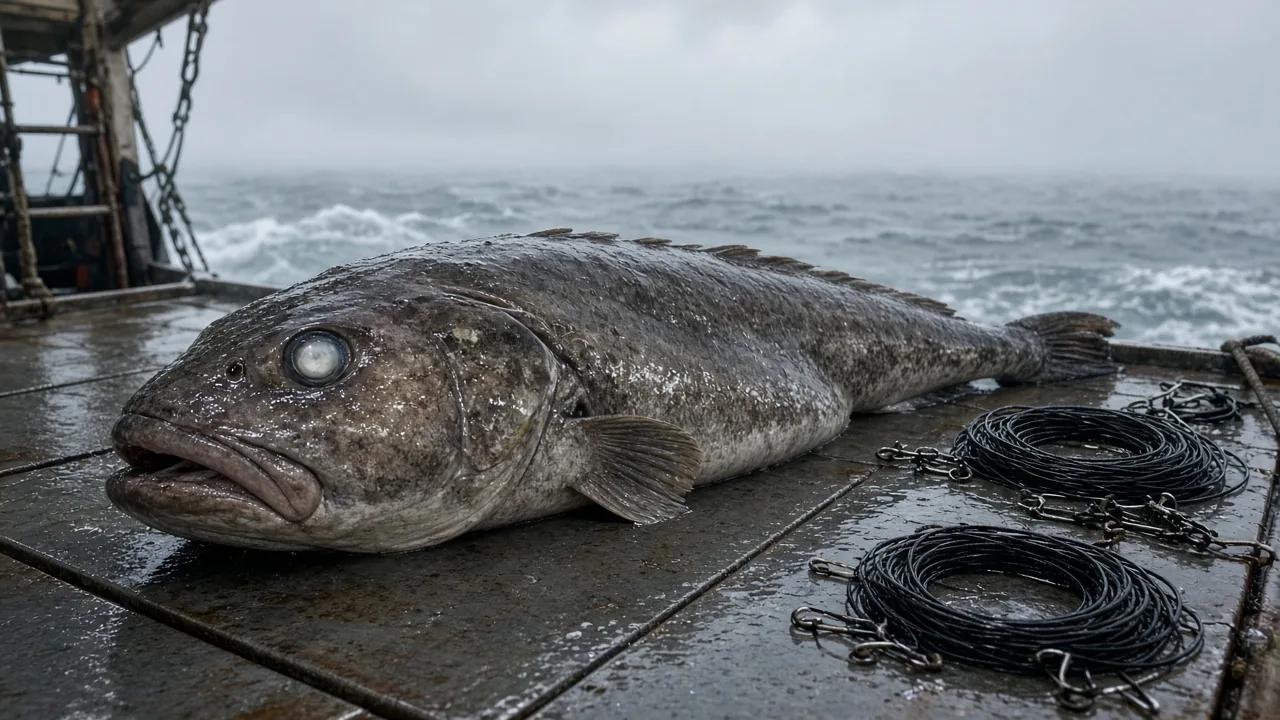 Catch
Southern Ocean, sustainability.
Open →Ask the Fish Guide about chilean sea bass — grounded in this species hub.
Also called
Chilean sea bass (US and UK menus), Patagonian toothfish (official name), mero (Chile and Spain), légine (France)
Scientific name
*Dissostichus eleginoides*
Taste
mild, rich and buttery; thick, large, moist flakes
Lifespan
can live 50 years or more (Marine Stewardship Council)
Sabor
mild, rich and buttery; thick, large, moist flakes
Temporada
can live 50 years or more (Marine Stewardship Council)
Hábitat
Chilean sea bass (US and UK menus), Patagonian toothfish (official name), mero (Chile and Spain), légine (France)
Recipes
Step-by-step methods from our recipe pages — same hero photos you will see on each dish.
International · Medium
Buttery Chilean sea bass marinated in a sweet miso glaze, then roasted and grilled until caramelised. A restaurant favourite made at home.
Chilean sea bass is the market name for the Patagonian toothfish, a deep-sea fish from the cold Southern Ocean with rich, buttery, snow-white flesh.
Buying links may earn a commission. Restaurant listings are editorial — not paid placements in this block.
Catch & season
Species guide
Chilean sea bass is the market name for the Patagonian toothfish, a deep-sea fish from the cold Southern Ocean with rich, buttery, snow-white flesh. Despite the name, Chilean sea bass is not a true bass and is not related to the branzino or sea bass you see on European menus, and it is famous for being almost impossible to overcook.
What is Chilean sea bass? It is the Patagonian toothfish (*Dissostichus eleginoides*), a large, slow-growing predator that lives in the deep, icy waters around Antarctica and the southern tips of South America. It is found at depths of roughly 200 to 2,000 metres (about 650 to 6,500 feet), can grow to more than 2 metres long, and can live for 50 years or more (Marine Stewardship Council).
"Patagonian toothfish" is not a very appetising name, so the fish is sold in shops and on menus as Chilean sea bass. In the US and UK alike, it has become a favourite at upscale seafood restaurants thanks to its rich, buttery flesh.
The fish has a large mouth, sharp teeth and grey-brown skin. It is a slow-growing predator, and because it lives so long, it takes years to reach the size at which it is caught. That is one reason why careful management of the fishery is so important.
This is the most common mix-up, so here is the short version:
| Chilean sea bass | European sea bass / branzino | |
|---|---|---|
| Real name | Patagonian toothfish | *Dicentrarchus labrax* |
| Where from | Southern Ocean, near Antarctica | Northeast Atlantic and Mediterranean |
| Wild or farmed | Wild only | Mostly farmed |
| Flavour | Rich, buttery, oily | Mild, sweet, lean |
| Texture | Thick, large, silky flakes | Delicate, fine flakes |
| Usual cut | Thick skinless fillets or steaks | Whole fish or thin fillets |
Our sea bass guide explains every fish sold under the "sea bass" name.
Chilean sea bass tastes mild, rich and buttery. Because it lives in very cold water, it carries a lot of natural fat, which gives it a silky, melt-in-the-mouth texture and big, moist flakes. It is never strong or "fishy".
That high fat content is also why it is so forgiving to cook: it stays juicy even if you leave it in the pan a minute too long. People often compare it to black cod (sablefish), another rich, buttery fish that is famous with a miso glaze.
Patagonian toothfish lives in the cold waters of the Southern Ocean, near sub-Antarctic islands and the southern coasts of Chile and Argentina. Fishing is done with longlines (long fishing lines with many hooks) and some traps, in deep water far from land.
Many of these fisheries are managed under the Commission for the Conservation of Antarctic Marine Living Resources (CCAMLR), an international body that sets catch limits in Antarctic waters.
Chilean sea bass has a complicated past. In the 1990s and early 2000s, a large amount of illegal, unreported and unregulated (IUU) fishing hurt toothfish stocks, and many chefs and shoppers stopped buying it for a while.
Today the picture is much better for well-managed fisheries:
The UK and US advice is simple: buy Chilean sea bass with the blue MSC label, or ask your fishmonger which fishery it came from. Older Seafood Watch ratings from 2013 rated some fisheries as Best Choice and others as Avoid, so the source matters a lot.
Why is Chilean sea bass so expensive? Several reasons combine:
Fresh or thawed fillets should be:
Frozen fillets should be solid, tightly sealed, and free of ice crystals or white "freezer burn" patches. Thaw overnight in the fridge, never on the counter. Cook fresh or thawed fish within a day or two.
How to prepare Chilean sea bass in four easy steps:
How to cook Chilean sea bass so it turns out silky every time:
It is done when the flesh is opaque all the way through and flakes apart with gentle pressure. The safe minimum cooking temperature for fish is 145°F (63°C) (FoodSafety.gov).
Because it is so rich, a little goes a long way. For a main course, about 5 to (140 to 170 g) of fillet per person is plenty. For a starter or a tasting menu, (85 g) is enough. Thick, even pieces cook more evenly than thin tail ends, so ask your fishmonger for centre-cut portions if you can.
Yes, if it has been well scaled. The skin is fairly thick, so it needs a hot pan to become crisp: start skin side down in a little oil and leave it for 4 to 5 minutes without moving it. If you are glazing, baking or steaming the fish, the skin stays soft, so most cooks remove it before cooking.
You might also like:
Chilean sea bass is a favourite at upscale seafood restaurants and steakhouses. Find one near you through our fine dining seafood restaurants, or browse city guides such as the New York seafood guide and the Miami seafood guide.
Is Chilean sea bass healthy? Yes, in sensible portions. It is a rich source of omega-3 fats and selenium. According to USDA FoodData Central (sea bass, Chilean, frozen, wild caught, raw; values per 100 g):
| Nutrient | Amount |
|---|---|
| Calories | 209 kcal |
| Protein | 14.9 g |
| Total fat | 16.6 g |
| EPA (omega-3) | 0.415 g |
| DHA (omega-3) | 0.47 g |
| Selenium | 69.4 µg |
Is Chilean sea bass fattening? It is higher in calories and fat than lean white fish like haddock or cod, because most of that fat is natural fish oil. Enjoy it in normal portions and with lighter sides.
Mercury: the US FDA lists Chilean sea bass (Patagonian toothfish) as a "Good Choice", which means one serving a week is recommended, including for people who are pregnant or breastfeeding.
Part of our Bass, bream & warm-water white fish guides in the fish and seafood guide hub.
What is Chilean sea bass? It is the market name for Patagonian toothfish (*Dissostichus eleginoides*), a deep-sea fish from the Southern Ocean. It is not a true bass.
How do you cook Chilean sea bass? Pan-sear it until golden, then finish in a 400°F (200°C) oven, or marinate it in miso and roast it. It is done when opaque and flaky.
How do you prepare Chilean sea bass? Thaw it in the fridge, remove any skin, check for bones, pat dry and season just before cooking.
Is Chilean sea bass healthy? Yes. It is rich in omega-3 fats (EPA and DHA) and selenium (USDA FoodData Central). The FDA lists it as a Good Choice: one serving a week.
Why is Chilean sea bass so expensive? It is wild only, caught in remote and rough seas, under strict catch limits, and demand is high.
Is Chilean sea bass fattening? It is richer than most white fish, at about 209 kcal per 100 g raw, but most of its fat is healthy fish oil.
What does Chilean sea bass taste like? Mild, rich and buttery, with thick, silky flakes.
Is Chilean sea bass the same as sea bass? No. European sea bass (branzino) is a different, leaner fish from the Atlantic and Mediterranean.
It is the market name for Patagonian toothfish (
Pan-sear it until golden, then finish in a 400°F (200°C) oven, or marinate it in miso and roast it. It is done when opaque and flaky.
Thaw it in the fridge, remove any skin, check for bones, pat dry and season just before cooking.
Yes. It is rich in omega-3 fats (EPA and DHA) and selenium (USDA FoodData Central). The FDA lists it as a Good Choice: one serving a week.
It is wild only, caught in remote and rough seas, under strict catch limits, and demand is high.
It is richer than most white fish, at about 209 kcal per 100 g raw, but most of its fat is healthy fish oil.
Mild, rich and buttery, with thick, silky flakes.
No. European sea bass (branzino) is a different, leaner fish from the Atlantic and Mediterranean.
Cookies. Essential cookies always run. Analytics and ads need your choice — manage or accept below. Essential cookies run the site. Google Analytics runs by default outside the UK, EEA and Switzerland, and only after you accept it there. Opt out any time in Cookie settings. Ads (Meta, Pinterest) load only with your permission. · Privacy