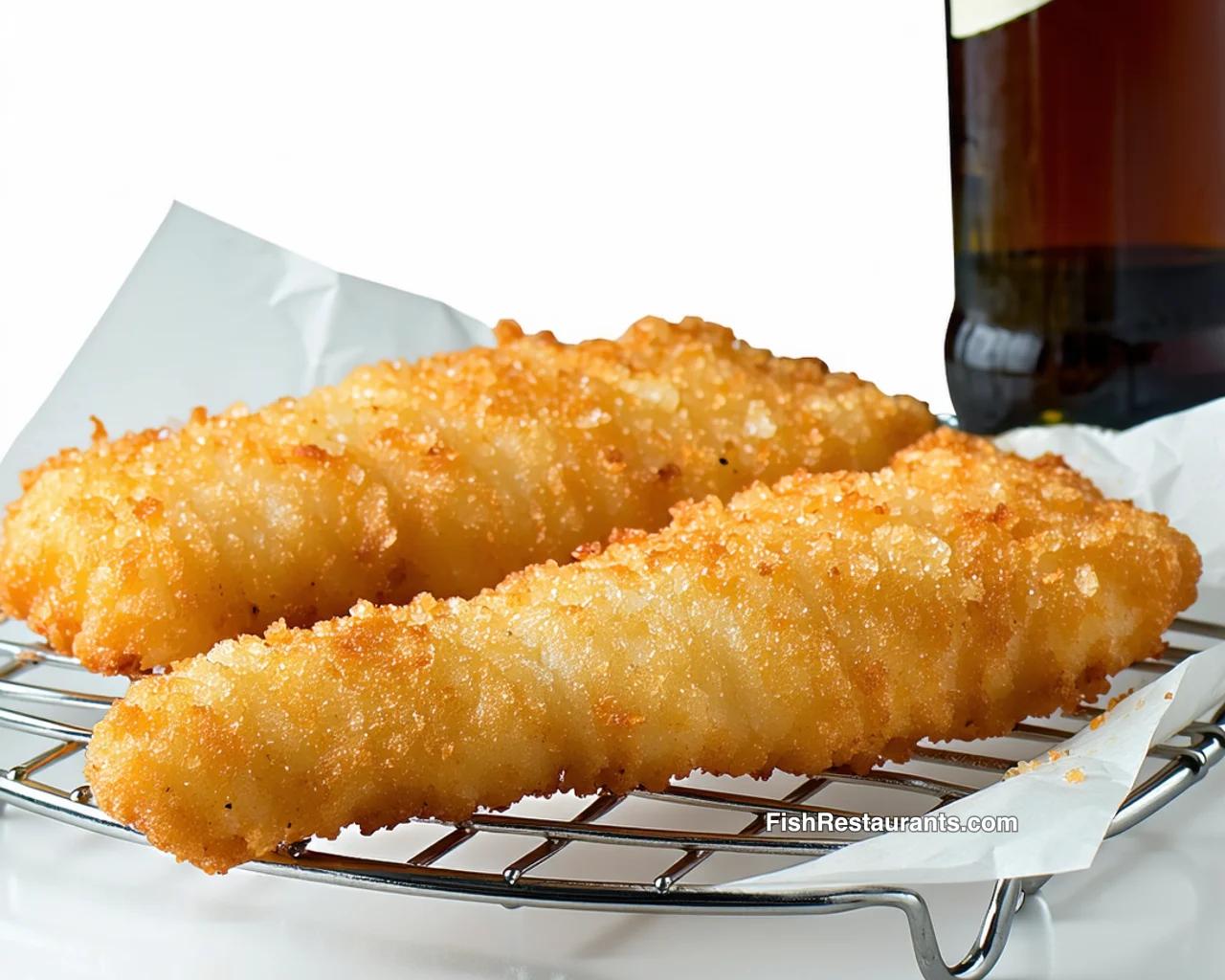
Breading sticks when fish is dry, lightly salted, dredged in order, rested on a rack, and fried at steady oil temperature—not when it is rushed wet into the pot.
Fish and chips night fails when half the crust floats away. Cod and haddock fillets need structure before they meet 180 °C oil. Frying cuts and batter styles are catalogued on the Atlantic cod hub.
Dry, salt, dry again
Salt fillets 10 minutes ahead to pull moisture; blot until no sheen. Wet protein repels flour.
Score overly thick portions slightly so heat penetrates without overbrowning crust.
Three-stage dredge
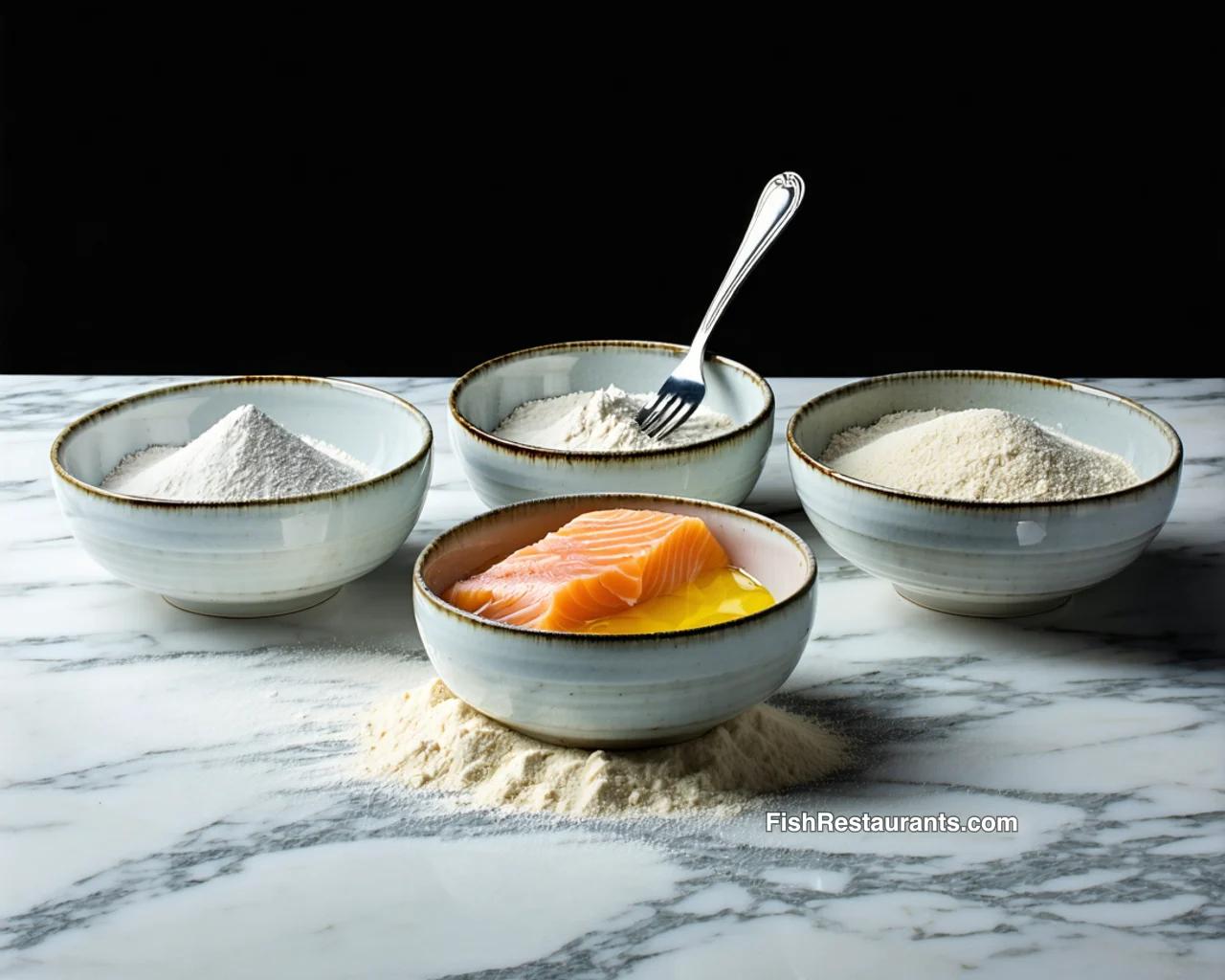
- Flour seasoned lightly—shake off excess.
- Egg beaten with a splash of water or beer for stretch.
- Breadcrumbs or batter pressed on with palms.
Double-dip only for extra crunch; single dip is enough if you rest.
Rest on a rack
Chill breaded fish on a wire rack 15 minutes so starch gelatinizes against flesh. Skipping this step is the top home mistake.
Fry discipline
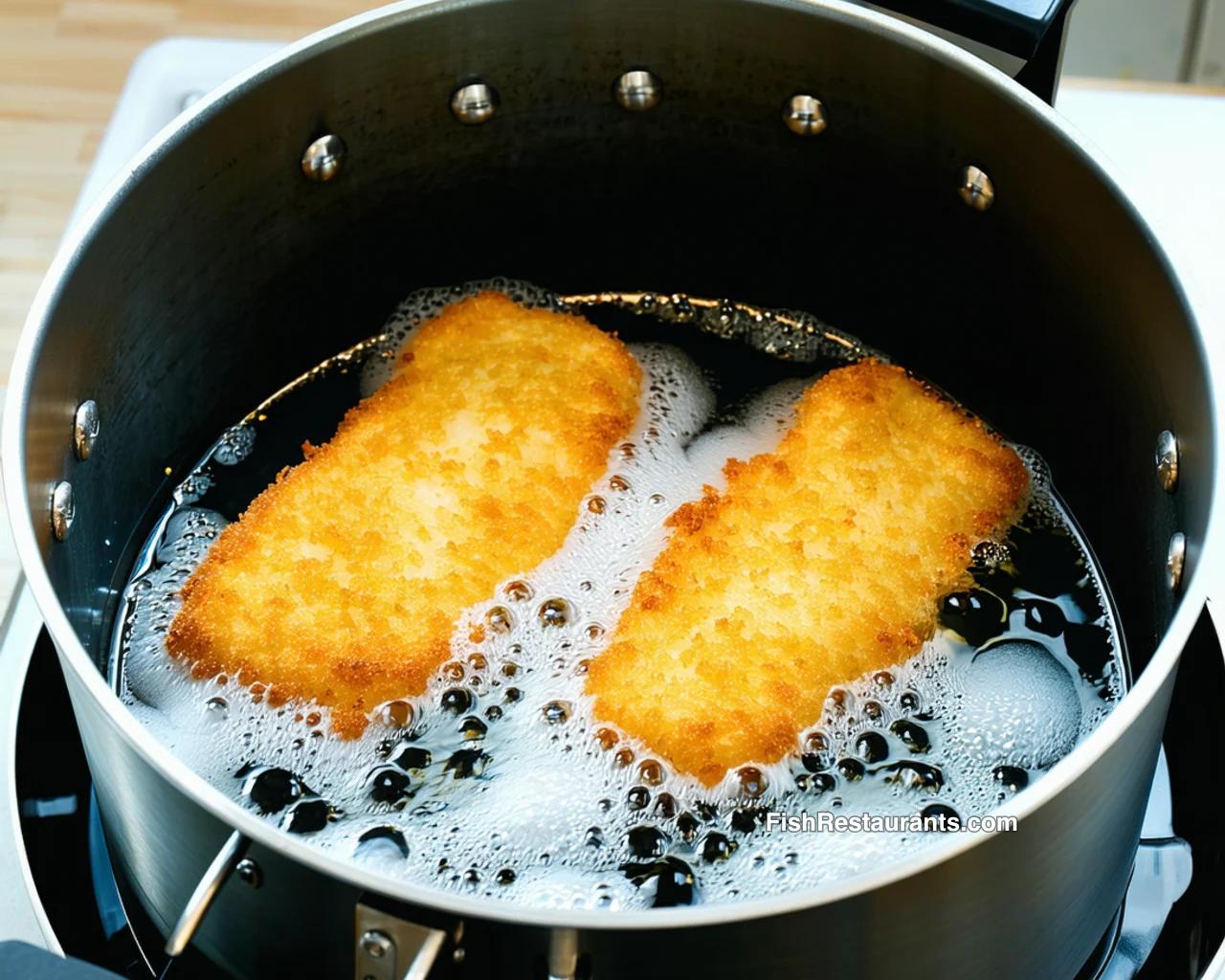
Oil 175–185 °C. Lower fillets away from you; do not crowd—temperature crash causes peeling.
Turn once when color is deep gold; thick fillets may need 4–5 minutes per side.
| Oil temp | Symptom if wrong |
|---|---|
| Too low | Soggy, crust slides |
| Too high | Burnt outside, raw inside |
| Crowded pan | Both problems |
Drain right
Rack or paper briefly; steam from stacking softens crust. Salt hot.
Shallow versus deep fry
Home shallow fry needs turning care; deep pot gives even crust. Either way, maintain temperature with a clip-on thermometer.
Tartar sauce timing
Sauce on hot fish steams crust—serve on the side. Pickles and capers cut richness without softening coating.
FAQ
Cornstarch in flour?
Helps adhesion and crispness—50/50 with wheat flour.
Beer batter instead?
Dip just before fry; no long rest.
Gluten-free?
Rice flour + egg + crushed cornflakes works with rest step.
Reheat leftovers?
Oven 200 °C on rack, not microwave.
Cod alternatives?
See species swap notes on the Atlantic cod guide.