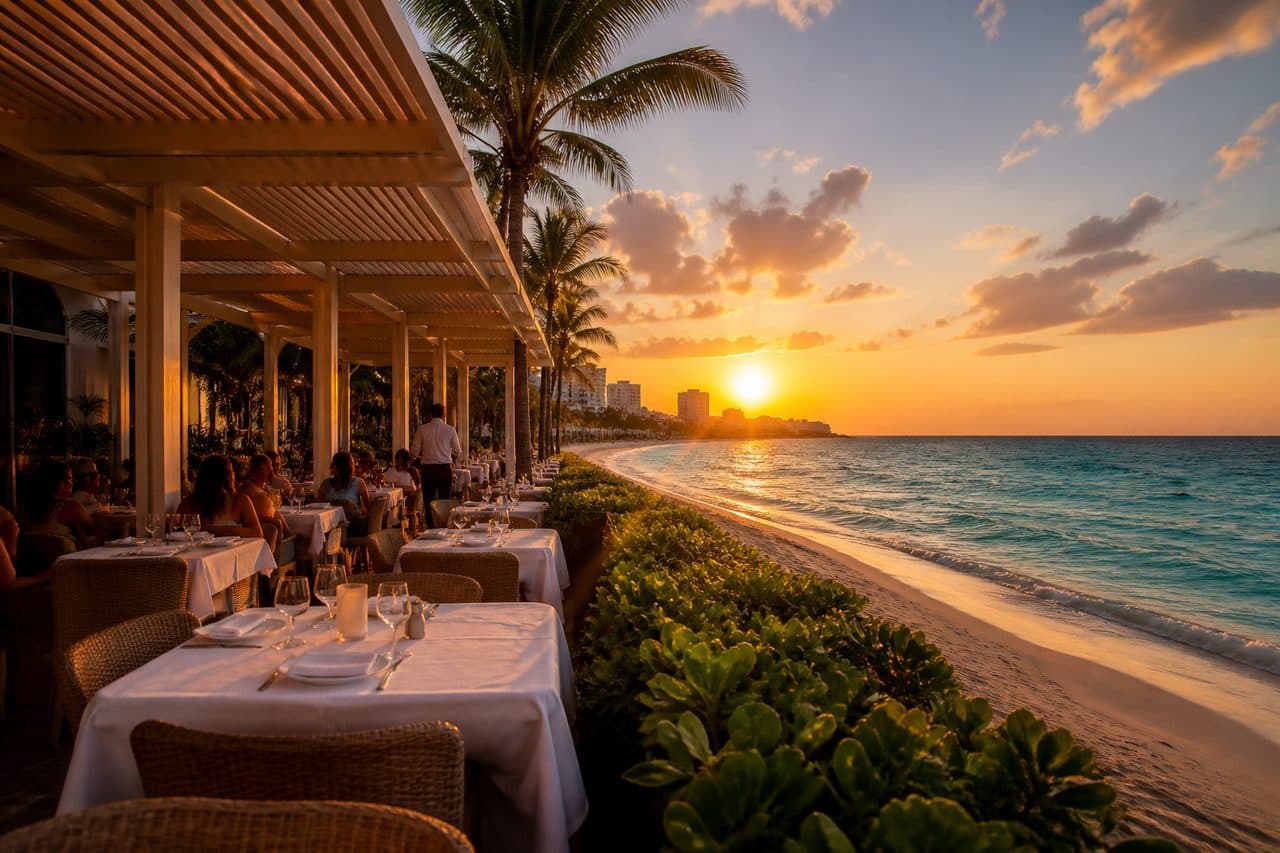
7:14 p.m. Tuesday. The snapper was portioned at four. Two servers on. A couple at table 12 splitting a bottle and not ordering a third course. The walk-in still holds Friday’s fish, because you ordered like the weekend would leak into Wednesday. It did not.
Your Google listing can look fine. Photos updated. 4.5 stars. Hours correct. None of that explains why the room is dressed and the tickets are not.
This is not a tutorial about map pins. It is the week, in public numbers and in the math owners already feel in their chest.
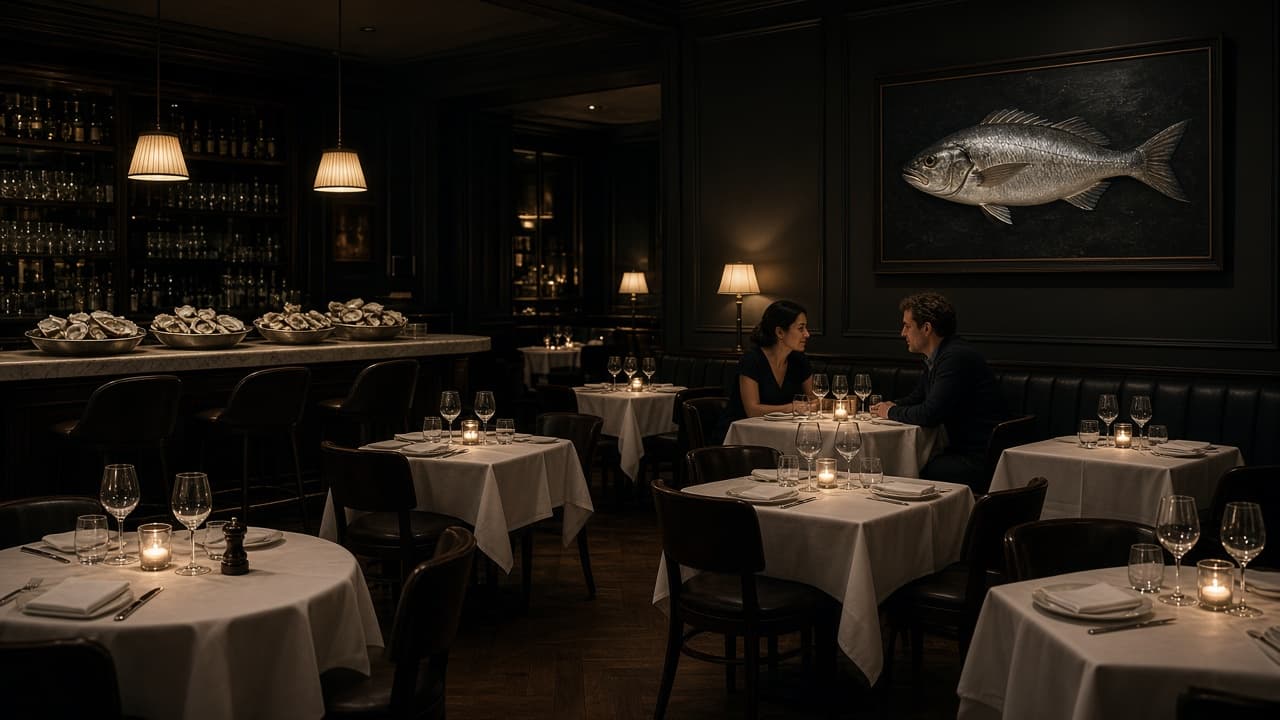
The week is the P&L. Saturday is the alibi.
Friday and Saturday still save a lot of independent seafood rooms. That is exactly why the wound hides. You remember the line at 8:40. You forget that Monday through Wednesday you paid a crew to stand, and you already bought protein that does not keep.
Look at a 90-seat independent seafood restaurant as a worked example — not a survey, the shape operators describe in Miami, New York, Boston, and every other coastal city that lives on weekend covers:
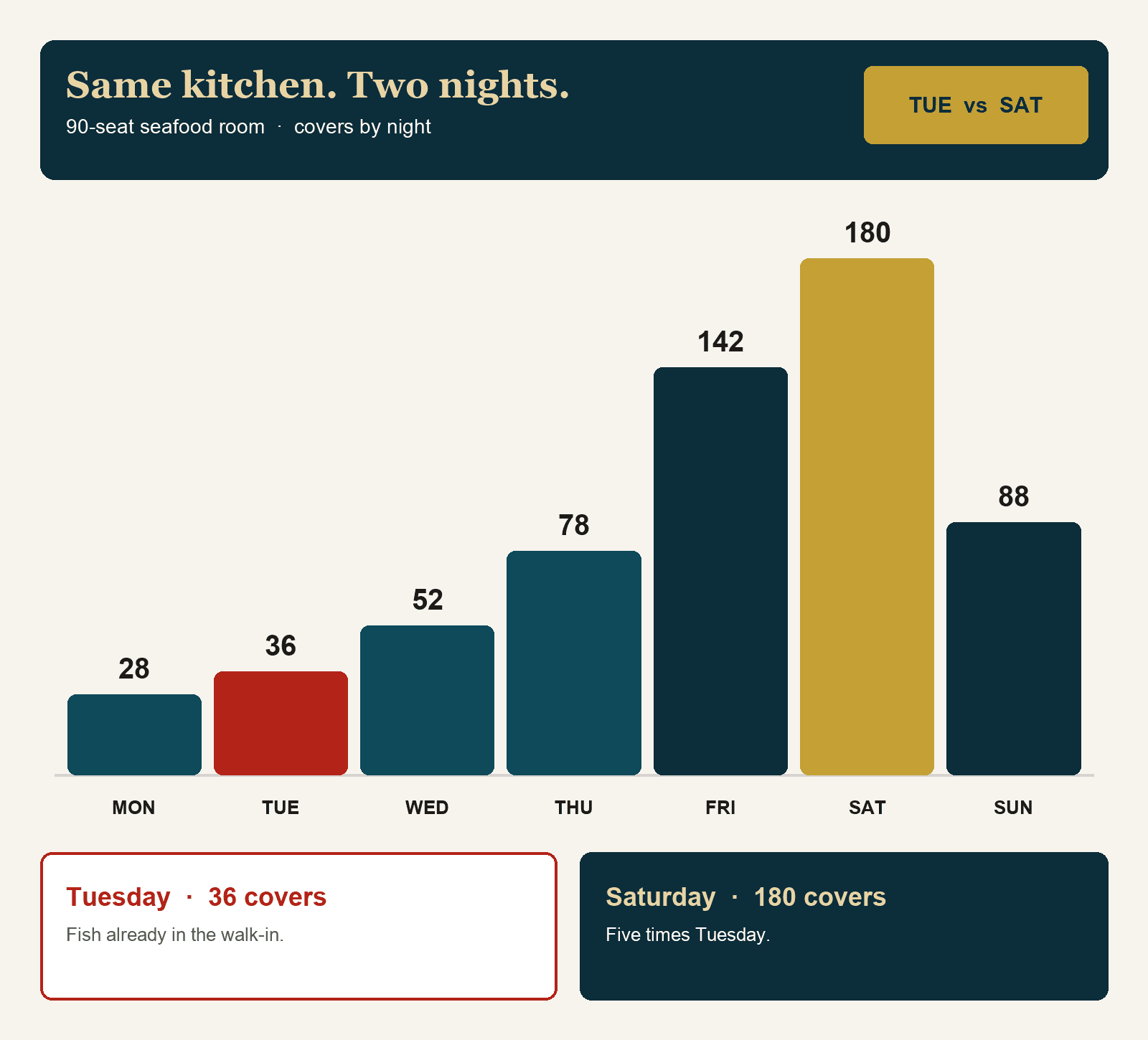
Saturday at 180 covers is not “business is good.” It is five times Tuesday. Rent does not know which night it is. Neither does the fish invoice.
A burger place can freeze the loss. You cannot. Whole fish, oysters, snapper portions — they were a bet you placed on Friday. Tuesday empty is not a quiet night. It is inventory going off while the lights stay on.
Why fish makes the empty night more expensive
National Restaurant Association data for 2025 is blunt. 42% of operators said their restaurant was not profitable. Six in ten reported traffic declines. More than nine in ten cite food, labor, insurance, energy, and card fees as major pressures. Food and labor still eat about 33 cents of every sales dollar each.
Seafood gets hit twice.
On the buy side, wholesale food is up 35% since 2019 (BLS, cited by the NRA). Restaurant labor is up 35% over that same stretch; average hourly earnings for restaurant workers are up 41% since February 2020. On the menu side, Datassential numbers cited by SeafoodSource show fish entrée prices up 3% year-on-year in Q2 2026 — shellfish 6%. Guests will not let you catch up. They already treat fish as a splurge. Raise it like your invoice, and they skip the dish. Or skip you.
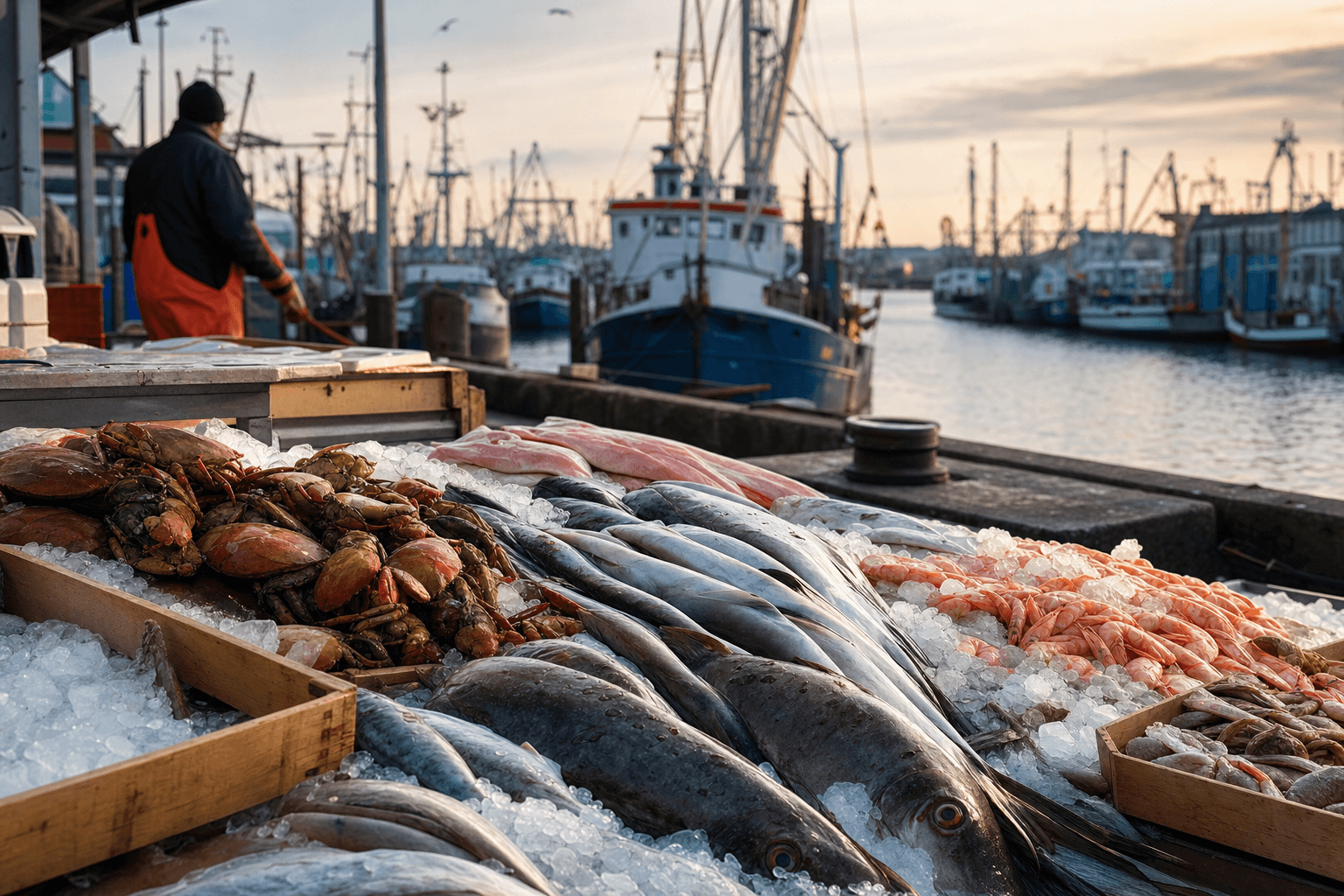
You feel that in the cooler before the guest ever sees it on the check.
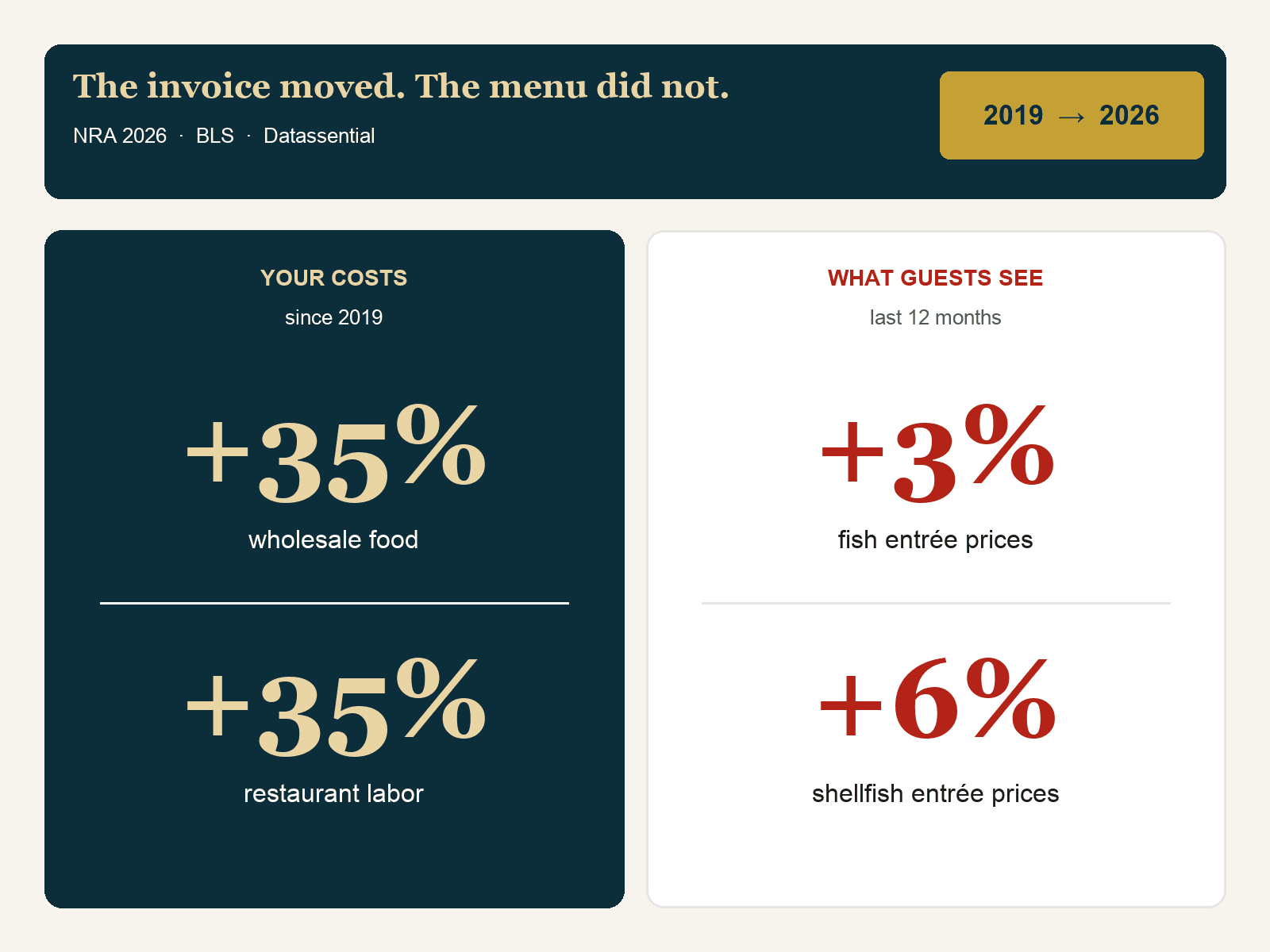
The trap is ugly because both moves fail. Hold the price and the margin dies. Raise it and Tuesday gets quieter. Owners say the same sentences, city after city: “Friday we’re slammed, Wednesday I’m paying people to stand.” “Snapper landed higher and I already raised the menu once.” “The hotel sends tourists to the same three names.” “Delivery takes the margin; dine-in is the only thing that works, and dine-in is random.”
That is not a marketing slogan problem. That is a revenue-shape problem: lumpy demand, rising COGS, fixed rent, perishable protein.
Forty empty chairs, in dollars
A healthy midweek for a 90-seat seafood room is not Saturday. It is 70 to 80 covers — a night you can staff without looking foolish. If you are 40 covers short of that, and your average check is $72:
40 × $72 = $2,880 in one Tuesday.
Four Tuesdays: $11,520 in lost sales for the month. That is before the fish you already bought, the overtime you will pay trying to make it up on Saturday, and the waste you will write off on Thursday.
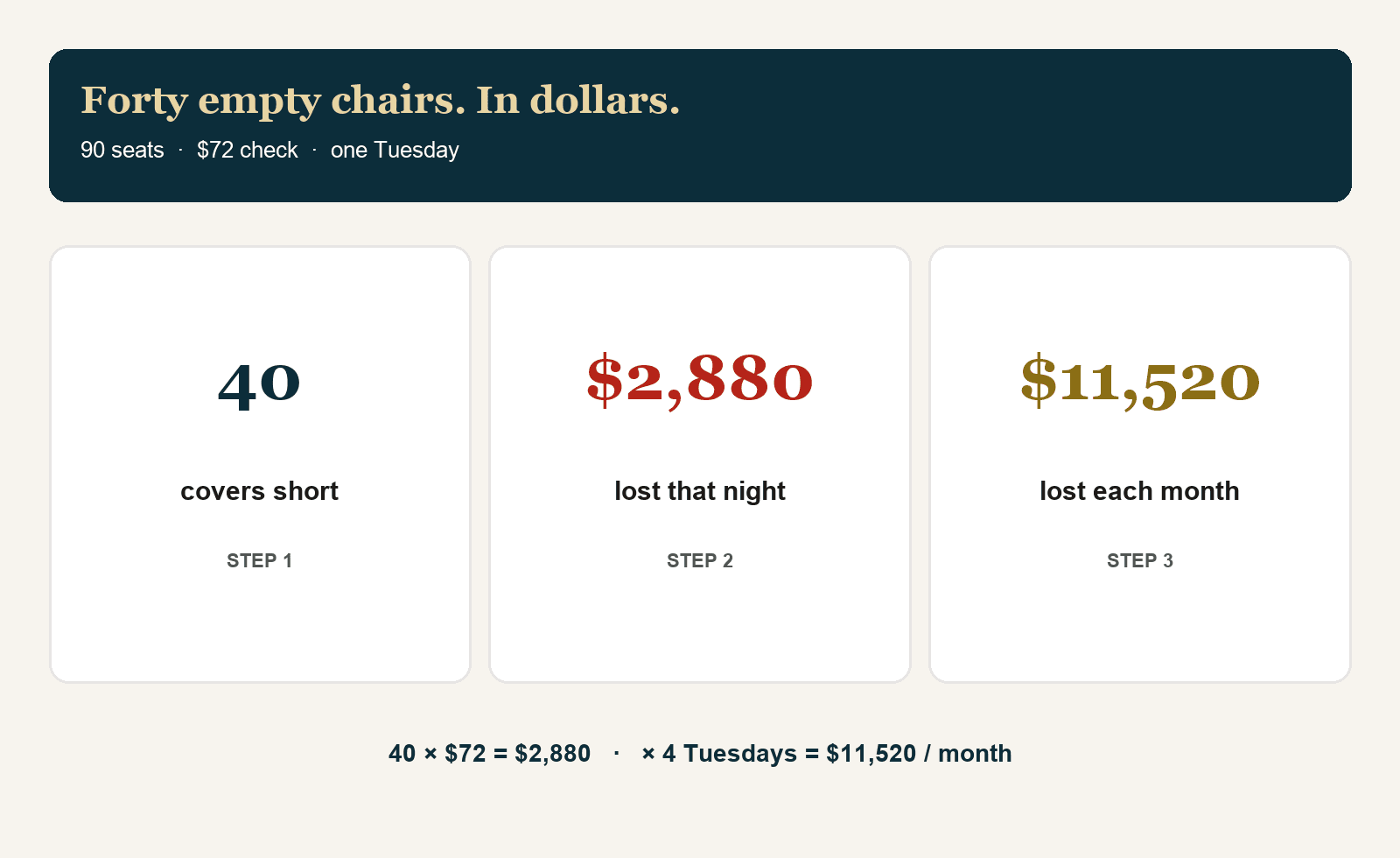
Plug your own numbers. 60 seats and a $54 check still hurts. 110 seats and $95 hurts more. The shape does not change: the night you cannot fill is the night you already spent.
A year of Tuesdays like that is north of $130,000 in sales you never rang. Some of that would have been cost of goods. A lot of it would have been the contribution that pays rent, insurance, and the people you cannot send home because Saturday still has to work.
Friday was decided without you
The empty Tuesday is the symptom. The lost Friday is often the cause.
Strangers do not wander in. A visitor to Miami Beach, a couple in the Seaport, a hotel guest in Midtown — they pick one seafood dinner. One. Then they pick from a short stack they already heard:
The concierge list that still has last year’s five names. The “best seafood in town” roundup a friend texted. The place with the line they saw on TikTok. The dining room the hotel already books because the GM knows the host.
Google Maps is one tab. It is not the decision.
They are not comparing your room to every seafood restaurant in the city. They are comparing three names they already have. You are either on that list, or you are Tuesday.
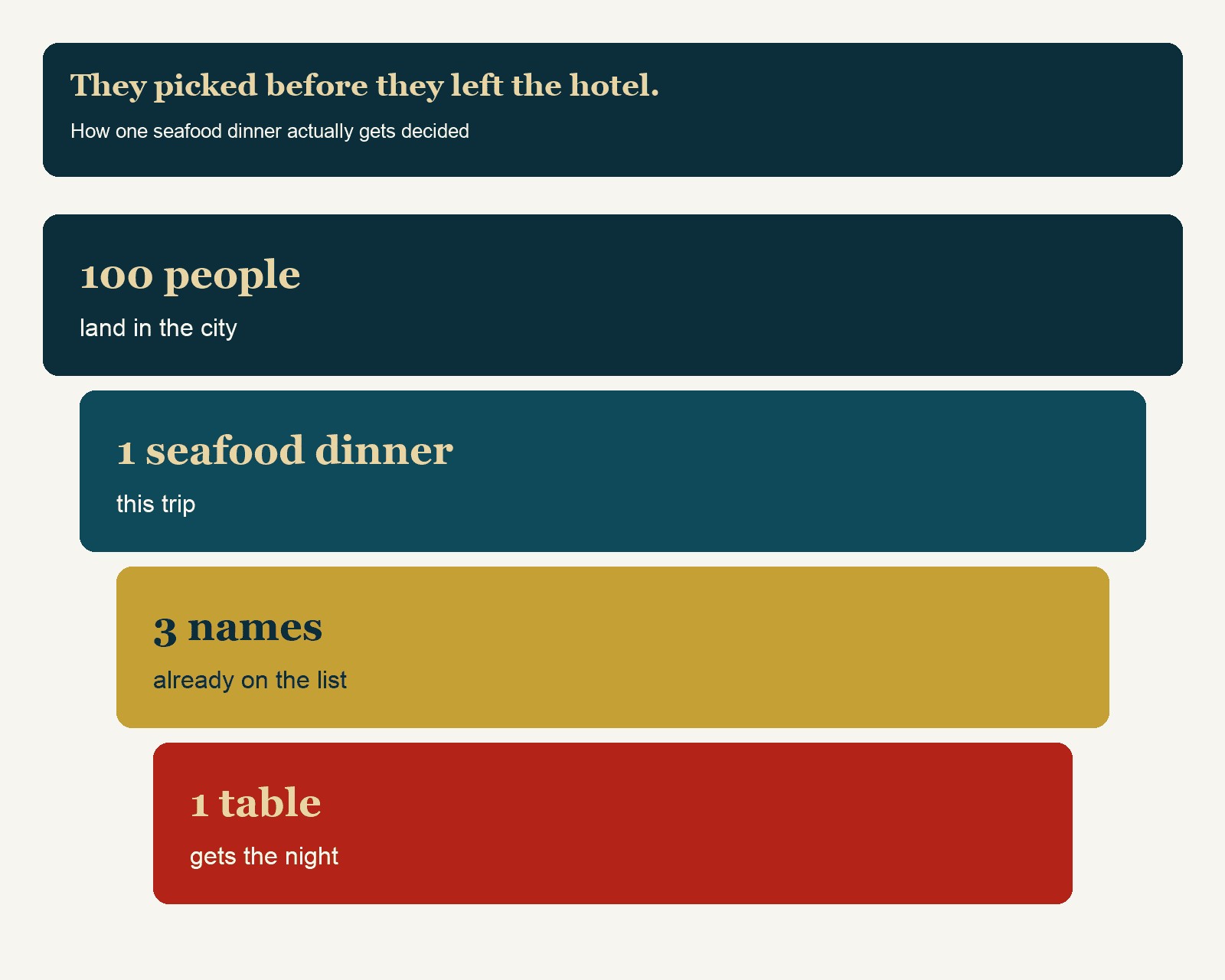
The room that wins is not always better at fish. It is the one that already got named before the guest left the hotel. If you are not one of those three names, Saturday’s line belongs to someone else — and you get Tuesday’s empty tables plus a walk-in you have to cook through or throw.
Demand did not die. The NRA found 61% of adults still call dining out essential. Spending got selective. That is worse. Selective guests do not “try a new place.” They spend the one fish night on a name they already trust.
Sit with this on a Tuesday
Count the empty tables. Count the fish you already bought. Then ask the only question that matters:
When someone in this city picks one seafood dinner tonight, whose names are on the list — and how did they get there before you did?
No checklist. No agency pitch. Just the gap between a good room and a full one. Saturday will keep looking fine. Tuesday will keep eating the week.
Sources: National Restaurant Association, 2026 State of the Restaurant Industry; NRA analysis of BLS wholesale food and restaurant labor (food and labor ~33¢ of each sales dollar; hourly earnings +41% since Feb 2020); SeafoodSource on Datassential menu pricing, Q2 2026. Cover figures in the week and dollar charts are a labeled worked example for a 90-seat independent seafood room, not a survey. Analysis published by FishRestaurants.com editorial.