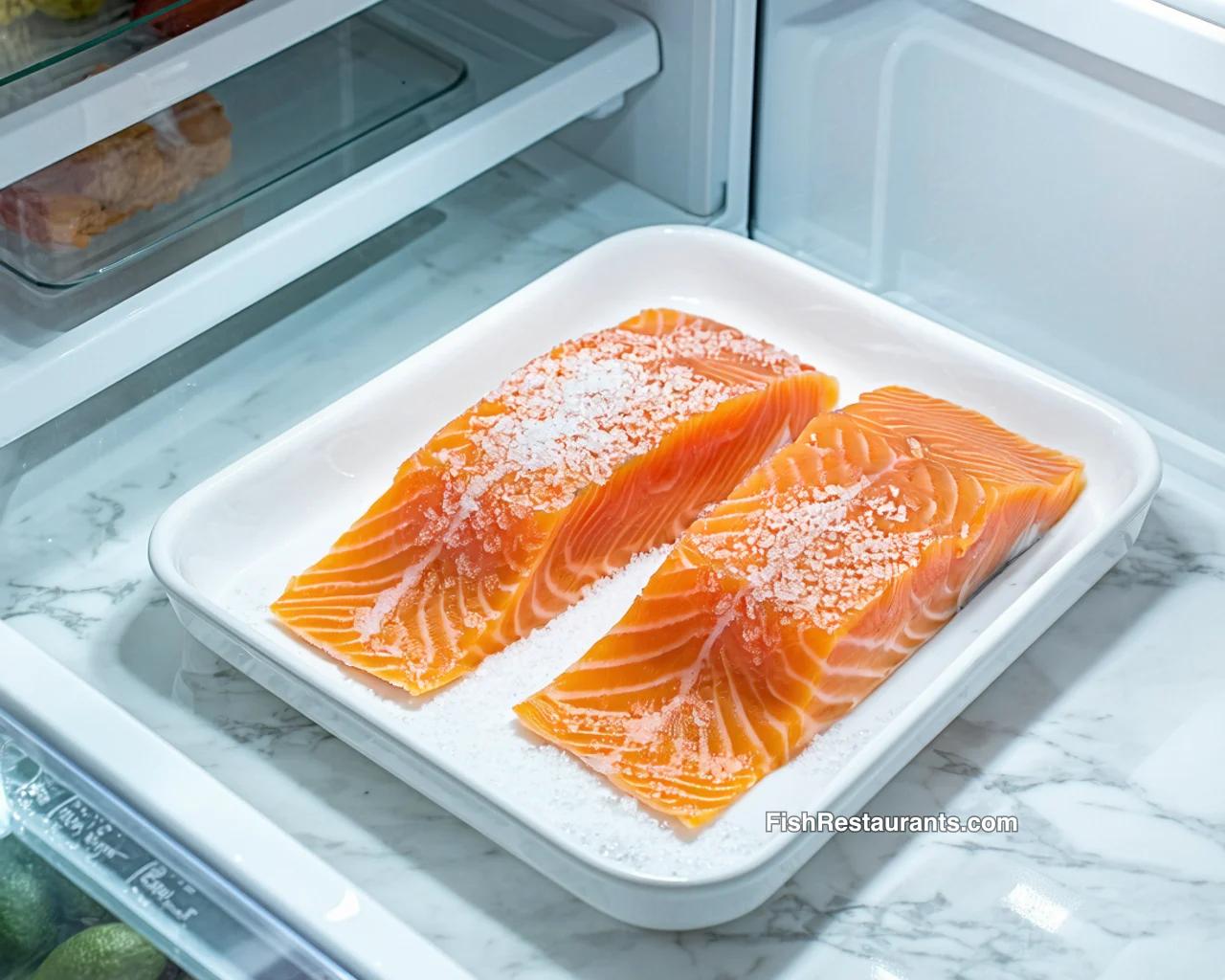
Thaw frozen fish in the refrigerator or in cold water inside a sealed bag—never on the kitchen counter. The goal is even thawing without letting the outer layers sit in the danger zone while the center is still ice.
m. and need dinner at 7? Cold-water thawing is your tool.
Planning tomorrow’s meal?The fridge wins on texture. Either way, keep fish cold until it hits the pan.
For species-specific storage notes, see the salmon hub and Atlantic cod hub—this page stays focused on thaw mechanics.
Fridge thawing (best texture)
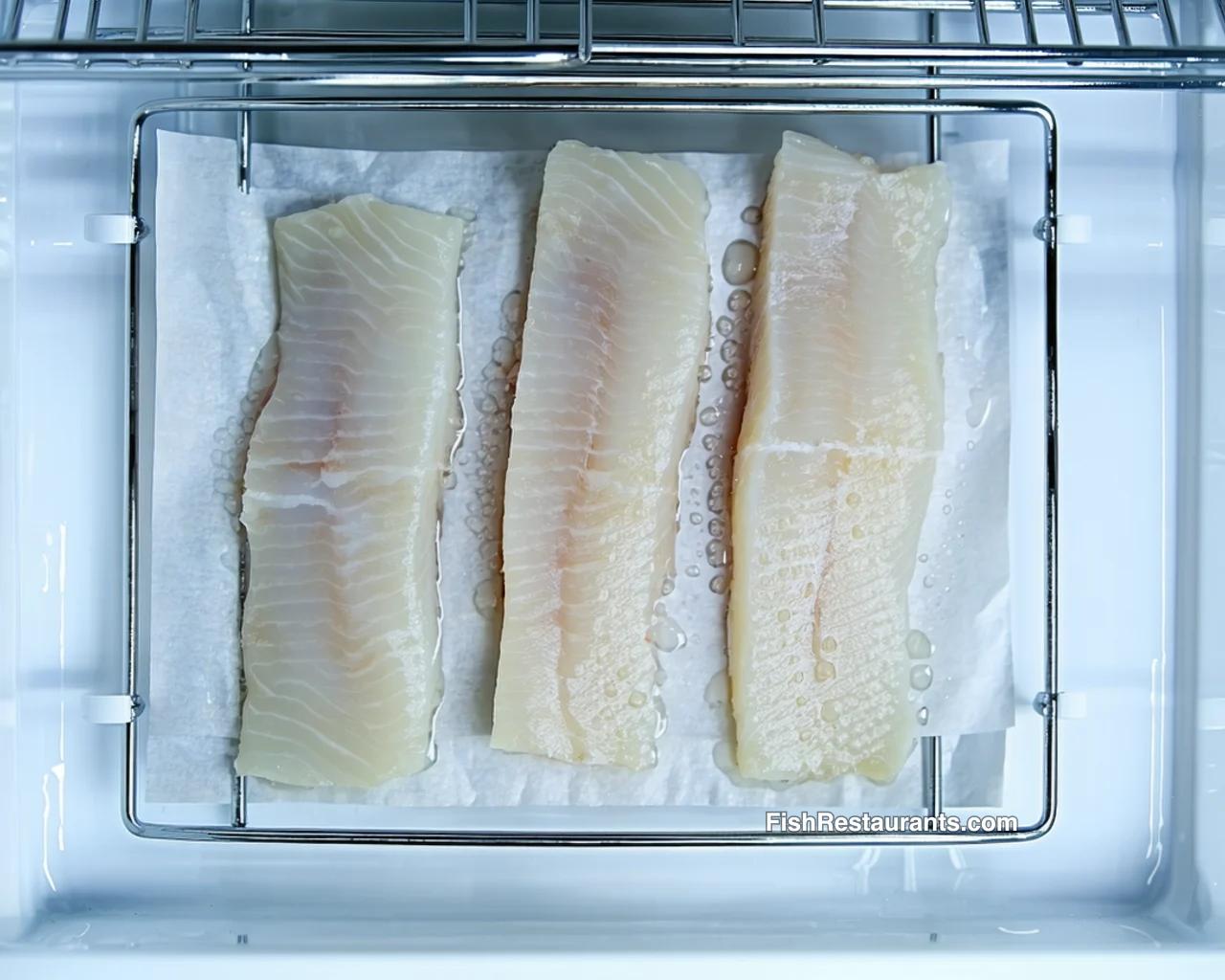
Move vacuum-packed or tray-sealed fish to a rimmed plate on the bottom shelf. Estimate 12–24 hours per inch of thickness for block fillets; thin sole may be ready overnight, while a thick cod loin can take a full day.
| Situation | Fridge time (guide) | Notes |
|---|---|---|
| Thin fillets under 2 cm | 8–12 hours | Good for next-day lunch |
| Standard 2–3 cm fillets | 12–18 hours | Most home portions |
| Thick steaks or sides | 18–30 hours | Rotate bag if juices pool |
Keep the original packaging if it is intact; otherwise slide fish into a zip bag with air pressed out so it does not pick up fridge odors.
Cold-water thaw (under 90 minutes)
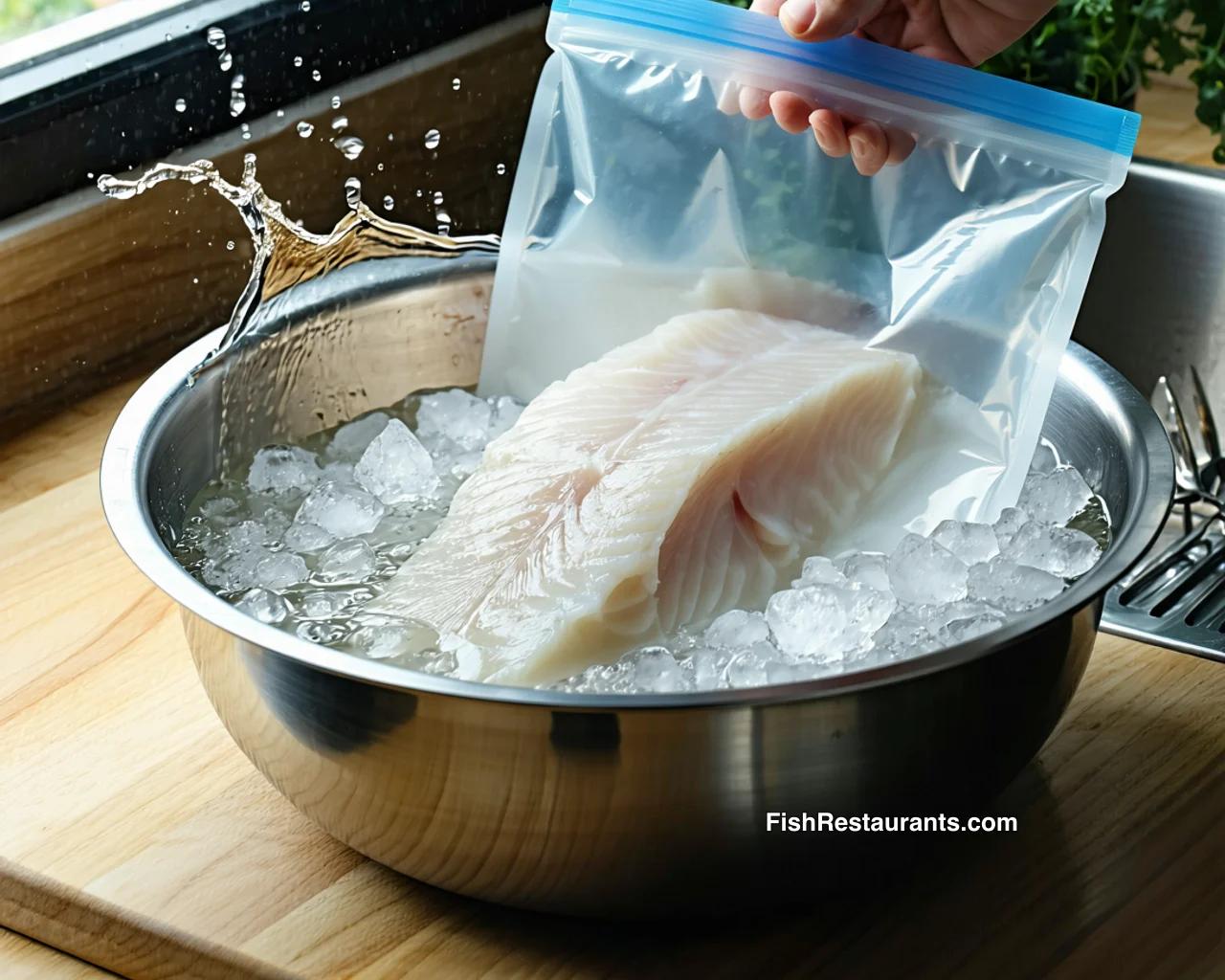
Seal fish in a leak-proof bag. Submerge in a bowl of cold tap water, changing the water every 30 minutes. A one-inch salmon portion often turns flexible in 45–70 minutes; thicker cuts need the full hour-plus.
Weigh the bag down so every surface contacts water. If the counter is warm, nest the bowl inside a larger bowl of ice water—still faster than the fridge, but safer than bare countertop thawing.
What never works
Microwave “defrost” cooks edges while the middle stays icy—fine in a pinch for stew fish, poor for searing. Room-temperature thawing is worse: bacteria multiply on the soft outside long before the core loosens.
Running hot tap water over fillets washes flavor away and heats the surface unevenly. Discard any package that swelled in the freezer or smells sharp when you open it; thawing will not fix spoiled fish.
Cook or chill immediately after quick thaw
Fish thawed in water should be cooked right away. If plans change, pat dry, return to the refrigerator, and cook within a few hours—do not refreeze raw portions unless they never warmed above 4 °C (about 39 °F).
Pat surfaces dry before high-heat methods. Moist skin steams instead of browning, which is why your pan looked pale last time.
FAQ
Can I cook fish straight from frozen?
Yes for many portions—especially oven-baked salmon. Thawing is about even cooking and seasoning cling; it is not always mandatory.
How long is thawed fish good in the fridge?
Use within 24–48 hours after fridge thaw, sooner if the fish was previously frozen a long time.
Does thawing in milk help?
Milk soaks are for mellowing flavor in strong white fish, not for safe thawing. Thaw by cold methods first.
Should I remove packaging before thawing?
Leave vacuum seal intact for fridge thaw; open only after thaw if you need to rinse. For cold water, use a second bag so water never touches the fish.
Where do I learn about buying better frozen fillets?
Start with the salmon species guide for freeze quality cues and label terms—then apply the same cold-chain habits to cod and other fillets you keep on hand.
Thawing and food safety numbers
S. FDA food code treats thawing as part of the cold chain: fish should spend minimal time between 5 °C and 60 °C (41–140 °F). Fridge thawing keeps fish entirely below that window.
Cold-water thawing is acceptable because water stays cool if you refresh it; the fish surface never idles at room temperature.
Restaurant kitchens often label thawing racks with pull times. Home cooks can copy the idea—write the time you moved fish from freezer to fridge on a sticky note.
If life interrupts and fish sits in water past 90 minutes, cook it immediately rather than parking it on a towel.
Texture differences you will taste
Slow fridge thaw preserves cell walls better than rushed methods. Fillets seared after fridge thaw brown more evenly and shed less liquid in the pan.
Cold-water-thawed fish is still excellent for tacos, curries, and oven bakes where surface moisture matters less.
Block-frozen whole sides need an extra half-day in the refrigerator compared with individually frozen portions. If the center feels icy after outer flesh flexes, give it more fridge time instead of forcing it in warm water.
Equipment that helps
A wire rack over a sheet pan elevates bagged fillets so meltwater drips away instead of pooling. For water thawing, a large pasta pot with a colander insert keeps the bag submerged without floating.
A thin probe thermometer is useful after thaw—if the thickest part is still below 2 °C internally, you have margin before cooking.
Frozen fish straight from a home freezer is often colder than supermarket display cases. Budget an extra 15 minutes of water thaw time for rock-hard portions pulled from the back of a deep freezer.