Jet lag wakes you at 5:30 a.m. By noon you have already eaten twice. At 6:00 p.m. you still want serious fish — but Tsukiji Outer Market stalls are closing and your hotel concierge says “book omakase three weeks out.” Both facts can be true. [Tokyo](/fish-restaurants/japan/tokyo) sushi timing is a schedule problem before it is a restaurant problem.
This guide maps morning market eating vs evening counter sushi — what closes when, why Toyosu still matters even if you never visit, and how to land a 7:30 p.m. omakase without wasting a travel day. City context: Tokyo fish restaurants guide, Tokyo sushi and yakizakana, where to buy fresh fish Tokyo. Listings: fish restaurants in Tokyo.
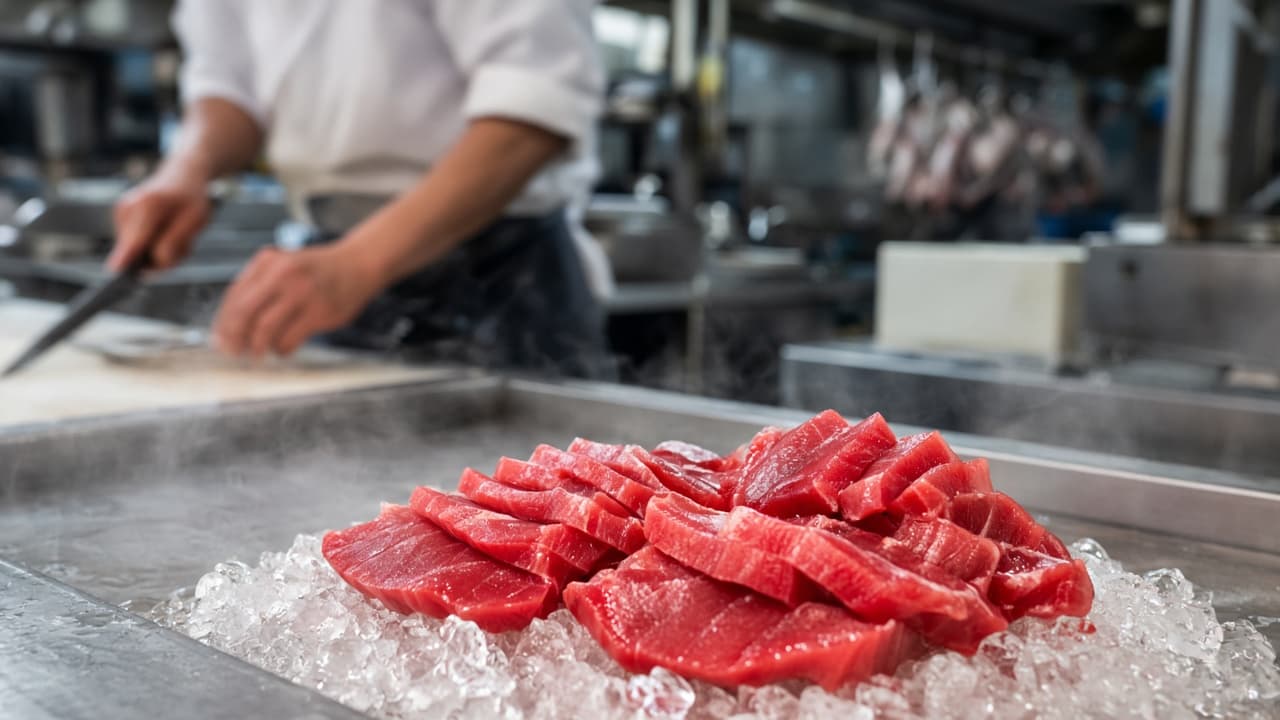
Tsukiji Outer Market vs evening sushi — different meals
Tsukiji Outer Market (Jogai) is a morning and lunch ecosystem: tamago blocks, grilled scallops on sticks, kaisen-don counters, knife shops. Most food stalls wind down early afternoon; many are closed by 3:00–4:00 p.m. You do not “do Tsukiji” for dinner in the same way you do Ginza omakase.
Evening sushi lives in counters across Ginza, Yurakucho, Shinjuku, Ebisu — rooms that bought through Toyosu supply chains hours earlier. The tuna you eat at 8:00 p.m. was not filleted in front of you at 8:00 a.m.; it was stored, aged, and paced by a chef who knows which fish peaks at night.
| Time | Eat | Skip |
|---|---|---|
| 6:00–9:00 a.m. | Kaisen-don, grilled market bites | Omakase (most closed) |
| 11:00 a.m.–1:30 p.m. | Market bowls, yakizakana sets | Long Ginza counters without reservation |
| 5:00–7:00 p.m. | Early counter slots, izakaya fish | Outer market food stalls |
| 7:30–9:30 p.m. | Omakase, polished nigiri | Conveyor belts if you wanted craft |
| After 10:00 p.m. | Late izakaya, some Shinjuku rooms | Last-minute “best sushi” walks in Ginza |
Morning: outer market without the auction myth
Toyosu hosts the wholesale tuna auction — general tourists cannot shop the wholesale floors like a supermarket. What you can do:
- Morning: Outer Tsukiji lanes for donburi and grilled bites
- Reference: Toyosu shapes citywide quality even when you eat in Shibuya at night
Read where to buy fresh fish in Tokyo before you plan a 5:00 a.m. taxi — many first-time visitors confuse auction viewing with restaurant breakfast.
Order script (market morning): 1. One kaisen-don or otoro/toro set — do not chase every stall 2. Tamago or grilled hotate (scallops) if the line moves fast 3. Stop before you are full — you will eat again at lunch
Species: tuna guide, scallops guide.
Afternoon gap: the mistake travellers make
The 2:00–5:00 p.m. dead zone catches people who ate market bowls at 11:00 and want “just one more” sushi sit-down at 3:30. Strong counter rooms are often closed between lunch and dinner; remaining options skew conveyor or hotel lobby.
Fix: treat afternoon as walk, nap, or onsen — not a failed omakase attempt. Book 6:00 or 6:30 p.m. first seating if you want an early dinner and a second small bar later.
Evening omakase: pacing and budget bands
At a serious counter, let the chef pace nigiri. Ask omakase budget bands before you sit — “standard” vs “premium” vs seasonal upgrade. Seasonal white fish often beats Instagram tuna alone; see sea bream / dorade when it appears on the board.
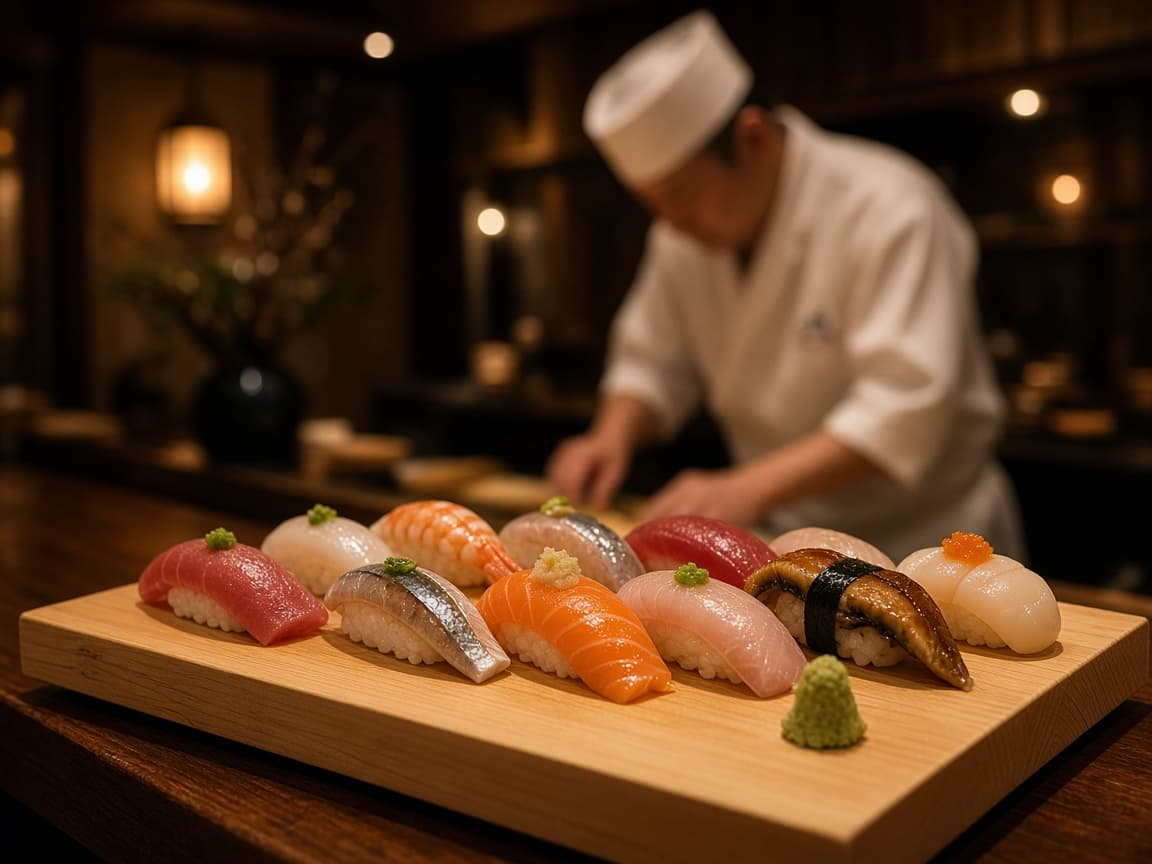
Rated evening starting points (confirm hours on each profile):
- TokyoSushiBowl (4.9, 1.6k+ reviews) — high guest scores; verify whether your visit is counter omakase or bowl service before you go
- Sushi|Yurakucho Kakida|Tokyo (4.6, 5.1k+ reviews) — Yurakucho office-district energy; strong weekday evening option near station cores
- Matsue Ebisu Head Store (4.8, 1.7k+ reviews) — Ebisu neighbourhood room worth booking ahead
For mid-range fish markets turned dining halls, Yonpachi Gyojo Nishi-Shinjuku (4.7, 1.6k+ reviews) and Yonpachi Gyojo Shinagawa (4.6, 2.3k+ reviews) suit groups who want variety without one long omakase — different format, same evening window.
One-day timing template (jet-lag friendly)
Day 1 — market + evening counter
- 7:00 a.m. — Outer Tsukiji kaisen-don (one stall, move on)
- 12:30 p.m. — Yakizakana set lunch in Ginza or office district — lighter than another don
- 3:00–6:00 p.m. — Rest; no forced sushi
- 7:00 p.m. — Booked omakase or Yurakucho Kakida
Day 2 — skip market, double down on dinner craft
- Sleep in
- 6:30 p.m. — Matsue Ebisu or Shinjuku yonpachi with friends
- Late: standing izakaya fish if still hungry — not another full omakase
Reservation reality (2026)
Many strong counters require advance booking — sometimes through hotel concierge, sometimes direct. Rules differ on cancellation, late arrival, and solo vs pair seating. Check each Tokyo listing for phone links and hours.
Walk-in windows that sometimes work: - Weekday 5:30–6:00 p.m. first seating at neighbourhood counters - Single diner at bar in Yurakucho office district - Not Saturday 8:00 p.m. Ginza without a name
What to avoid
- Conveyor belt when you flew in for craft sushi — fine for kids, wrong mood for omakase night
- No budget clarity before the chef opens with uni and otoro
- Chasing only tuna while seasonal kasugo or kohada is the better piece that week
- Outer market at 5:00 p.m. — stalls closed, photos only
- Skipping yakizakana lunch — one of Tokyo’s best value fish formats; see the yakizakana guide
Ginza vs Tsukiji-adjacent vs Ebisu (evening only)
Ginza — polished counters, highest reservation friction, best when you booked before the flight.
Yurakucho / Shinbashi — salaryman sushi heritage, weekday evenings punch above tourist belts.
Ebisu / Shinjuku — neighbourhood density; use ratings on our directory, not billboard photos.
You can morning Tsukiji + evening Ginza on one day if you respect the afternoon gap — not if you try to eat five fish meals before sunset.
FAQ
Can you eat sushi at Tsukiji in the evening?
Outer market food stalls — mostly no; they close afternoon. Evening sushi happens at restaurants citywide, many supplied via Toyosu chains. Plan market for breakfast/lunch, omakase for dinner.
Tsukiji or Toyosu for tourists?
Toyosu for auction viewing (rules apply); Tsukiji Outer for street food and donburi. For dinner, use the Tokyo directory — neither market is an evening sit-down zone.
What time should I book omakase in Tokyo?
7:00–8:00 p.m. is standard peak. 6:00 p.m. first seating helps jet lag. Confirm last order time — many counters stop 90 minutes before listed closing.
Is morning market sushi better than evening omakase?
Different goals. Morning = speed, market energy, donburi. Evening omakase = chef pacing, aged fish, higher cost. Do both on separate meals, not one continuous binge.
How do I find evening sushi near Tsukiji?
Walk Ginza (10–15 minutes) or ride to Yurakucho. Start with Sushi|Yurakucho Kakida|Tokyo and filter Tokyo listings by rating and hours.