
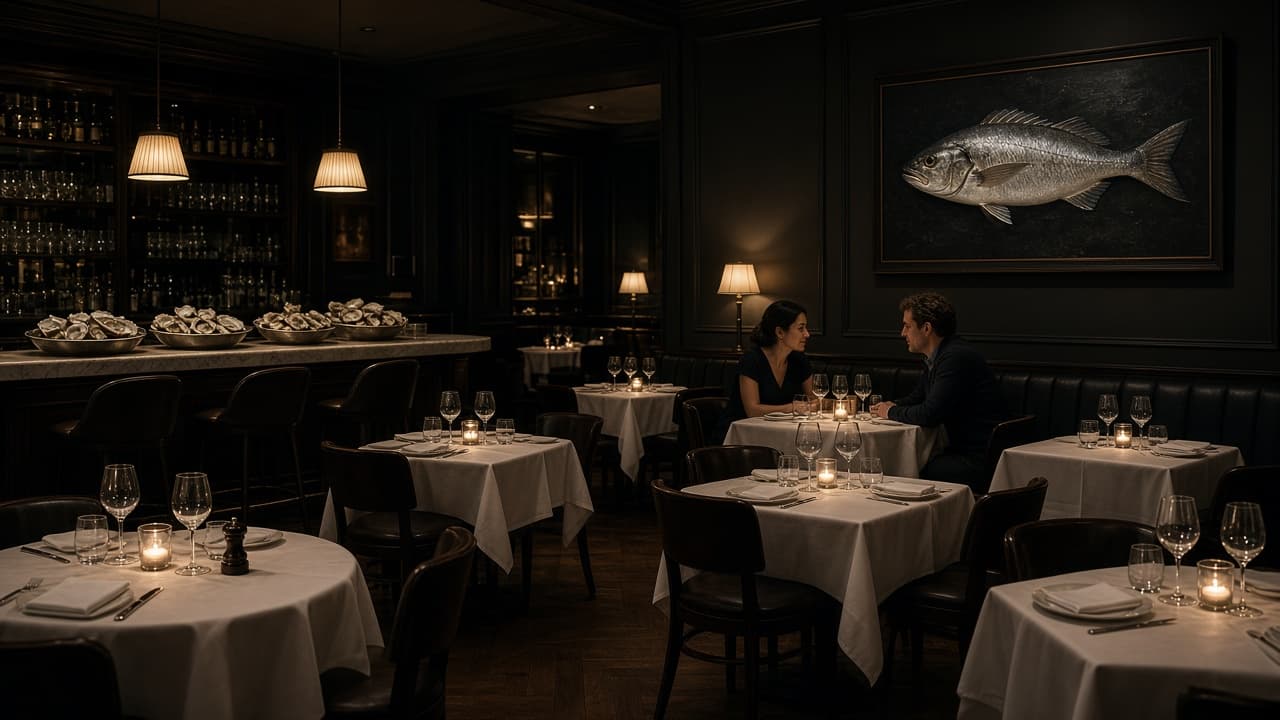
Rain on the glass. 7:22 p.m. Tuesday in Soho. Dover sole still in the fridge from the weekend order. Two covers at the bar nursing a half bottle. The host has already sent one server home. Outside, the theatre crowd is walking past to somewhere they already booked last week.
Your TripAdvisor score can sit at 4.6. Your Google photos can be sharper than the room next door. Guests still pick one seafood night in London — and that night is often decided before they leave the hotel, the office, or the Tube map.
This is not another “how to rank” checklist. It is the week as London fish rooms actually live it: lumpy covers, perishable protein, and a shortlist you were never on.
Saturday is not proof the model works
Mayfair on a Saturday at 8:30 looks like success. Covent Garden with a queue looks like demand. Both can be true — and still leave Monday to Wednesday carrying a kitchen that already bought fish as if the weekend would stretch.
Take a 90-seat independent seafood restaurant as a worked example. Operators in Soho, Marylebone, and Borough describe the same shape, even when the menu reads differently:
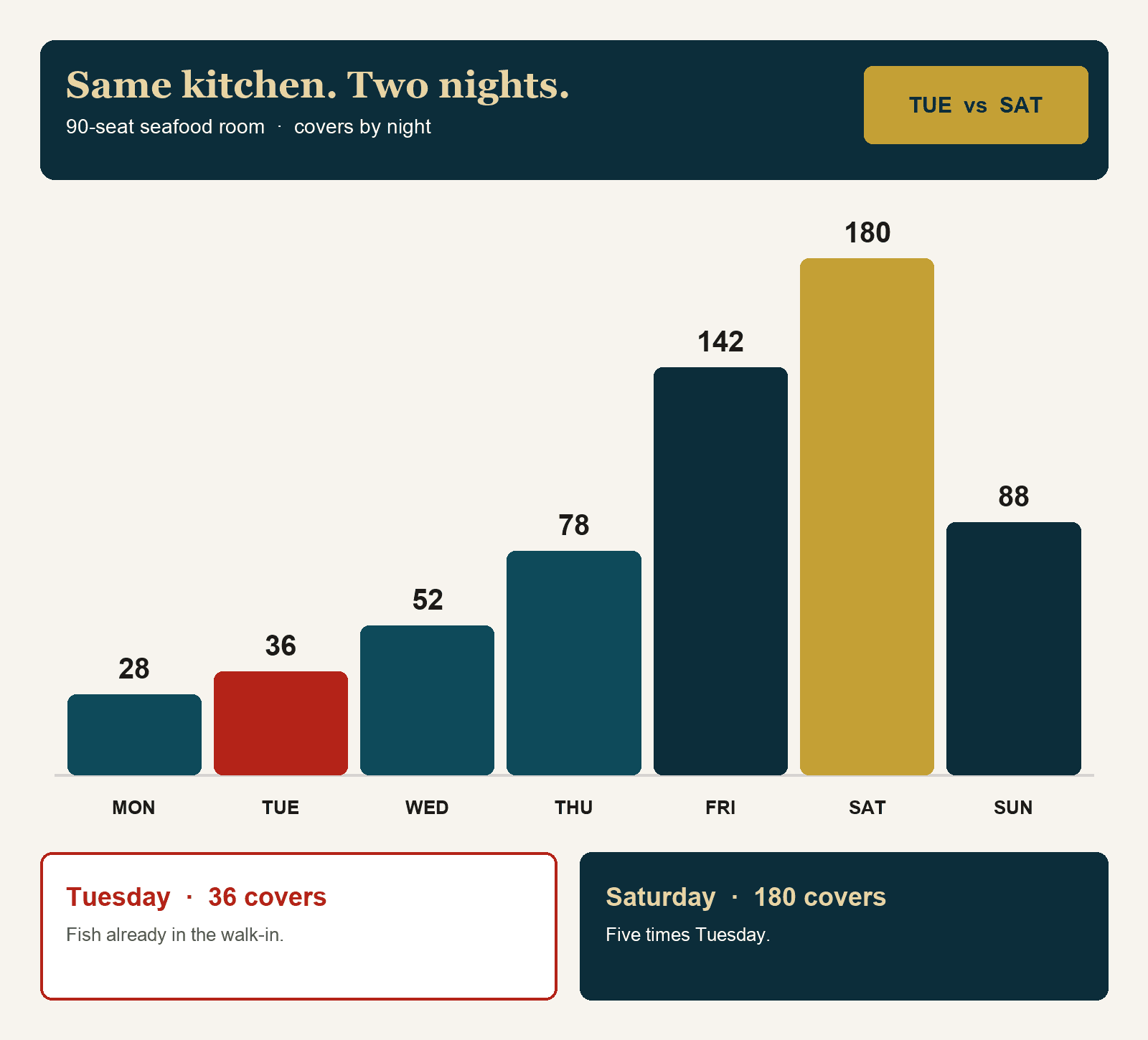
Saturday at 180 covers is five times Tuesday. The lease in pounds does not care. Neither does the delivery from Billingsgate, the day-boat invoice, or the oysters that had to be opened or written off.
A steakhouse can hold product. You cannot. Whole fish, native oysters, crab — Tuesday empty is not a soft night. It is money you already spent, sitting in a walk-in while the lights stay on for a room that did not fill.
Hotels, pre-theatre, and the Tube decide Friday before you do
The empty Tuesday is the symptom. The lost Friday is often the cause — and in London the cause has a local shape.
A visitor staying near Covent Garden does not browse every fish restaurant from Shoreditch to Chelsea. They ask the concierge. A couple off the Elizabeth line opens a thread a friend forwarded. A City table after a late meeting picks the room the hotel already books because the GM knows the maître d’. Pre-theatre in the West End is worse: the booking was made with the tickets, days earlier, from a short stack of names that already feel “safe.”
You are either on that stack, or you inherit the walk-past.
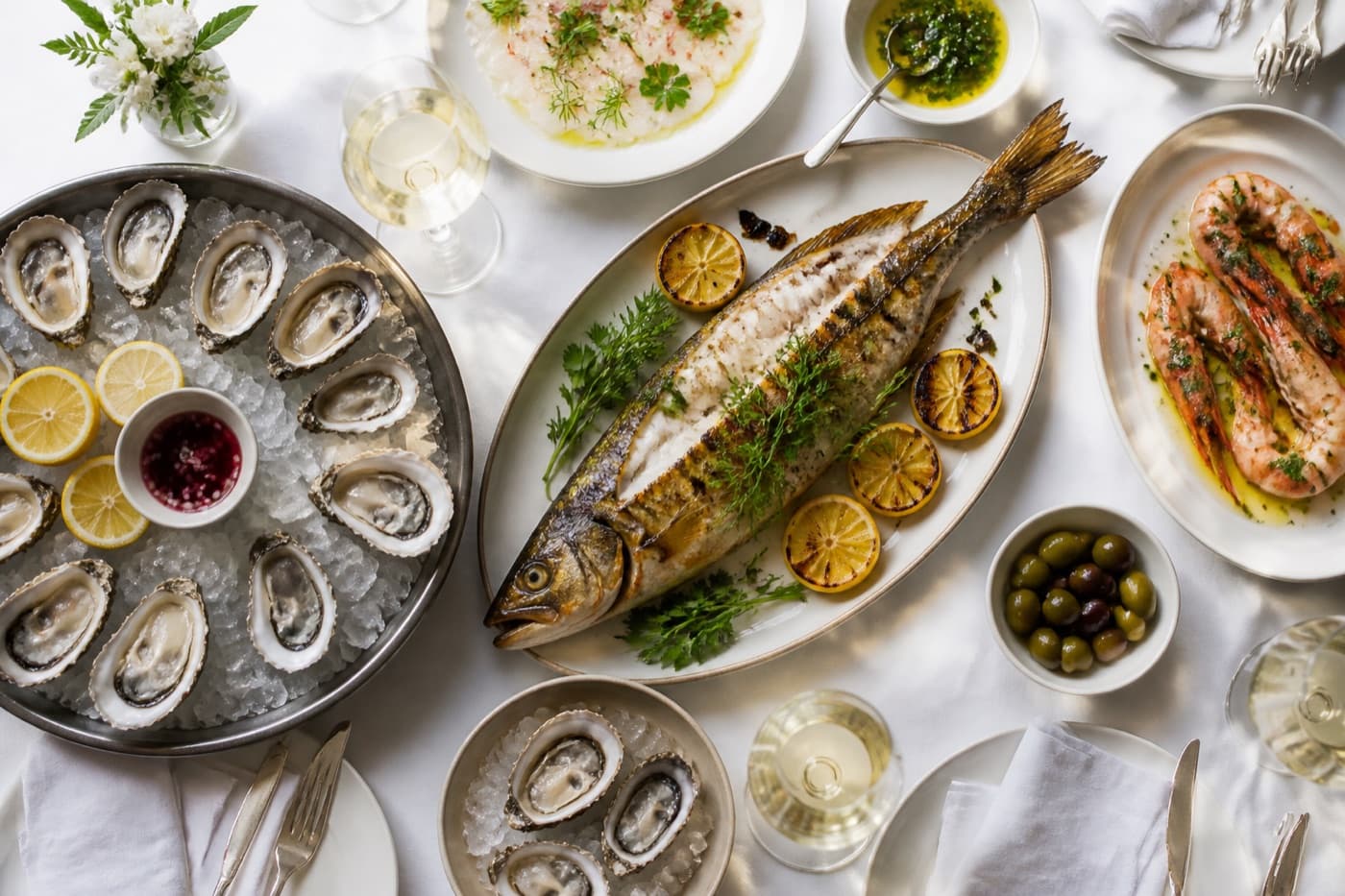
Billingsgate does not care that the hotel list is sticky. Fish still arrives on the schedule you ordered for a weekend you hoped would leak into Wednesday. When it does not, you cook through it, discount it, or throw it — while the theatre crowd fills someone else’s room at 7:15.
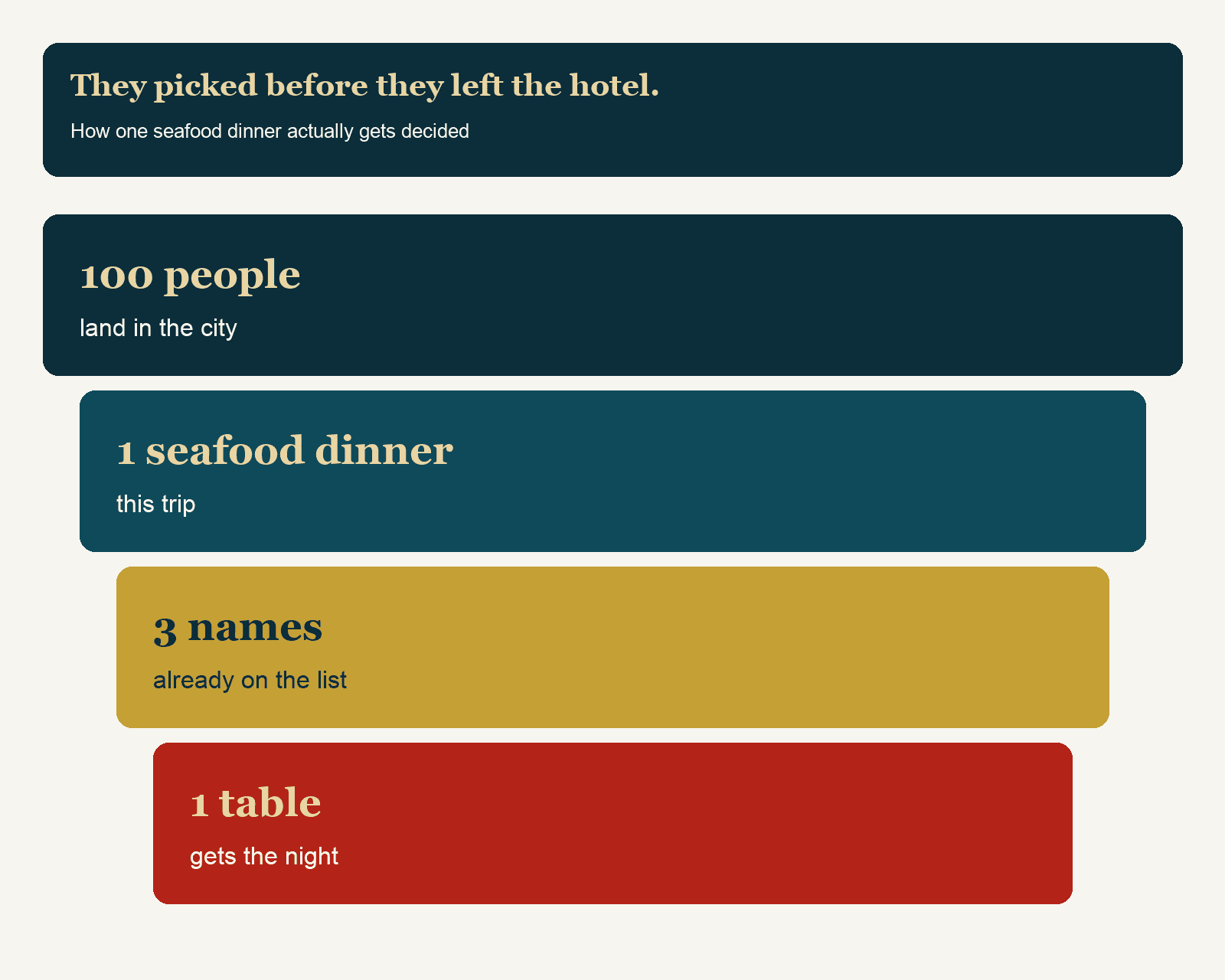
The room that wins is not always better at fish. It is the one that got named in the lobby, on the group chat, or on the pre-theatre shortlist. Miss that, and Saturday’s line belongs to someone else.
The UK cost stack makes an empty midweek mean more
London’s traffic story already shifted. UKHospitality’s H1 2025 read-out, drawing on Meaningful Vision data, noted that London footfall declined for the first time since the post-Covid recovery — while like-for-like guest numbers nationally stayed under pressure even where total traffic looked steadier. More openings do not automatically mean more guests for your room.
Then the fixed costs. April’s National Living Wage and employer National Insurance changes hit payroll just as operators were already juggling energy and food. UKHospitality flagged hospitality rateable-value rises after the Budget — restaurants and cafés among them — so business rates climb while covers do not. NIQ / Zonal’s 2026 business confidence work found about half of hospitality leaders saying profitability had dropped, or that the business was running at a loss or unviable.
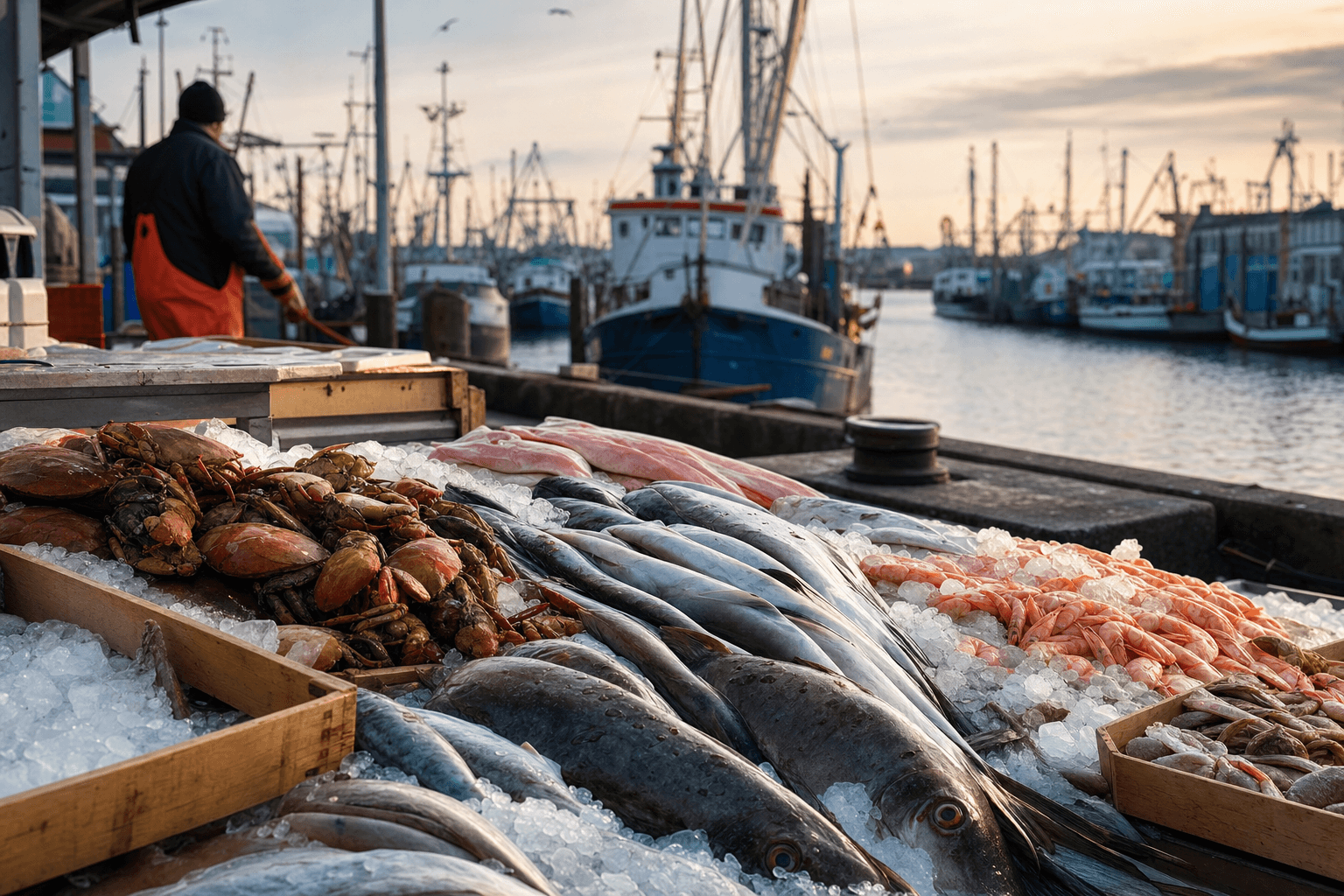
For a seafood room the bind is sharper than for a pub with a freezer. You buy perishable protein on a London wholesale clock. Guests already treat Dover sole and a proper oyster plate as a splurge. Raise the menu to chase the invoice and midweek gets quieter. Hold the price and the margin dies on the nights you do fill.
That is not a branding problem. That is a revenue-shape problem: selective demand, rising wage and rates bills, fish that dies on a Tuesday.
Forty empty chairs, in pounds
A healthy midweek for a 90-seat London seafood room is not Saturday. It is roughly 70 to 80 covers — a night you can roster without looking foolish. If you are 40 covers short of that, and your average check is £68:
40 × £68 = £2,720 in one Tuesday.
Four Tuesdays: £10,880 in lost sales for the month. That is before the fish you already bought, the Saturday overtime you will burn trying to claw it back, and the waste you write off before Thursday’s delivery.
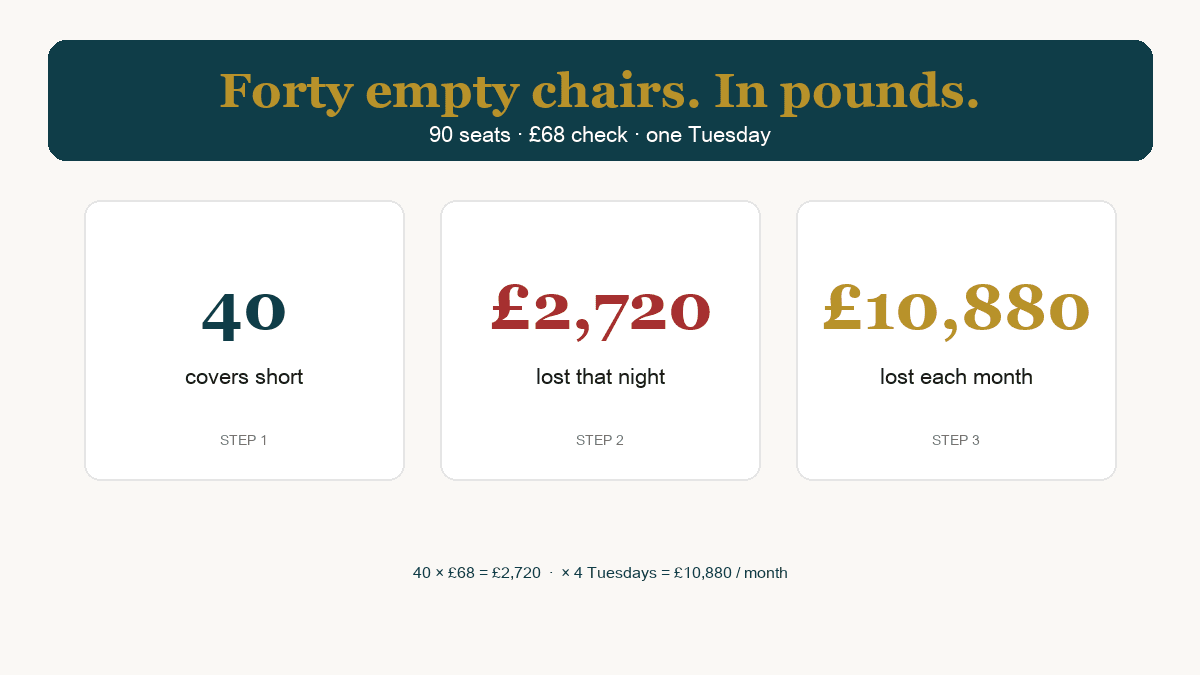
Plug your own room: 55 seats and a £52 check still hurts. 120 seats and £95 hurts more. The night you cannot fill is the night you already spent.
A year of Tuesdays like that is well over £130,000 in sales you never rang. Part of that would have been cost of goods. A large part would have been contribution toward rent, business rates, insurance, and the staff you cannot send home because Saturday still has to work.
Count the empty tables on a Tuesday
Walk the floor. Count the fish you already paid for. Then ask the only question that matters for a London seafood room:
When someone in this city picks one seafood dinner tonight — hotel guest, theatre night, City dinner — whose names are already on the list, and how did they get there before you did?
No agency pitch. No ranking tips. Just the gap between a good room and a full one. Saturday will keep looking fine. Tuesday will keep eating the week.
Browse fish restaurants in London if you want to see how the city’s seafood rooms show up to diners searching tonight.
Sources: UKHospitality / Meaningful Vision, H1 2025 hospitality trends (London footfall, wage and NI cost pressure); UKHospitality Budget 2025 response (rateable-value pressure on hospitality); NIQ / Zonal hospitality business confidence, 2026. Cover and sterling figures are a labeled worked example for a 90-seat independent seafood room, not a survey. Analysis published by FishRestaurants.com editorial · hello@fishrestaurants.com.