
By FishRestaurants.com Editorial. Menus and techniques on this page were reviewed for editorial accuracy. Editorial policy · Updated 2026-11-26
What to Order at a Cajun or Creole Seafood Restaurant
*Images on this page are illustrative. This is a dining-order guide, not a recipe.*
!Illustration: A bowl of seafood gumbo beside rice (illustrative)
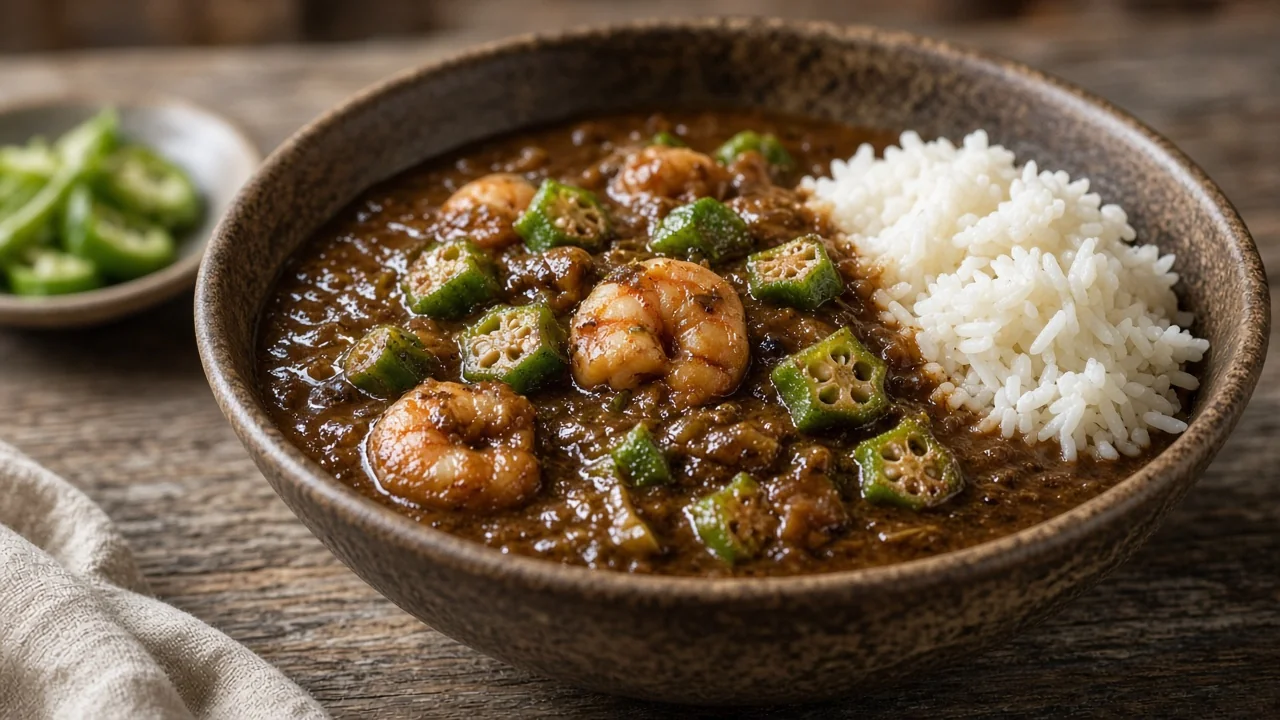
A Cajun or Creole seafood restaurant is a plated, often sit-down room. You may still see a boil on the menu, but the centre of the card is usually gumbo, étouffée, shrimp and grits, a sauté or a blackened fish, and perhaps a stuffed redfish or a crab cake. That is a different ticket from a bag-and-bib boil house. For the boil-house order, use what to order at a seafood boil restaurant. For a worked example of a Florida room that prints gumbo, shrimp and grits, and crab cakes on its official menus, see Harry's Seafood Bar & Grille, checked 10 November 2026.
Cajun and Creole are related cooking languages, not identical ones, and restaurants use the words in their own way. Order the dish as printed rather than litigating the label.
Soups and stews first
Gumbo is a stew, often darker, built on a roux, with seafood, sausage, or both, served over or beside rice. Étouffée is usually tighter and more sauce-like, often crawfish or shrimp over rice. A bisque is smoother. You do not need all three in one meal. If you want to understand the cooking at home later, our seafood gumbo recipe is the kitchen version, not a substitute for the bowl in front of you.
A "cup" is a start; a "bowl" can be a meal. If you are also ordering a whole fish or a stuffed fillet, start smaller.
Shrimp and grits, crab cakes and fish
Shrimp and grits is a plate, not a side. It is a practical order when you want seafood without a messy shell pile. Crab cakes vary widely in how much filler they use; ask if the cake is mostly crab if that matters to you. Our shrimp and grits and crab cakes pages are for cooking at home.
Blackened, pan-seared or crab-crusted fish — redfish, snapper, grouper, whatever the board lists — is the "I want a knife and fork" course. If the official menu names a duo, such as a snapper and lobster plate, that is a richer, shared-feeling entrée. Confirm the fish of the day before you lock the table into a name that is 86'd.
!Illustration: Shrimp and grits in a shallow bowl (illustrative)
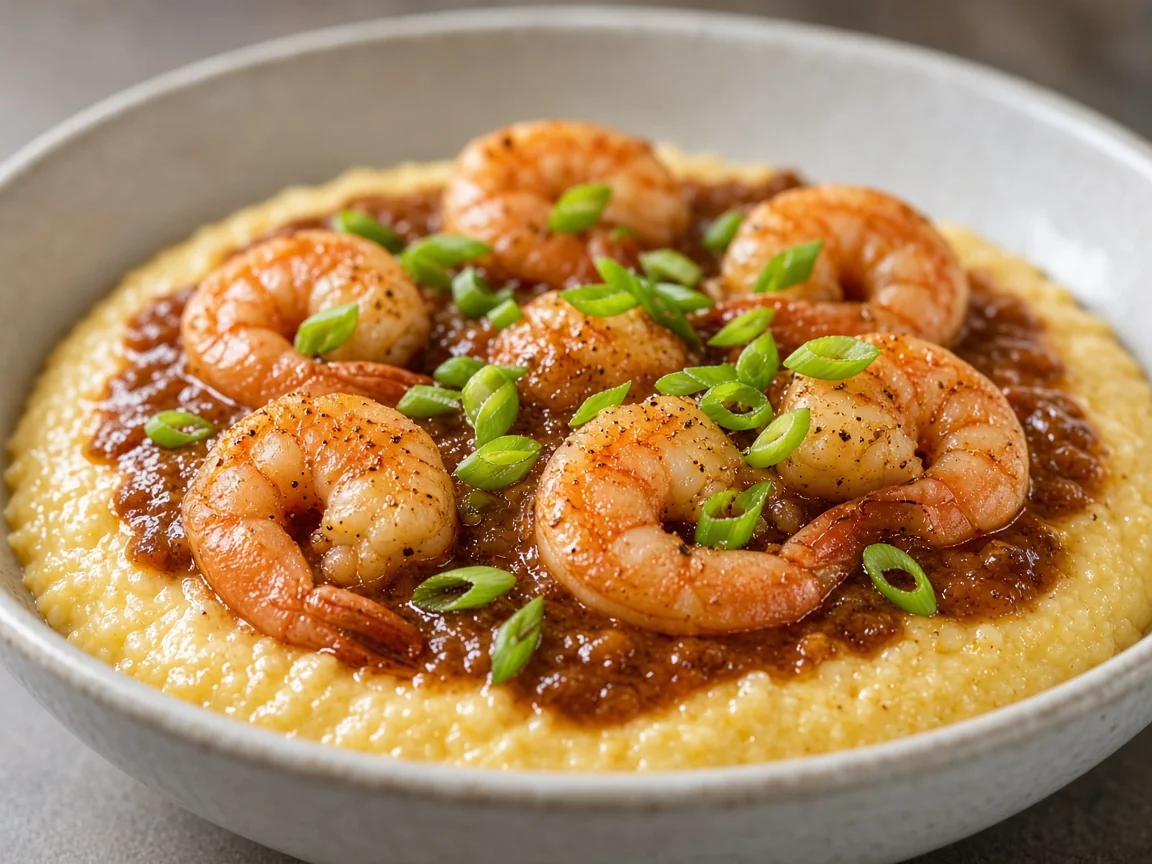
*Illustrative image: AI-generated, not taken at a restaurant.*
Boils, po boys and raw bars on the same card
Some rooms also serve a seafood boil, a po boy, or a small raw-bar list. Those are useful when the table is mixed: one diner wants a tidy plate, another wants a bag of shrimp. Do not automatically stack a full boil on top of gumbo, étouffée and a fried platter. Pick a direction. If crawfish are in season and listed whole, how to eat crawfish at a restaurant is the table method. If you are in Charleston rather than in a Louisiana-style dining room, official menus we checked for she-crab soup and shrimp still belong in where to eat seafood in Charleston; the cooking language is Lowcountry, not identical to Cajun, but the "share a few serious seafood plates" idea is the same.
!Illustration: A sit-down table with gumbo, rice and a plated fish, no faces or logos (illustrative)
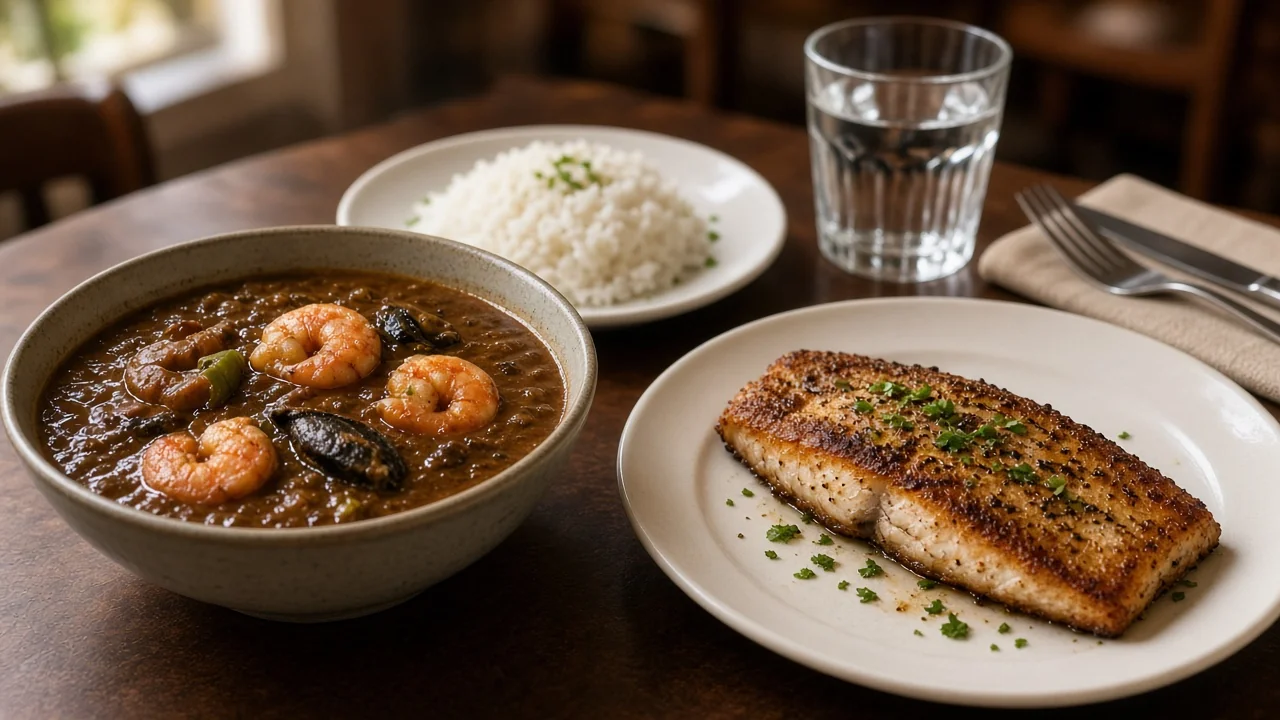
*Illustrative image: AI-generated, not taken at a restaurant.*