
By FishRestaurants.com Editorial. Menus and techniques on this page were reviewed for editorial accuracy. Editorial policy · Updated 2026-11-26
How to Eat Oysters at a Raw Bar
*Images on this page are illustrative. This is dining technique, not a shucking lesson and not medical advice.*
!Illustration: A raw-bar platter of oysters on ice with lemon and mignonette (illustrative)
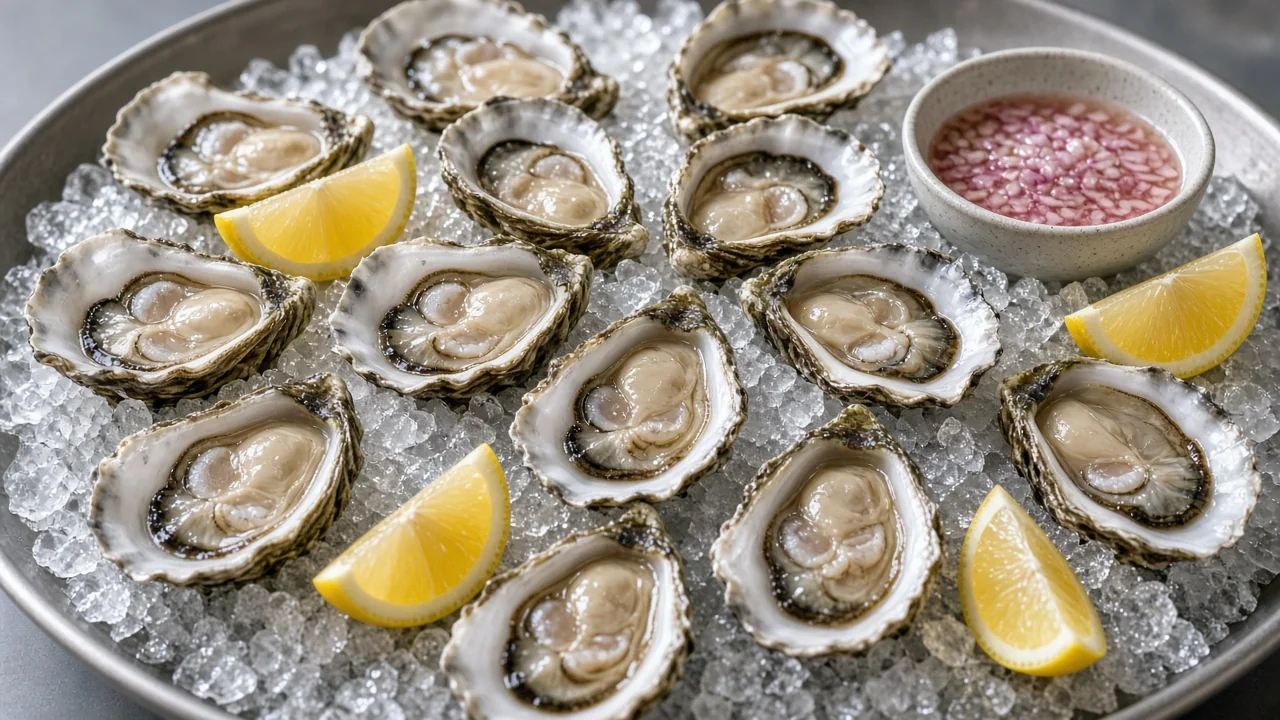
A raw bar does the shucking for you. You are choosing oysters, eating them, and deciding how much sauce you want — not opening shells with a knife. That is why this page is separate from our how to shuck oysters recipe, which is for work at home. For species and seasons in general, see the oyster guide.
Raw oysters are a perishable food. A serious raw bar keeps them cold, shucks to order or keeps a short turn on ice, and will tell you the name and source of what is in the tray. If a room cannot name what you are eating, that is a reason to order something cooked instead. We are not a health authority; if someone at the table should avoid raw shellfish, they should follow their own clinician's advice and pick a cooked dish.
How to order
Many lists are split by water: East Coast, West Coast, Gulf, sometimes further by farm or bay. East Coast oysters are often brinier and firmer; West Coast oysters are often softer and more cucumber or melon-like. Those are tendencies, not laws. If you are new, ask for a mixed half-dozen rather than a dozen of one name you have never tasted. Ask which oysters came in that morning. A chalkboard that changes is a good sign.
Sauces are usually lemon, mignonette (shallot and vinegar), cocktail sauce, and sometimes a house hot sauce. Taste one oyster with almost no sauce first so you know what the oyster itself is doing. If you want to make that sauce at home, our oyster guide is the place to start; this page stays at the raw-bar table.
!Illustration: A hand lifting an oyster shell toward a mignonette bowl, no faces (illustrative)
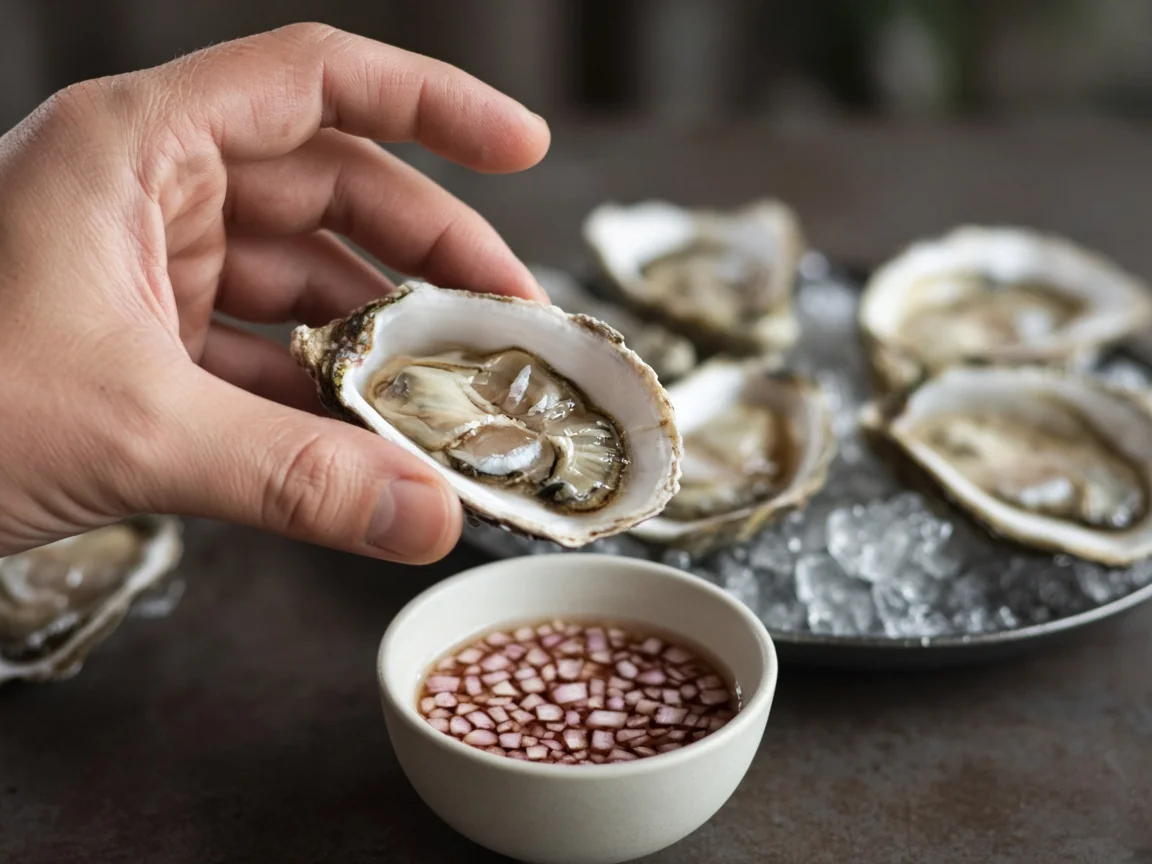
*Illustrative image: AI-generated, not taken at a restaurant.*
How to eat one
The oyster should already be loosened from the shell. If it is still attached, use the small fork to free it. Lift the shell, add a drop of lemon or mignonette if you want, and slurp the oyster and its liquor in one go, or use the fork. Either is acceptable. Chew once or twice; do not swallow it like a vitamin if you actually want to taste it. Set the empty shell face down so the server can see you are finished with that one.
Do not knock back oysters as a race. Space them, drink water or whatever else you are drinking, and stop if one tastes off. Tell the server. A good raw bar would rather replace a shell than argue.
Cooked oysters on the same menu
Many raw bars also serve roasted, charbroiled, Rockefeller-style, or fried oysters. Those are a different dish with a different heat and often a heavier topping. They are a practical option for anyone at the table who does not want a raw shellfish. In a boil house, oysters may also appear as a baked or fried side rather than a raw list.
Charleston and Seattle rooms that list oysters on official menus, checked for this week's guides, are in where to eat seafood in Charleston and where to eat seafood in Seattle. The unpublished Seattle oyster spoke, if you are integrating both packs, is where to eat oysters in Seattle.
!Illustration: A raw-bar counter with oysters on ice and lemon, no faces or logos (illustrative)
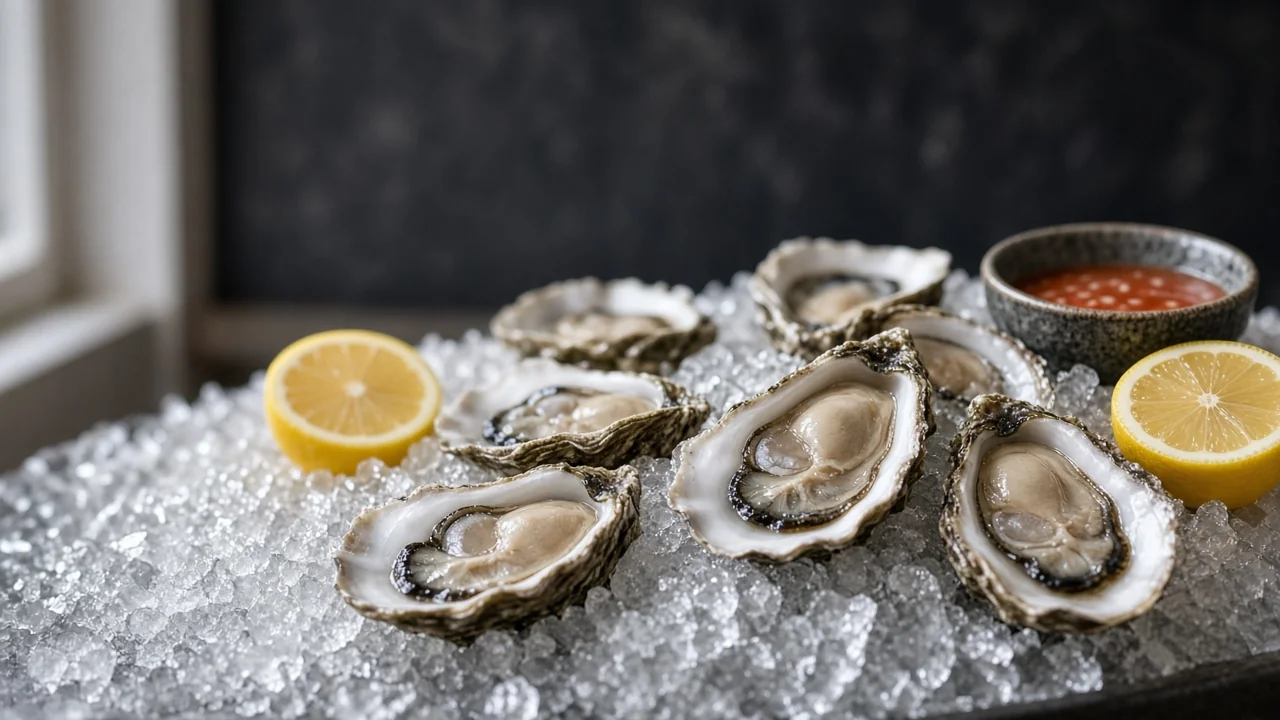
*Illustrative image: AI-generated, not taken at a restaurant.*